Psychology is an extraordinarily diverse field with hundreds of career paths. Some specialties, like caring for people with mental and emotional disorders, are familiar to most of us. Others, like helping with the design of advanced computer systems or studying how we remember things, are less well known.
What all psychologists have in common is a shared interest in the minds and behaviors of both human and nonhuman animals. In their work, psychologists draw on an ever-expanding body of scientific knowledge about how we think, act and feel and they apply the information to their areas of expertise.
Many psychologists work in more than one setting. For instance, college professors often consult for industry or see clients on a part-time basis. Although it is possible to identify a host of different work settings, for the purpose of this booklet, we’ll consider some of the most prominent examples.
Where psychologists work
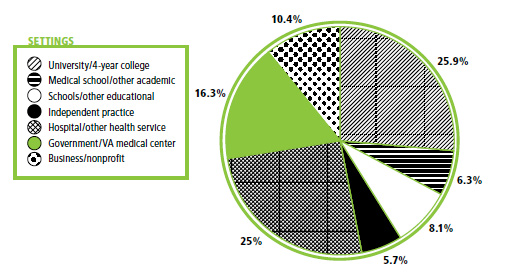
Note: The chart represents employment settings for those with recent doctorates in psychology. Totals amount to 97 percent due to rounding and exclusion of 17 "not specified" responses. Adapted from D. Michalski, J. Kohout, M. Wicherski & B. Hart (2011),
2009 Doctorate Employment Survey
(Table 3)
opens in new window (PDF, 33KB).
Psychologists conduct research
Many psychologists
conduct research
that runs the gamut from studies of basic brain functions to individual behavior to the behavior of complex social organizations. Subjects of such scientific study include nonhuman animals, human infants, both well-functioning and emotionally disturbed people, older persons, students, workers and just about every other population one can imagine. Some research takes place in laboratories where the study conditions can be carefully controlled; some is carried out in the field, such as the workplace, the highway, schools and hospitals, where behavior is studied as it occurs naturally.
Much of the laboratory research is conducted in universities, government agencies (such as the National Institutes of Health and the armed services) and private research organizations. Whereas most psychological scientists are engaged in the actual planning and conduct of research, some are employed in management or administration — usually after having served as active researchers.
 Dr. Linda M. Bartoshuk
Psychophysics psychologist, researcher, and university professor
I am a psychologist and Bushnell Professor at the University of Florida (UF). I direct human research in the UF Center for Smell and Taste and collaborate with food scientists and plant geneticists working to make fruits and vegetables more palatable. I study taste and the genetic and pathological conditions that affect taste and thus alter a variety of behaviors (dietary choice, smoking, drinking) affecting health.
I earned my BA at Carleton College. Although I began my college career as an astronomy major, my courses in astronomy got me interested in people’s abilities to compare the brightness of stars, and that led to my interest in the senses. I switched my major to psychology. After receiving my PhD from Brown University, I worked at the Natick Army Research labs (where research related to food for military personnel is conducted), then went to the Pierce Foundation and Yale University in New Haven, Conn., and am now at the University of Florida in Gainesville.
Psychology contributes to health in significant ways. As an academic working in the health professions, I have collaborated with dentists and physicians in using psychophysics to quantify symptoms, thereby advancing the understanding of disorders in my field (taste/oral pain) and promoting patient well-being. Psychology and the science supporting it have never been
more relevant to the world around us.
I spend a typical workday at my computer and with patients. My students and I design experiments to study the sense of taste, run the experiments and then analyze the data. Sometimes I serve as a subject in experiments, because I never do an experiment on another person that has not been done on me first.
I believe that to be a psychologist, a good background in mathematics and science is useful, and you need to observe the world around you and yourself. Behavior is fascinating. Psychology includes many subspecialties. The more you learn about them, the easier it will be to pick an area that will use your skills and give you great satisfaction.
I love being a psychologist. We study the behavior we see, but we know how to look beneath the surface to explore mechanisms. We are sophisticated and tolerant thinkers, yet we recognize nonsense. We have an impact on the lives of real people, and we care about them. To me, there is no better way to spend one’s life...I feel very lucky to be able to do the work that I love. The best advice that I ever gave myself was to go with my heart!
 Dr. Robert Rescorla
University professor and research psychologist who studies how we learn
Dr. Robert Rescorla became a psychologist because he likes puzzles. “You see a phenomenon and try to understand it,” he says. “I like the logic of designing an experiment, developing a hypothesis, and testing your ideas.” Dr. Rescorla studies his favorite phenomenon, learning, at the University of Pennsylvania, where he directs undergraduate studies in psychology and is Christopher H. Browne Distinguished Professor in Psychology. Throughout his career, he has discovered and defined the ways that animals (including humans) learn, especially by the power of association.
His love of research was sparked at Swarthmore College, where one professor encouraged students to conduct their own experiments in visual perception. Recalls Dr. Rescorla, “It was exciting to be the first person in the world to know the answer to something.”
After graduating in 1962, he earned a PhD in psychology in 1966 at the University of Pennsylvania. Inspired by a book by one of the field’s early researchers, Dr. Rescorla and Dr. Richard Solomon embarked on a classic series of experiments on the mechanisms of learned fear. Their findings have helped to shape effective therapies for treating phobia and other anxiety disorders.
Dr. Rescorla began his teaching career at Yale University. In 1981, he returned to the University of Pennsylvania, where in 1986 he was appointed the James M. Skinner Professor of Science. He studies not only how animals and humans learn that one stimulus signals another, but also how they learn that this relationship no longer holds. Dr. Rescorla also figured out how to measure the strength of learning, the key to documenting his observations.
This lifelong researcher has seen his work help to relieve human suffering. Armed with insights into associative learning, clinical psychologists have developed ways to “extinguish” the phobias that develop when people learn to fear a stimulus because it signals a painful experience.
Dr. Rescorla encourages more undergraduate research because, as he learned, “Once you do it, you’re hooked.” At Penn, he has chaired the psychology department and been dean of the College of Arts and Sciences. He was elected to the Society of Experimental Psychologists in 1975 and to the National Academy of Sciences in 1985.
For students considering psychology, he recommends a broad liberal arts education and adds, “Take the psychology intro course, and then sample broadly around it so you can find out what psychology is, whether it’s right for you, and what particular topic within it grabs you.”
Dr. Rescorla also urges students to study more biology and math. “Psychology increasingly has a biological component — not just in the laboratory but in the applied world, for various therapies. Plus, you will need more of a quantitative background.”
 Dr. Stanley Sue
Clinical psychologist, researcher, and university professor
I am a professor of psychology and the director of the Center for Excellence in Diversity at Palo Alto University. Unlike psychologists who specialize in a technique or a theory, I specialize in a population. Much of my work focuses on Asian American and ethnic minority clients, who often have special needs, especially if they immigrated to the United States.
I went to an all-boys technical high school and wanted to be a television repairman. Within a year, I became disinterested in electronics and woodworking, so I switched schools and tried to prepare myself for college. Along the way, I decided I wanted to become a clinical psychologist even though I was quite naive and didn’t know what a clinical psychologist actually did. But I remember always watching a television program called The Eleventh Hour that featured both a psychiatrist and a psychologist and thinking that this is what I wanted to do.
I told my father that I was interested in psychology, particularly clinical psychology. He’s Chinese from the old country and couldn’t understand what a psychologist does and how one could make a living at it. But I persisted and went to the University of Oregon to major in psychology and then to the University of California, Los Angeles for graduate work. Since then, my three brothers have gone into psychology. The oldest brother even married a psychologist!
At the Palo Alto University center, we focus on cultural and group issues involving diversity dimensions such as ethnicity; race; lesbian, gay, bisexual and transgender issues; gender; and social class. We conduct research, develop programs to promote diversity, integrate such issues into our courses, and recruit and train students to work effectively with diverse groups.
My particular area of interest is to study rates of mental disorders among Chinese people in the United States. Little is known about Asian Americans in this regard. Many people have said that Chinese and other Asian Americans don’t have many mental health problems. But we know that they have problems just like any other group of people, although there are some differences in the distribution of disorders.
What we have found generally, however, is that Asian Americans tend to underutilize mental health services and that those who do use the services tend to be very disturbed. This means that Asian American people with mild disturbances tend not to come in until their problems are serious.
We’re also trying to determine the factors related to mental disturbances among some Chinese people in this country and the factors that seem to insulate others in this population from mental problems. Several researchers at the center are also studying parent–child conflicts in Asian American families to see if the conflicts are different from those affecting other ethnic families and to identify ways to resolve the conflicts. Other investigators are looking at husband–wife problems to ascertain if they’re unique because of cultural differences.
One researcher has developed a scale that measures “loss of face,” which is a particularly important concept for people of Asian descent; fear of losing face affects how they behave. We are also going to look at how to improve the delivery of effective mental health services to Asian Americans.
Psychologists study social development
Developmental psychologists study the many behavioral and psychological changes that occur throughout the life span.
 Dr. Pamela Trotman Reid
Developmental psychologist, researcher, professor and college president
Developmental psychologists look at the changes that occur across an entire lifetime. It is a fantastic area because you can do so many different things. You can focus on language development, for example, and study why children’s speech may not reflect their thinking. You can look at adolescents and the problems they have in establishing identity. Or you can examine families, from how they use discipline to how they develop attitudes.
There is also a growing interest in adult development and aging, partly because of the graying of America and partly because we are beginning to realize that we don’t stop growing when we reach puberty. Instead, we continue to change and develop in many areas all our lives. Developmental psychologists can investigate adult learning issues at the workplace or the effects of aging on cognition.
I was always interested in science; even as a child I had played with chemistry sets. At Howard University in Washington, D.C., I majored in chemistry and thought about becoming a medical doctor. But because so many of my friends were taking psychology as an elective, I did, too. Psychology, I learned, is about both science and the application of science to people. I fell in love with the subject, switched my major to psychology, and then went to graduate school and earned my doctorate in educational psychology.
As a researcher and professor in psychology for many years, I specialized in social development; the effects of gender and culture were my primary interest. Today, as the president of Saint Joseph College in Connecticut, I still get a great deal of pleasure from teaching and research. I enjoy helping my students prepare for leadership roles by studying how leaders develop and what factors influence their leadership styles from childhood through adulthood.
In some of my past studies, I investigated why girls act in certain ways and why boys behave in different ways. One small body of research had suggested that women and girls are typically more interested in babies than men and boys are. But all this research had been conducted on White children and adults.
So I looked at both Black and White children and found no difference between African American boys and girls! In 8- to 10-year-old middle-class children, the White girls liked the babies (they looked at them, touched them, and smiled at them), the African American girls liked the babies, and even the African American boys liked the babies. Only the White boys appeared uninterested. As often happens, the research led to more questions. Now, instead of asking why girls are more interested than boys in babies, the question became are we socializing White boys so that they don’t like babies?
I also conducted research with children who lived in shelters because their families were homeless. I learned about the stresses they undergo so that we can understand how some children cope and others do not. For me, the important thing is that in psychology, you can research the questions that you are interested in, not only those that someone else has posed.
 Dr. Miguel Ybarra
Counseling psychologist and director of a VA substance abuse treatment program
There are many ways to enter the field of psychology, but the best way is to understand your strengths and what it is you want to accomplish. I started my academic career as a music major. One of my professors helped me see that my strengths, however, were in another area. I decided that there had to be a better fit for me in a different career. One day, it occurred to me that most of my friends and family would seek me out to talk about things going on in their lives. I felt I had a natural ability to help people see the options that were before them. It was at that moment that I decided to explore what I could get out of (and offer) the field of psychology.
Having to master statistics and research methodology was an intimidating prospect. In fact, the very idea of having to learn this material was so worrisome that I almost decided not to apply to graduate school at all! But once I started learning the material and applied these skills to real-life situations, it made sense and became enjoyable. Statistics became a tool I would use to actually provide the clinical services for which I was in training. This was the best part of my academic experience because the very thing that almost kept me out of a graduate program became the means to achieving my goals.
During my course work in counseling psychology at the University of Wisconsin—Madison, I was fortunate enough to have worked with one of my professors and participate in a study he was directing. The design of this project was to learn about the use of various coping strategies by middle-school students living and interacting in a multicultural setting. This experience became even more important to me when I realized that we were also searching for ways to get our findings back to the community that had agreed to participate in the study. With great enthusiasm, we presented our findings to the parents and teachers of those students at an open meeting.
Through all of this, I learned that the need for psychologists to bring crosscultural considerations and multicultural competency to their work is increasing daily because of the changing cultural and ethnic composition of our country. As members of the larger and increasingly diverse society, we need to meet the needs of people from different backgrounds and communities, thus allowing them to build on their strengths. Also, let us not forget the role of language. We must understand the context from which language (and behavior) emanates in order to be successful psychologists, whether we are conducting research, teaching or providing therapy.
Since completing my doctoral degree, I have worked as a full-time and part-time faculty member and have taught in undergraduate, master’s and doctoral programs and in college counseling centers. I have also been involved with the Veterans Affairs initiative to integrate mental health with primary health care; worked as a consultant for businesses and academic programs; and conducted research. Currently, I am the program director of a VA substance abuse treatment program. Each professional experience has helped to shape my own journey and has added to my satisfaction and success within the field of psychology. My best advice is to seek out diverse experiences that match your interests, be ready to transform a “not-so-great” job description into a great work experience, and never take yourself out of the running to achieve a goal you want to attain.
Psychologists teach and provide services to students
Psychologists provide a number of services — both direct and indirect — to children, youth and families in schools at all levels, from early childhood education settings through college. Some focus on improving student learning and behavior through research on topics such as motivation and cognitive processes, while others provide psychological services within educational settings. Psychologists work within specialty areas of learning, too, such as the arts and sports.
School psychologists help students with learning or behavior problems in the classroom and serve as members of the interdisciplinary teams that develop individual educational plans for students with learning disabilities, social and emotional issues, or other special needs. They work with students and staff members on schoolwide issues such as bullying prevention, and they consult with teachers on problems in the classroom.
 Dr. Sylvia Rosenfield
School psychologist, university professor and consultant
Schools are essential to our democratic society. I find them fascinating as organizations and recognize how important they are to children’s learning and mental health. I enjoy solving problems in schools and am never bored.
As an undergraduate at Cornell, I took Urie Bronfenbrenner’s child development course and became aware of how much settings contribute to behavior. Years later, after obtaining my degree from the University of Wisconsin in educational psychology, with a major in school psychology, I maintained my focus on settings and learning environments. Over the course of my career, I have worked as a school psychologist in the Madison (Wisconsin) public schools and as a school psychology faculty member at Fordham University in New York City, Temple University in Philadelphia, and the University of Maryland. I have been engaged in teaching, research and consultation with state education departments and with school systems around the country. My work has consistently been about enhancing learning environments for staff and students.
Schools today are diverse institutions, reflecting the multicultural nature of our society. There is consensus that schools have a mission to educate all students, including those of color, those with mental health and learning issues and those whose impoverished backgrounds have limited their learning opportunities. School psychologists play a key role in this essential work. As a faculty member in Fordham University’s urban school psychology program, I initiated a bilingual school psychology specialty to reflect our urban mission. We recruited and funded bilingual students and also provided all the school psychology students in the program with a better understanding of how culture and language affect teacher perceptions of students and student outcomes.
School psychologists engage in direct interaction and service to students, as well as focus on prevention (such as bullying prevention) and intervention through consulting with school staff about student concerns. My focus has been on using consultation skills to support school staff in promoting positive student outcomes, particularly for students at risk of developing more severe academic and behavior problems.
Through my work on consultation, I recognized the importance of helping schools develop structures so that staff can support their students’ development more effectively and efficiently. My colleagues and I created Instructional Consultation Teams (IC Teams), which we developed at the Lab for IC Teams at the University of Maryland. We embedded evidence-based process skills and content into a team structure and figured out how to help schools implement and sustain IC Teams, which are now conducted in multiple states and school districts.
People spend a large part of their lives in school. When you return as a school psychologist, you see the schools in a new way. Helping to create healthy environments in which children and youth can flourish is a rewarding life’s work.
Psychologists promote physical and mental health
Psychologists as health providers span a large and diverse spectrum of subfields. Some psychologists work alone, with patients and clients coming to the psychologist’s office. Others are involved in health care teams and typically work in hospitals, medical schools, outpatient clinics, nursing homes, pain clinics, rehabilitation facilities, and community health and mental health centers.
Increasingly, psychologists in independent practice are contracting on either a part-time or a full-time basis with organizations to provide a wide range of services. For example, a psychologist can join a health practice and work with a team of other health care providers, such as physicians, nutritionists, physiotherapists and social workers, to prevent or treat illness. This team approach, which is likely to become more common in the future, frequently includes efforts to change unhealthy behaviors and ensure that patients follow the recommended treatment. The team also helps patients cope with stress.
Psychologists also instruct students who are training to become health care professionals, such as physicians and nurses, about the psychological factors involved in illness. And they advise health care providers already in practice so that illnesses with symptoms that have a psychological component can be better diagnosed and treated.
 Dr. Daniel Abrahamson
Clinical psychologist, administrator and advocate
It’s important to pick a career that suits your temperament and your likes and dislikes. I grew up in a family that values helping people who are less fortunate and less able to take care of themselves. So psychology was a natural choice for me. I studied clinical psychology in graduate school.
I also went into psychology because I thought it would provide me with more variety than any other field. I have been a practicing psychologist, an administrator, a consultant and a researcher. I now work for the American Psychological Association as assistant executive director for state advocacy.
Before coming to APA, I was a clinical psychologist and the administrative director of a large group practice — The Traumatic Stress Institute (TSI) — in Connecticut. At TSI, my colleagues and I dealt with trauma — everything from natural disasters and industrial accidents to physical and sexual abuse. The institute is a model for independent practice because we did more than sit in an office for 50 minutes of psychotherapy with a patient — although we did that, too. But we also did research, training and community education to help traumatized individuals get their lives back on track as quickly as possible.
At TSI, my colleagues and I valued professional involvement and advocated for public policy that provides services and secures the rights for those who have experienced traumatic events. Over time, I became more involved in advocacy efforts on a number of fronts, primarily through my various roles in the state psychological association and also at APA.
Ultimately, I changed careers and began working full-time at APA on a broad range of issues affecting the professional practice of psychology at the state and national levels. For the past several years I’ve worked on health care reform, changes in health finance and reimbursement as they affect psychological and mental health services, and parity in mental health insurance coverage.
All of these opportunities to advance the practice of psychology stemmed from my earlier role as a practitioner interested in contributing to the field through state advocacy efforts. It is essential more than ever that psychologists think both locally — regarding their individual practices — and globally — concerning how they can contribute to the larger world. Through involvement in a broad range of institutions (e.g., educational, health care, business/corporate, correctional, environmental systems), psychologists can have a significant impact on the psychological well-being of others.
I can’t think of a single part of our culture, a single part of the world that we live in, where psychology doesn’t have something to contribute. I get excited when I think that I can make a difference in somebody’s life. I love the field.
 Dr. Dorothy W. Cantor
Clinical psychologist in independent practice
I like to help people solve their problems. My work as a clinical psychologist with an independent practice in New Jersey allows me plenty of opportunity to do so. I help individuals from teenagers to octogenarians, and some couples, who have varied psychological or relationship concerns.
I earned my PsyD, a professional psychology doctorate, in 1976, was licensed in 1978 and since then have practiced psychodynamic therapy, which assumes that a person’s early years are a critical part of his or her current problem and explores them in the context of the patient–therapist relationship.
I listen with the ear of someone who is trained to understand the dynamics of what the person is saying. If medication is indicated for the patient, I coordinate the treatment with a local psychiatrist.
Psychology wasn’t my first career. I was originally trained to teach because that’s what most women who went to college in the 1950s did. Beginning when my children were in preschool, I earned two master’s degrees (in reading education and school psychology) at New Jersey’s Kean College. I went on to earn the newly offered PsyD, a doctoral degree designed for people who want to practice psychology, at Rutgers University’s Graduate School of Applied and Professional Psychology. It was important that the schools I attended be close to home so that I could combine my education with being a mom — and Rutgers is 35 minutes from home!
I earned my doctorate so that I could be licensed to have a clinical private practice. As a school psychologist, I did a lot of the assessing of problems but never got to help alleviate them.
To be a good psychologist, you should be a good listener, nonjudgmental, smart and flexible in order to apply scientific theory to people in a nonformulaic way, which takes a certain creativity. I advise students entering the field to prepare for many years of education, all the way to the doctorate. The rewards are just so great. It’s so gratifying to be helpful to people on an ongoing basis.
I am past president of the American Psychological Association and current president of the American Psychological Foundation. I’ve written many articles and several books, including "Women in Power" (with Dr. Toni Bernay), "What Do You Want to Do When You Grow Up?" and "Finding Your Voice." And I’ve appeared as an expert on many television shows, including Good Morning America, Prime Time Live and the Today show.
What lies ahead? I expect psychology to become more of a part of the bigger health care system, as people come to understand how mind and body interact. I hope that people will go for mental health checkups the way they go for physical health checkups.
As for my career, my role model was a 90-year-old psychologist who worked until her death. I plan to write a few more books. And then, as always, I’ll see what opportunities present themselves. There are just so many opportunities for psychologists.
 Dr. Rodney Hammond
Health psychologist and CDC violence-prevention program administrator
My passionate interest in helping people live their lives to their fullest potential is what attracted me to psychology. My early training and experiences prepared me for career opportunities that I could scarcely have imagined as an undergraduate in college. Ultimately, I identified as a health psychologist because it is a field that goes beyond traditional mental health and addresses broader health concerns.
When I started as an undergraduate at the University of Illinois at Urbana-Champaign, I hadn’t decided on my major. To help finance my education, I took a part-time job in a child development research program sponsored by the psychology department. There, I observed inner-city children in settings designed to enhance their learning. I saw firsthand the contributions psychology can make, and I knew I wanted to be a psychologist.
After completing undergraduate work in psychology, I went on to earn my doctorate, focusing on children, both in school and in the community. When I graduated, there was no such thing as a health psychologist. I started as an assistant professor in a doctoral program in school psychology at the University of Tennessee. But soon I went on to direct a children’s program at Meharry Medical College in Nashville. As a psychologist in a medical setting, I could help children with health problems as well as their families and physicians.
At Meharry, I was in charge of an extensive and innovative program with an interdisciplinary staff. We worked with children who had developmental disabilities, dealt with child abuse and neglect, developed partial hospitalization for children with emotional problems, and created prevention programs for youths at risk. I then became assistant dean at the Wright State University School of Professional Psychology in Ohio, where I trained clinical psychologists and directed a program to prevent homicide and violence among minority youths.
Most of my career was spent at the Centers for Disease Control and Prevention (CDC), where for 15 years I served as the director of the Division of Violence Prevention at the National Center for Injury Prevention and Control (I retired in 2011). The division, with its budget of more than $100 million, manages research, surveillance, and programs in intentional injury; homicide, suicide, and youth, family and intimate partner violence prevention; and rape and sexual assault prevention.
As director of this CDC division, I oversaw the world’s largest concentration of public health experts working on violence issues and prevention. These experts come from a variety of fields, including psychology, medicine, sociology, economics and epidemiology. I was also involved in global efforts to prevent violence through the World Health Organization and Pan American Health Organization.
Through my work, I was able to achieve a career level unprecedented by a psychologist — I was the first psychologist to serve as the director of a division of the CDC. As you can see from my experience and background, my early work as a health psychologist was the basis for — but just the beginning of — this adventure. Psychology is much more than the traditional roles you may be aware of. When you think of a career in psychology, think beyond those limited roles!
 Dr. Parinda Khatri
Clinical psychologist and community health organization director
I was always interested in human behavior; it seemed to be a key component to so many aspects and issues in life. I was also strongly influenced by my father, who was both a sociologist and psychologist. When I was a child, he would talk to me about the work of Freud and B. F. Skinner. I knew words like classical conditioning and super ego before I reached the 9th grade! I wanted to contribute to society and engage in a variety of activities such as teaching, clinical practice and research. Psychology offered the opportunity to fulfill these goals in a meaningful way.
After majoring in psychology at the University of Alabama at Birmingham, I graduated with a PhD in clinical psychology from the University of North Carolina at Chapel Hill. I completed a postdoctoral fellowship at Duke University Medical Center, which was an amazing experience. On my first day I joined the cardiac rehab team and talked to patients about health behavior change while walking on a track with them. What a shift from the traditional 50-minute therapy session! From then on I realized that the knowledge and skill base in psychology could be adapted to fit almost any setting and, moreover, could have a significant impact on a person’s quality of life, health status and overall functioning.
Today I am director of integrated care at Cherokee Health Systems (CHS), which is a comprehensive community health organization that provides integrated primary care and behavioral health services in east Tennessee. CHS is both a federally qualified health center and a community mental health center, with a mission of improving the physical and mental health of everyone in our community. As a community health organization, we see everyone in our communities regardless of their ability to pay. Therefore, we are able to bring progressive, evidenced-based health care to everyone, including people who are uninsured. Working in community health means I can fulfill my personal and professional mission to work with the underserved in our communities.
As director, I am responsible for implementing the clinical model of integrating behavioral health and primary care to optimize functioning and quality of life for our patients. I am also involved in teaching and consulting with other organizations as part of CHS’s training and outreach initiatives on integrated care. I serve on teams that provide oversight and guidance regarding clinical activities and procedures within the organization. In my leadership role, I am responsible for many of CHS’s wellness, chronic care and research initiatives. As training director of CHS’s APA-accredited internship program, I am closely involved with teaching, clinical supervision, and program administration.
On any given day, I may see patients, work on a grant, develop a training schedule, address operational and clinical issues that arise at any of our clinics, provide clinical supervision (i.e., supervise the work of other providers) and participate in a management meeting. I love the variety and stimulation in my work. I get to work with bright, mission-oriented individuals with a range of expertise in different fields, including medicine, behavioral health and business management.
Working in a community health setting with a mission to the underserved provides tremendous professional and personal satisfaction. Primary care psychology offers exciting opportunities for psychologists to practice in a unique and rewarding setting. It is a significant growth area in the field. My advice to new psychologists: Work hard, be guided by a sense of mission and purpose, think outside of the box and be open to new possibilities. You will be amazed by the opportunities that will come your way.
 Dr. Carol Manning
Neuropsychologist and university professor
My doctoral degree was in clinical psychology. I do clinical work, research and teaching at the University of Virginia. All three aspects of my career are very important to me.
For example, I work in a memory disorders clinic as part of a team of neurologists, nurses and medical technicians. I oversee patient treatment apart from medication. What I learn in my research, I use in my clinical practice. And in my clinical practice, I learn the important questions to ask in my research.
One of my patients who has Alzheimer’s disease is in a clinical drug trial involving an experimental medication. No one knows if he is receiving medication or a placebo, which is something that looks like the medication but is actually inert (i.e., an inactive substance or preparation). I assess this person periodically and also talk with his wife occasionally to determine whether his condition has changed. I test his ability to remember things, and I look to see if the kinds of judgments he makes are the same kinds of judgments you or I would make. I test his ability to know the time, date and place — to see if he knows generally where he is. I look at his ability to copy drawings and also to remember those drawings. I also check his attention span.
I use computers to run experiments. This morning, I tested a patient’s spatial memory: He had to remember where words were placed on the screen. I also use computers for statistics — to analyze what my data mean.
I teach in the Department of Neurology, and some of my work involves supervising graduate students. It’s important that my students are truly interested in psychology and in the projects they’re working on. They need to think creatively, be determined and work thoroughly and carefully.
I’m helping one graduate student learn to do therapy and to assess patients. Another graduate student works with me on research studies. She helps me guide people through the research program on the computer. She analyzes data, and she’s learned to do statistics and how to design studies. We write papers together for publication.
If you’re interested in psychology, I’d advise you to take psychology courses as an undergraduate. And try to work in a research laboratory so that you can get some insight into what the field is really like.
Many of today’s students are encouraged to take time off between undergraduate and graduate school because it’s a long haul and it takes a lot of determination. Sometimes I think it’s nice for people to have a break in there. It takes persistence to earn a doctorate in psychology, along with a great interest in psychological research, science and people. It takes a long time — but I think it’s well worth it!
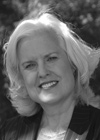 Dr. Susan McDaniel
Clinical psychologist, family health psychologist and administrator
I was raised in the South during desegregation and have always been interested in the underlying values and behaviors that can bring different individuals, groups or cultures together. This process is a common thread in my professional life, whether working to strengthen couples and families or in primary care teams with physicians, psychologists and other clinicians.
My father was an obstetrician/gynecologist who loved being a physician. It was clear to me that I wanted to do meaningful, rewarding work, too. My interest in science came from him. My emotional intelligence came from my mother. Put those with the irrational events of the time I grew up in, and you have the makings of a budding psychologist.
When I went to college in the early 1970s, I wanted to study stereotyping and why people generalize across groups. This led to a double major in cultural anthropology and psychology at Duke. I loved studying the effect of culture on behavior and language but thought psychology might be a more practical choice for graduate school. I was fortunate to attend the University of North Carolina at Chapel Hill in clinical psychology, working with many talented clinical and research professors, including William Stiles, with whom I did my dissertation on language (verbal response modes) in psychotherapy. Probably because of my strong southern family, I went to the University of Texas Medical Branch in Galveston for internship and worked with pioneering family psychologists Harry Goolishian and Harlene Anderson. Family therapy made immediate sense to me. It is applied anthropology — understanding individual behavior in the context of the group.
A fascination with mind–body interaction led me to accept a part-time job as a faculty member in the Department of Family Medicine at the University of Rochester (the first woman and first PhD on the faculty) in 1981. These bright, dedicated residents wanted a more organized behavioral science curriculum that would prepare them for the huge proportion of primary care practice that is psychological in nature. They were also interested in what family therapy had to offer family medicine.
Collaborating closely with family physician Thomas Campbell, we developed a practical curriculum that taught family medicine residents to evaluate the mental, behavioral, and interpersonal difficulties of their patients along with their biomedical problems. We combined the biopsychosocial approach with a family systems approach that is particularly well suited to primary care. The problems people bring to their primary care doctor aren’t always physical and are often difficult to evaluate. Having systems skills to understand the individual, family and community components is extremely helpful for assessment and successful treatment planning. It is also useful in enlisting family input and support and in promoting team functioning among the disciplines that make up the primary care team.
The Family Medicine Department has been a wonderful home. I see my own patients in the primary care setting (and see many patients who will not enter the traditional mental health system). My systemic/family skills are now put to use in promoting healthy faculty functioning, leadership coaching, and helping to transform primary care practice into patient-centered medical homes that are psychologically healthy.
The year after I joined the family medicine faculty (1982), I joined the psychiatry faculty when a family therapy training program began there. I eventually took over as division chief and developed the Institute for the Family, which has clinical, training, and research functions. We train family medicine, psychiatry, pediatric and internal medicine residents. By design, faculty members work both in the Institute and in another clinical department (i.e., ob/gyn, pediatrics, the epilepsy center, internal medicine, family medicine) to provide behavioral health at the point of service as part of a heath care team.
Health care — patients, families and other health professionals — needs psychologists. There is enormous opportunity for psychologists with clinical, systems, health and research training. Some opportunities are defined and posted, others (like the coaching program) are innovative and an obvious fit with our skill set. Like my father, I have meaningful and rewarding work that I love. You can, too.
Psychologists support community and individual well-being
Community psychologists focus on changing community settings to increase opportunities for individuals and families to successfully participate in community life. While they may work in different locations (e.g., as university faculty, in government or nonprofit agencies, as part of consulting firms, or as individual practitioners), they collaborate with professionals and community activists from different disciplines and with the people who are being served. They use their psychological training to address community issues and use community-based participatory research to guide community decision making.
 Dr. Meg A. Bond, PhD
Community psychologist, professor of psychology, researcher and activist
Through a career in community psychology I have been able to live my passion for promoting social justice. As a professor of psychology at the University of Massachusetts Lowell, I teach in our community social psychology program; conduct applied research addressing gender, racial and ethnic differences; and direct a Center for Women and Work. I am also a resident scholar at the Brandeis University Women’s Studies Research Center. But I did not start out knowing that this is what I wanted to do.
When I started graduate study in clinical psychology, I knew I wanted to “help people,” but something was missing for me. I took a 2-year leave of absence, during which I worked in a residential treatment center for adolescent girls. I returned to school to discover a new program emphasis on community psychology. With its focus on empowerment, prevention and changing social conditions to improve people’s lives, I knew I had found the right professional home.
My investment in social change predates my career decisions. I have been attuned to issues of inclusion since my years at a multiracial high school where I was in a minority as a White girl, which taught me much about relating across differences. This introduction to racial inequity has shaped my career-long work on the dynamics of diversity in organizational settings. Influenced by the feminist movement, I worked at the grassroots level on issues such as domestic violence and women’s health care. This interest in women’s rights propelled me through a nontraditional dissertation about what sustains women’s activism. Community psychology, which integrates research and action, has allowed me to pursue both my interests: helping individuals and addressing the systemic causes of injustice.
My career exemplifies how letting your interests guide you can take you on a rewarding, albeit circuitous, path. Following my clinical internship, I provided management training and organizational consultation to agencies serving individuals with developmental disabilities, and I became active in the Society for Community Research and Action (SCRA: Division 27 of APA). As co-chair of the SCRA Women’s Committee (the first of many leadership roles in this organization), I became interested in barriers to women’s professional development, which led to research on sexual harassment and the realization that I enjoy research, particularly when there are clear action implications. After 6 years as an entirely applied psychologist (i.e., a psychologist who applies the theories, principles and techniques of psychology to practical concerns), I sought an academic job — violating the common advice that you must decide in grad school if you desire an academic career.
I have been at UMass Lowell for 22 years, and my work has continued to evolve — both because community psychology is a diverse field and because academic positions provide great flexibility. In our applied community psychology master’s program, I help new professionals bridge theory with skills for promoting social justice. For almost 15 years, I have directed a Center for Women and Work, with an interdisciplinary group of scholars, and I have been able to partner with community members on numerous action projects.
At the university, I work much more than 40 hours/week, but I have the flexibility to pursue what I am most passionate about. Naturally, there are unmovable commitments to teaching, mentoring and meetings, but I choose where to focus my research, initiate action projects that I care about, and become involved in social issues of importance to me. Additionally, this flexibility allows me to navigate the roles of professor, activist, partner and mother more smoothly.
Psychologists study the work environment and performance issues
Anywhere people work, and anything they do while at work, is of interest to psychologists. Psychologists study what makes people effective, satisfied and motivated in their jobs; what distinguishes good workers or managers from poor ones; and what conditions of work promote high or low productivity, morale and safety.
Some psychologists design programs for recruiting, selecting, placing and training employees. They evaluate, monitor and improve performance. They help make changes in the way the organization is set up. Others help design the actual tasks, tools and environments people must deal with when doing their jobs. These specialists can also help design the products that organizations create and conduct research related to product design. For example, they play a big role in making computer hardware and software more user friendly.
Psychologists with training in mental health and health care also deal with the health and adjustment of individuals in the work setting. They work with employee assistance plans that provide help with drug or alcohol addiction problems, depression and other disorders; they also foster healthy behavior. Others work on performance issues in areas such as sport psychology, where they may provide athletes with counseling, work with them to improve motivation and performance, explore psychological considerations in sports injuries and rehabilitation, and perform a range of tasks related to sports performance and education.
 Dr. Elizabeth Kolmstetter
Industrial/organizational psychologist, researcher and senior executive
If we’re going to keep up with the “bad guys,” we need to keep our workforce skills, knowledge and competencies continuously developing. As an industrial/organizational (I/O) psychologist, I helped lead the drive to heighten airport security after Sept. 11, 2001. This involved the largest civilian mobilization effort in the United States — to hire more than 50,000 airport screeners for the government in less than a year. The undertaking, called for in the Aviation and Transportation Security Act that President Bush signed into law soon after the attacks, sought to strengthen airport security screening by federalizing it and enhancing the workforce skill standards.
At that time, I was the director of Standards, Testing, Evaluation and Policy for the newly formed Transportation Security Administration (TSA). I created a team of I/O psychologists, HR professionals, medical experts and trainers to develop higher standards and the accompanying tests for screeners’ cognitive, customer service, X-ray detection and physical abilities. Using future-oriented job analyses, the team validated new post–9/11 skill standards for every aspect of the new screener rotational job design and then designed an assessment process, including automated application screening, computer-based tests and in-person structured interviews and medical evaluations, that could process masses of applicants efficiently. Applying the newly established standards, the TSA processed more than 1.8 million applications and hired and trained about 50,000 screeners by the congressionally mandated 1-year deadline. Throughout the process, the team faced many obstacles, but we did get it done — we raised the standards for the workforce and national security, and we did it against unbelievable odds.
During my nearly 6 years with the TSA, I developed numerous testing and assessment programs for screeners, law enforcement officers and armed pilots; implemented enhanced training, including the automated Learning Management System; implemented a mandatory, annual certification program for all screeners; instituted a pay-for-performance program; and designed and implemented a career progression program for the screeners.
In 2007, I became the deputy associate director of National Intelligence for Human Capital at the Office of the Director of National Intelligence (established in 2005). I help to drive the collaboration and integration of the 17 agencies that make up the Intelligence Community (IC). My work includes setting common competency directories for the occupations of the IC, supporting culture change through common performance standards and appraisal processes, developing common leadership programs and succession management processes, establishing a consistent workforce planning template and annual process, and designing a common professional development framework and associated metrics.
It is very rewarding to know that the programs I build as an I/O psychologist touch every employee and greatly improve the workplace. I continuously see how our work directly improves the nation’s ability to enhance and ensure national security during this most challenging time in our history. A lot of it has to be done with creativity and innovation.
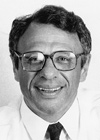 Dr. David Sirota
Industrial/organizational psychologist and consultant
When I began my career as an industrial/organizational (I/O) psychologist, there was an emphasis on testing — ability testing, personality testing and so on — in an effort to put the right person in the right job. Today, the emphasis is turning to establishing the atmosphere most conducive to productivity and quality work.
The field has become extremely influential — starting in the late 1970s — in part because of the overwhelming competition from Japan and the success of their products. Studies indicated that Japanese companies tended to manage the way I/O psychologists say people should be managed.
Most I/O psychologists maintain that people go to work wanting to do good work. Nevertheless, when we look at a company that has a problem — let’s say, a drop in customers or a large turnover in labor — we see large percentages of people not working very hard. When we analyze what causes people to lose their motivation, the answer usually has to do with how they’re being managed. For example, if management treats employees like children or criminals, the employees are likely to become demoralized.
I had wanted to be a psychologist since I was a psychology major at the City College of New York (I originally thought I would go into engineering). One great influence on me was my father. He was a strong union man. From him I learned that workers’ opinions are very important to a company’s overall well-being. While earning my doctorate in social psychology at the University of Michigan, I also became enamored of survey work at the university’s Institute for Social Research.
I was an I/O psychologist for IBM for 13 years and then set up my own consulting firm, Sirota and Associates, in New York City. (I sold the firm a few years ago.) It is now called Sirota Survey Intelligence and does work for companies, government agencies and nonprofits all over the world. Earlier in my career, I also taught at a number of universities, such as MIT and the Wharton School.
My particular branch of the field focuses on data collection. We diagnose an organization’s problems by surveying people in the organization through questionnaires, informal interviews, focus groups or a combination of all three methods. Why do employees stay with the company? What helps them produce quality products or quality service? Do they have the right training, the right equipment, the right management, the right whatever? Does the way management treats employees cause them to feel good or bad about the company’s customers? Often we interview the customers, too. All these variables constitute the heart of what we do.
We come back to management with our analysis. We try to be candid, but not abrasive, pointing out what’s being done well and the opportunities for improvement. We then try to get the managers involved in coming to their own solutions.
Unlike a doctor who finds out what’s wrong with you and then writes a prescription, most I/O psychologists want people to become their own doctors. We’re not necessarily interested in people liking each other or becoming “nice guys,” per se. Of course, it’s good if they do, but what we want is for them to deal with what has to be done in terms of business objectives.
 Dr. Adam Shunk
Neuropsychologist and sport psychologist
There are many different paths that may lead to a career in psychology, and many opportunities that present themselves along the way. In my case, my passion to work as a psychologist in athletics guided my journey to create my dream job.
I always knew as a child that I loved sports and wanted my career to involve athletics. I was a dedicated high school athlete who was fortunate enough to earn an athletic scholarship to the University of North Carolina. After college, I followed my passion for sports to become a professional track-and-field athlete who competed on the international circuit for 4 years. My involvement in sports and my experience as a coach helped me understand the sports culture.
Early in my academic training, I realized that I wanted to focus on positive psychology and help individuals in their pursuit of excellence. In my studies, I was drawn to biology and the relationship between brain and behavior. Although I was primarily trained as a neuropsychologist through my formal education, I emphasized and integrated sport psychology course work into my curriculum at both the undergraduate and graduate levels, and focused rotations were part of my internship and postdoctoral training. I had to be innovative in creating a training program that met formal guidelines in neuropsychology and also provided appropriate training in sport psychology. It worked out beautifully for me, as I found a career that allowed me to pursue my passion for sports and neuropsychology with a population focused on athletic achievement.
My schedule differs on a daily basis, and flexibility is an essential part of my job. For example, 2 days a week I work in an athletics setting at Purdue University, where my time is spent providing counseling and assessment services in the athletic department. As a sport psychologist, I have been trained in the applied practice of sport and performance psychology, and I work with “elite” performance issues and positive psychology applications. Another focus of sport psychology is to provide individual counseling for mental health issues and consultation services for coaches, teams and administrators.
My job often involves travel, and I frequently work with clients on weekends and in the evenings to accommodate their busy schedules. The focus of sport psychology is to use psychological interventions to enhance athletic and overall performance. The nature of athletics creates some specialized needs for athletes, who must manage and deal with rigorous practice, workout schedules, extensive travel, injuries, fatigue, high expectations and media exposure, in addition to normal stressors.
If you are interested in becoming a sport psychologist, you’ll need to establish proficiency within the field. APA’s Division 47 (Exercise and Sport Psychology) provides appropriate guidelines for establishing competency as a sport psychologist.
Pursuing my interests in neuropsychology and sport psychology has certainly been challenging, but it has taught me that if you know what you want to do, there is always a way to make it happen.