|
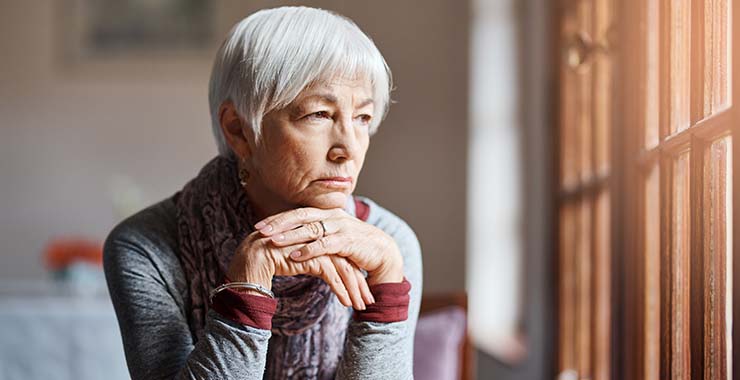
Elder Abuse and Neglect: In Search of Solutions
|
|

Every person-every man, woman, and child-deserves to be treated with respect and with caring.
Every person-no matter how young or how
old-deserves to be safe from harm by those who live with them, care
for them, or come in day-to-day contact with them.
Older people today are more visible, more active, and
more independent than ever before. They are living longer and in better
health. But as the population of older Americans grows, so does the
hidden problem of elder abuse, exploitation, and neglect.
Every year an estimated 2.1 million older Americans are victims
of physical, psychological, or other forms of abuse and neglect. Those
statistics may not tell the whole story. For every case of elder abuse and
neglect that is reported to authorities, experts estimate that there may be as
many as five cases that have not been reported. Recent research suggests that
elders who have been abused tend to die earlier than those who are not abused,
even in the absence of chronic conditions or life threatening disease.
Agnes, 85 years old, lost her husband last year. Because of her own
problems with arthritis and congestive heart failure, Agnes moved in with her
55-year-old daughter, Emily. The situation is difficult for all of them.
Sometimes Emily feels as if she’s at the end of her rope, caring for her
mother, worrying about her college-age son and about her husband, who is about
to be forced into early retirement. Emily has caught herself calling her
mother names and accusing her mother of ruining her life. Recently, she lost
her temper and slapped her mother. In addition to feeling frightened and
isolated, Agnes feels trapped and worthless.
Like other forms of abuse, elder abuse is a complex problem, and
it is easy for people to have misconceptions about it. Many people who hear
"elder abuse and neglect" think about older people living in nursing
homes or about elderly relatives who live all alone and never have visitors. But
elder abuse is not just a problem of older people living on the margins of our
everyday life. It is right in our midst:
- Most incidents of elder abuse don’t happen in a nursing home.
Occasionally, there are shocking reports of nursing home residents who are
mistreated by the staff. Such abuse does occur-but it is not the most
common type of elder abuse. At any one time, only about 4 percent of older
adults live in nursing homes, and the vast majority of nursing home
residents have their physical needs met without experiencing abuse or
neglect.
- Most elder abuse and neglect takes place at home. The great majority of
older people live on their own or with their spouses, children, siblings, or
other relatives-not in institutional settings. When elder abuse happens,
family, other household members, and paid caregivers usually are the
abusers. Although there are extreme cases of elder abuse, often the abuse is
subtle, and the distinction between normal interpersonal stress and abuse is
not always easy to discern.
- There is no single pattern of elder abuse in the home. Sometimes the abuse
is a continuation of long-standing patterns of physical or emotional abuse
within the family. Perhaps, more commonly, the abuse is related to changes
in living situations and relationships brought about by the older person’s
growing frailty and dependence on others for companionship and for meeting
basic needs.
- It isn’t just infirm or mentally impaired elderly people who are
vulnerable to abuse. Elders who are ill, frail, disabled, mentally impaired,
or depressed are at greater risk of abuse, but even those who do not have
these obvious risk factors can find themselves in abusive situations and
relationships.
Elder abuse, like other forms of violence, is never an
acceptable response to any problem or situation, however stressful. Effective
interventions can prevent or stop elder abuse. By increasing awareness among
physicians, mental health professionals, home health care workers, and others
who provide services to the elderly and family members, patterns of abuse or
neglect can be broken, and both the abused person and the abuser can receive
needed help.
What Is Elder Abuse?

Elder abuse is the infliction of physical, emotional, or
psychological harm on an older adult. Elder abuse also can take the form
of financial exploitation or intentional or unintentional neglect of an
older adult by the caregiver.
- Physical abuse can range from slapping or shoving to severe
beatings and restraining with ropes or chains. When a caregiver or
other person uses enough force to cause unnecessary pain or injury,
even if the reason is to help the older person, the behavior can be
regarded as abusive. Physical abuse can include hitting, beating,
pushing, kicking, pinching, burning, or biting. It can also include
such acts against the older person as over- or under-medicating,
depriving the elder of food, or exposing the person to severe
weather-deliberately or inadvertently.
- Emotional or psychological abuse can range from name-calling or giving the
"silent treatment" to intimidating and threatening the individual.
When a family member, a caregiver, or other person behaves in a way that
causes fear, mental anguish, and emotional pain or distress, the behavior
can be regarded as abusive. Emotional and psychological abuse can include
insults and threats. It can also include treating the older person like a
child and isolating the person from family, friends, and regular
activities-either by force or threats or through manipulation.
- Caregiver neglect can range from caregiving strategies that withhold
appropriate attention from the individual to intentionally failing to meet
the physical, social, or emotional needs of the older person. Neglect can
include failure to provide food, water, clothing, medications, and
assistance with the activities of daily living or help with personal
hygiene. If the caregiver has responsibility for paying bills for the older
person, neglect also can include failure to pay the bills or to manage the
elder person’s money responsibly.
Madeline is 75 and suffers from congestive heart failure. She lives alone,
with home health nurses and nurses’ aides coming in daily to provide nursing
care and personal assistance. She depends on the home health agency’s
personal assistant to help her with the routine tasks around the house and to
provide interaction with someone from the outside world. At first, the
assistant was sweet to Madeline, but lately, the assistant has started
ignoring Madeline’s requests, snapping at her, and bumping into her with the
vacuum cleaner or dusting brush while cleaning. Madeline thinks the assistant
is bumping her on purpose, but she doesn’t know for sure, and she’s afraid
to confront her.
- Sexual abuse can range from sexual exhibition to rape. Sexual abuse can
include inappropriate touching, photographing the person in suggestive
poses, forcing the person to look at pornography, forcing sexual contact
with a third party, or any unwanted sexualized behavior. It also includes
rape, sodomy, or coerced nudity. Sexual abuse is not often reported as a
type of elder abuse.
- Financial exploitation can range from misuse of an elder’s funds to
embezzlement. Financial exploitation includes fraud, taking money under
false pretenses, forgery, forced property transfers, purchasing expensive
items with the older person’s money without the older person’s knowledge
or permission, or denying the older person access to his or her own funds or
home. It includes the improper use of legal guardianship arrangements,
powers of attorney, or conservatorships. It also includes a variety of scams
perpetrated by sales people for health-related services, mortgage companies,
and financial managers-or even by so-called friends.
Sometimes older adults harm themselves through self-neglect
(e.g., not eating, not going to the doctor for needed care) or because of
alcohol or drug abuse. In this pamphlet, the focus is on elder abuse that is
perpetrated by others. However, one of the most difficult problems family
members face is achieving a balance between respecting an older adult’s
autonomy and intervening before self-neglect becomes dangerous.
Older adults who show signs of dementia may become abusive as
part of the disease process, and the object of the abuse may be another older
adult, for example, a spouse who is caring for the impaired elder. The abuse may
take the form of hitting or gripping the caregiver to the extent of causing
bruises, or creating hazards such as setting furniture on fire. Although the
behavior can be explained by the impairment, it is still unacceptable.
Importantly, while abuse comes in many guises, the net effect is
the same. Abuse creates potentially dangerous situations and feelings of
worthlessness, and it isolates the older person from people who can help.

Cues That Cannot Be Explained Medically May Signal Elder Abuse
Many of the symptoms listed below can occur as a result
of disease conditions or medications. The appearance of these symptoms
should prompt further investigation to determine and remedy the cause.
Physical Abuse
- Bruises or grip marks around the arms or neck
- Rope marks or welts on the wrists and/or ankles
- Repeated unexplained injuries
- Dismissive attitude or statements about injuries
- Refusal to go to same emergency department for repeated injuries
Emotional/Psychological Abuse
- Uncommunicative and unresponsive
- Unreasonably fearful or suspicious
- Lack of interest in social contacts
- Chronic physical or psychiatric health problems
- Evasiveness
Sexual Abuse
- Unexplained vaginal or anal bleeding
- Torn or bloody underwear
- Bruised breasts
- Venereal diseases or vaginal infections
Financial Abuse or Exploitation
- Life circumstances don’t match with the size of the estate
- Large withdrawals from bank accounts, switching accounts, unusual ATM
activity
- Signatures on checks don’t match elder’s signature
Neglect
- Sunken eyes or loss of weight
- Extreme thirst
- Bed sores
Why Does Elder Abuse Happen?

There is no one explanation for elder abuse and neglect.
Elder abuse is a complex problem that can emerge from several different
causes, and that often has roots in multiple factors. These factors
include family situations, caregiver issues, and cultural issues.
Family Situations and Elder Abuse
Family situations that can contribute to elder abuse include
discord in the family created by the older person’s presence, a history and
pattern of violent interactions within the family, social isolation or the
stresses on one or more family members who care for the older adult, and lack of
knowledge or caregiving skills.
Intergenerational and marital violence can persist into old age
and become factors in elder abuse. In some instances, elder abuse is simply a
continuation of abuse that has been occurring in the family over many years. If
a woman has been abused during a 50-year marriage, she is not likely to report
abuse when she is very old and in poor health.
Sometimes, a woman who has been abused for years may turn her
rage on her husband when his health fails. If there has been a history of
violence in the family, an adult child may take the opportunity to "turn
the tables" on the abusing parent by withholding nourishment or by
overmedicating the parent. But that doesn’t have to be the case-many adult
children who were badly treated by their parents become attentive caregivers.
Family stress is another factor that can trigger elder abuse.
When a frail or disabled older parent moves into a family member’s home, the
lifestyle adjustments and accommodations can be staggering.
In some instances, the financial burdens of paying for health
care for an aging parent or living in overcrowded quarters can lead to stress
that can trigger elder abuse. Such a situation can be especially difficult when
the adult child has no financial resources other than those of the aging parent.
Sometimes, there may be marital stress between an older couple
when they must share a home with their adult children. Or, the new living
arrangements could cause tension between an adult child and his or her spouse.
When problems and stress mount, the potential for abuse or neglect increases.
Social isolation can provide a clue that a family may be in
trouble, and it also can be a risk factor for abuse. Social isolation can be a
strategy for keeping abuse secret, or it can be a result of the stresses of
caring for a dependent older family member. Isolation is dangerous because it
cuts off family members from outside help and support they need to cope with the
stresses of caregiving. Isolation also makes it harder for outsiders to see and
intervene in a volatile or abusive situation to protect the older person and to
offer help to the abuser.
Caregiver Issues and Elder Abuse
Personal problems of the caregiver that can lead to abusing a
frail older person include caregiver stress, mental or emotional illness,
addiction to alcohol or other drugs, job loss or other personal crises,
financial dependency on the older person, a tendency to use violence to solve
problems. Sometimes the person being cared for may be physically abusive to the
caregiver, especially when the older person has Alzheimer’s or another form of
dementia.
Caregiver stress is a significant risk factor for abuse and
neglect. When caregivers are thrust into the demands of daily care for an elder
without appropriate training and without information about how to balance the
needs of the older person with their own needs, they frequently experience
intense frustration and anger that can lead to a range of abusive behaviors.
The risk of elder abuse becomes even greater when the caregiver
is responsible for an older person who is sick or is physically or mentally
impaired. Caregivers in such stressful situations often feel trapped and
hopeless and are unaware of available resources and assistance. If they have no
skills for managing difficult behaviors, caregivers can find themselves using
physical force. Particularly with a lack of resources, neglectful situations can
arise.
Sometimes the caregiver’s own self-image as a "dutiful
child" may compound the problem by causing them to feel that the older
person deserves and wants only their care, and that considering respite or
residential care is a betrayal of the older person’s trust.
Dependency is a contributing factor in elder abuse. When the
caregiver is dependent financially on an impaired older person, there may be
financial exploitation or abuse. When the reverse is true, and the impaired
older person is completely dependent on the caregiver, the caregiver may
experience resentment that leads to abusive behavior.
James is a financially secure 90-year-old man who has been healthy and
active until the last year. He has finally agreed to move in with his oldest
daughter, Lorraine, who now believes her father "owes her" more of
his money than her brother and two sisters are entitled to. She talks her
father into giving her power of attorney for his bank accounts "as a
convenience," then writes herself large checks that she tells herself are
for "expenses." Soon she has come up with excuses to transfer a
significant portion of his investment holdings into her name. James has no
energy to oversee his finances and is totally trusting that his daughter has
his best interests at heart.
Emotional and psychological problems of the caregiver can put
the caregiver at risk for abusing an older person in their care. A caregiver who
is addicted to drugs or alcohol is more likely to become an abuser than one who
does not have these problems. Indeed, caregiving can lead to greater use of
alcohol, in an attempt to mange stress. Also, a caregiver with an emotional or
personality disorder may be unable to control his or her impulses when feeling
angry or resentful of the older person.
Cultural Issues and Elder Abuse

Certain societal attitudes make it easier for abuse to
continue without detection or intervention. These factors include the
devaluation and lack of respect for older adults and society’s belief
that what goes on in the home is a private, "family matter."
Certain cultural factors, such as language barriers, make some
situations more difficult to distinguish from abuse or neglect, and it
is important not to ignore abuse by attributing the cause to cultural
differences. However, before reporting abuse, anyone working with older
people should be sensitive to cultural differences and not mistake these
for abuse or neglect. Definitions of what is considered
"abuse" varies across diverse cultural and ethnic communities.
Lack of respect for the elderly may contribute to violence
against older people. When older people are regarded as disposable, society
fails to recognize the importance of assuring dignified, supportive, and
nonabusive life circumstances for every older person.
The idea that what happens at home is "private" can be
a major factor in keeping an older person locked in an abusive situation. Those
outside the family who observe or suspect abuse or neglect may fail to intervene
because they believe "it’s a family problem and none of my business"
or because they are afraid they are misinterpreting a private quarrel. Shame and
embarrassment often make it difficult for older persons to reveal abuse. They
don’t want others to know that such events occur in their families.
Religious or ethical belief systems sometimes allow for
mistreatment of family members, especially women. Those who participate in these
behaviors do not consider them abusive. In some cultures, women’s basic rights
are not honored, and older women in these cultures may not realize they are
being abused. They probably could not call for help outside the family and may
not even know that help is available.
How Can We Prevent Elder Abuse?
The first and most important step toward preventing elder abuse
is to recognize that no one-of whatever age-should be subjected to violent,
abusive, humiliating, or neglectful behavior. In addition to promoting this
social attitude, positive steps include educating people about elder abuse,
increasing the availability of respite care, promoting increased social contact
and support for families with dependent older adults, and encouraging counseling
and treatment to cope with personal and family problems that contribute to
abuse. Violence, abuse, and neglect toward elders are signs that the people
involved need help-immediately.
Education is the cornerstone of preventing elder abuse. Media
coverage of abuse in nursing homes has made the public knowledgeable about-and
outraged against-abusive treatment in those settings. Because most abuse
occurs in the home by family members or caregivers, there needs to be a
concerted effort to educate the public about the special needs and problems of
the elderly and about the risk factors for abuse.
Respite care-having someone else care for the elder, even for
a few hours each week-is essential in reducing caregiver stress, a major
contributing factor in elder abuse. Every caregiver needs time alone, free from
the worry and responsibility of looking after someone else’s needs. Respite
care is especially important for caregivers of people suffering from
Alzheimer’s or other forms of dementia or of elders who are severely disabled.
Social contact and support can be a boon to the elderly and to
the family members and caregivers as well. When other people are part of the
social circle, tensions are less likely to reach unmanageable levels. Having
other people to talk to is an important part of relieving tensions. Many times,
families in similar circumstances can band together to share solutions and
provide informal respite for each other. In addition, when there is a larger
social circle, abuse is less likely to go unnoticed. Isolation of elders
increases the probability of abuse, and it may even be a sign that abuse is
occurring. Sometimes abusers will threaten to keep people away from the older
person.
Counseling for behavioral or personal problems in the family can
play a significant role in helping people change lifelong patterns of behavior
or find solutions to problems emerging from current stresses. If there is a
substance abuse problem in the family, treatment is the first step in preventing
violence against the older family member. In some instances, it may be in the
best interest of the older person to move him or her to a different, safer
setting. In some cases, a nursing home might be preferable to living with
children who are not equipped emotionally or physically to handle the
responsibility. Even in situations where it is difficult to tell whether abuse
has really occurred, counseling can be helpful in alleviating stress.
What You Can Do About Elder Abuse
If you suspect that an older person is being abused or
neglected...

Don’t let your fear of meddling in someone else’s business stop
you from reporting your suspicions. You could be saving someone’s
life. The reporting agencies in each state are different, but every
state has a service designated to receive and investigate allegations of
elder abuse and neglect. Even if these agencies determine that there is
only potential for abuse, they will make referrals for counseling. (Call
the Eldercare locator at 1-800-677-1116.)
Do not put the older person in a more vulnerable position by
confronting the abuser yourself unless you have the victim’s permission and
are in a position to help the victim immediately by moving him or her to a safe
place.
If you feel you are being abused or neglected...
Your personal safety is most important. If you can safely talk to someone
about the abuse (such as your doctor, a trusted friend, or member of the clergy)
who can remove you from the situation or find help for the abuser, do so at
once. If your abuser is threatening you with greater abuse if you tell anyone,
and if the abuser refuses to leave you alone in a room with others who could
help, you are probably afraid to let anyone know what is happening to you. A
good strategy is to let your physician know about the abuse. The physician has a
legal obligation to report the abuser and to help you find safety.
If you are able to make phone calls, you can call protective
services or a trusted friend who can help you find safety and also find help for
the person who is abusing you.
If you feel you have been abusive or are in danger of abusing an
older person in your care...
There is help available if you have been abusive to an older
person or if you feel you want to hurt someone you are caring for. The solution
may be to find ways of giving yourself a break and relieving the tension of
having total responsibility for an older person who is completely dependent on
you. There are many local respite or adult day care programs to help you.
If you recognize that abuse, neglect, or violence is a way you
often solve problems, you will need expert help to break old patterns. There is
help and hope for you, but you must take the first step as soon as possible. You
can learn new ways of relating that are not abusive. You can change. Talk with
someone who can help-a trusted friend or family member, a counselor, your
pastor, priest, or rabbi. If alcohol or drugs are a problem, consider contacting
Alcoholics Anonymous or some other self-help group.
Therapists specialize in helping people change destructive
behaviors; to find a competent therapist, ask your physician or your health plan
for a recommendation. If you cannot afford private therapy, call your city or
state mental health services department to find out what your options are.
The most important thing for you is to be honest-with yourself
and with those who want to help you-about your history of violent behavior and
about your abusive relationship with the older person. Someone’s life-and
your own-may depend on it.
Where To Go for Help
National Center on Elder Abuse
1225 Eye Street, NW, Suite 725
Washington, DC 20005
(202) 898-2586
Fax: (202) 898-2583
www.elderabusecenter.org
NCEA is a resource for public and private agencies,
professionals, service providers, and individuals interested in elder abuse
prevention information, training, technical assistance, and research.
Eldercare Locator is sponsored by the Administration on
Aging (AoA). If you know the address and ZIP code of the older person being
abused, Eldercare Locator can refer you to the appropriate agency in the area to
report the suspected abuse.
1-800-677-1116
Area Agency on Aging
Most states have an information and referral line that can be helpful in
locating services for victims or potential perpetrators of elder abuse and
neglect. Check your local telephone directory.
Medicaid Fraud Control Units (MFCU)
Each state attorney general’s office is required by federal law to have an
MFCU that investigates and prosecutes Medicaid provider fraud and patient abuse
and neglect in health care programs and home health services that participate in
Medicaid.
Adult Protective Services
In many states, Adult Protective Services is designated to receive and
investigate allegations of elder abuse and neglect. Every state has some agency
that holds that responsibility. It may be the Area Agency on Aging, the Division
of Aging, the Department of Aging, or the Department of Social Services.
National Domestic Violence Hotline
The hotline provides support counseling for victims of domestic violence and
provides links to 2,500 local support services for abused women. The hotline
operates 24 hours a day, every day of the year.
1-800-799-SAFE
TDD 1-800-787-3224
References
The National Elder Abuse Incidence Study. (1998). U.S.
Department of Health and Human Services, Administration on Aging (www.aoa.dhhs.gov/abuse/report/default.htm).
Diagnostic and Treatment Guidelines on Elder Abuse and
Neglect. American Medical Association.
A Profile of Older Americans. (1998). American
Association of Retired Persons (AARP) and the Administration on Aging, (www.aoa.gov/aoa/stats/profile/default.htm).
Understanding and Combating Elder Abuse in Minority
Communities. (1998). Archstone Foundation and the National Center on Elder
Abuse.
Domestic Mistreatment of the Elderly: Toward Prevention.
AARP.
Back to Top
|