skip to main content

Postpartum depression: Causes, symptoms, risk factors, and treatment options

APA Style leaf logo Cite This Article in APA Style
American Psychological Association. (2022, November 2). Postpartum depression: Causes, symptoms, risk factors, and treatment options. https://www.apa.org/topics/women-girls/postpartum-depression

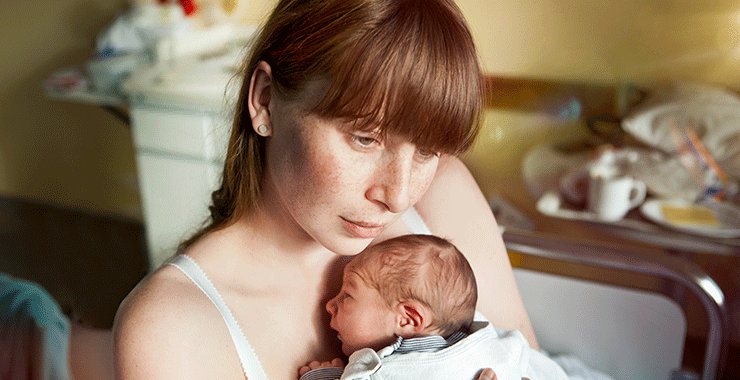
Mom holding a new born baby

What is postpartum depression and anxiety?

It’s common for women to experience the “baby blues”—feeling stressed, sad, anxious, lonely, tired or weepy—following their baby’s birth. But some women, up to 1 in 7, experience a much more serious mood disorder—postpartum depression (PPD). (Postpartum psychosis, a condition that may involve psychotic symptoms like delusions or hallucinations, is a different disorder and is very rare.) Unlike the baby blues, PPD doesn’t go away on its own. It can appear days or even months after delivering a baby; it can last for many weeks or months if left untreated. PPD can make it hard for you to get through the day, and it can affect your ability to take care of your baby, or yourself. PPD can affect any woman—those with easy pregnancies or problem pregnancies, first-time mothers and mothers with one or more children, women who are married and women who are not, and regardless of income, age, race or ethnicity, culture, or education.

What are the symptoms of PPD?

The warning signs are different for everyone but may include:

  • A loss of pleasure or interest in things you used to enjoy, including sex

  • Eating much more, or much less, than you usually do

  • Anxiety—all or most of the time—or panic attacks

  • Racing, scary thoughts

  • Feeling guilty or worthless; blaming yourself

  • Excessive irritability, anger, or agitation; mood swings

  • Sadness, crying uncontrollably for very long periods of time

  • Fear of not being a good mother

  • Fear of being left alone with the baby

  • Misery

  • Inability to sleep, sleeping too much, difficulty falling or staying asleep

  • Disinterest in the baby, family, and friends

  • Difficulty concentrating, remembering details, or making decisions

  • Thoughts of hurting yourself or the baby (see below for numbers to call to get immediate help).

If these warning signs or symptoms last longer than 2 weeks, you may need to get help. Whether your symptoms are mild or severe, recovery is possible with proper treatment.

What are the risk factors for PPD?

  • A change in hormone levels after childbirth

  • Previous experience of depression or anxiety

  • Family history of depression or mental illness

  • Stress involved in caring for a newborn and managing new life changes

  • Having a challenging baby who cries more than usual, is hard to comfort, or whose sleep and hunger needs are irregular and hard to predict

  • Having a baby with special needs (premature birth, medical complications, illness)

  • First-time motherhood, very young motherhood, or older motherhood

  • Other emotional stressors, such as the death of a loved one or family problems

  • Financial or employment problems

  • Isolation and lack of social support

What can I do?

  • Don’t face PPD alone. To find a psychologist or other licensed mental health provider near you, ask your OB/GYN, pediatrician, midwife, internist, or other primary health care provider for a referral. APA can also help you find a local psychologist: Call 1-800-964-2000, or visit the APA Psychologist Locator.

  • Talk openly about your feelings with your partner, other mothers, friends, and relatives.

  • Join a support group for mothers—ask your health care provider for suggestions if you can’t find one.

  • Find a relative or close friend who can help you take care of the baby.

  • Get as much sleep or rest as you can even if you have to ask for more help with the baby—if you can’t rest even when you want to, tell your primary health care provider.

  • As soon as your doctor or other primary health care provider says it’s okay, take walks, or participate in another form of exercise.

  • Try not to worry about unimportant tasks. Be realistic about what you can do while taking care of a new baby.

  • Cut down on less important responsibilities.

  • Remember that postpartum depression is not your fault—it is a real, but treatable, psychological disorder. If you are having thoughts of hurting yourself or your baby, take action now: Put the baby in a safe place, like a crib. Call a friend or family member for help if you need to. Then, call a suicide hotline (free and staffed all day, every day):

IMAliveopens in new window
1-800-SUICIDE (1-800-784-2433)

988 Suicide and Crisis Lifelineopens in new window
Dial 988
(Formerly known as The National Suicide Prevention Lifeline 1-800-273-TALK)

Recommended Reading

Other versions

All translations of the English Postpartum Depression brochure were partially funded by a grant from the American Psychological Foundation.

You may also like