The Fast and the Furious

Psychologists figure out who gets road rage and find ways to calm them down.

Findings

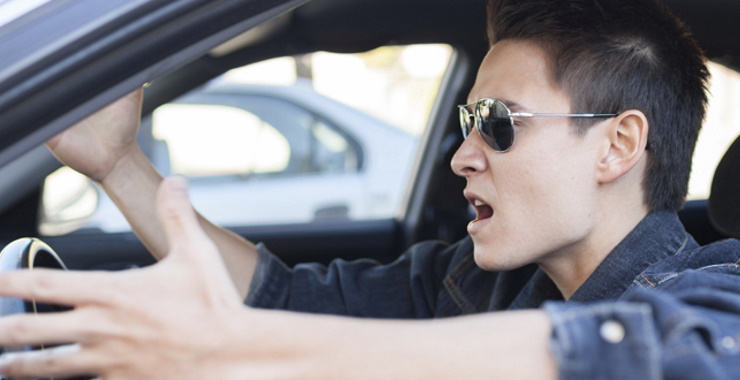
Psychologists are studying what makes some people more prone to "road rage" and how to keep them from becoming a danger on the road. In an analysis of 10,037 police reports and newspaper stories about traffic accidents that led to violence, the AAA Foundation for Traffic Safety found from 1990 to 1996, road rage contributed to 218 deaths and 12,610 injuries. Worse, AAA found that road rage incidents increased nearly seven percent each year within that six-year period. Understanding what fuels this dangerous behavior may help psychologists to curb it. At Colorado State University, counseling psychologist Jerry Deffenbacher, PhD, has studied anger and aggressive driving for nearly 20 years. His research has found that high-anger drivers (who identified themselves as such) differ from low-anger drivers in five key ways.

  • They engage in hostile, aggressive thinking. They're more likely to insult other drivers or express disbelief about the way others drive. Their thoughts also turn more often to revenge, which sometimes means physical harm.

  • They take more risks on the road. High-anger drivers are more likely to go 10 to 20 mph over the speed limit, rapidly switch lanes, tailgate, and enter an intersection when the light turns red.

  • Not surprisingly, high anger drivers get angry faster and behave more aggressively. They're more likely to swear or name-call, to yell at other drivers, to honk in anger. And they're more likely to be angry not just behind the wheel, but throughout the day.

  • High-anger drivers had twice as many car accidents in driving simulations. They also report more near-accidents and get more tickets for speeding.

  • Finally, short-fused drivers experience more trait anger, anxiety and impulsiveness. Perhaps from work or home stress, high-anger drivers are more likely to get in the car angry; they also tend to express their anger outward and act impulsively.

Significance

Is road rage out of control? Not necessarily. Deffenbacher found that even people with the consistent cluster of high-anger driving traits stayed calm under certain road conditions - for example, when they drove down a simulated wide-open country road. Congestion and slowdowns seem to increase anger, but only for some drivers. There are large individual differences, so it appears to be the mix of temperament and environment that lights the fuse. As an example of an outside factor, the rise in long commutes may be bring out more road rage in formerly unflappable drivers.

Practical Application

Thankfully, a combination of cognitive and relaxation techniques have shown promise for reducing road rage among high-anger drivers. Deffenbacher has taught applied relaxation coping skills and used cognitive restructuring, or reframing of negative events, to help high-anger drivers stay cool.

In a series of studies, high-anger drivers who wanted help attended eight therapy sessions involving either relaxation or cognitive-relaxation therapy. In the relaxation-only condition, the drivers learned deep breathing and other basic relaxation techniques. In the cognitive-relaxation therapy condition, drivers learned similar relaxation methods as well as cognitive change strategies. Both groups practiced skills to better control their anger while visualizing anger-provoking driving situations, such as someone cutting them off in traffic, and then practiced these skills when they were actually driving.

Deffenbacher found that both interventions were equally effective in curbing road rage. They couldn't completely douse a driver's anger, but they did reduce its frequency and intensity. What's more, some studies found that a year after therapy, people continued to keep their cool at roughly their immediate post-treatment and one-month follow-up levels.

In New York State in 1999, the University at Albany's Center for Stress and Anxiety Disorders treated 20 aggressive drivers referred by the local District Attorney's office and 10 volunteers who described themselves as aggressive drivers. Tara Galovski, PhD, designed treatment sessions that included deep relaxation, stress-management coping skills, and cognitive restructuring, and learning different ways to think about roadway events and stressors. These strategies have proven very successful with aggressive driving behaviors, as well as general anger and aggression. The treatment group averaged a 64 percent drop in aggressive driving behaviors, and showed marked reductions on measures of psychological distress, a standardized Driving Anger Scale, and a Driver Stress Profile. Improvements were maintained at a three month follow-up.

Other court systems are also working with psychologists, considering whether to mandate anger- reduction programs for aggressive drivers. Psychologists will continue to study the effectiveness of these new types of programs.

Cited Research and Additional Sources

Deffenbacher, J.L., Deffenbacher, D.M., Lynch, R.S., & Richards, T.L. (2003). Anger, aggression and risky behavior: A comparison of high and low anger drivers. Behaviour Research and Therapy, Vol. 41(6), pp.701-718.

Deffenbacher, J.L., Filetti, L.B., Richards, T.L., Lynch, R.S., & Oetting, E.R. (2003). Characteristics of two groups of angry drivers. Journal of Counseling Psychology, Vol. 50(2), pp.123-132.

Galovski, T.E.; Blanchard, E.B. (2002). The effectiveness of a brief psychological intervention on court-referred and self-referred aggressive drivers. Behaviour Research & Therapy, Vol. 40(12), p.1385, 18p.

Galovski, T.E.; Blanchard, E.B.; Malta, L.S.; Freidenberg, B.M. (2003). The psychophysiology of aggressive drivers: comparison to non-aggressive drivers and pre- to post-treatment change following a cognitive-behavioral treatment. Behaviour Research & Therapy, Vol. 41(9), p.1055.

Galovski, T. E. & Blanchard, E. B. (2004). Road rage: A domain for psychological intervention? Aggression and Violent Behavior: A Review Journal, Vol. 9,
pp. 105-127.

Galovski, T. E. & Blanchard, E. B. (in press). Psychological treatments of angry and aggressive drivers. In D. A. Hennessy and D. L. Wiesenthal (Eds.), Contemporary Issues in Traffic Research and Road User Safety. Hauppauge, N.Y.: Nova Science Publishers, Inc.

Galovski, T. E., Malta, L. S., & Blanchard, E. B. (in press). Road Rage: Assessment and Treatment of the Angry, Aggressive Driver. Washington, DC: APA Books.

Lajunen, T. & Parker, D. (2001). Are aggressive people aggressive drivers? A study of the relationship between self-reported general aggressiveness, driver anger and aggressive driving. Accident Analysis & Prevention, Vol. 33, pp. 243-255.

Novaco, R.W. (1991). Aggression on roadways. In R. Baenninger (Ed.), Targets of violence and aggression. Amsterdam: Elsevier Science Publications.


American Psychological Association, July 21, 2005