This page has been archived and is no longer being updated regularly.
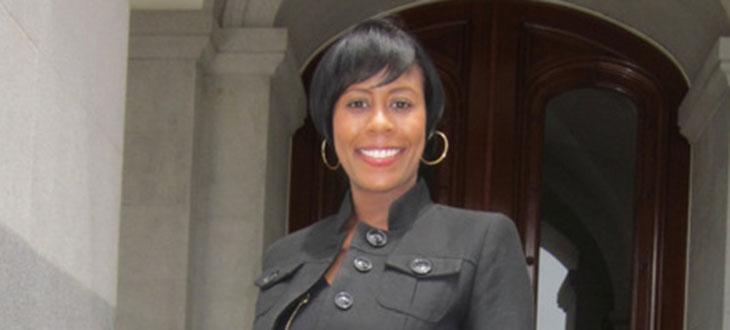
Le Ondra Clark Harvey, PhD
Counseling Psychologist
“I wanted to be a scientist [and] a practitioner, but also have the leverage to impact systems.”
Taking Care of Senate Business
State legislators rely on a range of experts to help them as they draft and consider bills. In the California Senate, one of those experts is Le Ondra Clark Harvey, PhD, a health policy consultant who analyzes legislation that affects health care professionals. She sends her recommendations to the senators who sit on the Senate Committee on Business, Professions and Economic Development.
Dr. Clark Harvey’s work during the yearlong legislative session includes writing analyses of legislation and briefing staff on her recommendations, as well as participating in meetings with committee members, lobbyists and other advocates who are seeking to influence bills. She sits in on weekly bill hearings and, in the three months when the Senate is not in session, she works on informational hearings – such as a 2013 hearing where the role of certified nurse assistants in and outside health care settings was examined. As if that weren’t enough, Dr. Clark Harvey also oversees 15 of the state’s health care boards, including the Boards of Psychology, Behavioral Sciences and Registered Nursing.
The Road to the California Capitol
Earlier in her career and before she earned her doctorate, Dr. Clark Harvey was a licensed professional counselor in Wisconsin. She later conducted research on the mental health treatment provided to disenfranchised communities and worked at UCLA’s and USC’s children’s hospitals in Southern California.
“These experiences have equipped me to bring a unique perspective to the work I do as a consultant to the Senate,” she says. “I understand the viewpoint of [other health practitioners], I have worked on interdisciplinary and multidisciplinary teams, and I am engaged in the policy-making process.”
Trying to Do It All
Dr. Clark Harvey was introduced to psychology and mental health care by her mother, who has been a licensed marriage and family therapist for more than 25 years.
As for setting her sights on earning a doctorate, she says, “I always tell people that I pursued the PhD because I wanted a license to do everything.”
But even “doing everything” involves making some choices, and Dr. Clark Harvey says she struggled in graduate school to figure out how to apply her degree. “The notion of psychologists being confined by the ‘scientist-practitioner’ model always perplexed me,” she says. “I wanted to be a scientist [and] a practitioner, but also have the leverage to impact systems. “ So she made a career shift from providing services to disenfranchised communities to positions that allowed her to help shape the public policies that affect the care that is delivered to these people. “I wanted to be able to have a seat at the table where decisions that impact those I used to work with were made,” she says. “I feel that I am well on my way to making this happen, and it is my foundation of training in psychology coupled with my experience in the Legislature that enables me to continue pursuing this goal.”
Counseling Psychology
Counseling psychologists help people recognize their strengths and find resources to cope with everyday problems and adversity. Counseling psychologists focus on interactions between people and their environment, and on educational and career development.