


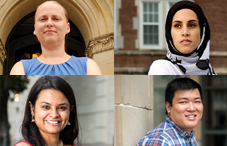
At age 18, Shraddha Niphadkar was a top student in her high school class in Mumbai, India, yet she was keenly aware that her aspirations to pursue a career outside the home would be questioned — if not frowned upon — by her family. In her household, men had traditionally been the breadwinners while women were expected to stay home. Niphadkar's career dreams seemed even more unorthodox when she decided to major in psychology as an undergraduate in India where therapy was also somewhat taboo.
Determined to buck gender role expectations and give her family a source of prestige, Niphadkar applied to graduate school in psychology in the United States. She embarked on her international adventure in the fall of 2009 as a master's degree student in mental health counseling at Boston College. Her enthusiasm, however, was quickly tempered by a storm of harsh practical and emotional realities.
"My transition from India to Boston was quite rough," says Niphadkar, who was 22 at the time. "I was completely unprepared as far as finances, and I had never lived away from my family. Suddenly I was halfway across the world in an apartment by myself on weekends when my roommate was away. I was very lonely."
She also discovered that the cost of her education would be much more than she had anticipated. She had heard that male engineering students from India had found financial aid in the form of assistantships, but Niphadkar later realized that they had gone to large, public U.S. universities that could offer more funding to international students. Luckily, her family covered the $50,000 cost of her master's education, but this left them financially drained. When she later applied to doctoral programs in the United States, she was savvy about finding financial aid — but there were other complex rules to navigate related to her student visa status, such as the fact that she couldn't work more than 20 hours a week on campus.
According to the Council of Graduate Schools (CGS), a national organization focused on graduate education and research, Niphadkar is among a growing number of students from abroad who are choosing to study in the United States. Recent survey data from the CGS showed that there were more than 236,700 international graduate students enrolled in schools nationwide in the fall of 2014 — an 8 percent increase from 2013. Nearly 16,000 of those graduate students were enrolled in social sciences and psychology programs. One reason they choose to study here is the country's strong reputation when it comes to higher education. According to the Quacquarelli Symonds World University rankings, 12 of the 20 top universities for psychology are in the United States. The rankings are based on academic reputation, employer reputation and research impact.
While many of these students cope well, some say that their outward appearances may mask the internal struggles international students confront on a daily basis.
"Dealing with all of the issues related to visas and funding restrictions is almost like a second job, and it is a constant source of anxiety," says former international student Sonia Suchday, PhD, originally from India and now chair of the Pace University psychology department. "Many times, international students do not reveal to others that they are struggling because they are afraid of standing out for negative reasons."
Entering the visa maze
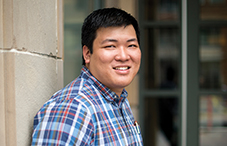
International doctoral student Jerrold Yeo says that he still worries about the complex logistics related to studying in the United States. The complicated details started to surface as soon as he began the application process. Yeo, who is studying in the Graduate School of Professional Psychology at the University of Denver, found that online resources provided much-needed information while he was still living in his home country, Singapore.
For example, an APA website that explained accreditation allowed him to search for schools in different states that were accredited in his area of interest. Other sites detailed how to apply for a student visa and the work restrictionsopens in new window associated with this status.
When Yeo arrived in Denver in 2012, he also discovered certain employment restrictions associated with his student visa status. Like Niphadkar, he could work only 20 hours a week on campus. When he was searching for practicum sites, he was precluded from federal sites because he was not a U.S. citizen. This was particularly challenging because many of the practicum sites for his choice of specialty — neuropsychology — were in federal VA hospitals.
"I had to work harder to find practicum sites at hospitals, in private practices and community mental health clinics," he says. "Now I am starting to think about finding an internship, and I'm worrying about the visa restrictions that will apply."
Once Yeo secures an internship, for example, he must finish within 12 months or he will not qualify for "optional practical training," or OPT, an additional year he will be allowed to stay in the United States after graduation. He hopes to use his OPT for a postdoctoral position in an American hospital that will focus on neuropsychology or rehabilitation psychology.
Yeo has relied heavily on fellow international students in his program to overcome the challenges of studying 9,000 miles from home. He also has started advocating for more awareness within his department about the issues these students confront. "Some of the faculty and even the school's international office do not fully understand a number of the difficulties we face, and I am trying to change that," he says.
Yeo, for example, organized a meeting with the department chair to share these challenges, and he met with a representative from APAGS to do the same. He also reaches out regularly to international students of incoming cohorts to mentor them as they navigate the same issues.
Breaking the isolation barrier
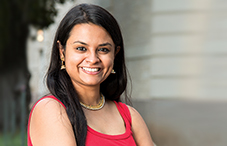
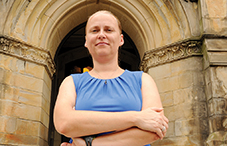
Niphadkar was pleased when she was accepted into the doctoral counseling psychology program at the University of Florida with five years of guaranteed funding in the form of assistantships. When she started her internship in August, she was required to pay the out-of-state tuition rate of more than $11,000 for that year because she could not apply for Florida residency like her American peers.
"I depend completely on my stipend to survive here, which literally means that I live paycheck to paycheck," says Niphadkar, 27. "I cannot even afford to travel to the APA conferences when they are held in places like Toronto because I cannot travel to Canada without a Canadian visa."
Like Yeo, Niphadkar made a conscious decision to seek out support when she was grappling with frustration, loneliness or other challenges related to studying abroad.
"I am somebody who is naturally shy and more of an introvert, but I had to change that style of relating," she says. "People in this country respect privacy a bit too much, and nobody knew I was struggling. I learned that the more people I talk to, the more information and support I will receive."
She started reaching out to classmates and attending social events held by the psychology program for international students. There were eight international students in a class of 60 at Boston College, and that group became her support system. In Florida, she expanded her network to include American peers.
Culture clash
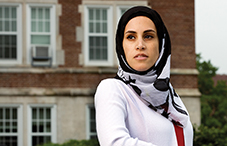
In addition to practical issues such as visa restrictions, students from abroad may also encounter cultural misunderstandings or even bias. Samar Harfi, a doctoral student from Saudi Arabia at the Illinois School of Professional Psychology, dresses in a head scarf and modest clothing, which occasionally elicit offensive comments from her peers.
"Part of me feels activated and wants to explain myself, but I also just want to be a student," says Harfi. "I am generally very open to discussing my practices, but I have also learned that I don't need to defend my choices."
She also chooses not to drink alcohol to honor her religious beliefs. As a result, she felt isolated during social gatherings with peers and faculty when drinking was a central part of the experience. She started voicing her internal conflict and asked if the group could consider other types of social events, such as bowling, and the group agreed to the idea.
Harfi found allies when she started going to office hours to meet with her professors — which she had never done in her home country. Her professors connected her with support systems, such as APA's Div. 52 (International Psychology), which offers students access to several Listservs, information about conferences and professional opportunities and access to a journal and newsletter.
Rather than seeing her foreign background as a disadvantage, division members consider it an asset. For example, a professor invited her to attend Psychology Day at the United Nations. The annual event in New York gave Harfi the opportunity to learn about the work of psychologists at the United Nations and how the field is involved in solving problems around the world.
The upside
Despite the challenges, most international graduate students agree that the experience has strengthened them.
"I have grown so much personally and professionally, and my world view has changed," Niphadkar says. "I would never have known about multicultural awareness, social justice and the LGBT community. Even though I have had some bad experiences here, I have had more good ones. At the end of the day, the trials have taught me about myself and others."
The growth, however, is often the result of perseverance. No one knows this more than Joanna Dziura, 39, a doctoral student in psychology at Gallaudet University in Washington, D.C.
Dziura had earned a master's degree in psychology in Poland and worked as a military psychologist there for 10 years before she met her American husband overseas. After marrying, the couple moved to Colorado Springs, where Dziura quickly learned that she would need graduate training if she hoped to find a job as a psychologist in the United States. To gather more information, she met with psychology professors at a local university, but they implied that her age and foreign background would make her an unlikely candidate for a doctoral program.
Undeterred, she enrolled in community college courses to improve her English and pored over the APA website to learn how to write essays for graduate school applications. When she and her husband moved to Washington, D.C., she applied to Gallaudet University, but she was not accepted into the program. In hindsight, she believes she did not know how to highlight her experience and passion for the field during the interview.
The following year, she enrolled as a "graduate special student" at the school and took general first-year graduate student courses. She started talking to students and professors to learn how to improve her odds of being admitted to the program. She applied a second time in 2012 and was accepted.
After she graduates in 2017, she hopes to return to working as an active-duty military psychologist. "My grandfather fought in World War II and my family always had a strong respect for the military profession," she says. "I am interested in how physical injuries and illness impact the psychological health of people in the service as well as their family members."
Although international graduate students may encounter more snares on the path to graduation, Sonia Suchday's journey is a reminder that the perseverance pays off.
"The more successful I became, the more I felt a sense of freedom to do international research in the areas that truly interested me," says Suchday, who studies how globalization affects health.
"We live in a global market that is becoming more complicated every day, and I sincerely believe that unless psychologists understand some of the global perspectives, they will not be effective in treating the person next door. I think everything local is global and everything global is local, and for this reason, our profession will benefit from more psychologists with an international background."