


 Americans' biases about lesbian women and gay men have decreased across all demographic groups over the last few years, suggests a study by University of Virginia psychology doctoral student Erin Westgate. She, along with her co-authors, analyzed data collected from more than 500,000 people from 2006 to 2013. Over the seven-year period, implicit, or unconscious, bias against lesbian and gay people declined by 13 percent and explicit, or self-reported, bias decreased by twice as much — 26 percent. The researchers also found that unconscious bias decreased most among women, as well as among white, Hispanic, liberal and younger people. Men — as well as Asian, black, conservative and older people — showed the smallest changes in bias (Collabra, online July 23opens in new window).
- Simply receiving a notification on your cellphone can impair your ability to focus on a given task, finds a study led by Florida State University cognitive psychology doctoral student Cary Stothart. The researchers compared participants' performance on an attention-demanding computer task when they were asked to complete the task and were assigned to one of three groups: those who received a call, a text or no notification. The researchers found that the probability of making a mistake on the computer task was three times greater for participants who received notifications, compared with those who didn't, and was similar to that of participants who received a call (Journal of Experimental Psychology: Human Perception and Performance, Augustopens in new window).
- You can still be happy in your career, even without taking your "dream job," finds research by Patricia Chen, a University of Michigan doctoral psychology student. Chen asked 892 adult participants, ranging widely in age, about their expectations, choices and outcomes associated with achieving vocational well-being. She categorized participants as either "fit theorists," who tend to select vocations they enjoy from the outset and are more willing to take a low-paying job that offered enjoyable work, or "develop theorists," who prioritize higher pay over immediate enjoyment and focus on cultivating passion and fit over time. Results showed that fit theorists were more likely to say they felt well-suited to their job initially, but when it came to their current feelings about their work, fit and develop theorists were similarly passionate and satisfied. They also felt equally successful and made comparable incomes (Personality and Social Psychology Bulletin, online July 31opens in new window).
- Some single people are happier on their own, contrary to past research showing that being single is often associated with lower life satisfaction and poorer physical and psychological health, according to research by Yuthika Girme, a psychology doctoral student at the University of Auckland. Girme surveyed more than 4,000 New Zealand residents ages 18 to 94. She found that people with high "avoidance social goals," who try to avoid relationship disagreements and conflict, were just as happy being single as other people were in relationships. Being single may remove some of the anxiety triggered by relationship conflicts for those individuals, she suggested (Social Psychological and Personality Science, online Aug. 21opens in new window).
- Higher levels of fitness appear to improve executive function in older adults, according to research by Chelsea Wong, a doctoral student at the University of Illinois at Urbana-Champaign. In the study, Wong and her co-authors examined fMRI scans and data on fitness levels from 128 adults ages 59 to 80. The researchers found that certain brain regions, specifically, the anterior cingulate cortex and its supplementary motor area, were activated more when participants performed two simultaneous tasks compared with a single task. Their analysis also suggests that activation in these regions was associated with higher cardiorespiratory fitness. As people age, executive function declines, the authors note. Their findings suggest that with higher cardiorespiratory fitness, individuals can enhance executive function performance by engaging these brain regions more strongly (Frontiers in Aging Neuroscience, Aug. 12opens in new window).
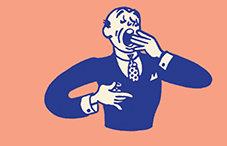 People who lack empathy are less likely to "catch" a yawn from someone else, suggests research led by Brian Rundle, a doctoral student in psychology and neuroscience at Baylor University. In a study with 135 college students, participants answered questions on a standard psychological test aimed at determining their degree of cold-heartedness, fearless dominance and self-centered impulsivity — in essence, how much empathy they had for others. Then, the students sat in a dim room in front of a computer and watched 10-second video clips of different facial movements: a yawn, a laugh or a neutral face. Results showed that the less empathy a person had, the less likely he or she was to yawn after seeing someone else yawn (Personality and Individual Differencesopens in new window, November).
Research Roundup