


Coming together: Healing after a summer of violence
 Americans are continuing to grapple with a summer of senseless violence. With the terrorist attack in Orlando targeting the LGBT and Latino communities, the shooting deaths of more black men by police and the murder of Dallas and Baton Rouge, Louisiana, police, Americans are feeling less safe, more disjointed.
Recognizing the pain and anxiety Americans are feeling, APA President Susan H. McDaniel, PhD, says it's time for psychologists to "put our psychological science and practice skills to work as best we can."
We must "reach out to our patients, our colleagues, our students, our friends, our families and our communities to encourage dialogue over violence, understanding over ignorance, and to bring about greater equity and opportunity for all people in our country," she says. "We all know there is so much talent in our discipline and our association. Let us each bring it to bear in helping this awful moment move towards something much stronger for the futures of all our people."
And in fact, Americans are seeking the help that psychologists can provide. In the days after the July 7 murder of five Dallas police officers and injury of seven others, Dallas Police Chief David O'Neal Brown called out for help.
"We're asking cops to do too much in this country," he said. "Every societal failure, we put it off on the cops to solve," listing the inadequacies of the mental health system, the scourge of drug addiction and failing schools as among the problems that fall to police to solve. But, he said, they cannot unravel those issues alone. "I just ask for other parts of our democracy along with the free press to help us."
As was widely reported, the Dallas police officers were killed by Micah Johnson, who sought to murder police and white people in response to the shooting by police of Alton Sterling in Baton Rouge, Louisiana, and Philando Castile, in Falcon Heights, Minnesota.
Those tragedies came just weeks after the June 12 mass shooting at Orlando's Pulse nightclub, which killed 49 people and injured 53 others.
Over the summer, APA and its members have worked to help the nation come together and heal. For psychologist David J. Romano, PhD, a significant moment of recovery from the Orlando shooting occurred when a rainbow appeared over a 50,000-person vigil held several days after. "That was a natural memorial and it became a reflection of a turning point," says Romano, a member of APA's Disaster Resource Network (DRN) who offered assistance after the tragedy.
After, he says, people began to focus on "how to build hope, compassion, show love and not be reactive against any group."
APA's DRN members responded to the needs of victims' friends and family immediately after the shooting. Their goal has been to be a "compassionate presence and offer assistance if needed," says Romano. He and other volunteers relied heavily on APA briefing sheets, including "Managing Your Distress in the Aftermath of a Shooting," "Helping Your Children Manage Distress in the Aftermath of a Shooting" and "10 Ways to Build Resilience."
APA itself has also been active in the wake of the tragedies. Through the APA Federal Action Network, psychologists and graduate students sent over 5,000 emails to Congress—one of APA's most successful action alert campaigns to date. The messages urged legislators to expand federal background checks to all sales, ban gun sales to those on the federal No-Fly list, and support a public health approach to gun violence prevention. Although the Senate blocked the relevant measures, APA sent out a more targeted alert that urged Congress to support a bipartisan compromise. The House is expected to vote on related measures later this year during the appropriations process.
In addition, APA participated in a White House conference call on July 12, focused on the fatal police shootings. And on July 22, APA hosted a meeting of Div. 18 (Psychologists in Public Service) and Div. 51 (Society for the Psychological Study of Men and Masculinity), which are working together to develop best practices for reducing bias and healing communities.
For more resources on dealing with the police shootings and violence, go to www.apa.org/news/press/releases/2016/07/police-shooting-terrorism.
Career opportunities: Free and easy job searches: Welcome to PsycCareers
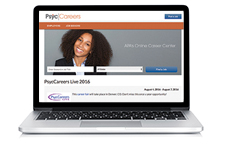 APA has launched a new, enhanced career center—PsycCareers—that connects psychologists across all disciplines and career stages with employers offering job opportunities.
The new platform offers several exciting benefits to psychologists and employers, including:
- The ability for psychologists to post anonymous resumes, allowing them to be recruited while retaining control over which employers view their complete information.
- Integration of job content with social media to engage psychology professionals and provide valuable job exposure to APA's audiences on Twitter, Facebook, LinkedIn and other social channels.
- A mobile-responsive environment to ensure job-seekers have an optimal experience, regardless of the device they are using.
- The ability for psychology professionals to receive alerts every time a new job becomes available that matches their personal goals and interests.
- Integration of career resources, training and other benefits APA offers its members.
- Extensive employment advertising opportunities for employers.
For more information, visit PsycCareers: www.PsycCareers.com.
Power lunch: Lunchtime is learning time
 At most of the nation's high schools, lunch "hour" is more like 20 minutes. But at Kennedy High School in Cedar Rapids, Iowa, lunch is over an hour and includes opportunities to get extra help in calculus, play ball or do homework.
Known as SMART (Students Maximizing Achievement, Relationships and Time) Lunch, the program has earned the school APA's Golden Psi Award, a $1,000 prize the association's Board of Educational Affairs presents each year to schools that use evidence-based strategies to improve students' academic and socio-emotional development.
Kennedy students' 65-minute lunch period is split into two 30-minute periods with a five-minute transition. Students choose how to structure that time: They can eat lunch, then head to the library or computer lab to tackle homework, or they can bring their lunch to one of more than a dozen teachers offering tutoring. If students don't need extra academic help, they may play basketball or soccer or participate in school clubs.
Students say they enjoy having control over their time. Teachers say they love having time to help struggling students and to get to know their students better in an informal setting, says Kennedy Principal Jason Kline.
"When I came to Kennedy, the top concern I heard from teachers is that they just didn't have time to work with kids the way they wanted to," says Kline.
Administrators have noticed an increase in the number of students taking Advanced Placement courses, which could be because of the additional academic support, says Kline.
"Kids have told us that they are willing to take more challenging courses because they know they have time during the day to get the work done, and to get help," he says.
Read more about the Golden Psi Awards at www.apa.org. Go to YouTubeopens in new window and search for Kennedy's SMART lunch to see a video about the program.
Accountability: New tools will ensure psych majors learn what they should
 In 2013, APA issued revised guidelines for what undergraduate psychology majors should know by the time they graduate. Now, an effort is underway to help psychology professors and programs determine whether students have actually learned the material and related thinking skills.
"Faculty and departments are facing increasing demands for accountability," says University of West Florida psychology professor Jane S. Halonen, PhD, who co-chairs APA's Committee on Associate and Baccalaureate Education (CABE). In addition to accrediting bodies and academic program reviews, she says, professors and programs are increasingly trying to gather evidence that what they're doing works.
Finding a way to help educators meet those demands was the goal of the first-ever APA Summit on National Assessment of Psychology, sponsored by APA, the National Science Foundation and the University of Wisconsin–Green Bay. At the summit, held June 21–25 in Green Bay, 48 assessment experts identified easy-to-use resources that will form the basis of an online repository designed to help educators at two- and four-year colleges assess their effectiveness.
Designed to be a "one-stop shop" for assessment, the database will begin by offering five best practices in each of the domains identified by APA's Guidelines for the Undergraduate Psychology Major 2.0: content, scientific inquiry, social and ethical responsibility, communications and professional development.
In addition, the database will list the best practices for program-level evaluations for community and four-year colleges. Eventually, CABE hopes to make the website interactive and invite educators and assessment experts to make their own contributions.
"Our goal is to put assessment tools in the hands of faculty on the frontlines of psychology education," says Regan A.R. Gurung, PhD, a UW professor of psychology and human development who co-directed the summit's planning committee. "When people hear the word assessment,' they often think of top-down demands, but this is for anyone who's teaching and wants to know whether their students are learning or not."
For more information, go to www.apa.org and search for CABE.
In style: An online resource for APA Style debuts
 Interested in a tutorial on data analysis? Wish you could use a template for your paper? Need a reminder of how to format a table in APA Style?
Help is just a click away with a new institutional electronic resource, APA Style CENTRAL. Developed especially for students and instructors, the complete online style guide and collaborative writing tool helps users with each step of researching, writing and publishing their work.
The new resource is designed to "help students become proficient researchers, writers and scholars," says Emily Ayubi, APA's business development director. "It facilitates learning and provides an educational foundation in effective scholarly writing while serving as a 24/7 APA Style mentor."
APA Style CENTRAL allows:
- Students to learn the basics of scientific writing through a series of quick guide and tutorial videos, self-quizzes and samples that demonstrate how to write and format a paper and references in APA Style.
- Researchers to access nine tutorials that discuss the scientific process and explain how to conduct and report their research. They can use interactive research tools to develop their research ideas, organize their notes and track study participants.
- Groups to share papers and make real-time comments and edits using the platform's word-processing functions.
- Writers to use APA Style CENTRAL's reference forms, check functions and extensive style resources to avoid common style mistakes.
- Researchers ready to publish to watch videos on authorship and copyright issues and get tips on writing a great paper title. They can also find the best home for a completed paper by searching or browsing a database of information about thousands of journals.
APA Style CENTRAL will be offered exclusively to institutions for campus-wide use via an annual license. Find out more at https://apastyle.org.
–Compiled by Monitor staff