
About CE
"CE Corner" is a continuing education article offered by APA's Office of CE in Psychology. To earn CE credit, after you read this article, complete an online learning exercise and take a CE test. Upon successful completion of the test—a score of 75 percent or higher—you can immediately print your certificate.
To purchase the online program visit www.apa.org/ed/ce/resources/ce-corner. The test fee is $25 for members and $35 for nonmembers. For more information, call (800) 374-2721.
As an APA member, take advantage of your five free CE credits per year. Select the free online programs through your MyAPA account.
Overview
CE credits: 1
Learning objectives: After reading this article, CE candidates will be able to:
- Define "HIV exposure" or "HIV criminalization" laws and discuss the limits of these laws and the ways they can subject people to discrimination.
- Discuss the research done to date as well as further research that is needed.
- Discuss advocacy efforts that seek to change these laws.
For more information on earning CE credit for this article, go to www.apa.org/ed/ce/resources/ce-corner.
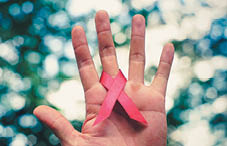
In the 1980s, during the early panic surrounding the AIDS epidemic, states began to pass a new type of legislation. These laws made it illegal, often felonious, to knowingly expose another person to the human immunodeficiency virus (HIV). Many reflected the oft-irrational fears of HIV that were prevalent at the time. Today, in many states, people with the virus can be prosecuted for such acts as spitting, even though HIV cannot be transmitted through saliva.
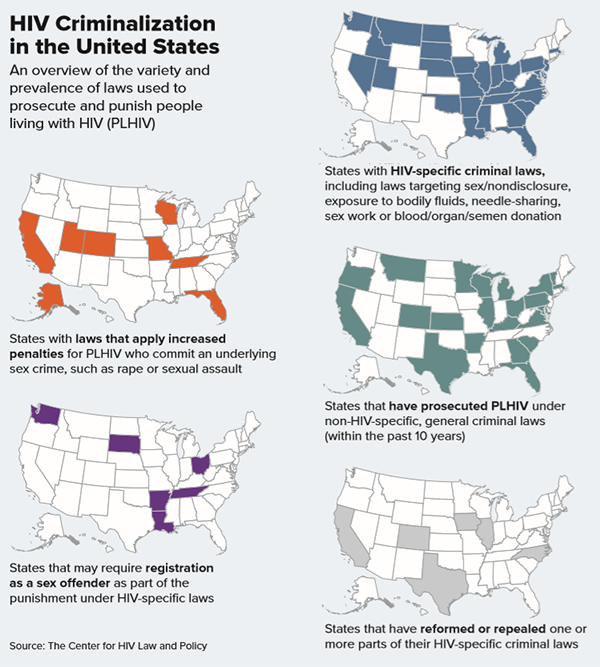
These laws, often called "HIV exposure" or "HIV criminalization" laws, spread throughout the 1990s and early 2000s. There are now 34 states and two U.S. territories where a variety of acts—from having sex or sharing needles without disclosing one's status to exposing others to bodily fluids—are illegal if a person has been diagnosed with HIV. These laws rarely take into account the factors that affect actual transmission risk, such as condom use or adherence to antiretroviral therapy. Tracking arrests, prosecutions and convictions under HIV-related laws is a challenge because there is no central repository or system for reporting those data, but the Center for HIV Law and Policy and the Positive Justice Project documented at least 363 arrests and prosecutions between 2008 and May 2018. Research suggests these laws are enforced more often against marginalized populations, including people of color and sex workers. At the same time, there is no evidence that they reduce HIV transmission or make people more likely to disclose their serostatus or get tested.
"In general, the literature is reaching the conclusion that these laws aren't really helping," says experimental psychologist Timothy Heckman, PhD, associate dean for research at the University of Georgia's College of Public Health. "If anything, they're hurting."
While the tide hasn't yet gone out on HIV exposure laws, there are signs of an impending sea change. Over the past decade, multiple professional organizations, including APA, have opposed the laws. A draft federal bill, the REPEAL HIV Discrimination Act (H.R. 1739), has been introduced over the past several congressional sessions. Though the bill has not yet made it to a vote in the House or Senate, it would incentivize states to reform HIV criminalization laws. Meanwhile, California, Colorado, Iowa and North Carolina have recently revised their laws and statutes related to HIV.
Amid these steps, though, advocates debate what ideal reform looks like: Is it enough to say, for example, that people whose viral load is undetectable should be exempt? Or does linking laws to viral levels simply further stigmatize those who can't access treatment?
Criminal exposure
HIV-related laws differ by state. According to the legal and policy advocacy group the Center for HIV Law and Policy, some states require disclosure before consensual sex. Others enhance penalties for sex work if the worker is HIV-positive or criminalize needle-sharing by people living with HIV. Still others target behaviors with little to no risk of transmission, including spitting or biting.
On their face, laws requiring the disclosure of HIV-positive status before risky activities might seem like a reasonable way to reduce transmission. But there is good evidence that the laws aren't accomplishing that goal—and evidence that they might be undermining it.
A 2017 study, conducted by a team of researchers from the Centers for Disease Control and Prevention led by Patricia Sweeney, MPH, compared the relationship between the existence of HIV criminalization laws in a state and the rate of diagnosis of HIV and AIDS through 2010. That year, 30 states had laws criminalizing HIV exposure. The researchers found no relationship between the laws and HIV diagnosis rates ( AIDS , Vol. 31, No. 10, 2017 opens in new window ).
In many cases, people at risk for HIV may not even know the laws exist. A 2012 study led by Medical College of Wisconsin researcher Carol Galletly, JD, PhD, surveyed 479 HIV-positive New Jersey residents recruited through local organizations. Only 51 percent were aware that the state criminalized sexual penetration without disclosing one's HIV-positive status ( American Journal of Public Health , Vol. 102, No. 11, 2012 opens in new window ).
Another study, led by University of Minnesota associate professor of epidemiology and community health Keith Horvath, PhD, found that across 16 states, 75 percent of men who have sex with men (whether HIV-positive or not) were unaware of their state laws ( AIDS and Behavior , Vol. 21, No. 1, 2017 opens in new window ).
Do these laws backfire?
But even awareness of such laws doesn't seem to translate to the kind of results policymakers might have been hoping for when they put HIV criminal exposure laws on the books. In fact, the laws may actually increase risky sexual behavior among people at risk for HIV. Horvath's study found that participants who believed their state had an HIV exposure law (whether it really did or not) engaged in riskier sexual behavior than those who believed their state did not have a law. It's possible, the researchers hypothesize, that these people took comfort in the idea that the laws would protect them from contracting HIV.
Unfortunately, that comfort is probably false. Multiple studies, including the 2012 New Jersey survey, have found that HIV exposure laws don't increase disclosure or abstinence, or modify any risk behavior among people with HIV or people at risk of contracting the virus. One study that surveyed people at high risk of HIV because of sexual behavior or intravenous drug use found that most believed it was morally wrong to expose someone unknowingly to the virus but that their beliefs about the legality of doing so did not affect their self-reported behaviors ( Arizona State Law Journal , 2007 opens in new window ). A 2006 study on disclosure before sexopens in new window found no link between living in a state with HIV criminalization laws and whether HIV-positive people actually shared their status with their partners ( AIDS and Behavior , Vol. 10, No. 5, 2006). opens in new window
In fact, many experts worry that HIV exposure laws could backfire. HIV-specific laws might generally increase HIV stigma by subtly dissuading people at risk from discussing their sexual behavior with their doctors because the doctor's notes might later be subpoenaed, says Maya Kesler, PhD, MSc, a postdoctoral fellow at the University of Toronto. Or the laws might engender a sort of self-defeating logic that prompts people not to get tested because knowledge can make them legally culpable.
"Somebody who does not know their HIV status and is positive and is likely very infectious cannot be prosecuted, because they don't know their status," says psychologist Perry Halkitis, PhD, MPH, dean of the Rutgers University School of Public Health, who researches health disparities affecting gay men. "[Yet] the positive person who knows their status, who is doing the right thing, who is probably in care and in treatment, can get prosecuted. It makes no sense."
There is little evidence on whether HIV laws do in fact influence real-world testing decisions. But in one small study, Kesler and her colleagues reported that of 150 HIV-negative men who had sex with men who were interviewed at a primary-care clinic in Toronto, 7 percent said concerns over prosecution would make them less likely to be tested ( PLOS ONE , Vol 13, No. 2, 2018 opens in new window ). Seven percent sounds small, Kesler says, but it could mean as much as an 18.5-percent increase in community HIV transmission.
"When you put it at the community level, an 18.5-percent increase is very high and could have drastic effects," she says.
HIV exposure laws may have even grimmer effects than the research lets on. In many cases, the studies draw from relatively well-off populations, like the educated gay men with access to medical treatment in Kesler's study. In contrast, the people most affected by the laws are often hard-to-contact marginalized populations, says Kate Boulton, JD, an attorney with the Center for HIV Law and Policy.
"Sex workers are among the most disproportionately harmed," Boulton says. That's based on a 2015 report from the Williams Institute, a think tank at the University of California, Los Angeles, devoted to researching sexual orientation and gender identity law, and the California HIV/AIDS Research Program. The report examined the 800 cases of people who came into contact with the justice system because of HIV-related laws in California between 1988 and 2014 ( Williams Institute , December 2015 opens in new window ). Of those cases, 95 percent involved sex workers or people accused of sex work. Black and Latino people accounted for 67 percent of cases, despite making up only 51 percent of people living with HIV in California. The report also found that 21 percent of people who had contact with the justice system over their HIV status were black women, while this group makes up only 4 percent of people with HIV in California.
A separate report from the Williams Institute that focused on Georgia found complex racial disparities in the 571 arrests between 1988 and September 2017 in that state ( Williams Institute , January 2018 opens in new window ). The most disproportionately affected group in Georgia was white women, who accounted for 11 percent of HIV-related arrests while making up only 3 percent of people living with HIV in the state. Black men and women were more likely to be arrested for HIV-related offenses than white men or women, the researchers found, but not out of proportion to the rate of black men and women with HIV in the state. However, black men were twice as likely to be convicted of the HIV-related offense as white men.
Race and sexuality also play a role in the court of public opinion, says Kenyon Farrow, a senior editor at the HIV-focused website The Body. In one illustrative case in 2013, Farrow says, police said (and the media reported) that a Missouri man named David Mangum was arrested on HIV-related charges that he may have exposed more than 300 men to the virus. Ultimately, Mangum told a judge under oath that his real number of sex partners was closer to 12, and he was convicted on just two counts of exposure. In another Missouri case, that of college student Michael Johnson, prosecutors described the size of Johnson's penis in graphic detail and showed screenshots of videos that included his genitalia.
"So much of what the prosecutor did in the Johnson case was to play on fears of black male sexuality and black male genitalia because his accusers were almost all white," Farrow says.
There is growing awareness that HIV exposure laws are a problem, Boulton says. In 2014, the Department of Justice released a best-practices guide urging that laws be updated to consider condom usage, pre-exposure prophylaxis and antiretroviral therapies, the latter of which can make transmission impossible. An APA resolutionopens in new window adopted in 2016 opposes HIV exposure laws. Other organizations that have issued statements against the laws include the Association of Nurses in AIDS Care, the HIV Medicine Association, and the National Alliance of State and Territorial AIDS Directors. In March, an op-ed by researchers from George Mason University and Columbia University in The New England Journal of Medicine called for the continued repeal or amendment of the laws ( NEJM , Vol. 378, 2018 opens in new window ).
Four states have reformed their HIV exposure laws in the past five years. In 2014, Iowa changed a law that had imposed up to 25 years in prison and a spot on the sex offender registry for nondisclosure of HIV-positive status to a sexual partner, even with condom use and no actual transmission. Under the revised law, other transmittable diseases such as hepatitis are included—HIV is not singled out—and penalties are tiered based on whether the person took precautions to prevent transmission. In 2016, Colorado eliminated felony offenses for engaging in sex work if HIV-positive and reduced some sentencing enhancements for sexual assault by an HIV-positive person. In 2017, California reduced its HIV transmission penalties from felonies to misdemeanors. And effective this year, North Carolina updated the HIV control measures in its administrative code to take into account whether an HIV-positive person is virally suppressed at the time of sexual intercourse.
That last change is one that advocates against HIV exposure laws are watching closely. One common charge against the laws is that they don't take into account antiretroviral therapies that can suppress the virus so that it is undetectable in the blood, and thus untransmittable. Thus, a potential emerging solution is to modernize laws so that they don't prosecute people who are virally suppressed. There are reasons to be cautious about that strategy, though, says Kesler.
"We need to be careful and have new research looking at people who can't obtain an undetectable viral load," she says. "We don't want to increase stigma within that group of individuals."
Or leave them out in the cold in terms of criminal prosecution, Boulton adds. The people most disproportionately affected by HIV criminalization, including sex workers, are also those least likely to access the care they need to achieve "undetectable" status, she says. That means the most vulnerable populations could still be the most in danger of prosecution under revised laws.
More work ahead
Much more research is needed into how laws are enforced on the ground, Boulton says. There's also a dearth of good qualitative research on the experiences of people living under these laws and how the laws play into decisions about testing, says Heckman. For example, one question that no one has studied, he says, is whether HIV criminalization laws affect people's use of home testing kits for HIV, which are available over the counter and allow people to learn their serostatus without it becoming part of their medical record.
"Psychologists are uniquely positioned to conduct the behavioral and social science research needed in this area," says University of South Florida psychologist Tiffany Chenneville, PhD, chair of APA's Committee on Psychology and AIDS. "Different disciplines within psychology can provide insight into issues of relevance to discussions about HIV criminalization laws. For example, social psychologists may study the impact of HIV criminalization laws on HIV-related stigma and discrimination, while forensic psychologists may study the impact of HIV-related stigma on jurors' perceptions in cases involving charges related to existing HIV criminalization laws."
In a 2017 article in APA's Psychology and AIDS Exchange Newsletter, Heckman outlined other suggestions for psychologists researching HIV-related laws. Health psychologists might examine disparities in post- and pre-exposure prophylaxis use, while cognitive psychologists could investigate the heuristics and biases involved in making decisions about disclosure of HIV-positive status in light of HIV exposure laws. Addiction specialists might study the impact of HIV exposure laws on intravenous drug users, while industrial/organizational psychologists might focus on if and how people living with HIV disclose their serostatus at work (Psychology and AIDS Exchange Newsletter, March 2017).
"I think the question we need to be asking is ‘Why are HIV transmissions still happening at such high rates in the black and Latino communities in the richest country in the world?' Why is it that people with HIV still struggle to have access to treatment in this country?" Farrow says. "We need to put our focus on making sure that people have access to prevention and to treatment rather than on creating systems that stigmatize people with the virus and then ultimately criminalize them."
There's work to be done on the clinical side as well, Halkitis says. "Clinicians need to be prepared to support their HIV-positive or at-risk clients through decisions about testing and treatment in the face of pervasive stigma. HIV criminalization laws are just one way that stigma persists."
"It's more than just about HIV," he says. "It's about the various ‘-isms' and the ‘othering' perpetuated by our society."
To read the APA resolution on HIV criminalization laws, go to Resolution Opposing HIV Criminalization (PDF, 61KB)opens in new window .