The first-ever device to treat pediatric attention-deficit hyperactivity disorder (ADHD) received clearance from the U.S. Food and Drug Administration (FDA) in April. The external Trigeminal Nerve Stimulation (eTNS) system offers an alternative treatment option for more than 6 million American children with an ADHD diagnosis.
The current standard of treatment for the disorder involves a combination of medication—typically a stimulant such as an amphetamine—and behavioral therapy, depending on a child’s age, say clinical practice guidelinesopens in new window from the American Academy of Pediatrics (AAP).
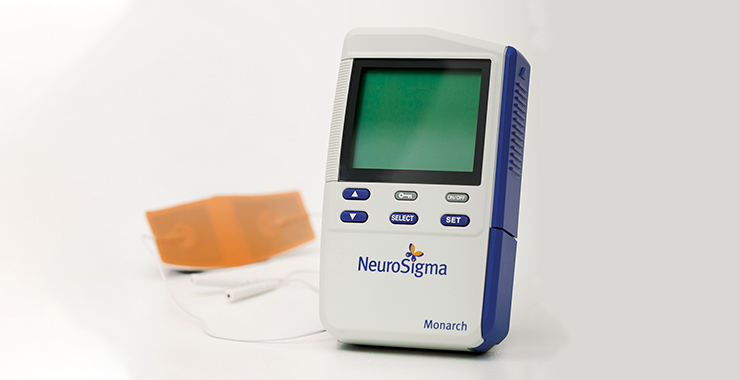
The eTNS system, designated for use in children ages 7 to 12 under the supervision of a caregiver, is a small electronic device that delivers low-level stimulation to the brain’s trigeminal nerve. Each night, electrodes applied to the forehead deliver eight hours of treatment while a child sleeps. Already studied as a potential aid for depression, epilepsy and post-traumatic stress disorder in adults, the eTNS system has now been shown to produce a statistically significant reduction in ADHD symptoms in a clinical trial (Journal of the American Academy of Child & Adolescent Psychiatryopens in new window, Vol. 58, No. 4, 2019).
"This new device offers a safe, nondrug option for treatment of ADHD in pediatric patients through the use of mild nerve stimulation, a first of its kind," says Carlos Peña, PhD, director of the FDA’s Division of Neurological and Physical Medicine Devices.
Research support
The FDA provided marketing authorization for the prescription-only device to the biotechnology company NeuroSigmaopens in new window through its "de novo" premarket review pathway, which is used for new low- to moderate-risk devices with no existing market equivalent. Researchers from the University of California, Los Angeles (UCLA), including one clinical and two educational psychologists, conducted the clinical trial with 62 children, ages 8 to 12, who had moderate to severe ADHD. Each participant received four weeks of at-home treatment using either the eTNS system or a placebo device.
Researchers administered two assessments on a weekly basis: the ADHD-IV Rating Scale (ADHD-RS), a parent questionnaire that evaluates a child’s behavior, and the Clinical Global Impressions (CGI) scale, which measures symptom severity.
Compared with the placebo group, children who used the eTNS device showed statistically significant improvements in ADHD symptoms, with average ADHD-RS scores dropping about 31 percent. Children in the placebo group experienced an average decrease of about 18 percent. Slightly over half of participants in the intervention group showed improvement that was clinically meaningful, defined as a score of "much improved" or "very much improved" on the CGI Improvement scale.
The research team also collected electroencephalography (EEG) data before and after administering treatment. Children who used the eTNS system displayed increased activity in the middle and right frontal regions of the brain, which help regulate attention and emotions.
In terms of treatment effect size, the behavioral changes observed are similar to those rendered by nonstimulant medications for ADHD, such as atomoxetine and guanfacine, but less pronounced than the effects of stimulant medications, says psychologist Sandra Loo, PhD, of UCLA’s Semel Institute for Neuroscience and Human Behavioropens in new window, a co-author of the clinical trial.
"There’s a great demand for nonpharmacological ADHD treatments, so we’re excited about potentially offering empirically supported alternatives," she says, adding that around 30% of children taking stimulants for ADHD experience undesirable side effects—such as weight loss or insomnia—or do not respond to the drugs.
In the present study, more than half of the children using eTNS experienced side effects including fatigue, headache and increased appetite. Compared with the control group, these patients also showed significant changes in weight and pulse, with an average gain of about one kilogram and an increase of 10 beats per minute after four weeks, but no children withdrew from the study due to adverse side effects.
"This study shows that the eTNS device is relatively safe, efficacious and has a lot of promise," says Ronald T. Brown, PhD, a child psychologist and dean of the School of Health Sciences at the University of Nevada, Las Vegas, who was not involved in the clinical trial. "But these are preliminary results with a small number of participants that raise a number of additional questions."
For example, Brown, who was part of the AAP committee that developed the latest treatment guidelines for ADHD, says psychologists need more information about how the new device compares with traditional ADHD treatments, such as stimulant medications and behavior management. He also says it’s important to study the durability of the observed effects and whether improvements persist after a limited course of treatment.
Future studies
Loo says her team will conduct more research to better understand the device’s utility, including replicating the current findings in a larger sample, extending the participant age range, and assessing the long-term effects of eTNS treatment on ADHD symptoms and brain health. She also wants to delve further into the neural mechanisms underlying the device’s effectiveness, which are thought to involve activation of the brain’s frontobasal ganglia network, a system involved in inhibitory control and the suppression of motor behaviors.
Her team is performing additional analyses of their data to better understand what factors might predict which patients respond to the eTNS system. They also hope to explore the root of the unexplained increases in weight and pulse observed in the study. Ultimately, says Brown, clinicians are likely to prescribe eTNS treatment if they believe it will improve their patients’ functional outcomes—not just reduce ADHD symptoms.
"It’s key for us to understand whether this device has effects on academic achievement, behaviors at home and school, and the way children socialize with their peers," he says.