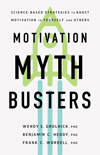

The scourge of misinformation touches every aspect of the field of psychology. Clinicians work with patients who have been subsumed by harmful conspiracy theories. Educators are dealing with disinformation propagated by generative artificial intelligence. Researchers are leading the effort to find science-based tools to lessen its harmful effects. I’m sure most of you have seen the harm it is doing to our institutions and communities. As you’ll read in This election year, fighting misinformation is messier and more important than ever, the fight against misinformation is one of the top trends facing the field in 2024, especially with U.S. elections this fall.
I’m proud that the U.S. Centers for Disease Control and Prevention asked APA to lead an international effort to find consensus on the latest psychological research about both the causes and solutions to this ongoing problem. A team of leading psychological scientists spent the better part of 2023 delving through dozens of research studies on misinformation to produce a series of recommendations for policymakers, social media companies, and mental health providers.
The researchers found it is important to avoid repeating misinformation, the power of “debunking” inaccuracies repeatedly, and the importance of leveraging trusted sources to share accurate information. As this is a behavioral issue, it is incumbent on each of us as psychologists to know what the research says so we can be a part of the solution. If we can become literate in the science of stopping misinformation, we can help people in the spheres we operate in—whether that’s in our practices, our labs, our communities, or our families.
APA is now working to share these recommendations widely. We are also asking social media companies to reduce the spread of misinformation and are pushing for new federal funding to find more ways to counter it.
This work builds on the partnerships we’ve built to empower other groups to use our science. For example, we hosted a briefing for journalists with the National Press Club on how to combat misinformation. We’ve joined the News Literacy Project to help explain why people fall for lies and conspiracies. And we’ve worked to share our resources with more than 90 organizations that are part of the Coalition for Trust in Health and Science.
Please take a moment to read the article on misinformation in this issue, including the eight key recommendations from this new report. I’m hopeful that with this latest information, our field will continue to make a positive impact on the world.
I hope you had a wonderful holiday season and wish you a healthy start to the new year. Stay inspired.