Timothy Heckman, PhD
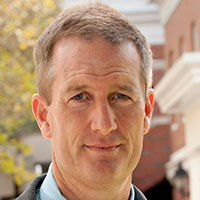 As the editor of the Journal of Rural Mental Health, Dr. Timothy Heckman plans to feature cutting-edge research of interest to rural mental health researchers and practitioners, both domestic and global.



As the editor of the Journal of Rural Mental Health, Dr. Timothy Heckman plans to feature cutting-edge research of interest to rural mental health researchers and practitioners, both domestic and global.
Tell us a bit about your background: What is your area of research? What is your most recent journal-editing experience?
I am an experimental health psychologist by training. I received a BA in psychology from Penn State, a masters in experimental psychology from the University of Hartford, and a PhD in experimental psychology from the University of Vermont.
From 1993 to 2000, I served on the faculty of the Center for AIDS Intervention Research (CAIR) in the Department of Psychiatry and Behavioral Medicine at the Medical College of Wisconsin in Milwaukee. From 2000 to 2012, I was a faculty member in the Department of Psychology at Ohio University and the Department of Geriatric Medicine/Gerontology in the Ohio University College of Osteopathic Medicine.
I joined the University of Georgia's College of Public Health as Associate Dean for Research and Professor of Health Promotion and Behavior in 2012.
Over the past two decades, I have served on the editorial boards of the Journal of Rural Health, Health Psychology, and AIDS and Behavior.
I currently serve as an associate editor for Behavioral Medicine.
Briefly, what are your main priorities? For example, how will you grow readership, what type of scholarship would you like to see in the journal, and what kind of content are you hoping to attract?
A major priority of the journal will be the continued dissemination of reports that describe cutting-edge research, policy development and implementation, and practice-oriented commentaries of interest to rural mental health researchers and practitioners.
These reports will take a number of forms, such as original research articles, brief reports, review articles, meta-analyses, program descriptions, and letters to the editor.
In short, if anyone in the rural mental health community believes that he or she can make an important contribution to the field, we want the journal to serve as an outlet for their ideas and experiences.
Also, while the journal has focused largely on rural mental health domestically, the journal looks forward to receiving manuscript submissions from across the globe.
Why is this journal important for the field? What is its relevance to society/public health? What are the hot issues in your area right now?
Rural areas account for 25% of our nation's population and 90% of its land mass. Developing effective and contextualized mental health treatments — and delivering them to so many people across such a vast amount of area — is a truly daunting task.
The Journal of Rural Mental Health will always be the "go to" journal for reports related to rural mental health. Over the past several decades, our nation has made great strides in improving mental health in rural areas, but much work remains to be done and it will require contributions from individuals in psychology, medicine, social work, nursing, public health, and many other fields.
Priority issues on which the journal will focus include:
What challenges, if any, lie ahead for the field?
Many federal funders of mental health research (e.g., the NIH) are requiring prospective researchers to be extremely innovative. But there are potential pitfalls in this requirement.
An increasing amount of research investigating ways to diagnose and treat mental health disorders incorporates technologies such as smartphones, the internet, wearable devices, virtual reality, and many other systems. These technologies oftentimes require highly-trained professionals and sophisticated technical supports.
There is a concern that it will be difficult to scale-up these types of highly sophisticated treatments in rural areas; many rural-based organizations (e.g., community mental health centers) have minimal staff and too few resources.
Relatedly, some funders now require mental health researchers to incorporate biomarkers and physiologic/immunologic outcomes into their projects, such as STD markers and CD4 counts.
While these assessment methodologies are possible in urban areas, it is very difficult (logistically and financially) to use these methods in rural areas. This is particularly true if rural mental health researchers' samples are scattered across an entire state or several states.
The concern exists that these types of research requirements will increasingly marginalize rural mental health researchers, but these challenges also represent opportunities.
Rural mental health researchers will need to develop innovative methodologies to ensure that rural residents are always included in initiatives seeking to better understand and improve mental health.
Editor Spotlight features interviews with the newly-appointed editors of APA Journals.
APA Journals produces an array of scholarly journals that cover the spectrum of modern psychology and feature the latest research in the field.
Journal of Rural Mental Health publishes articles on rural mental health research, practice, and policy within the United States and internationally.