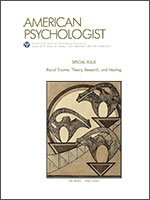
 Growing research and clinical literatures demonstrate that People of Color and Indigenous individuals' (POCI) experiences with racism, discrimination and microaggressions affect their health and sense of wellbeing. Racial trauma, a form of race-based stress, refers to POCI's reactions to dangerous events and real or perceived experiences of racial discrimination.
The articles in a special issue of American Psychologistopens in new window introduce new conceptual approaches, research, and healing models to address the complex issues related to racial trauma.
Guest editors Drs. Lillian Comas-Díaz, Gordon Hall, and Helen Neville shed light on the significance and practical implications of articles within the issue.
What is the special issue about?
This special issue is about racial trauma — the events of danger related to real or perceived experience of racial discrimination, threats of harm and injury, humiliating and shaming events, in addition to witnessing harm to other people of color due of real or perceived racism
What is the significance of the issue?
This topic is significant because growing research and clinical literature attests that POCI experiences with racism, discrimination, and microaggressions affect their mental and physical health.
The current presence of racial discrimination and a recent raise in hate crimes, highlights the importance of studying the consequences of racial discrimination and also the factors promoting healing from racial trauma associated with these personal, vicarious, and collective experiences.
How did the issue come about?
As guest co-editors we aimed to identify newer approaches to conceptualize and empirically examine the expression of racial trauma and factors promoting healing from individual, collective, and historical racial injuries.
Tell us about a few key takeaways.
Although similar to PTSD in symptoms such as hyper-vigilance to threat, flashbacks, nightmares, avoidance, suspiciousness, and somatic expressions such as headaches, heart palpitations, among others, racial trauma differs from PTSD in that it involves ongoing injuries due to the exposure (direct and/or vicarious) and re-exposure to race-based stress.
In addition to psychological and physical effects, racial trauma causes hidden wounds to individuals,groups, and communities.
Racial trauma occurs in a sociopolitical context and an ongoing basis.
What are some practical implications of the articles featured in the issue?
Healing approaches include psychotherapy, group counseling, community methods and ethno-political interventions. Healing approaches include intersectional frameworks such as HEART — Healing Ethno and Racial Trauma, Racial Encounter Coping Appraisal and Socialization Theory (RECAST)
Microinterventions (short term actions) address microaggressions by mobilizing targets, allies, and bystanders to confront and educate perpetrators. Strategic goals of microinterventions are to make the invisible visible, disarm the microaggression, educate the perpetrator, and seek external reinforcement or support.
It is important to draw on the resilience of individuals and groups resilience to promote intra-individual and interpersonal healing and wellness.
Special Issue
- View the table of contents and abstracts on APA PsycNETopens in new window
- Purchase the special issue
PDF Format ($24.95)