

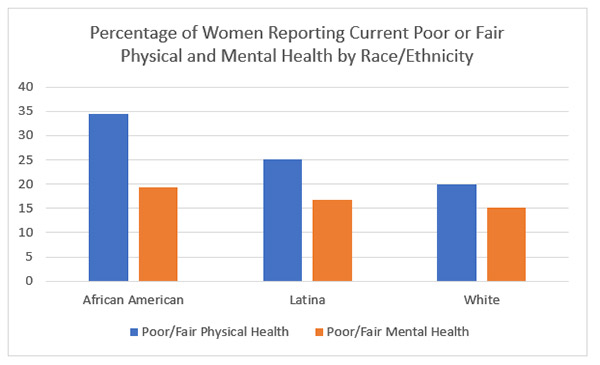
 Sexual violence has been linked to numerous long-term health and mental health consequences. Female survivors of sexual violence are more likely than other women to experience psychological distress, depression, PTSD, and suicidal ideation as well as chronic health conditions and poor physical health following their experiences of sexual assault. However, the social, economic, and health burdens of sexual violence do not affect all women equally.
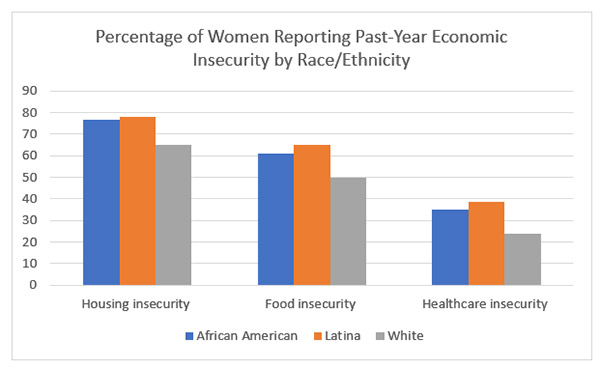
Income and education are important social determinants of population health that have also been broadly associated with poor physical and mental health outcomes following sexual violence. Yet survivors of sexual violence often experience other types of economic insecurity as well as financial barriers to accessing healthcare. This could feasibly affect their physical and mental health.
An article in Psychology of Violenceopens in new window by Lisa Fedina, Charlotte Bright, Rebecca Campbell, Andre Rosay, and Melissa Edmondson Smith explored the salience of economic factors related to housing, food and nutrition, and health care in the physical and mental health of survivors of sexual assault.
Using data from the National Intimate Partner and Sexual Violence Survey, the researchers explored the relationships between sexual assault experiences, socioeconomic factors, and self-rated physical and mental health status among African American, Latina, and White non-Hispanic women. This research highlights the ways in which economic insecurity uniquely affects these groups of women.
Their results show that for African American women, financial barriers to affordable health care predicted worse physical and mental health. Racial disparities in health have been partly attributed to inequities in the availability, affordability, and quality of health care. Inequities in insurance coverage and insurance loss disproportionately affecting African Americans may have especially negative effects on the health and wellbeing of sexual assault survivors. The results from this study suggest that at a minimum, unaffordable health care worsens physical and mental health among African American women survivors of sexual assault and may act as barrier to getting needed treatment.
For Latina women, lower incomes predicted worse physical and mental health. Inequalities in housing, food and nutrition, and health care are important issues facing Latinx communities in the United States, which point to unmeasured factors affecting health; these could include immigration status, ethnic identity, acculturation, and help-seeking behaviors. More culturally informed research is needed on the experiences of Latina survivors of sexual assault.
For White women, food insecurity and housing insecurity were statistically significant predictors of physical and mental health. These socioeconomic factors have been broadly linked to poor health outcomes in the general population. However, the need to decide between paying for food, housing, health care, and other costs may prevent survivors from receiving urgently needed medical and mental health treatment.
Findings from this study highlight widespread economic insecurity facing sexual assault survivors and its significant relationship to physical and mental health. More research is needed to unpack the ways in which structural inequalities in housing, education, employment, and healthcare due to racism and discrimination shape health outcomes among survivors of sexual assault.
Note: This article is in the Social Psychology and Social Processes topic area. View more articles in the Social Psychology and Social Processes topic area.