

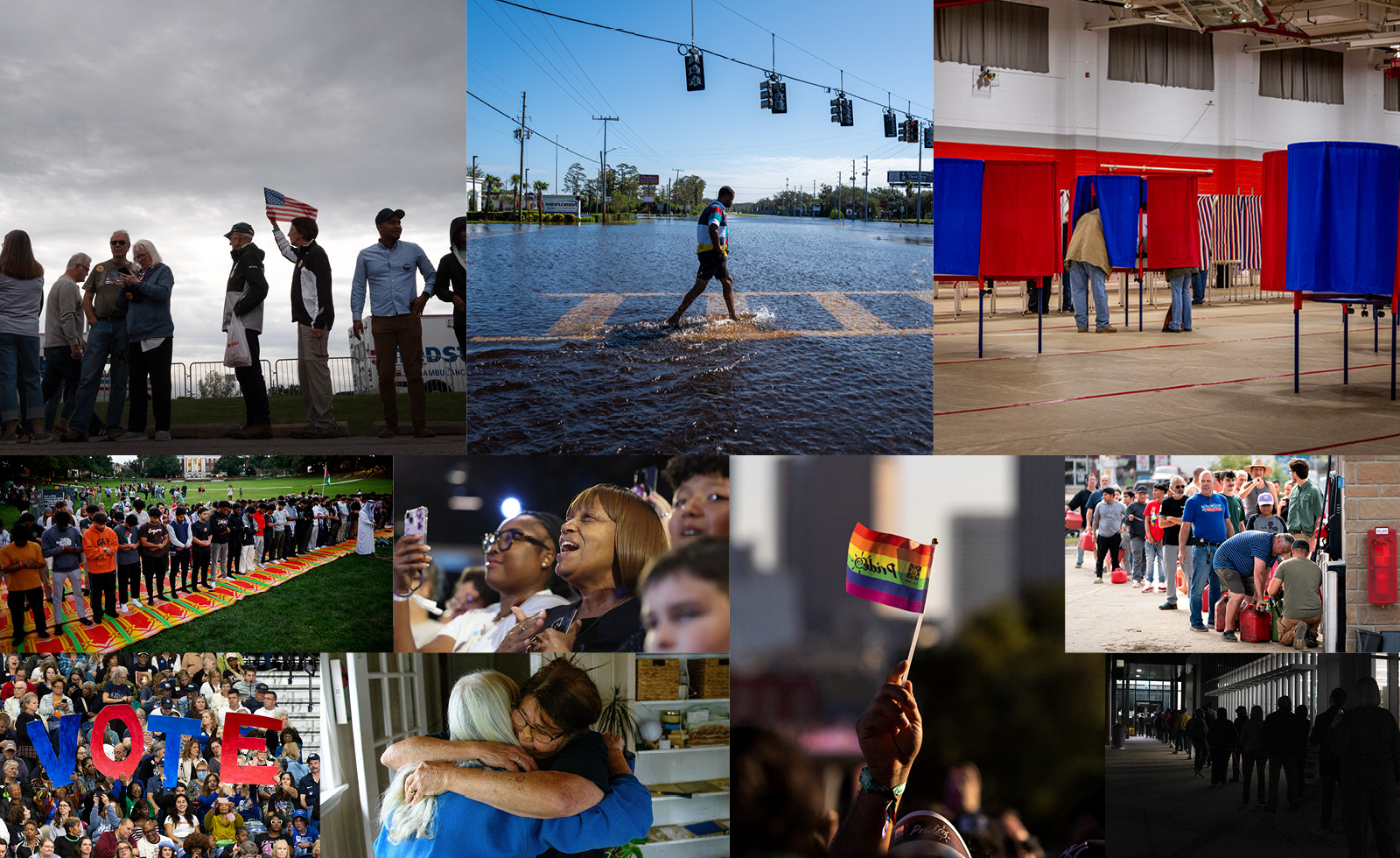
APA’s latest Stress in America™ poll revealed a populace dealing with multiple stressors as the country braces for the 2024 U.S. presidential election.
In the new survey, conducted by The Harris Poll on behalf of APA, the most commonly reported sources of stress centered on the election or were political in nature.
More than 7 in 10 adults reported the future of our nation (77%) as a significant source of stress in their lives, making it the most common source of significant stress in this year’s survey. The economy was the second most common, with 73% of adults having reported it as a significant source of stress. The 2024 U.S. presidential election followed closely at 69%.
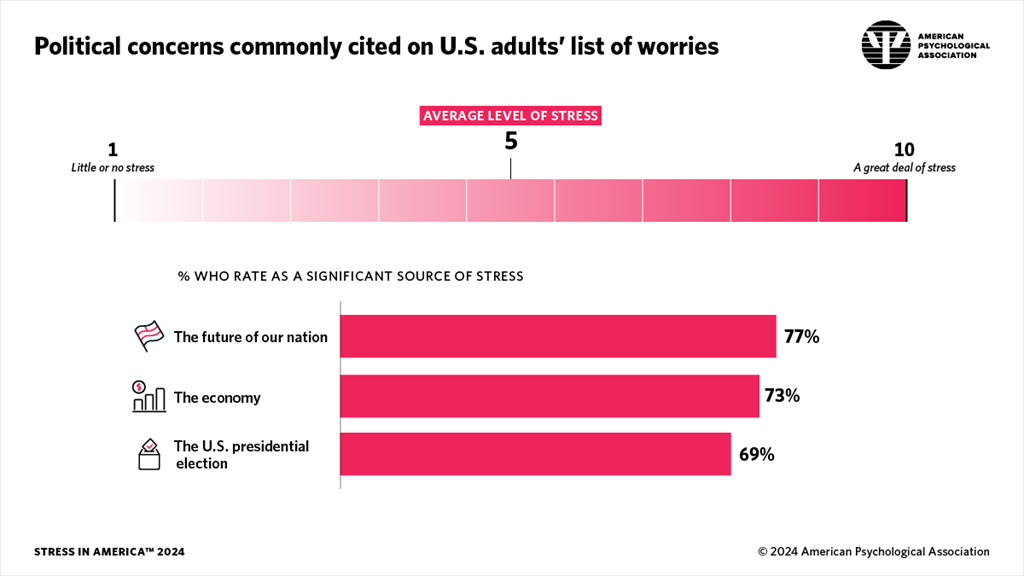
The overall average reported level of stress this year was 5 out of 10 1, which is similar to previous years. In addition to the top political stressors, societal stressors cited by many adults as significant sources of stress included
- U.S. politics (62%)
- health care (55%)
- violence and crime (54%)
- the environment (51%)
- global tension/conflict (51%)
- gun laws and regulations (49%)
When asked to rate their stress about specific news, topics and events, many adults said housing costs (65%), mass shootings (63%), the spread of false news (62%), and social divisiveness in our nation (60%) were also significant sources of stress in their lives.
1 Respondents were asked to rate their average level of stress during the past month on a scale of 1 to 10, where 1 meant they had “little or no stress” and 10 meant they had “a great deal of stress.”
Postelection survey
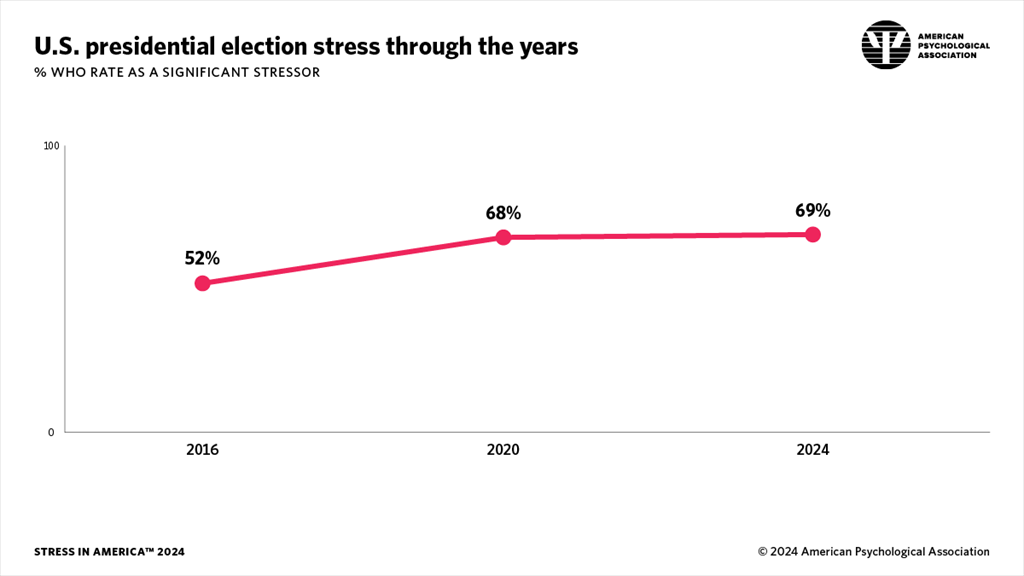
Compared with the previous two presidential elections, stress related to the 2024 election was slightly higher than in 2020 (69% vs. 68%) but significantly higher than in 2016 (52%). Stress related to the current election appeared to be driven, in part, by the potential consequences from the election results.
The concern about dire consequences is evidenced by two data points from this year’s survey:
- More than 7 in 10 adults (72%) were worried the election results could lead to violence.
- More than half of adults (56%) said they believe the 2024 presidential election could be the end of democracy in the U.S.
A strained political climate
Stress in America 2024: A Nation in Political Turmoil reveals a country in the grip of existential stress in the run up to Election Day. Around 2 in 5 adults reported the state of the nation has made them consider moving to a different country (41%) and the political environment in their state has made them consider moving to a different state (39%). In addition, nearly two-thirds of adults (64%) felt as though their rights are under attack.
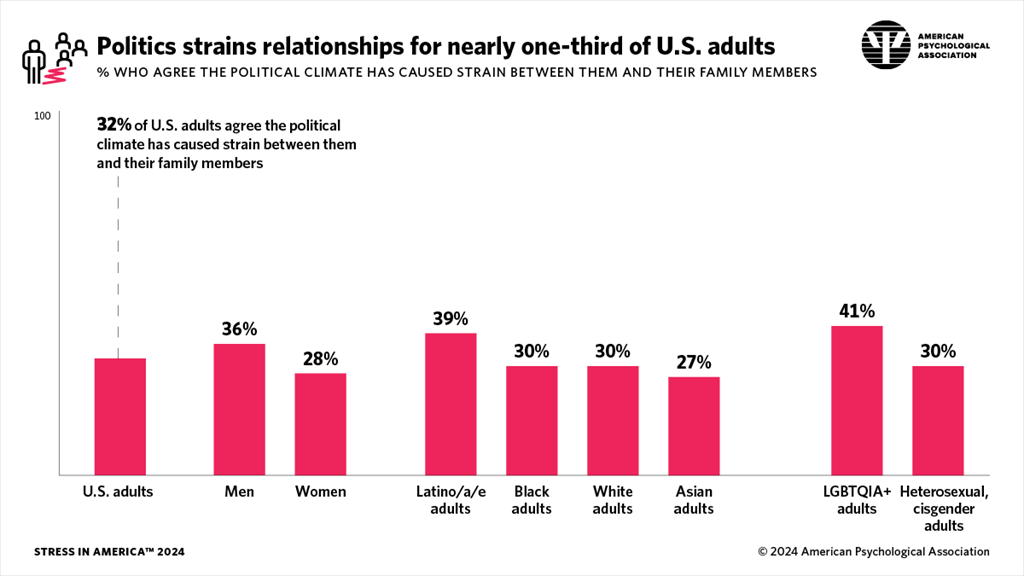
A strong majority (82%) were worried that people may be basing their values and opinions on false or inaccurate information. Furthermore, around a third of adults (32%) reported the political climate has caused strain between them and their family members, and 3 in 10 (30%) said they limit their time with family because they don’t share the same values.
Hope, resilience, and determination
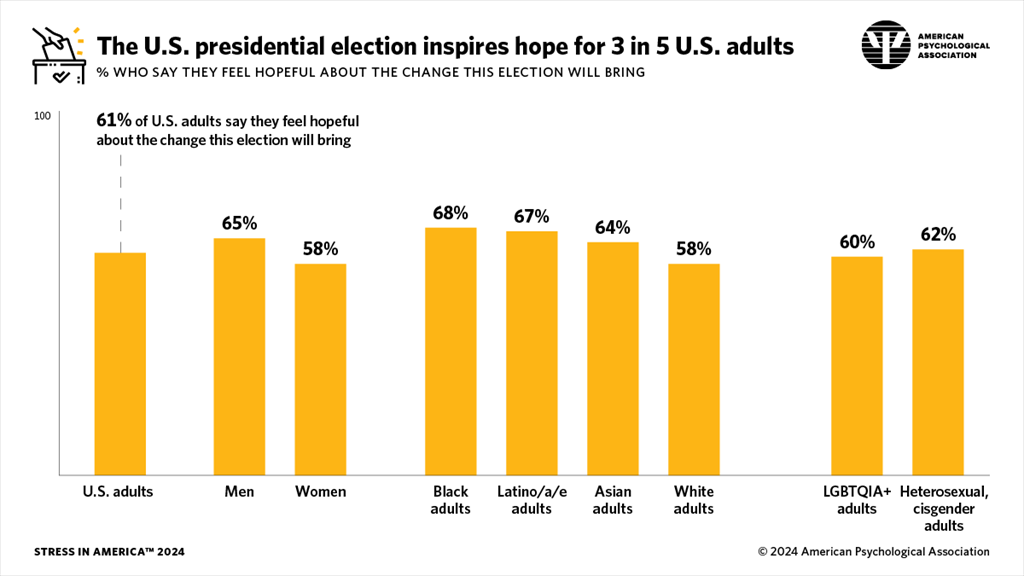
Despite their concerns about our nation’s future, this year’s survey revealed determination and resilience among adults. Approximately 3 in 5 adults reported feeling hopeful about the change this election is going to bring (61%) and that this election will lead to a more inclusive society (59%).
Findings also suggest that the current political climate has motivated positive change through individual actions. More than three-quarters of adults (77%) said they intend to vote in the presidential election, and half of adults (51%) said they feel more compelled to volunteer or support causes they value as a result of the state of our nation—significantly higher than the 45% who said so in 2019 prior to the 2020 presidential election.
Methodology
The 2024 Stress in America™ survey was conducted online within the United States by The Harris Poll on behalf of the American Psychological Association between August 1–23, 2024, among 3,305 adults ages 18+ who reside in the U.S. that serves as a nationally representative sample. In addition, oversamples were collected to allow for subgroup analysis by racial/ethnic groups. Sample sizes across the national and oversamples are as follows:
- 801 Black adults
- 855 Hispanic adults
- 804 Asian adults
Interviews were conducted in English and Spanish.
Data was weighted where necessary to reflect its proportions in the population based on the 2023 Current Population Survey by the U.S. Census Bureau, PEW NPORS 2023 (for frequency of internet use and political party affiliation) and PEW 2021 (for language use). Weighting variables included age by gender, race/ethnicity, education, region, household income, frequency of internet use, and political party affiliation to bring them in line with their actual proportions in the population. Hispanic adults were also weighted for acculturation, taking into account respondents’ household language as well as their ability to read and speak in English and Spanish. Country of origin (U.S./non-U.S.) was also included for Hispanic and Asian subgroups.
Respondents for this survey were selected from among those who have agreed to participate in Harris surveys. The sampling precision of Harris online polls is measured by using a Bayesian credible interval. For this study, the sample data is accurate to within ±2.2 percentage points using a 95% confidence level. This credible interval will be wider among subsets of the surveyed population of interest.
- The sample data for the Black sample is accurate to within ±4.6 percentage points using a 95% confidence level.
- The sample data for the Hispanic sample is accurate to within ±5.2 percentage points using a 95% confidence level.
- The sample data for the Asian sample is accurate to within ±4.6 percentage points using a 95% confidence level.
All sample surveys and polls, whether they use probability sampling, are subject to other multiple sources of error that are most often not possible to quantify or estimate, including, but not limited to coverage error, error associated with nonresponse, error associated with question wording and response options, and postsurvey weighting and adjustments.
Throughout the report, mentions of political parties are defined by those who self-identify as registered voters of the Democratic or Republican party.