

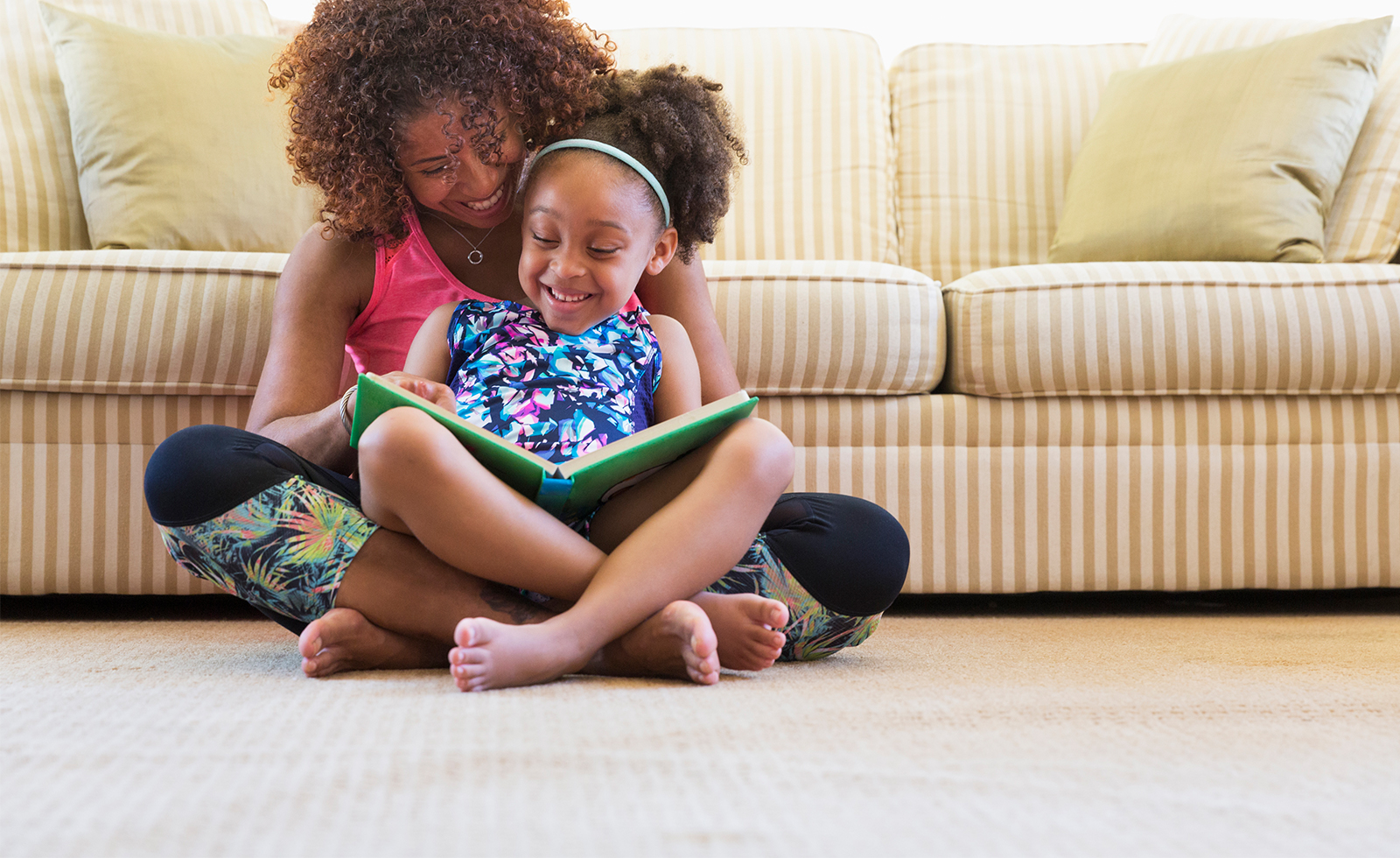

Why should I talk with my child about race and ethnicity?
Children's ideas about their own race and others’ races begin forming in early childhood.
- Children learn about racial and ethnic identity from their environments.
- For young children, parents and family members are the primary sources for learning about race and ethnicity.
- Children learn about race and ethnicity through direct messages, such as conversations about race, and through indirect messages, such as the images they see around them.
- Children are learning about race and ethnicity whether they talk about them or not. Even choosing not to directly discuss race communicates your values and beliefs.
Why are books a good tool for talking to my child about race and ethnicity?
- Books allow opportunities for your child to see themselves and develop their understanding of others.
- Culturally diverse books that are relevant to children’s lives can increase interest in reading, improve literacy skills, boost self-esteem and help to develop a positive sense of racial and ethnic identity.

How to Choose Appropriate Books
Choose Book Titles That Teach
Choose books with strong positive characters that look like your child and/or your family.
Choose books that explore your family’s racial or ethnic culture, and that share traditions, activities and important cultural stories.
Choose Age-appropriate Books
Picture books are ideal for children ages five and under. Consider books that introduce your child to diverse people, contexts and concepts. As your child grows older, simple books with complex storylines and interactive lessons can be interesting to them. During adolescence, teens may prefer books written from a teen’s perspective or in a teen’s voice. Select books that feature characters most relevant to children’s lives.
Search for culturally-relevant content that is authentic and realistic. Children gravitate to books in which they see a reflection of their own lives, experiences and contexts. Support children’s books by ethnic minority authors. Their books expose children to inclusive and authentic literature that foster an understanding of others.
Assess the Quality of the Books

Read the book cover and browse the pages before you check out the book. Children’s books should have a good storyline, and feature multidimensional characters living complex lives.

Look for negative stereotypes in the illustrations and in the text. Watch closely for one-dimensional characters who lack depth and never seem to learn or grow.

Common examples in popular literature are the token minority (often depicted as representative of their race), the faithful sidekick to a white protagonist and racist caricatures of ethnic minority groups.

Tips for Creating a Children’s Book Library
Choose a bright and clean space in your home for the children's library.

Store the books where your child will be able to access them on their own time.

Aim for diversity in your book collection to encourage curiosity and interest in reading.
Children who have grown up with a diverse range of books will be more likely to choose diverse books on their own.
How to Use the Books
- Read out loud and imitate separate characters to draw them into the story.
- Focus on the positive. Stop and make comments to assess their interest before turning a page.
- Ask questions about the characters and the story.
- Let your child set the pace while you guide and facilitate the conversation.
- Ask questions about the characters and the story. Listen to your child and respond to their thoughts and questions.
- Be prepared to talk about what your child sees and hears in the story.
- Your child may become more vocal in asking questions about race, especially if they have read a book on the issue and enjoyed it.
- Ask your child to talk about their favorite moments in the book.
- Help your child think critically about the book’s themes by linking them to real-world contexts.
Types of Questions to Ask
- Ask your child to explore the characters in the illustrations (e.g. "Who is this character?" "What are the
characters doing or feeling?") - Do you notice similarities or differences between the characters (and yourself)?
- What about the story made you feel [insert an emotion]?
- What was your favorite part of the story?
- What happened at the end of the story?
- What did you learn from the story?
- Who is your favorite character, and what did you like about them?
- If there was a problem in the story, how did the character(s) solve the problem? What do you think about that?
- Did you wish there were a different ending of the book? If so, what?
- What did you learn from the book?
- If you had to describe this story in one word, what word would you choose?
- If you could ask the author one question about the story, what would you ask?
- What do you like about this book? What do you dislike?
- What are the key takeaways?
- Who is your favorite character, and what did you like about them?
- How did the book inspire you to think differently? How did the book challenge your understanding of race?
- Does the book remind you of something that you've experienced in real life? Why?
- If you could, how would you change the ending?
- What questions do you have after reading the book?
Questions Your Child May Ask
- Why do people have different skin colors?
- Why is that person’s hair different?
- Why am I called "black"?
- Is being black bad? Is being white good?
- What is the dark skin vs. light skin (i.e., colorism) debate? Where did it come from?
- Why do the police shoot and sometimes kill unarmed Black people? (i.e., racial profiling, police shootings)
- Why is it that some people get treated differently or unfairly in our society? (i.e., discrimination and racial inequality)