Findings
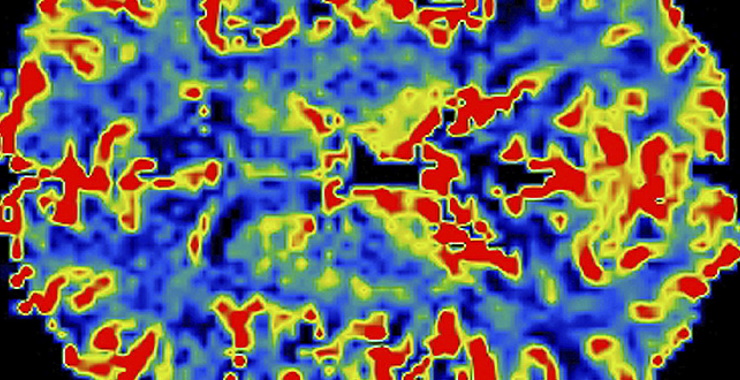
Intensive instruction in reading improves how a child’s brain works. In schizophrenia, key parts of the brain may not communicate well, making it hard to organize one’s thoughts. And true love wouldn’t be true without the neurotransmitter dopamine. We know all this and more thanks to neuroimaging, an increasingly sophisticated tool that sheds light—literally—on the human brain.
Doctors and scientists once had to wait until autopsy to examine the brain, and psychologists had to deduce from behavior where the brain was injured. Now they can study detailed three-dimensional images of the brain to spot problems, to understand what happens during tasks, thoughts, and emotions, and to assess the effectiveness of various treatments.
Current neuroimaging techniques reveal both form and function. They reveal the brain’s anatomy, including the integrity of brain structures and their interconnections. They elucidate its chemistry, physiology, and electrical and metabolic activity. The newest tools show how different regions of the brain connect and communicate. They can even show with split-second timing the sequence of events during a specific process, such as reading or remembering.
Psychologists employ these tools across the range of the discipline. Social cognitive neuroscientists, for instance, are capturing the psychological and neural processes involved in emotion, pain, self-regulation, self-perception, and perception of others. Psychologists have used neuroimaging technology to demonstrate how White Americans, even those who report themselves free of prejudice, show differences in brain activity in the amygdala—a structure involved in emotional learning—when they look at pictures representing people of different racial groups. Positive emotions are also studied. Psychologists have compared functional images taken when students looked at pictures of their romantic partner versus pictures of an acquaintance. When students gazed at their beloved, two deep-brain areas that communicate as part of a circuit showed increased levels of activity. Those areas help to regulate the neurotransmitter dopamine, which floods the brain when people anticipate a reward.
Neuroimaging is also helping us understand how the brain develops from infancy through adulthood. Developmental neuroscientists study the neurobiological underpinnings of cognitive development. Combining functional measures of brain activity with behavioral measures, they explore how subtle early insults to the nervous system affect cognitive and emotional function later in life—for example, the effects of maternal illness or early childhood neglect on learning, memory, and attention later in life. Imaging tools can pay off in the classroom, too: Using such tools, literacy experts have shown that a year of intensive, methodical reading instruction makes the brains of high-risk kindergärtners look and function like those of more skilled young readers.
To aid clinical treatments, psychologists are using functional imaging to get at the neural mechanisms involved in such difficult problems as post-traumatic stress disorder, phobias, and panic disorder. For example, scans reveal that schizophrenia’s diverse symptoms may result not from faults in single neural components but rather from differences in webs of neural connections. Scans similarly help researchers follow brain activity to assess whether various treatments change the underlying brain dysfunction.