
Do you ever feel too overwhelmed to deal with your problems? If so, you’re not alone.
According to the National Institute of Mental Healthopens in new window, more than a quarter of American adults experience depression, anxiety, or another mental disorder in any given year. Others need help coping with a serious illness, losing weight, or stopping smoking. Still others struggle to cope with relationship troubles, job loss, the death of a loved one, stress, substance abuse, or other issues. And these problems can often become debilitating.
What is psychotherapy?
A psychologist can help you work through such problems. Through psychotherapy, psychologists help people of all ages live happier, healthier, and more productive lives.
In psychotherapy, psychologists apply scientifically validated procedures to help people develop healthier, more effective habits. There are several approaches to psychotherapy—including cognitive-behavioral, interpersonal, and other kinds of talk therapy—that help individuals work through their problems.
Psychotherapy is a collaborative treatment based on the relationship between an individual and a psychologist. Grounded in dialogue, it provides a supportive environment that allows you to talk openly with someone who’s objective, neutral, and nonjudgmental. You and your psychologist will work together to identify and change the thought and behavior patterns that are keeping you from feeling your best.
By the time you’re done, you will not only have solved the problem that brought you in, but you will have learned new skills so you can better cope with whatever challenges arise in the future.
When should you consider psychotherapy?
Because of the many misconceptions about psychotherapy, you may be reluctant to try it out. Even if you know the realities instead of the myths, you may feel nervous about trying it yourself.
 Overcoming that nervousness is worth it. That’s because any time your quality of life isn’t what you want it to be, psychotherapy can help.
Some people seek psychotherapy because they have felt depressed, anxious, or angry for a long time. Others may want help for a chronic illness that is interfering with their emotional or physical well-being. Still others may have short-term problems they need help navigating. They may be going through a divorce, facing an empty nest, feeling overwhelmed by a new job, or grieving a family member’s death, for example.
Signs that you could benefit from therapy include:
- You feel an overwhelming, prolonged sense of helplessness and sadness
- Your problems don’t seem to get better despite your efforts and help from family and friends
- You find it difficult to concentrate on work assignments or to carry out other everyday activities
- You worry excessively, expect the worst, or are constantly on edge
- Your actions, such as drinking too much alcohol, using drugs, or being aggressive, are harming you or others
What are the different kinds of psychotherapy?
There are many different approaches to psychotherapy. Psychologists generally draw on one or more of these. Each theoretical perspective acts as a roadmap to help the psychologist understand their patients and their problems and develop solutions.
The kind of treatment you receive will depend on a variety of factors: current psychological research, your psychologist’s theoretical orientation, and what works best for your situation.
Your psychologist’s theoretical perspective will affect what goes on in his or her office. Psychologists who use cognitive-behavioral therapy, for example, have a practical approach to treatment. Your psychologist might ask you to tackle certain tasks designed to help you develop more effective coping skills. This approach often involves homework assignments.
Your psychologist might ask you to gather more information, such as logging your reactions to a particular situation as they occur. Or your psychologist might want you to practice new skills between sessions, such as asking someone with an elevator phobia to practice pushing elevator buttons. You might also have reading assignments so you can learn more about a particular topic.
In contrast, psychoanalytic and humanistic approaches typically focus more on talking than doing. You might spend your sessions discussing your early experiences to help you and your psychologist better understand the root causes of your current problems.
Your psychologist may combine elements from several styles of psychotherapy. In fact, most therapists don’t tie themselves to any one approach. Instead, they blend elements from different approaches and tailor their treatment according to each patient’s needs.
The main thing to know is whether your psychologist has expertise in the area you need help with and whether your psychologist feels he or she can help you.
 As part of their professional training, psychologists must complete a supervised clinical internship in a hospital or organized health setting. In most states, they must also have an additional year of post-doctoral supervised experience before they can practice independently in any health care arena. It is this combination of doctoral-level training and clinical internship that distinguishes psychologists from many other mental health care providers.
 Your employer may also offer an employee assistance program. These programs typically offer one to eight sessions of mental health treatment for free or at a very low cost. Your spouse or partner may also be eligible for these benefits.
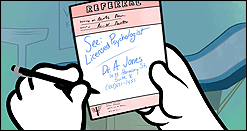
 If you’ve been referred by another professional, such as a physician or attorney, notes about why they did so can be helpful. If a teacher suggested that your child undergo psychotherapy, you might bring in report cards or notes from his or her teacher. Your psychologist can also call these professionals for additional information if you give written permission. Records from previous psychotherapy or psychological testing can also help your new psychologist get a better sense of you.
 Then the psychologist may ask a question like, “What brought you here today?” or “What made you decide to come in now rather than a month or a year ago?” It helps to identify your problem, even if you’re not sure why you have it or how to handle it. For example, you might feel angry or sad without knowing what’s causing your feelings or how to stop feeling that way. If the problem is too painful to talk about, the psychologist shouldn’t push you to say more than you’re comfortable sharing until you get to know each other better. It’s OK for you to say that you are not ready to talk about something just yet.
 In fact, hundreds of studies have found that a very important part of
  Some people begin to feel better in about six to 12 sessions. If you don’t start seeing signs of progress, discuss it with your psychologist. Your psychologist may initiate a conversation about what to do. If he or she doesn’t, bring it up yourself. You could ask your psychologist about additional or alternative treatment methods, for example. Sometimes speaking up to your psychologist can be very empowering, especially since your psychologist will be understanding and nonjudgmental instead of offended.
 If you’ve been suffering from extreme anxiety, for example, you might feel better simply because you’re taking action—a sign of hope that things will change. Your psychologist might also offer a fresh perspective early in your treatment that gives you a new understanding of your problem. And even if your problem doesn’t go away after a few sessions, you may feel confident that you’re already making progress and learning new coping skills that will serve you well in the future.
 You might want to meet with your psychologist again a couple of weeks or a month after psychotherapy ends just to report how you’re doing. If all is well, you can wrap things up at that follow-up session.