
As smartphones, smart homes and other technology become more ubiquitous, it's more important than ever for researchers and companies to focus on designing technology that older adults can use easily. That's the aim of the Center for Research and Education on Aging and Technology Enhancement (CREATE), a multi-university collaboration aimed at developing technology and training programs to address the changes that come with age—such as decreased vision and working memory.
"People have to be able to interact with technology to be able to function well independently," says Sara Czaja, PhD, director of CREATE and a professor in the department of psychiatry and behavioral sciences at the University of Miami. "If [technology] is well designed and people are trained properly, then it has the potential to enhance quality of life."
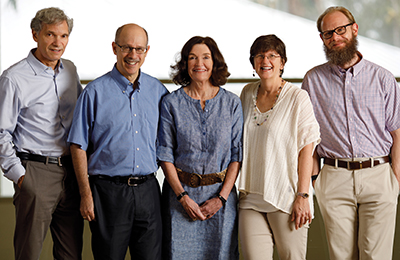 CREATE began in 1999, when Czaja applied for a National Institutes of Health (NIH) grant with four colleagues who shared an interest in how human factors affect technology use among older adults: Joseph Sharit, PhD, of the University of Miami, Neil Charness, PhD, of Florida State University, and Wendy Rogers, PhD, and Arthur Fisk, PhD, then both at Georgia Tech. The researchers came from a variety of backgrounds—Sharit and Czaja's degrees are in industrial engineering, while Charness's, Rogers's and Fisk's are in psychology.
"We have similarities, but also differences in our backgrounds, experience and interests, which always strengthen a collaboration," Czaja says.
The center is now in its 18th year (and fourth NIH grant cycle), and has produced more than 100 journal articles, 50 book chapters and a series of edited books on human factors and aging. The researchers have also worked with technology designers and developers in government and industry to get their findings out of the lab and to the public. For example, they worked with NIH's National Institute on Aging to help design a website with health information for adults older than 60.
Strength in diversity
Right now, the center's primary project is designing and testing a software program called PRISM (Personal Reminder Information and Social Management) that helps older adults use the internet to boost their social connectivity, and improve their memory and other cognitive skills. The software provides streamlined access to email, calendar features, games and community resources, and offers training developed specifically for older adults who have minimal computer experience.
The CREATE researchers conducted extensive pilot testing with older adults as part of the design process, to refine both the software itself and the training protocol. They incorporated details including easy-to-read fonts, a consistent-looking and easy-to-navigate interface, and minimal distracting material on the screen.
This is the second iteration of PRISM: In a recent study, the researchers found that the first version boosted perceived social support, well-being and computer proficiency in a sample of 150 older adults at risk for social isolation, who used it for one year (The Gerontologist, advance online publication Feb. 15, 2017).
Now, the team is developing a tablet version of the software and testing it in diverse populations. At Florida State University, Charness's lab is testing it with rural residents; at Georgia Tech, Rogers's team is testing it with residents of senior housing communities, including low-income and minority residents; and at the University of Miami, Czaja is testing it with residents of an assisted living center.
In addition to this cross-site project, each of the principal investigators also runs his or her own research program under the center's umbrella. For example, Wally Boot, PhD, an associate professor of psychology at Florida State University who joined as a principal investigator in 2008, studies how video games may help older adults improve their cognitive and memory skills. Czaja and Sharit have examined how well middle-aged and older adults are able to understand information from their personal electronic health records—like those accessible from a physician's office patient portal—and use the information to make medical decisions. And Wendy Rogers and her students are studying how older adults could use mobile health apps and activity trackers like Fitbits to increase physical activity.
An evolving mission
CREATE's focus has evolved over time, Charness says. In the early 2000s, the research explored more basic questions, such as how to design a display screen to allow for easy navigation by older adults (they found the font should take up at least 2 degrees of the user's visual angle), or whether older adults preferred to use a mouse or a light pen to navigate a computer screen (light pens were better, though they have now been replaced by touch-screen technology).
Now that many of those basic questions are answered, the team is working on how technology can address bigger issues, like how to reduce social isolation, increase physical activity and improve health. The work has also become more translational over time, moving from behavioral lab studies to randomized field trials in the community, Czaja says.
One constant, however, is the cohesion and interaction among the researchers. There are still five principal investigators: Fisk retired in 2013, Boot joined the team in 2008 and Katinka Dijkstra, PhD—now on the faculty at Erasmus University Rotterdam—was a PI from 2004 to 2009. The PIs hold four or five face-to-face meetings per year, plus monthly conference calls. "We're very friendly, interactive and we see each other all the time," says Boot. "That just makes the experience more rewarding."
Indeed, last year the center won the inaugural APA prize for interdisciplinary team research. Czaja describes the team as a "scientific family"—one that extends to students and former students, dozens of whom have passed through the researchers' labs over the past two decades. Nineteen have received pilot research grants from the center, which also funds independent research projects by students and junior investigators from the undergraduate through postdoc level.
Richard Pak, PhD, now an associate professor of psychology at Clemson University, was a Georgia Tech graduate student and a member of CREATE from 1999 to 2005. He says the experience exposed him to a larger network of scientists. "The nice thing was that I was advised by my mentors, but I also had access to and frequent contacts with the other PIs, as well as their students. It was a great way to build a research community."
Future of aging
As today's younger adults age, the center's work may become even more relevant. Tomorrow's older adults will likely be more familiar with technology than today's seniors: 42 percent of Americans age 65 and older now own a smartphone, a 12 percent increase from two years ago, according to a 2017 Pew Research Center report. And nearly three-quarters—74 percent—of people age 50 to 64 own a smartphone.
"But what you're going to find is that each generation, when they age into old age, is going to have similar problems [adapting to new technology]," Charness says. "It's physiology: Vision declines, working memory capability declines."
Despite those constraints, Czaja emphasizes that the center's work shows that the stereotype of the "technophobic" older adult does not hold up to research scrutiny. "Older adults are not technophobic—we've trained people up to 98 years old to use a computer," she says. "They are willing and interested in learning new technology, as long as they see the value of it, understand how it can be beneficial and how it can be used."
Research foci
The CREATE Center is exploring:
1: Design strategies to help older adults use technology well
2: How technology affects older adults' health, quality of life and independence
3: Older adults' needs and preferences with respect to technology
"Lab Work" is a Monitor series that illuminates the work psychologists are doing in research labs nationwide.