Kim Mills: No one gets through life unscathed. We all encounter difficult and painful things. We get sick, our loved ones die, we live through natural disasters and wars. Many people would call these events traumatic, and they do have the potential to traumatize us. But in recent years, psychologists have found something surprising. Most people manage to get through terrible times and come out the other side without lasting trauma. Today we’re going to talk to a researcher who studies the psychology of human loss, grief, and resilience about why we may be more resilient than we realize.
So what is trauma? What is resilience? Why do people sometimes develop post-traumatic stress disorder or lasting trauma after a terrible experience while other times they don’t? And what can we learn from this research that can help us handle difficult times and treat—or even prevent—lasting trauma? Welcome to Speaking of Psychology, the flagship podcast of the American Psychological Association that examines the links between psychological science and everyday life. I’m Kim Mills. My guest today is Dr. George Bonanno, a professor of psychology at Teachers College Columbia University, where he leads the Loss, Trauma and Emotion Lab. His research centers on the question of how humans cope with loss, potential trauma and extreme life events, and the factors that lead to resilience in the face of adversity. He’s the author of hundreds of peer reviewed scientific articles and three books, including his most recent, The End of Trauma: How the New Science of Resilience is Changing How We Think about PTSD.
Dr. Bonanno, thank you for joining me today.
George Bonanno, PhD: Thank you, Kim. Nice to be here with you.
Mills: Let’s start with the basics. How does psychology define resilience? What does that term mean?
Bonanno: Well, people define it somewhat different ways, but in my research and—I think a lot of people have adopted this approach, I define resilience exclusively as an outcome. So I think you have to be resilient to something. And I define resilience as in the simplest terms, a stable trajectory of healthy functioning after exposure to some extreme adversity or potential trauma. And I do that computationally, but it’s basically a stable trajectory of just good health afterwards.
Mills: Is resilience baked into us? In other words, is there a biological or genetic component to it?
Bonanno: I think that the capacity to be resilient is part of human nature. It’s part of who we are. As a result of millions of years of evolution, we have a tremendous capacity to adapt, probably more than most creatures on earth, maybe more than all creatures on earth, because we have—there are a number of things that characterize human development and the way the brain works that are pretty unique and it allows us to modify and adjust to all kinds of things. We’re very flexible creatures.
Mills: What is that that makes some people more resilient than others?
Bonanno: Resilience to an aversive event doesn’t just happen. I don’t think resilience is a characteristic of people or a trait. Resilience is an effortful outcome that happens when people adapt themselves to the challenges of the situation they’ve been presented with. And that requires what I call now regulatory flexibility. You can also call this behavioral flexibility. It’s this capacity or this ability to adapt to the challenge of the moment. And of course, as the scientist, we’ve broken this down into its constituent parts, but we find when we study those parts, those pieces of this basic flexibility, that people do vary in those abilities.
Mills: In your latest book you write that although terrible things have always happened to people, the idea of trauma is a more modern concept. When and how did trauma as a concept develop and what did people think happened to them before that?
Bonanno: That’s a great question. It’s very curious. I think that psychological trauma was probably around for a very long time, but it wasn’t anything that we really have any record of. Curiously, if we go back in time to the earliest forms of literature that we have, oral traditions that were put into stories, a great example is Homer’s Iliad and Odyssey, right? And the Iliad is just filled with war and battle, and there is grief in the Iliad. The soldiers in the Iliad openly grieve. They grieve in front of their enemy, they talk about it, but there’s no evidence of anything remotely like PTSD and you don’t see this really anywhere in our history until really— well, it really was first acknowledged explicitly in the 19th century, psychological trauma. The first written record is probably in the 17th century in the diaries of a guy named Samuel Pepys.
And Pepys is—some of you out there will know Pepys. There are Pepys-philes in the world. I am a big fan of Samuel Pepys. I’ve read all of his diaries. So what Pepys was an aristocrat who kept a diary for about 10 years, wrote down everything unabashedly. He wrote about his hemorrhoids, he wrote about all kinds of other things, and he didn’t really—arguably didn’t really intend it to be read during his lifetime. He wrote in a kind of quasi code. And then when he died, he donated his entire library, quite a library. He donated it to the University of Cambridge, I think. Well, Cambridge had it. I don’t know if he gave it to them, but they had it. They had it for about 100 years before they actually got around to figuring it out. And then when they did, they realized that there was a treasure trove of information. It’s like being in somebody’s head in the 17th century, 1666, for example.
So in 1666, he had been living in London during the Great London Fire when more than half of the city burned. And he was asked by the king to survey the damage. So he went around and went to places where the fire was still going. He talked about the bottoms of his feet, feeling they were on fire, seeing horrible carnage. And in his diary—he suffered greatly and he had nightmares and he wrote about this in his diary and he was very confused about it. And in his diary, he said things like, I don’t understand why I’m unable to sleep for these horrible images of fire that keep invading my brain. This maybe 6 months later. So that speaks volumes, I think, because it suggested he was having trauma symptoms as we know of them today, symptoms of PTSD, I should say. And he didn’t know what to make of it and he didn’t tell anybody. As far as we know, he put it in his diary, and this is the first written account we have of anything like that. So it appears that traumatic events, certainly people were subject to all kinds of horrific things in the past. We were often prey for all kinds of predators with little defenses, but we didn’t seem to know what to think of those responses. And it raises questions. Maybe they weren’t as prevalent in the past as they were now. We just don’t know the answers to those questions.
Mills: One of the main findings of your work is that we’re more resilient than we realize, that not every potentially traumatic event causes lasting trauma. What’s the difference between trauma and a potentially traumatic event?
Bonanno: So I started using the word potential trauma or a potentially traumatic event, I don’t know, about 10 or 15 years ago now. And I had to force myself to concentrate and to do that because we have a tendency to call things traumas, anything violent or life-threatening we then think of as trauma. But this gets us into all kinds of conceptual trouble because we then assume that anytime anybody’s been through a violent or life-threatening event like an automobile accident, a natural disaster, a terrorist attack, a disease pandemic, a civil war, an assault, anything like that, that they will be then traumatized because they’ve been through a trauma.
The facts are that people that go through these somewhat horrific category of events, they are mostly not traumatized. In other words, they mostly do not suffer lasting damage. So calling them traumas is just confusing to people. As I said, I’ve forced myself to call these events potentially traumatic events, and this is really from an eye of trying to understand what these events are and what they do to us. And so it’s a lot easier or a lot more conceptually clear to say these are potentially traumatic events. Now what’s happens when somebody is exposed to one? And we can then track that.
Mills: Are there differences of sensitivity that make the difference for people? So somebody is traumatized, somebody goes to war and comes back and doesn’t really think about it again and other people ruminate on it for the rest of their lives, for example.
Bonanno: Yeah, there are a lot of different factors that have been identified. There are some epigenetic effects. In other words, people, this is typically people who have been through pretty dramatic things when they were younger and their stress response, their HPA axis though, the main neurohormonal system in the body that produces cortisol, which helps us defend against these aversive events, that those systems are either overly active, which tends to lead to depression, or they’re underactive, which tends to actually lead to PTSD. But these differences have been identified. So when people go through horrific events for a prolonged period of horrific events in the past, their system can be epigenetically—that is the way genes are expressed—gets altered so that they either react too much or not enough. And these effects have been identified. The problem is, in a statistical sense, they’re small effects and what that means in just plain languages, they don’t really explain very much.
Similarly, we did a study where we had tracked different patterns of outcome after potential traumas, and we looked at what are called polygenic scores, and this is the entire genome that’s weighted against certain outcomes. And we used a known polygenic scores and we found there were some of these scores that did predict who would be resilient and who not. Certain patterns of scores of certain patterns, I’m sorry, of genes, but again, the effects are small. And this is true of just about everything that we know of that either predicts PTSD or recovery or resilience, these different patterns, we might show the effects of any individual factor don’t explain very much. And this has been a puzzle for me personally. This has been a puzzle I’ve been trying to solve for years, and this is where I got onto the idea of what I’m calling flexibility. The capacity to adapt is when we utilize the tools that we have to adjust to an outcome. It’s our capacity to use whatever tools we have to adapt to the challenge. And individual differences or differences in that ability carry a lot of weight in predicting who will be traumatized, who will be resilient, et cetera.
Mills: You described four trajectories that people can follow after they experience a loss or a tragedy. What are they? How common are they?
Bonanno: The trajectories we’ve identified, and I should point out that we’ve identified these trajectories now many, many times in recent review papers. And one my team conducted, one other recent paper another team conducted. There’ve been over a hundred studies that have shown these same patterns. That’s one of the most replicable things in psychology. And what we find with those, there are other patterns, but the four patterns we see mostly predominantly are: One, chronic symptoms. That’s a lot like having chronic PTSD. It’s high levels of symptoms and distress that last for at least a year or two after exposure to a potentially traumatic event. So you could consider that chronically not doing well. Chronically elevated symptoms. That pattern occurs anywhere from about five to 30%. The maximum is around 30%, which is an awful lot. When I first began to do this, people took issue with the fact that I was saying it was 30% was the ceiling, the most, because it was thought that more people in that would have PTSD, and in fact, that’s about the most we’ve ever seen. But 30% is a lot of people, right? It’s a lot of people. Usually it’s 5 to 10%, somewhere in that range that will develop a chronic PTSD or other type of reaction. And for some pretty horrific events, it could be higher. So that’s one pattern, chronically elevated symptoms.
Another one we see, which is very interesting, we call recovery. It’s when people have a big burst in symptoms. They’re an acute reaction, they’re not doing well and they don’t recover right away. It takes maybe a year or two to recover. So it’s kind of a gradual alleviation of symptoms. But people showing that pattern do eventually sort of get back to where they were before, back to baseline in a sense. And we see that pattern somewhere between 5 and say 20, 25%, and it varies on average. These are the estimates.
Then we see a third pattern with when we’re talking about potential traumatic events, when we call worsening, we could call it delayed symptom elevations. But what’s kind of interesting about that pattern, back in the days when people didn’t think resilience was real, and there was definitely a time when I first began reporting resilience, people thought it was just an artifact of some statistical trick I was doing. I took a lot of grief in those days for publishing papers saying, no, look, most people are resilient. So the belief was that resilience was really kind of a denial, and that people who were showing this healthy pattern were really not doing well at all, but they were kind of suppressing it or hiding it. And then eventually out of the blue, they would have a major trauma reaction. It would come to roost eventually. And there’s really no, not a real clear biological neurological reason why that would be the case, but that was the belief. And when we began to tracking people over time and mapping these trajectories, we never saw that pattern. But what we do see instead is this worsening pattern where people, and this is other investigators have reported this as well, where people are struggling, but they’re what we’d say below threshold. They don’t really meet the criteria to have PTSD say or another disorder, but they’re not perfectly healthy either. They’re kind of struggling and then they’re gradually getting worse and they’re gradually getting worse at some point, getting, they crossed a line into enough of a symptom profile to meet diagnostic criteria. So now they have PTSD, but it’s not like it just came out of the blue. They were just gradually getting worse and then cross that somewhat arbitrary line into where we would consider it PTSD. We do see that pattern and we see that pattern. We sometimes don’t see that pattern, but when we do, it’s usually around, I don't know, 15, 20%. All of these are in that kind of domain.
But the largest pattern that we see, the most common is the pattern that we call resilience. The resilience trajectory, and that are people who have been through a potential trauma. They may have a little bit of a bump, they may struggle for a week or two, maybe a little bit longer because potentially traumatic events are really lousy events and they’re really disturbing. They give people nightmares. Sometimes they have intrusive thoughts. That’s all very normal in the beginning, right? In the first week or two. It’s not uncommon. And so they may have those reactions, but then they’re basically regained whatever equilibrium they had and they continue to function and what I had mentioned before, stable trajectory of healthy functioning.
Now, when I began my career, I started doing this in 1991, it was assumed that hardly anybody showed that pattern. It was assumed that people that had little or no symptoms were very rare. And if they did show that pattern that there was probably something wrong with those people. They were in denial. It was a kind of weird pathological personality that would not react to these events. But when we began to track people over time, we found, in fact, this is where most people were. Most people were showing that pattern, that is the norm. And we’ve shown this now over and over and over in so many studies. That is the normative pattern.
Mills: So what are the implications of your work for treatment and helping people who are suffering from PTSD or traumatic event?
Bonanno: That’s a great question. And moving in that direction now, I’m a trained clinical psychologist. I’m a professor in a clinical psychology program, an APA-accredited clinical psychology program. But I haven’t done any kind of intervention work in probably about 30 years now. I’ve just devoted myself to doing research. However, for the first time, I’m developing a training for this concept. I mentioned flexibility because we have enough evidence now to conclude that this is how people find resilience through enacting these flexibility components. And I’m fairly confident that we would also be able to help people who are suffering more with either having a difficult time recovering or showing a chronic pattern of elevated symptoms or PTSD. I think people would benefit from learning or practicing these skills as well. I think the skills are already part of our human makeup, but most things need or a combination of some innate tendency and learning, and it takes a while to learn how to regulate yourself, how to adjust yourself in the world. This is one of the things we do through our long 25 years or so when our brains are developing, our cortex is developing. I think teaching these skills and there’s a fairly clear set of skills is something that can really help people.
Mills: So in practical terms, what does that look like? I mean, I’m thinking of exposure therapy. Is that one of the types of things that you would be recommending?
Bonanno: I think exposure therapy has got a really great track record. Exposure therapy does work for PTSD. Yeah, it’s probably works better than just about anything that’s been tried. Although there are other approaches that work pretty well too that are not nearly—exposure therapy is a challenging type of treatment, both to do and to receive. It’s intense, but the intensity pays off based, this is what the evidence tells us. But there are other approaches that have to do with systematic relaxation and finding ways to calm oneself. And there are other interventions having to do with that are more behavioral and more cognitive thinking about how to manage the symptoms. And earlier in my career, I worked with a lot of PTSD patients and we tried various mix of these things.
The flexibility approach, we call this regulatory flexibility or specifically the flexibility sequence. This has three main parts. The first part we call context sensitivity, which is about reading the situational cues, reading the context, the challenge we’re facing in the moment, and deciding what the problem is, what that problem is in the moment, and then deciding to do something about it, to form a goal to deal with that problem. Then the next step, so for example, before I go to the next step, I might be feeling very anxious and for say I’m feeling anxious and something bad’s going to happen, I might do that for a day or two, but at some point I can realize the problem I’m struggling with right now is that I’m feeling anxious. So what can I do about that? If we’ve been through a broader situation, like a natural disaster, an automobile accident, a potentially traumatic event, we have a tendency to think of ourselves as traumatized and think in this much broader way, this larger scale way of I’m traumatized, which is a very difficult thing to conceptualize and to move beyond.
But if we think more locally, what’s the problem I’m facing right now? And that problem might be that I’m feeling anxious, that I’m having trouble sleeping, that I’m having a difficult time concentrating. We have to narrow our approach down to a problem that we can actually manage. And that is actually impinging on us at the moment, and that’s what this first step is, is context, part context sensitivity. We are reading the cues. What is it that my body’s telling me? What is it that my experiences in my life right now this day are telling me about what the problem is? So we focus, we get a sense of picking out a problem to address, then we move to the next step, which is we actually do something to solve that problem. We call that step the repertoire step because it hinges on the tools that we have, our repertoire of strategies, tools that we have in our toolbox.
So we’re evaluating a situation, we’re asking ourselves, what’s happening to me? What do I need to do? And then in the repertoire step, we’re asking ourselves, what am I able to do? What do I have at my disposal? And teaching people about this is almost a matter of psychoeducation because we have to, many times we don’t even know what the strategies we really have are. It’s a good thing to develop a sense of that. When we’re in the midst of a difficult time, it’s a little harder to think clearly in this way, this. So we go through the first two steps. We are assessing the challenge we’re facing, right in this moment. We decide what we’re going to focus on. We go to our repertoire of strategies and we pick, and we often do this without really even thinking about it. It’s a sort of natural ability.
And then the third step’s very important. We call it the feedback step. What all it really is comprised of is monitoring what we just did, the strategy we just used to see if it worked. And this is where a lot of people, I know clinically, a lot of people struggle because we’re struggling with something. We try some way to get beyond it and it doesn’t work, and we assume we can’t do it. I give up. I am not good at this. I’m feeling anxious. I tried breathing, exercise, it didn’t help. I don’t know what to do. I can’t deal with this. I’m anxious. But in fact, human beings, like most all animals cope by trial and error. Nobody gets it right the first time. Even the healthiest people don’t get it right the first time. A matter of, it’s almost like a machine learning algorithm or an AI algorithm. You take a crack at it, see what happens, and then you find out, did that work? No. Okay, what else do I have to try? And this is very much what the research tells us, that people cope by trial and error. Sometimes it takes four or five tries, but when we do that, when we pay attention to it, we gradually get to learn what works for what kind of problems and what situation, and we can cycle through this many times. That’s kind of the basis of it.
Mills: So once a person has figured out what it takes for them to actually be resilient, is that a stable trait then? In other words, the more that they’re confronted with traumatic events, will they always continue to be resilient throughout?
Bonanno: I wish that were the case. Unfortunately, it’s not because it’s really a matter of always putting in the effort and doing it. And it’s partly because when we think about potentially traumatic events, we tend to think of them—because they’re all called potentially traumatic events, same thing if we decide to call them traumas—we tend to think of if something is a trauma that all traumas are the same. But the simple fact is that all the challenges we face in life are dramatically differently, present us with very different challenges. So coping with a natural disaster is going to be challenging in different ways than coping with say an abuse situation. But even within one of those subcategories, natural disasters, they’re going to present us with all kinds of different challenges. So coping with a hurricane is different than coping with an earthquake, which is different than coping with a flood, which is different than a fire, a volcano.
And I’ve been in a couple, I’ve almost drowned a couple times in floods, and I think it’s happened to me now three times in my life, and this mostly my own stupidity that ended up in these situations. But each one of those events was dramatically different in itself. So the challenges that life can throw at us are never really going to be quite the same. We can generalize some, but we’re always going to have to kind of think it through, what do I need to do here? What is going on now and what do I have at my disposal that can address this particular piece? In addition to that, there’s also a motivational component, which I hadn’t mentioned. We call that the flexibility mindset, and that’s a mindset for engaging with the event. It’s a mindset that says, all right, I didn’t want this to happen, but I’ll get through it. I usually do. The world usually goes on eventually.
We could put this really, we could broaden this out right now too. There’s a lot of people feel right now that the world is going insane. And if anyone’s feeling that way, the flexibility mindset would be, well, it’ll get through this event and then something else will happen, and we’ll get through that. So that mindset is motivating, and I think that if we don’t have that kind of motivation, we’re not going to do the work we have to do. Unfortunately, it is work. There’s a long answer to your question is that we can have these tools and these tools really help and we can hone them, develop them, and it gives us more to work with when something happens, but we still have to do it each time.
Mills: A lot of people who listen to this podcast are parents, can parents do anything to help teach their kids to be more resilient through life?
Bonanno: I’m reluctant to say anything that parents should do because I want to give parents all the benefit of doubt I can. But I think flexibility is obviously part of whatever I would say is an answer given what I’ve said so far. And it’s part of what we see. The developmental researchers have documented this for years, this gradual development of these kinds of skills in kids into adulthood. And there was a few wonderful review articles not long ago describing what the endpoint of development was. And it was essentially this kind of flexibility that I’m describing. It takes a while to learn all this, and there’s a learning process. There’s also the development of our brains that give us the tools we need. And I think we can help our kids to be more resilient, to be healthier people by encouraging them to try things, by encouraging them to tolerate mistakes. Because trial and error learning is very important. And if we don’t try things, we can’t learn anything new. And if we have to be able to make mistakes, live with mistakes, it’s how we grow and develop. And I think that’s a crucial thing right now to be able to allow children to make mistakes.
Mills: But we don’t teach them by traumatizing them.
Bonanno: Well, we don’t want to traumatize them, no. But again, to go back to the idea of a potential trauma, a difficult experience is not a trauma until we don’t get over it. So I think that’s a nice way to think about it.
Mills: So what are you working on now? What are the big questions that you’re still trying to answer?
Bonanno: We’re doing a lot of work on the flexibility idea, and we’re trying to find different ways to be able to assess it. We’re trying to find ways that we can really get at it in a simpler way so we can talk with people about it. I’m also doing a lot of work right now with veterans. I developed kind of an approach to veterans a number of years ago where we were seeing that most veterans don’t have PTSD, but a lot of veterans, sometimes the majority, between 40 and 60% still struggle when they leave the military. And we decided, or we coined of the phrase transition stress, that this is a matter of transition stress. And as particularly anytime we go through major transitions, we can experience the stress of transition because we have to adapt to it. We have to rethink many things we and calibrate our brains in a sense, as kind of a new reality. But it’s particularly difficult for soldiers. And there are probably other categories that maybe refugees would also experience something similar.
But soldiers often go into the military as very, very young people, and they often experience their first true adult identity as soldiers. And the military is a very different world than the non-military world, than the civilian world. It’s more regimented, it’s more highly structured. It has built-in meaning and a clear sense of value and purpose. And that world in a sense does a lot of regulating for people. But it also is a very clear and predictable world in many ways. When people leave that world, they kind of often start over. They go to a world where their skills may not transfer. Well, civilians may not have much of a clue what they went through, and they have to adapt to a new civilian world. And that’s difficult. And many, many veterans accomplish this, of course, and go on to live healthy lives. But I’m very interested in that right now, and maybe we can make that a little bit better for veterans. And that’s where the flexibility comes in. Again, we’re beginning to work with veterans and flexibility, and we’re testing now training with veterans to see if we can make that process easier for them.
Mills: Well, Dr. Bonanno, I want to thank you for joining me today. This has been really interesting. I’ve enjoyed talking to you.
Bonanno: Thank you, Kim. It’s very nice to talk with you.
Mills: You can find previous episodes of Speaking of Psychology on our website at speakingofpsychology.org or on Apple, Spotify, YouTube, or wherever you get your podcasts. And if you like what you’ve heard, please subscribe and leave us a review. If you have comments or ideas for future podcasts, you can email us at speakingofpsychology@apa.org. Speaking of Psychology is produced by Lea Winerman.
Thank you for listening. For the American Psychological Association, I’m Kim Mills.


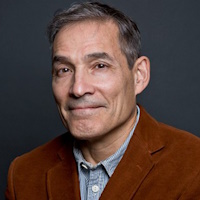 George Bonanno, PhD, is a professor of clinical psychology at Columbia University Teachers College. He received his PhD from Yale University in 1991. His research and scholarly interests have centered on the question of how human beings cope with loss, trauma, and other forms of extreme adversity. His most recent book is The End of Trauma: How the New Science of Resilience is Changing How We Think About PTSD.