Kaitlin Luna: Welcome to Speaking of Psychology, a biweekly podcast from the American Psychological Association. I'm your host, Kaitlin Luna. The topic for this episode is the mind-gut connection. Is your gut a second brain? Emerging research is showing that our brains and our gastrointestinal systems maybe we're connected than we previously thought, potentially holding profound influence over our moods, mental health and sense of well-being. This exciting new frontier of scientific knowledge has captured a lot of people's attention. Yet, there's still so much we don't know. Our guests for this episode are Dr. Faith Dickerson, a psychologist who is the head of the Stanley research team as Sheppard Pratt Health System, where she researches the role of infectious and immune factors in serious mental illness. And Dr. Emeran Mayer, a medical doctor who specializes in gastroenterology. He's one of the world's leading experts on brain-gut interactions in GI disorders. Both were featured in the cover story on this topic in a December 2018 issue of The Monitor on Psychology, APA’s magazine for members that covers science, education, psychology practice and more. Welcome Dr. Dickerson and Dr. Mayer.
Faith Dickerson: Hello.
Emeran Mayer: Nice to be on the show.
Kaitlin Luna: Let's start off with a basic question, Dr. Mayer. What is a gut microbiome and what does it do?
Emeran Mayer: So, the term microbiome is being used to refer it both to the population and relative abundances of microbes that live in our gut as well as its function, basically related to the genetic material and the ability to generate metabolites and substances that can influence various passions throughout the body.
So, the microbiome is both the relative abundance of organisms, as well as the function of the system. Microbiome, in contrast, is used only to refer to the, to the relative abundances.
Kaitlin Luna: So, what does that do for us and our inner intestines?
Emeran Mayer: Well, it does a lot and you know, we're recruiting the face that people think it's a most in just about every normal, healthy function. And in a large growing number of diseases, it's basically the most basic function. That's why that symbiosis is developed a long time ago, millions of years ago, is that the microbes have the ability to break down components of food, mainly plant-based fibers that we don't that human son of the enzymes to break them down.
This was a more important with our ancestors who were not able to cook things and break down some of the fibers. And they produce substances, the most one on ones being the short-chain fatty acids like butyrate, then act with these substances or metabolites, they can talk to each other. They can talk to our gut and they also can talk to distant organs from the heart, the liver and the brain.
So, they have a lot of other functions. I mean, for example, they can metabolize many medications. They can metabolize sex hormones like estrogen and progesterone and testosterone. They can, they deal with, with substances that as many substances that we now understand our kind of targeted at microbiome — large molecules. So, for example, so called Polyphenol. So, the health benefit producing substances that are in many plants, including blueberries and olives — infants can break down large molecules called human milk. That cannot give sort by the baby from breast milk, but they go directly down to the microbes.
So, just many, many substances that we are learning, that we're learning now that would play this role. You know this formally, it's kind of interesting to me always that the people could write medical textbooks without taking this into consideration, that any of our medicines, so therapy's really work without having taken this system into consideration.
Kaitlin Luna: And there's a lot we don't know yet correct, about, about what the gut microbiome does and what it can do?
Emeran Mayer: This is what people forget. With the very beginning of this, you know, we have extremely, we have extremely powerful ways to analyze them. So, that's actually made this whole field possible or sequencing techniques, you know, which used to be extremely expensive hundred thousand dollars for a stool sample. Now he can't do it for twenty dollars. But I think people tend to forget this is a very complex ecosystem, with regional differences from the stomach all the way down to the colon and start the same and we pick up and measure well if abundances and metabolites in the stool, I mean, that's a mixture of all of those regions.
It's kind of if you look at the world like extrapolated is to the, to the world. It would be like homogenizing information of mixing blood samples from every country on Earth and trying to make sense from these, from these mixed results, what people do in these individual countries, or what diseases they have. So, I think that's kind of what we are right now. I would say optimistically, I think we understand about ten percent at best what that system can do, what it is capable to do and what role it may play in various diseases.
Kaitlin Luna: And I want to turn over to Dr. Dickerson because you mentioned in that monitor article of the idea of bacteria near got influencing your behavior and mental health would have seemed cookie only ten years ago. And now there's a lot of public interest in this topic. So, what do you think has changed?
Faith Dickerson: Right. I think a number of things have changed. At least, at least, at least three reasons can account for this interest. One that Dr. Mayer mentioned was that the techniques that we now have to measure the microbiome have really become much more sophisticated and much more practical.
The methods that are used — people may not realize, are the same methods that are used to measure the human genome. And we know that these techniques have rapidly progressed over the last couple of decades, so that we now measure the microbiome and the organisms that make up the microbiome with these same methods. And the technical complexity is truly impressive and has enabled this research to take place.
I think that the second reason that the idea seemed less cookie for all of us, have to do with the very elegant animal experiments that have been done. And it's important to emphasize that most of what we understand about the microbiome has been carried out in animal studies, particularly with mice, and we could get into some discussion about how we translate those findings from animals to humans, but to spice it to say that there are many advantages, obviously and working with animals, one of which is that one can work with germ free animals, which do not have these microbes. You can't, you know, really work with germ free people, but you can work with germ free mice, and that enables one to introduce these organisms and to study the effects of the organisms in a very systematic way.
And obviously, animals can be sacrificed, and one can study the contents of their GI tract and the effect of the microbiome on the brain in ways that would be absolutely impossible in humans.
But, I think that the third reason isn't in some ways a little more distant, but also relevant to this discussion. I think the idea of the immune system and the gut brain access having a role in human behavior and in psychological and psychiatric problems also has to be seen in the context of the larger world of science and particularly of our understanding of genetics, because it was really felt a number of years ago by many of us that human genetics would really turn out to be more easily explanatory for the psychological and psychiatric problems that people face. And I think that that area of research has been somewhat disappointing, and we don't really have clear answers yet from human genetics about the ideology of complex psychiatric disorders and the genetic studies, to my understanding, have not really lead yet to effective treatments.
So, I think with the course of that research, it has enabled scientists and the general public to be more open to other paradigms. So, I think that's an important aspect of how this idea seems a little less cookie because we're now open to other, other realms in terms of our understanding.
Kaitlin Luna: As we've said a few times, this is all in their early stages. But, I wanted to talk about some intriguing findings that have emerged. People with GI disorders have higher than average rates of bipolar disorders and depression. People with schizophrenia often have blood markers that suggest GI inflammation, and people on the autism spectrum have higher rates of GI problems and average population. So, although we know this isn't the early state of stages where those findings tell us?
Faith Dickerson: Well, I mean, I would make some comments and then turn it over to Dr. Mayer. I mean, I think these associations – they’re very consistent, and they're very intriguing, and I think they highlight that there is an association among the brain, the immune system and the gut.
But, they don't tell us really what's the direction of that association and the causality. And again, we're studying these phenomena in animal models, and we can talk to the extent that animal models of psychopathology have relevance to human disease. But, I think they provide a very solid foundation for this area of research.
Emeran Mayer: Yeah, I would comment on this with, you know, I've always been a skeptic. I mean, that's why I'm a scientist. And so, you know, I believe something once really had the definitive proof for it. And I totally agree with the problem that we have. It's really two-fold. One is that the most exciting studies and results about the communication between the microbiome and the brain have come from mouse studies. Mouse behavior, obviously mice can’t talk. The mice don't have this highly complex brain that we have, particularly the prefrontal cortex, so it's like, is like comparing a HP handheld calculator with the Watson IBM supercomputer and the second thing is the mice.
So, there's hundreds of different mouse trains, says actually, a panel with all these different mouse trains. You can do an experiment in one of these trains with the microbiome and brain and you won't see an effect. And then you do it in a different strain and you see the effect. So, we don't know which one of these societies picked the ones where they see the effect. We don't really know that relates to humans, and I think we have to differentiate.
So, the brain-gut in traction and particularly attraction of the brain with a gut's associate immune system is the biggest part of our immune system that sits in the gut. That's kind of a well-established entity and field of science. We know stress changes the immune function. We know that immune activation in the god you know, can lead to withdrawal behavior that's often been taken as a depression- like behavior.
And many studies have looked at this. And actually, I would say there's some studies that prove causality from the brain to the gut and to the immune system and vice versa.
The problem with the microbiome? We don't have that yet in humans. So, It could easily be — and I'm going to tell you a study that I think in some ways supports that it could easily be that all these changes we're seeing gut-microbial composition and function and metabo-like production in patient, in patient populations but different brain or psychiatric disorders or a consequence of the output of the brain of the disease to the gut, which we know changes a lot of functions, has effects on the environment. It is microbes living but also directly on the microbes were if there's really primary changes in the microbiome that neither started in infancy were are related to intake of medications, many which modulate the microbiome. And then general signals that they contribute to the would cause the brain disease.
So, this – and I’ll give you one example, just many studies now in mice, monkeys, humans that's psychological stress can change the relative abundance. For example, a change in troop to fan metabolism. It's related to this elective is alive. And we recently completed study with Jeff Lackner at The University of Buffalo that showed that their patients who underwent to these three patients with IVS and underwent cognitive behavioral therapy. We looked at the responders versus the non-responders and the responders showed not only changes in the brain but also in the relative abundances, of microbes in the gut.
So clearly, an improvement at the brain level can have an effect on gut-microbial composition. So, I think we have to be really careful until we have these longitudinal, interventional studies, before we can say there's really a causalities in one direction versus the other.
Kaitlin Luna: Yeah, I want to talk about a recent study you interviewed about in nature microbiology. And that was about the link between gut bacteria and depression. So, in that study it was 2,100 adults, and it found that people with depression at different groups have got bacteria than people without depression. So, what are your thoughts about that study as well?
Emeran Mayer: Yeah, so it's again. It's a nice study because it's a large study and it also has the same limitation because it's a — it's, It's an association that's been shown. There's a lot of variation that goes into a study like this – it’s not like mice studies — seven mice, seven term free mice and characterize abnormalities and metabolites and then relate this to behavior. Here you have a tremendous variability in terms of genetics of the participating subjects, and they're the dietary habits, the medications that they’re on, abilities on that they're all could play a role here. And as I said, I mean, the gut-brain interaction is very sensitive to a lot of factors. Stress is one that we understand quite well. So, it's, it's limited by that. I mean, the association that they found with was certain tax and depression and quality of life is interesting and it does not, you know, prove causalities in any way.
And there are some similarities with – so, there's a few of these depression studies in patients with major depressive disorder. The findings that they have are not necessarily all consistent, as some of the bacteria shows up in several, and most of them, actually, that's, that's interesting. And I think it's definitely something that should be followed up in most studies. But I would look at this really, with still with a significant skepticism, that it proves a causal relationship.
Kaitlin Luna: Yes, I think, you know, I'm really — we've talked about your times is that there's all this intriguing research, but before we get carried away, there needs to be more research and more work done in this space.
Dr. Dickerson, I know you've been doing a lot of research people with bipolar disorder. So, can you talk about what you found in your work?
Faith Dickerson: Yes. Our studies are different and present a different look in a different way of investigating this topic. The study that was most recently published last fall in the journal Bipolar Disorders was not of the microbiome directly but was a clinical trial of probiotics and probiotics have become very popular, they’re widely used and advertised as having health benefits, which they may have. And probiotics are micro-organisms that are introduced into the body for beneficial qualities.
So, there are compounds that contain actually alive organisms that are thought to have a health benefit. So, in all of this research, our ultimate goal obviously, is to improve the symptoms and the lives of people. And in my case, of patients who have psychiatric disorders.
So, what we did again, based on our concept of the gut-brain access is we studied individuals who had been hospitalized for mania. Mania is a very acute psychiatric condition. Most people are probably familiar with the idea of it. Patients are very activated, unusually so with rapid speech and flight of ideas and behavioral activation. And this syndrome, this condition can be very disruptive and can lead people in a psychiatric hospital where they can get treatment.
So, what we did, and it was based on a previous study that we’ve done that hadn't been a clinical trial, but just observing patients, is that we enroll people who were hospitalized for mania when they were acutely psychiatrically ill and after they were discharged, and they were more stable shortly after discharge. We enroll them in a trial where they were randomized to receive either a probiotic compound as a supplement or something that looked like the probiotic but was not the probiotic.
So, this is a standard design of a randomized controlled trial, and the idea that we had based on our previous work was that the probiotics would reduce in intestinal inflammation and would help with their clinical course. The study that this was based on showed that patients admitted to the hospital for mania had elevations in inflammation and that the level of the inflammation was predictive of whether or not they were re-admitted in a six-month period.
So, we thought that one way may be to reduce inflammation and to help with this outcome would be to administer probiotics.
So, probiotics are pretty acceptable to patients. It wasn't that hard to recruit people from the study because we know they're generally safe. So, what we found was that in this trial that took a number of years to do, as you could imagine, to recruit the patients and to follow them for the six-month period after hospital discharge, we found that those who were receiving the probiotics that we only found out later when we broke the blind, so to speak, that the ones who were sieving the probiotics were significantly less likely to have a relapse, to have an exacerbation of psychiatric symptoms in the study period, the six month study period.
So, this was a proof of concept, as it will be considered of the role of inflammation and reducing inflammation against the use of a probiotic compound to improve psychiatric outcomes.
Kaitlin Luna: That's all very fascinating.
Emeran Mayer: If I could make a comment. This is definitely one of these examples of their important study done in humans when sort of going towards a mechanism rather than just an association. And I think it sort of goes along with our earlier study on the stopping of probiotics and brain function or activity. We showed that the regular intake over providing in healthy young women changed the connectivity of a whole network within the brain that was activated by an emotional recognition task.
So, we will not follow this up in a in a psychiatric population. But, it's certainly for us was a proof of concept that the signaling from the gut to the brain induced by but by a probiotic actually does happen as it happens in mice.
So, I think this mania study, it’s really, that's the kind of studies I think that we need to move to steal forward.
Faith Dickerson: I think it's really an interim process — understanding how some of these processes may work in an animal's than human observational studies, testing them out and clinical trials were again — we aim to minimize any potential harm that patients would be exposed to and then to circle back again to two other research realms.
In this study, you might say, well, this is one study. It's one hospital. You know, you had a pretty good sample size, but again, you'd really need to replicate it, to do the study again. And in fact, this particular trial is being replicated at the University of Texas, where they’re recruiting now for a similar study. And in the University of Texas study, unlike ours, they're actually getting measures of the gut microbiome. We had measures of the oral microbiome, which is kind of another chapter, but I think that we need to continue these studies with slightly different populations.
We’re also performing a trial now also funded by the Stanley Medical Research Institute, in which we are performing a very similar study. This time, instead of starting with patients who are acutely manic, we are starting with patients who were admitted to the hospital for bipolar depression because for people who have bipolar disorder, in fact, the depressive aspect of the illness is often the most disabling and does also result in hospital admission.
So, we're doing a similar trial, but starting with people who are acutely depressed in the context of their bipolar disorder. So, we’re just recruiting now on enrolling people, and they're taking their study medicine. We don't know which they're taking, and that's the kind of the excitement in the mystery of a clinical trial is really not knowing how it's going to turn out as the study is underway.
Kaitlin Luna: And Dr. Mayer, I want to turn to you to talk about a book he wrote called the “Mind-Gut Connection.” And in the book, you describe the gut as having capabilities to surpass all other organs and even rival the brain, and that it stores 95 percent of all serotonin in our bodies, that hormone in neurotransmitter that regulates mood. Because our guts have direct connections to our brain through nerves, what happens when our brains and our guts are not in sync?
Emeran Mayer: Yes, so this statement — it's not related to them as a gastroenterologist, but it's partly related to the fact that I've studied these brain-gut infractions for the better part of my career — for the last 40 years and what has become during that time, what has become known is as it just said, I mean, it's, it's the biggest endocrine organ in our body. It's the biggest immune. It's the biggest portion of our immune system. It is the main storage site for serotonin. It has its own so-called an intricate nervous system, which, you know, has been called the second brain, even though it’s really the first brain.
So, one of the questions is why? Why use that? And, well, the reason is doing evolution. This this gut- brain of gut nervous system access was really the first system of regulation and microbes. It came into this what was originally just a floating digestive tube with a nerve net around it.
And so, this interaction between the microbe elders, this very complex system in they got with all these modules, and the brain is one of the most ancient biological systems in our body and has been maintained in virtually every life form from, you know, fruit flies to cockroaches to large animals to whales. It’s almost vehicular.
So, you almost can say this is part of evolution and that this close connection, which has really been neglected for a long time. I mean, it's really amazing to me. It took the microbes to stimulate the interests of people in the brain — gut communication because, you know, people have been studying this for a long time. And is there's a lot of evidence that for this bidirectional communication, the brain regulating any of these other systems in the gut and the gut sending signals by multiple communication channels to the brain.
So, I would almost say this is like the main access home you started. The main home is static system within our bodies that has been around for the longest time. And we're now just recognizing its importance in health and disease.
Kaitlin Luna: And I understand stress could have a huge impact on a person's digestive health. So, how is our gut different when we're stressed and when we're relaxed?
Emeran Mayer: Well, you can almost say the, you know, and in my book, the gut of sort of the other side of the coin of an emotion. Any emotion, be it stress, and our stress will be reflected in changes in multiple gut functions, range from the simple thing — the contractions in different parts of the digestive track, the regional transit times, secretion of mucus, fluids, immune activation. When you stress, all of these functions are altered.
When you stress acutely, it's an adaptive response, because and then it settles back to its normal level. In chronic stress, it's different. It becomes maladaptive. So many functions become not just maladaptive for our own health, but also for the microbes that live in it. And, as I mentioned earlier, so north has been particularly well studied on this. You know, the main, one of monstrous mediators released by post-sympathetic nurse in the gut.
It also goes up — the concentration or been different in the gut blooming. There's certain microbes that actually might have allies, the form of different that's released inside the gut and make it more active.
And it’s been shown that this in the gut can modulate the behavior in the gene expression of a large number of microbes first was shown for pathogens. It makes pathogens more aggressive and more virulent, but it now has gone for symbiont. So, for the good guys our gut changes their behavior.
So, you could almost say, if you're chronically stressed your gut is completely different in all this function and the alteration of microbes will produce substances that get into your blood stream on and obviously some of them will reach the brain.
Stress also increases the probability of the gut and referred to in the media as the leaky gut. The leaky gut doesn't just happen in response to unhealthy food items, like fat and sugar, but also really well studied in response to acute severe stress and chronic stress. With that mechanism, you get immune molecules into the circulation.
So, you can say, when you're stressed, don't just worry about your heart and your blood pressure and the way it feels unpleasant. But you're doing something fundamental to one of the main regulatory systems in your body.
Kaitlin Luna: Yeah, and it's been reported that hunter gatherer tribes have more vibrant, diverse gut microbiomes. How does that compare with the average American’s gut health? I mean, can they be compared? And what can we take away from the that?
Emeran Mayer: Yes, there was a pivotal study was just on a couple of years ago where they compared – they took one of these hunter gather tribes on the Orinoco River, the Yanomami Indians. And to look their well if abundances and richness diversity of their gut microbiome and compare those to – they did the study post in adults and in infants. And they compared it to population in North American cities — posed again adults and infants. The remarkable thing was that there was a, I think, was about a forty percent decrease in the richness and diversity of the gut microbiome in people living in North America. And that was more intriguing that this was not on the scene in the adults were also in the infant. So that's something that you lose these bacteria as you as you grew up and having unhealthy diet as you start out — we start out with that compromise diversity. So, we've lost many of these organisms very early on and during a period, it's always said that the first thousand days of life are some of the most important for the maturing of the gut microbiome’s interactions with the immune system. So, we start out very early on in life, and it's forty place of all the transmission from the mother to the infant is a newborn with a compromised microbial ecosystem, which would chance, obviously, you know, major implications, because this book missing a microbe has shown this pretty dramatically. This decline in the diversity and relative abundance of certain organisms has been going on for the last hundred years or so and is continuing.
So, when you look at any other ecosystem, if you diminish the complexity and diversity of an ecosystem, it will lose its resilience and resistance against perturbations and diseases. So, this is something I think we really have to worry about.
Kaitlin Luna: Does that have anything to do with being in a world that's too clean?
Emeran Mayer: I think that's part of it. It is pretty manufacturers. It's obviously dietary. I mean, these Yanomami Indians have very different diet. It is, even though they live in the middle of the jungles surrounded by all of these wild animals, it's predominantly plant-based diet with multiple different types of plants that they consume.
And it's medications. Antibiotic consumption in infants and in pregnant mothers is extremely high. In the west, and there's other medications, as well.
So, there's multiple factors — the hygiene hypothesis — so that's, you know, the excessive cleanliness and hygiene that we have in the western world. And it’s pretty obvious if you travel to one of these places in the developing world, how dramatic the difference is, just in food preparation and that's being implicated in a compromised training of the system early on in life, during those first thousand days so that the immune system does not see potential mild pathogens and does not really learn to differentiate between self and non-self.
And the increase. The increase in analogies and hypersensitivities and auto-immune diseases has bean. It's been proposed that this hygiene hypothesis is where the explanation is for.
Kaitlin Luna: And I want to get both of your thoughts on companies that are offering to map your gut for us. So, Dr. Dickerson, do you want to start off with that one?
Faith Dickerson: Right? I think that while that's an intriguing idea, it seems somewhat premature. I don't think the results would be easily interpretable. We don't really have standards by which to judge these results. Seems like quite honestly, it might be a little bit of a waste of money, maybe benign unless people were told something about their health if it was alarming or actionable in a way that would be would be damaging to them.
But, I think at this point it's really premature. Although you know what one can see that it would be kind of intriguing to do it. You know, given that we're all kind of learning more about this microbiome and kind of intrigued and have no way to measure it ourselves. You know, it's not like we can look inside our gut and figuring it out. So, I think it's intriguing. But, premature at this point.
Emeran Mayer: Yeah, my common illnesses and I have to disclose that I am on the advisory boards of several such companies, the leading companies in this area, and I still have a certain degree of skepticism, as well as enthusiasm for something like that becoming really a routine test. And instead of getting a blood test where you look at ten substances in your blood is the ten measures and then make predictions about your health. I think this has the potential to go much further than that and, you know, in combination with genetic testing. So, we're definitely moving into a future. Would with these technologies that are available in the super computers that can make sense out of the data will pretty much fundamentally change medicine, diagnostics, health assessment, risk assessment. But, it’s still in the middle of this process. You know, there's one company, actually not about with it that postulates in their advertising that you can, if you have type two diabetes, metabolic syndrome that you can tailor your specific diet that's good for you and it does not worsen the syndrome. The thickened bases on assessment of the gut microbiome that, you know, it's based on a lot of high-quality research papers and the animal and humans, but it needs to be determined when is too busy in the next few years which one of these approaches turns out to be good enough.
So, they they're going to be adopted by insurance companies and that if you ask me what the likelihood is that this is going to happen, it’s going to happen. I think I would say it's pretty close to seventy percent of all right now. The way is, this is what we're not quite there yet.
Faith Dickerson: Yeah, I think it's an example where the technology at this point is ahead of our complete understanding and the interpretability of the data. But, I think the technology is there, and once there's more knowledge, potentially, these methods would be informative. But, I think now it would, you know if one did it more out of curiosity and not nothing, not putting much faith, so to speak in the results, I think it would be interesting, but not really as a diagnostic or therapeutic tool.
Kaitlin Luna: And can people do anything to improve their gut health?
Faith Dickerson: Well, that's always an interesting question. I mean, we know from studies, some of which have been mentioned in this podcast that diabetes is associated with aspects of the microbiome and obesity. We haven't mentioned antibiotics yet, actually. Antibiotics have a major effect on the microbiome — that I can tell you a study we've done about out of antibiotics and patients with mania.
But, based on what we know so far, I think we can assume that if patients have a healthy weight and if they have diabetes, if their diabetes is in control, and if they avoid unnecessary antibiotics, that that's likely to improve their microbiome. Again, we don't know quite in what direction the microbiome effects these conditions and vice versa. But, we do know that there are some ways that people can in general improve their gut health.
Emeran Mayer: Yeah, I would say also this question, but gut health, so people always want to know this. What can I do for my gut microbial health and my gut health. So, we always assumed that the two are interrelated. But, you know, in terms of the best thing that you can do is you stay away from unnecessary intake of medications and likely antibiotic. And I do want to emphasize unnecessary because obviously antibiotics are life-saving conditions and to be on a healthy diet. I think we know from even long before the microbiome science coming on the horizon, that a largely plant-based diet has the greatest benefit on cardiovascular brain function and metabolic diseases.
So, part of that beneficial effect of the diet, for example, is mediated by the microbes. But not all of it. You know, we know that so many effects on metabolic health are not mediated through the microbial metabolites that what general is from a plant-based diet. What the ratio is between a direct effect, for example, of health promoting food on our gut level. The things that are being absorbed in the small intestine and not metabolized by microbes as opposed to what role the microbial generated products by-products from our diet is, I think that needs to be determined. But, it's two ways I think that you can affect gut health — diet directly and diet through the intermediary of microbes.
Kaitlin Luna: Hey, what about foods like yogurt — you know, kimchi, sauerkraut? They get a lot of attention for being good for us because they're fermented foods. Do those have any impact on your gut health and digestive system?
Faith Dickerson: Well, just one thing I want to say at the outset is the many products that are promoted and sold, for many of them we really don't know if they contain the active organisms that they claim or the concentration of the organisms. And that is a major issue because most of these products are not really regulated by the FDA. So, it's hard to know. I would say that if these organisms are present and a sufficient quantity that they may be beneficial.
Emeran Mayer: Yeah, I would say I would agree with this. I think that probably ninety percent of the commercial herbal products, supplements and, you know, various protein probiotics are not based on other evidence-based. For example, confirmed by a gold standard, a randomized, clinical controlled trial so you would never be allowed to sell a medication with this limited amount of evidence. And I'm sure that a big portion of the benefits the people derive from taking different types of probiotics and probiotics you could consider a placebo response, so it’s nothing bad, placebo response is always good, but the actual health benefit — I mean, my recommendation to patients is start out with naturally fermented products. As you said, the kimchi and the yogurt and the rather than taking pills with probiotics and mix your probiotics with a high variety of plant-based foods, which are all full of probiotics instead of taking again, taking pills with probiotics with a single probiotic. If those things are not available for some reason or another, if you're in the North Pole and you may benefit from taking, you know some of these substances in pill form.
Kaitlin Luna: And Dr. Dickerson, in that Monitor piece you talked about psychobiotics. Can you explain what those are?
Faith Dickerson: Right psychobiotics are organisms that when ingested in adequate amounts, live organisms when ingested in adequate amounts produce mental health benefits.
So again, we haven't established absolutely that the ingestion of live organisms does produce mental health benefits, but in theory, something like a probiotic compound, if it were to be a determined and established in evidence-based trials, that it was helpful, that would be an example of a psycho, a biotic. Kind of an interesting combination of a term here.
Kaitlin Luna: And so, I want to get both of your takes on this. So, what is needed to continue research in this field? Is it more funding, more grants? What do you both think? I'll start with you, Dr. Dickerson.
Faith Dickerson: Well, certainly we can always use more funding. And a new area of research like the one we're discussing, it falls among and between our usual research silos. So, here we have a gastroenterologist participating in this podcast. I'm a psychologist. It falls to some extent in complementary and alternative medicine because these are not established medications per se. So, there's always the question of funding, of who is really taking the lead in this area. And as often happens, there are a number of different research, traditional research silos which are moving ahead. So again, definitely grant funding.
I also think there are regulatory issues. It hasn't been absolutely and fully established what is the role of the FDA, how much oversight they need and do have. These are new kinds of compounds to be tested that don't fall in the categories of traditional of medications. Prebiotics were mentioned a while ago. Those are not live microorganisms but do serve to promote the growth of healthy organisms in the G I tracts of the regulation of prebiotics, the regulation of probiotics. These regulatory issues for human subject trials, I think, also need to be better clarified. And there are some barriers here into performing this research with clinical patients.
Kaitlin Luna: What do you think, Dr. Mayer?
Emeran Mayer: Yeah, I would agree with this. I think, you know, just make one comment on the kind of research that's needed. I think that's a that's a very important, and this is already happening to certain degree. So, for the human studies and I personally believe there's the best approach to do something in humans first, to really characterize that it plays a role and then go back to the animal model and look at the mechanism. I think that somehow more rewarding than starting with a relatively artificial animal models and then only a very small fraction or translatable into in human population.
A good example, intractable seizures will be, for example, have known that that acute panic diet is beneficial, is therapeutic. And then a study came from on investigator at Du Soleil, Elaine Chao, that showed that this skeleton diet changes the micros produce metabolites that are responsible for changing the seizure threshold. So, this is like this reverse translation. I think that's one.
Another one in human studies. We need large numbers because you have a lot of variables now that you can measure from the microbial abundance, the metabolites, genetics of the host and then there is other parameters, chemical parameters. You need very large datasets to do that. And so, it will require consortia, most likely international consortia that can generate ten thousand self-checks that content subjects. And that's pretty — these two approaches that you go to do the reverse translation and you go to very large status. It's to, and then use no artificial intelligence to extract patterns and identified predictors. To me, that's really the most promising approach.
And DNA, for example, has taken that approach so well involved in a study, in a cooperative study on cognitive decline. What this is exactly being done with a consortium of U.S. and European investigators collecting data on patients.
Kaitlin Luna: Well, thank you so much for joining us Dr. Dickerson and Dr. Mayer. This has been a really wonderful conversation.
Faith Dickerson: Thank you.
Emeran Mayer: It was a pleasure to be on the show. Thank you very much.
Kaitlin Luna: And if you'd like to read the Monitor story on the mind-gut connection, visit APA’s website at apa.org/monitor. If you've been a long-time listener or are new to our podcast, please consider giving us a rating in iTunes, and if you have time write a review, we'd really appreciate it.
Also, we'd like to hear from you directly. So, if you have any questions, comments or ideas to share, please email me at kluna@apa.org, that's kluna@apa.org. Speaking of Psychology is part of the APA podcast network, which includes other great podcasts such as APA Journals Dialogue about new psychological research and Progress Notes about the practice of psychology. You can find all our podcasts on iTunes, Stitcher or wherever you get your podcasts. You can also go to our website SpeakingofPsychology.org and listen to more episodes. I’m Kaitlin Luna with the American Psychological Association.


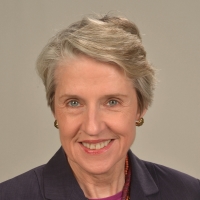 Faith Dickerson, PhD, is a clinical psychologist with Sheppard Pratt Health System who leads initiatives on schizophrenia and bipolar disorder. Dickerson’s work focuses on the role of infectious, immune and microbiome factors in serious mental illness. She also directs clinical and research programs focused on the physical health of individuals with serious mental illness and interventions to reduce premature mortality such as smoking cessation. At Sheppard Pratt, Dickerson also serves as the director of psychology. She is a clinical professor of psychiatry at the University of Maryland School of Medicine and an associate professor of psychiatry and behavioral sciences at the Johns Hopkins School of Medicine. Her research has been funded by the Stanley Medical research Institute, NARSAD and the NIH. She has done more than 200 research publications and often gives presentations at national and international meetings about her research studies.
 Emeran Mayer, MD is a professor in the departments of medicine, physiology and psychiatry at the David Geffen School of Medicine at the University of California, Los Angeles, executive director of the G. Oppenheimer Center for Neurobiology of Stress and Resilience and co-director of the CURE: Digestive Diseases Research Center at UCLA. Mayer is a world-renowned gastroenterologist and neuroscientist with 35 years of experience in the study of clinical and neurobiological aspects of how the digestive system and the nervous system interact in health and disease. His research has been continuously supported by the National Institutes of Health. He wrote "The Mind-Gut Connection: How the Hidden Conversation Within Our Bodies Impacts Our Mood, Our Choices, and Our Overall Health" and has published over 320 peer-reviewed scientific articles, including 100 chapters and reviews, co-edited four books and organized several interdisciplinary symposia in the area of mind body interactions and chronic visceral pain.