Kim Mills: You might think you have a pretty good idea of what obsessive compulsive disorder entails. Maybe you’ve heard someone say, “I’m so OCD,” when they’re just talking about how they like to keep a neat house or how they’re always punctual. But OCD is not synonymous with liking neatness and order, and it encompasses more than just the handwashing or counting or similar compulsions that many people are familiar with. In fact, it’s a multifaceted mental health disorder that seriously affects people’s lives, but it’s also treatable with evidence-based therapies. Today we’re going to talk to two experts, a psychologist who studies OCD and an advocate with lived experience, to do some myth-busting about this misunderstood disorder.
So what is obsessive compulsive disorder and how does it differ from the stereotypes? How common is OCD in both adults and children? What causes it? What effective treatments are available? And if you or someone you love is struggling with OCD, where can you go for help? And what should you look for in a treatment provider?
Welcome to Speaking of Psychology, the flagship podcast of the American Psychological Association that examines the links between psychological science and everyday life. I’m Kim Mills.
We have two guests today. First is Dr. Dean McKay, a professor in the department of psychology at Fordham University, where he heads the Compulsive, Obsessive and Anxiety Program Laboratory. Dr. McKay’s research focuses on the nature and treatment of obsessive compulsive disorder, as well as anxiety disorders and the role of disgust in psychopathology. He has edited or coedited 21 books and published more than 300 journal articles and book chapters. He is also a board certified clinical psychologist and director and founder of the Institute for Cognitive Behavior Therapy and Research, a private treatment and research center in New York. He’s a past president of both the Society for the Science of Clinical Psychology and the Association for Behavioral and Cognitive Therapies.
Next is Uma Chatterjee, a neuroscience PhD student at the University of Wisconsin-Madison, and an advocate with the International OCD Foundation. Her research interests include the neurobiology of OCD and neuropsychiatric disorders, and novel therapeutics for psychiatric disorders, including psychedelic compounds. She’s also a peer mental health specialist. Her mental health practice and research are both informed by her experience with lifelong OCD, compounded by PTSD, young adult cancer, and other chronic illnesses.
Thank you both for joining me today.
Dean McKay, PhD: It’s a pleasure.
Uma Chatterjee: Thank you for having us.
Mills: Dr. McKay, I want to start with you. What are some of the most common myths or misconceptions about OCD that you encounter and how do they differ from the actual disorder?
McKay: One of the most common ones, you touched on it in the introduction, that OCD is mainly expressed through meticulousness, orderliness, punctuality. Maybe every now and then someone will remark that they have some kind of proneness to checking something. These seem to be the net and sum total of what is OCD, and that is a pretty dramatic and common misconception, one that among OCD experts, we kind of find an unfortunate one because it really trivializes the severity of this condition. People who have OCD often suffer dramatically and it pervades their daily lives. And the kinds of things that are more commonly expressed as typical symptoms are things like severe washing related behaviors and intense concern that they might get contaminated, checking behaviors that might be really quite interfering with their social life, as well as just getting out and being able to work and engage in regular everyday functions, intrusive thoughts that are just absolutely horrific and terrifying and difficult to control, as well as some of the kinds of things that are stereotypically associated with the condition, but expressed at a debilitating level.
So when people say that they’re orderly, and that’s therefore OCD, they really are minimizing the way it’s expressed when people have it with true clinical severity. Now, to be fair, 99% of the population have from time to time symptoms that look a lot like OCD. The difference is the dimensionality of it. So we all occasionally and for very good reasons, check things, try to keep things in order, wash, and these things are normative. And so when someone says, I have a little bit of OCD, the answer really is, of course you do, because that’s a consequence of being alive.
Mills: Well, Ms. Chatterjee, you volunteer as an advocate for the International OCD Foundation to raise awareness and educate the public about OCD. Do you encounter these myths in the work that you do every day? And how do you respond?
Chatterjee: All day every day. And it’s in my advocacy, it’s in sharing my lived experience. It’s now as a researcher and sharing my research in research settings amongst people who you would think do understand—OCD clinicians and psychiatrists and researchers. It’s everywhere. And I think it is really difficult to both be holding the professional aspect of having to explain what the disorder actually is, but also holding this sadness within me of, oh, so you’re saying that the thing that crippled me and debilitated me for decades, it’s just a quirk or an adjective or something that’s flippant and doesn’t even need the amount of research that it does. So yeah, I deal with it all of the time. It’s most often portrayed as a quirk or an adjective.
People say, “I’m so OCD” all the time, which doesn’t even syntactically make sense. Nobody says, “I’m so obsessive compulsive disorder.” That doesn’t even make logical sense. And to Dr. McKay’s point, yes, everybody, every single human being experiences intrusive thoughts or fears. They also sometimes might have habitual behavior, but the key aspect that most people don’t experience is the disorder part. The fact that it could take at least 1 hour per day of your entire life. And for people with severe experiences like myself, sometimes 12 to 16 hours of our day, if not more, if we’re not sleeping.
So it’s also often seen as just a more extreme form of anxiety, which is not true based on the research. There’s so many other aspects of OCD as well. Some people don’t even experience anxiety as part of their OCD. So there’s so many myths and misconceptions. But I think the biggest one is that people with OCD like what they’re doing. So when people say, I’m so OCD about cleaning, or I’m so OCD about ordering things or about things being perfect, number one, again, syntactically incorrect. But number two, also, it’s implying that I like something a certain, and I need it that way because I really, really like it. And people with OCD hate what they’re doing. They do not want to be doing what they’re doing. They do not want to be thinking about what they’re doing. It is not a choice at all. So just really a different between what’s ego syntonic versus what’s ego dystonic.
Mills: So, Dr. McKay, we’ve talked a little bit about some of the manifestations, but there are different subtypes of OCD, right?
McKay: Yeah.
Mills: Can you explain what some of those are?
McKay: Sure. And so by way of introduction, the idea of subtypes is that as a condition, obsessive compulsive disorder is highly varied. The term that we might use is what we call heterogeneous. And so I named a couple of subtypes that are based on symptoms. So symptoms could be in different categories such as washing symptoms, which many people in the public understand to be associated with OCD. So washing and concerns with contamination. Then another, shall we say, symptom subtype involves checking stuff, making sure that things are not going to pose a danger down in the future, making sure the door is locked, making sure the stove is off. Those also kind of stereotypically associated with the condition. But again, when expressed in this rather extreme way.
Then there’s this category of symptoms that are primarily due to intrusive thoughts, like horrific thoughts of maybe unwanted urges to harm someone, unwanted thoughts about blasphemy, things that are in this forbidden realm where the person absolutely doesn’t wish these things to happen, but they nevertheless occur to them.
So those are some symptom subtypes. There are other expressions of the condition marked by things like a sense that things are not complete, or a sense that I need to get something just right, even though there’s a kind of arbitrary designation as to what is correct or not correct, the way things are placed on the table or the way a door closes. And if it doesn’t sound quite right that you might have to redo it. So that would be another manifestation.
In the introduction for my co-presenter, for Uma, an emerging recognized subtype is when people have OCD and co-occurring trauma, we understand that in order to address that particular kind of co-occurring symptom presentation, it may require a different approach to treatment. So there’s a variety of ways that this condition manifests that make it really complicated to treat when presented. And I guess foreshadowing a little bit where I know we’re going to go for our discussion, it’s what really calls for the need for specialized treatment.
Mills: So let me ask you, can you tell us some of your story and have you struggled with some of the compulsions that we’ve been talking about so far?
Chatterjee: Yes, absolutely. So according to my clinicians, they’re pretty sure I was born with OCD, and that’s because of the severity of my symptoms and for how long. I can go back and remember that I have been buried in obsessions and have just done compulsions to try to have any semblance of control without knowing I had OCD. So I also grew up in a first generation immigrant household with virtually no understanding of psychiatric conditions, mental health conditions, or the concept of mental health. So it took me very, very long to get a diagnosis and proper treatment, but outside of a lack of access to proper care, it was also hugely perpetuated the time and the delay to my proper treatment by the complete lack of understanding of what OCD was. So my mom used to bug me about cleaning my room growing up, and I would just be upset with her and say, gosh, stop being so OCD about cleaning.
I was one of those people as well. I had no idea whatsoever. But from a young age, I was severely, severely anxious and disgust prone. And I had these obsessions as a young kid of, what if my parents don’t come home? What if they die? And I was taught these prayers growing up to be able to try to control reality, or at least that’s what my brain interpreted them as. And so these 12 prayers, I would have to do them 39 times every single time I had this thought in order to neutralize it. And it sounds absolutely absurd, right? And that’s just the beginning of my whole OCD story. But that is just largely how it showed up as a kid. But I think it became even more pervasive as I grew up. And something very horrible about OCD is that there’s really no bounds as to what it can latch itself onto.
Whatever fears one interacts with, especially going through traumatic experiences, OCD will latch onto absolutely everything. And so for me, it started taking up every single aspect of my life. It was to the point where I was so afraid when I was around 18 to 20 years old of being homeless that I couldn’t even turn the lights on, and I had to sit in the darkness because I was so afraid that what if I spent too much money on an electricity bill and I lose all this money and I become homeless and I can’t function anymore? I couldn’t go to the grocery store without spending 8 hours there. And this is not a choice. Once again, this was absolutely debilitating. I would go to the grocery store and I had to compulsively compare every single product. If I had to get toilet paper, I had to compare every single product and figure out what is the best decision, what costs the least amount of money per unit, what’s going to get the job done?
And then once I would actually finally make that decision, 8 hours later, not exaggerating, I would then leave. Then I’d returned back to the store to return it. I would go make a different decision. I would just be consumed. I couldn’t function. I couldn’t live my life. And it was to the point where it got worse and worse and worse through my adolescence. What’s important to note is that I was hospitalized for attempts on my life, and largely that was because of OCD, but I was diagnosed with generalized anxiety disorder, a major depressive disorder. And yes, I did and do have, but I also had severe OCD and nobody knew it because yeah, what I just talked about were my physical compulsions. But number one, I didn’t know that I was supposed to talk about it. I didn’t know it was abnormal. Nobody had made me feel like this is something people don’t do.
It’s really easy to hide with OCD, but also what we’re going to get to later, mental compulsions. Those were the vast majority of what I experienced. I was constantly just ruminating, mentally reviewing my memories. I had pathological doubt about everything that happened to me. And so with that, I went first misdiagnosed, first undiagnosed until I was about 13. Then I was misdiagnosed until I was 22 years old. And at that point, when I was 22, I had dropped out of college with a 1.83 GPA because I could not function whatsoever. I would go to class and I would be so consumed by what if I don’t understand everything? What if I don’t write everything down? So I’d spend my entire college class trying to write every, literally every single word that the professor said down, I could not skip over a word. And of course, as I’m writing things down, I’m missing what they’re saying.
So then I started compulsively recording all of my classes, then going home and reviewing them over and over and over again until I just burnt out. So I was at a complete loss. I had internalized it as, I am just too stupid to do this. I don’t belong here. I need to leave college. And it got to the point at 22 where I was sitting in the dark, I couldn’t go to the grocery store. I started living with my partner, now husband. And let me tell you, living with someone really shows you how different your behaviors are than other people. And so when I started freaking out at the fact that he would turn the lights on or that he would use a whole piece of toilet paper, God forbid, or a whole piece of paper towel, it sounds absurd, right? But that’s the thing about OCD, some of the worst parts of OCD is that as sufferers, we have a sense of the fact that this is illogical, and we cannot override it because of the neural circuitry in our brains.
At least without treatment, we can’t override it. So all of it to say at 22, I was finally diagnosed, but that was because I started realizing that I was doing things repetitively. I went to a psychologist. They said, yes, you have OCD. Then they proceeded to treat me completely incorrectly for OCD with traditional cognitive behavioral therapy. Dr. McKay actually has an amazing article of many of the psychotherapies that are contraindicated and make things worse for OCD because they’re not—they just reinforce compulsions. But that’s what I experienced for 3 more years. So a diagnosis wasn’t even enough because who was treating me did not know how to treat it. I was also treated with psychodynamic therapy. So we were trying to find the root cause of all of my fears so that if we just got over the trauma, then I would be fine. And that obviously didn’t work.
Finally, once again, I was fully debilitated, but also telling myself that I’m supposed to be getting better. What really got me to finally get evidence-based treatment, was the fact that I kind of had just started sitting on my hands metaphorically and literally to not do compulsions. And at that point, from 22 to 25, I thought that compulsions were just physical. So I was like, if I just don’t do these compulsions, I’m fine. And so I would sit on my hands and I would not do them. My husband was around, so he held me accountable to it. But then after the pandemic, he went back to work. I was alone at home doing school, and I had returned back to school at that point, and I started doing my physical compulsions again. I realized I had relapsed. So I started Googling. And with my 25-year-old brain, I was then able to finally find the International OCD Foundation.
I realized exposure and response prevention [ERP] was a thing, and that was the actual treatment for OCD. I could not believe that in 25 years I had never heard of this and that I was being incorrectly treated. This whole time I finally started engaging with ERP, I gained so much of my life back. I went from someone with a 1.83 GPA to coming back to school, retaking all of my classes with straight A’s. I got my bachelor’s in psychology. I got my master’s in neuroscience with a 4.0. I’m now a PhD student at the University of Wisconsin-Madison. I’m studying this very thing. My life looks completely different than it did riddled with OCD. And why I’m so passionate about talking about this is because so many people, my story is not unique. Going so long incorrectly treated, so long misdiagnosed, and this definitely needs to change.
Mills: That’s quite an incredible story. And that leads me to ask you, Dr. McKay, how does this get diagnosed? I mean, is there a test that you give to people? Do you do brain scans? How do you find out that somebody really has true OCD?
McKay: Sure. Well, look, before I start, Uma, I had not heard your story before—really impressive. So I’m really happy to see that you’ve managed to overcome your OCD and come this far. Really congratulations, and it’s nice to see you giving back.
So as far, so coming to your question, Kim, it’s a great question. And the story that Uma told is unfortunately oft told about the misdiagnosis and mistreatment phase on the journey to finally finding correct treatment. So if we start with, one thing that I hope will come from this podcast is that more people will understand what it takes to try and identify it. There are a number of very brief, readily administered tests that could be given that would at least give a hint as to whether or not more testing should be done to diagnose OCD. Most of it is frankly self-report in nature.
We don’t yet have a definitive brain scan to diagnose OCD, nor do we have really for any psychiatric condition, a good reliable brain scan. But we do have tools at our disposal that in the hands of a skilled clinician can help point one in the right direction for how to measure this. So one of the measures is—there’s one that’s freely available, it’s really brief—called the obsessive compulsive inventory. If you’ll pardon me with a brief little bit of self-promotion. My colleagues and I published a brief version of it. It’s four items. It’s four questions. We are really hoping that primary care physicians will start adopting it because it’s literally something that could be part of an intake package that could be used. And we actually know a score that if you got above a certain score, it points one in the direction of whether or not someone might have OCD.
So that part of it is an important first step. After that, it requires a trained mental health practitioner to then ask some important follow-up questions, because a self-report questionnaire alone is really not enough. But we need to really know more about the setting, conditions under which this occurs, the degree to which it interferes with one’s life. I mean, Uma’s story is really quite intense in its conveyance about how much it can debilitate one, but also her story is not uncommon in that many people who suffer for so long are unaware that, wow, I don’t have to live this way. I don’t have to be consumed with the cost of things or whether I’m safe under these conditions. I mean, many people are kind of unaware of it because they get debilitated, but it also becomes something that they accommodate to. So those are some things that are worth paying attention to. I think practitioners can do a better job of it. Most sufferers go to primary care physicians and other medical and health professionals before they ever show up at a psychologist or psychiatrist’s office. And so I think there are some ways that this could be better understood in settings that people first go to, and it will save people just a ton of time, and it saves them a lot of frustration and pain.
Mills: Well, let’s talk for a minute about treatment. Now, Uma mentioned a few things, that treatments were administered to you that didn’t work, and I want to ask Dr. McKay, what does work? What are the proven treatments, and then what are the treatments that exacerbate the problem?
McKay: Sure, yeah. Yeah. So the one established evidence-based treatment, or what we call evidence-based treatment, in that it’s been studied carefully under a variety of conditions by independent groups. So it’s not just one clinician or one researcher who said, I have this idea, and then they keep doing it. It has to be independently shown. And the one that has actually been demonstrated for decades now is called exposure with response prevention, which Uma referred to before.
Now, the term, I kind of feel funny about the term because it’s got, it’s unfortunate in a way. It’s got a public relations problem. It requires that someone help the client who’s suffering from OCD practice doing the things that they’re afraid of. And now in the hands of someone who may be unskilled, this can be really a problem. And so Uma made reference to harmful treatments—one way that treatment can be harmful, like almost any other treatment, is by the way, there are opportunities for people to do it poorly, in which case it comes out badly.
So if we think about the day-to-day experience, and the way Uma described her daily life, imagine if you will, you’re standing on the edge of a building with no guardrail and the fear you might feel that’s probably, if I may Uma, and correct me if I’m wrong, I imagine, and what I’ve heard from other clients, that’s the intense level of fear that they feel each day as they try to make these basic decisions. And so in order to treat this, we try to help people go through in a very gradual paced, manageable way to encounter these things that they ordinarily might fear and then practice it between sessions. And as they do this more and more, it becomes less scary. They find, oh, look, I can actually do these things and survive.
And as they do that more and more, you can do more and more advanced things, and people find freedom in their life by doing it. So that’s the main treatment. And by the way, it was the first effective treatment for OCD. Prior to that, in 1965, there was an article written that said, if someone comes to your office and they have OCD, do not treat them. Everything you do will harm them. That was literally the words of in the American Psychiatric Association. The very next year is when exposure with response prevention began to get developed. So it’s about almost 60 years that we’ve had variations on exposure with response prevention. The extension to that is that some specific forms of cognitive therapy are useful. So Uma made reference to traditional cognitive behavioral therapy. Traditional cognitive behavioral therapy is where you help someone identify a way of thinking about things, and you say, Hey, let’s challenge those assumptions.
When you do that with OCD, it actually backfires badly because people will say to you things like, well, let’s say if I use Uma as an example, if I may, Uma, since you expressed it so perfectly, the symptom expression, it’s too compelling for me to not go there. So if Uma’s in the store and she’s saying, I’m worried about buying baked beans because I don’t know if I could spend $3 on this can of baked beans, someone might ask you to then go down the rabbit hole of, well, what is the evidence that if you spend $3 that it’s going to be a problem? And you get into this cycle that really basically is referred to as reassurance, which is basically a process that people with OCD probably do already. And that just makes things worse because now rather than demonstrating that, oh, I can spend $3 and not be destitute, they’re instead getting reassurance that lasts very briefly.
So that form of treatment is actually bad. A different form of cognitive therapy addresses, main themes that we understand are associated with OCD. Like I have this inflated sense that there’s danger facing me. If I spend $3, what is the danger of spending $3? Right? You start asking a different set of questions, and there’s a collection of these that we can think of. There’s concerns with perfectionism, concerns with responsibility. So people who have thoughts about harming others, they’re worried that their thoughts have the power to lead them to action, and therefore they’re more responsible for what might happen later on to people, even if they just thought about harming them, but they never did anything. There’s what they call overimportance of thoughts. So if I think it has greater potency, just in general, there’s what they call overestimation of threat. There’s intolerance of uncertainty. These are some of the main ways of thinking that people with OCD struggle with, and that cognitive therapy specifically for the condition is used to address.
Mills: Well, Uma, I want to turn to you now and ask you if you’ve gotten some of this treatment. You seem to have your life on a good track right now. Do you have to constantly go through these exercises to keep yourself from slipping back into having the OCD symptoms?
Chatterjee: That’s a really good question because I think the answer touches on a lot of aspects of recovery. So for me, I started exposure and response prevention in 2021, and it is now 2023, as of this episode. So as Dr. McKay mentioned, I have comorbid OCD and PTSD. So that has complicated treatment a little bit. But overall, my trajectory of treatment is pretty common, which is that there is a lot of gains as soon as one starts doing ERP and they understand how it works, and there’s enough psychoeducation to buy into, if you will, ERP. But then from there, I mean OCD is a chronic condition, and that can sound scary and it is, but with the proper tools, as you’ve just talked about—first of all, I’m still in ERP. I’m doing it right after this episode. We’re going to be downloading on this episode.
Also, it is a practice for me because I have come down from scoring extreme on the Y-BOCS—the Yale-Brown Obsessive Compulsive Scale that assesses the severity of OCD and diagnoses—I’ve gone from extreme to severe. Sometimes I’m moderate to severe. So for me, my OCD is very strong. I have recovered enough to gain my life, I wouldn’t even say back—I didn’t really have my life, honestly, before treatment. It was a very limited life. But with that being said, I still struggle deeply, and there are lots of themes and compulsions that I’m still working through myself right now. So I struggle, like I talked about before with mental compulsions. And they feel more difficult to deal with because it kind of feels like thinking, but they’re actually, it’s just a lot of compulsive thinking and themes that are more deeply rooted. So I think for me, ERP has been extremely helpful very quickly with almost more surface level obsessions. And I don’t say surface in a way to diminish the heaviness of how much it impacted my life, but it really just feels more like, this is OCD, I understand this is OCD, so I will do ERP, and it works much more easily.
It’s also with physical compulsions, but for things much more related to honestly taboo themes with harm, with the fear of hurting other people with my thoughts coming true, because what I want to say is adding onto intrusive thoughts and harm people with OCD or I guess everybody has intrusive thoughts. Everyone has a random thought of just abhorrent things of things happening to people. Like, what if I stab my dog? What if I’m driving under the bridge and it falls on me? And most people without OCD are able to be like, that’s a weird thought. Okay, moving on. My brain just did something. People with OCD have such a hyper responsible response to that thought. It’s like, well, what if that thought’s true? What if I actually want that? What if? And they don’t want it at all. They hate that thought. They do not resonate that thought. It’s ego dystonic.
All that to say those are what harm thoughts are, and it can extend to literally anything ever. And they’re very scary. Those are some of the harder themes for me that I’m still working through in recovery. So yes, it can work in the short term of like you do your sessions and you learn ERP and you move on with your life. Also in the advocacy and community space for OCD, we talk about ERP being a lifestyle because OCD can kind of latch onto anything that’s scary in our life, especially when the more we care about it, the more it can latch on. And so we have to keep doing ERP and keep understanding that we can tolerate the obsession and not do compulsions, which sounds very simple, but is extremely difficult.
McKay: If I could interject for a second, and maybe this is a helpful way for listeners to understand a philosophy that guides treatment for OCD and to Uma’s point about this being a chronic condition, what that means then is one has to take care of themselves in a very specific way. And the comparison that I use for clients, that’s sometimes reassuring, I use a dentistry comparison. So when you go to the dentist, you go regularly because you know that that’s good for your teeth. You also, every now and then when you go to the dentist, the dentist says, oh, you need a filling or you need a root canal. And that means you’re going to have to go a little bit more frequently, but you still have every single day a certain minimum level of care and maintenance that you have to do for your teeth.
You have to brush your teeth. And sometimes brushing your teeth is not that great. Sometimes people get sensitive gums or you get a piece of popcorn stuck between your teeth and you have to deal with that. It’s like a nuisance. When people get well enough with OCD that it’s really better managed, they still need to do this regularly, and there will still be days where they go, oh, wow, today was a tougher day. I had this intrusive thought of harming someone. It was a lot stronger. It kind of reminded me of what it was like six months ago. And that’s kind of like a brief filling that needs to be dealt with. And every now and then, actually, it might be even worse. You’re like, wow, I’m really stuck on this harm thought. And I’m really concerned, again about a whole litany of things with germs and contamination. Well, that’s like now the root canal. So we really have to view it more through this lens of regular maintenance and how to achieve wellness by integrating this component of treatment into your life, beginning with a period of time where it might eat up a lot of time, and then moving to a period of time in your life where it might be a regular daily occurrence.
Chatterjee: And I also want to add onto that analogy really quickly because I know I said it was chronic and that could at face value be taken as, oh, well, that’s just so unfortunate. Why even do treatment when I have to live with it my whole life? Well, kind of with the analogy of having maybe a cavity that you didn’t get treated for 10 years, I had one for 2 years, so I know what that feels like. And just the amount of pain and it taking over your mouth all day every day, once you get your cavity filled and then you brush your teeth and you might get a cavity again. But for the most part, until you get that next cavity, you’re still living in far less pain and in far more freedom. So it’s still worth getting the cavity filled and still worth, and there’s still so much freedom. So yes, there’s a lot of hope with OCD even when it is chronic.
McKay: Exactly right. I love that. That’s great. Thanks for building on that.
Mills: So another question occurs to me going back to something that Uma said earlier, which is that she thinks that she was born with OCD. And I want to ask you, Dr. McKay, are people born with it? Is it acquired? When does it first manifest? How would you know if you’re seeing it in a child, for example?
McKay: Yeah, so we usually think of OCD as having two distinct ages of onset. There’s a young child version, and so children who develop it where it’s really evident to everyone around them, usually around the ages six or seven. What makes it a little more complicated is that there’s a developmental stage where children exhibit compulsive behavior where it’s expected and normal. And so when we think about the birth of a child who may have a future with OCD, they probably temperamentally do exhibit it early on. We don’t know definitively how someone arrives with OCD, but we do know that there are certain dispositions that increase the odds, and those kids usually develop it early. There’s then a little more later onset, which is in the teen years. And by the way, for listeners to this podcast, if you’ve had other people talk about other psychiatric conditions, most conditions have an age of onset in the teen years.
The teen years are a period of intense social stress that is a way in which a lot of different anxiety disorders, depression and other psychiatric conditions show up. So it’s not surprising that OCD would have this other second major age of onset. So kids who develop it early, they probably temperamentally are more anxious, more prone to developing this because of circumstances in their environment that naturally would’ve led them there. So what I like to tell people is that you probably would’ve developed it no matter what. To spend time in more traditional psychotherapies where you might try to break down behaviors of one’s parents to look for conditions that gave rise to it, it’s usually kind of a fruitless endeavor, and frankly, it doesn’t promote any kind of wellness anyway. But we do know that there are temperaments, as they call it, ways that you respond emotionally to the world that you have when you arrive that may set the stage for this.
Mills: Uma, you’ve talked about having some comorbidities, some other issues in addition to having OCD. How has that affected your overall wellbeing, and is that really common as you’re dealing as an advocate? Do you see that a lot in people?
Chatterjee: Yeah, so there’s actually, in terms of the research done for OCD and especially for therapeutics, namely right now, there’s a lot of research being done with ketamine and psychedelics. For OCD, for example, a huge problem that researchers are facing is that they have a “dirty” population, meaning that people don’t just have OCD, they also have many other comorbid disorders. And so we’re not truly sure if we’re working specifically with OCD. And I think all that to say that it’s very common to have comorbidities, especially I think some of the highest ones are major depressive disorder, generalized anxiety disorder. One of them that I’m very particularly interested in is post-traumatic stress disorder. And I think what’s super important to note though, because I face this question a lot in my research and in advocacy is, well, is OCD just a form of these disorders then, or is it just a coping mechanism for these other disorders?
OCD, while it does have a lot of overlap, is also a distinct disorder with distinct functionality that requires distinct treatment. But to your question of my overall wellness, I think just on surface level, having these comorbidities and the fact that it was far easier to find my other disorders before OCD just delayed the treatment that I could have received for so long, which really wrecked me for so much of my life, and I’m working through the grief of how much life I lost due to undiagnosed and untreated OCD, I mean the amount I have gained in my life in the last two to 3 years from proper treatment. It’s just mind blowing how much is possible for my life with proper treatment. So I think on surface level, just those comorbidities kind of mask the OCD, but also in general, dealing with so many conditions at once and the severity of it all, it’s really taxing. And I think it’s hard to parse them entirely apart as to what’s the most debilitating. But I will say because of the added burden of OCD being so underdiagnosed and also because OCD has this way of causing and casting doubt on top of everything in my life and just causing this level of unsafety that the other disorders don’t really do as much, it definitely doesn’t make things very fun.
McKay: If I could add for a second, because I described exposure therapy, exposure with response prevention, and Uma mentioned it also, and she I think is a great living example of someone who has benefited from it and gotten freedom from her OCD symptoms that if you look online, so listeners to this podcast may now go further and look up exposure with response prevention. And the descriptions that are out there vary widely. Some of them fail to do it justice. So I want to say out loud and with the strongest voice I possibly can, that conducting exposure with response prevention for someone who suffers from OCD is probably the most compassionate thing you can do if it’s done properly. There are all kinds of descriptions out there that characterize it based upon the exposure part, and they also sometimes capture elements that are gleaned from execution by therapists who maybe understand what they’re supposed to do, but do it inelegantly. And so that’s an error of blaming the treatment when actually it was due to an inartful or unskilled therapy execution. So I can’t stress it enough. It is really the most compassionate thing you could do. It provides the fastest relief of any treatment we know when done properly. And so I really feel like it’s so important to really highlight that for anybody listening.
Mills: What about drug therapy though? I’m wondering since Uma brought that up, are there drug therapies that are effective for OCD?
McKay: There have been a lot of drugs tested for OCD and are on the market for OCD, that also has about a 45- or 50-year history in the medical research literature. The one drug that got this started is called clomipramine. The trade name is Anafranil. The challenge with that drug, as I understand it, I’m not a medical doctor, but I know enough about medication that I could talk about it with mild competency is that there are side effects that people find to be unpleasant. The newer antidepressants and the class of drugs, by the way, that are most likely to be used for OCD are antidepressants. So clomipramine was the first that really showed benefit, the side effects people find to be difficult to tolerate though.
And so the newer ones, and when I say newer, it’s as of Prozac and on, so it’s still like a 35-year history, are better tolerated medications. So most prescribers who treat OCD regularly start with newer serotonin re-uptake inhibitors. So the neurotransmitter that’s been implicated in OCD is serotonin. Prozac is one drug that’s often prescribed. Both of these you can get generic. So fluoxetine for Prozac, fluvoxamine for Luvox. Sertraline, AKA Zoloft is also widely prescribed. Newer medications than that are things like Lexapro, which is commonly prescribed.
And as you get to newer and newer medications, what they call selectivity, the degree that they target only serotonin and don’t end up targeting other neurotransmitters, which is where the side effects come into play, is what is the benefit for the newer ones. So let’s say Lexapro really only targets serotonin. There aren’t too many other neurotransmitters at a target, so people don’t have as many side effects. The downside is that the research suggests that they may not necessarily provide as much benefit. And the bottom line with all of this is that most of the research has suggested that medication alone is generally not sufficient. So most sufferers at some point probably will need to meet with a mental health professional who does not prescribe in order to help alleviate their symptoms. But medication can take the edge off, and some people find real meaningful and lasting benefit from it. So we should really pay attention to that. It’s an important facet of how treatment can be done properly and comprehensively.
Chatterjee: The neuroscientist in me wants to just add a few more things to that. A newer line of research too is glutamate modulators. So glutamate is an excitatory neurotransmitter that’s also implicated in OCD as well. So that’s being looked at as well, as well as psychedelic treatments for the purposes of modulating many other types of neurons and neurotransmitters. Additionally, I think when people hear the word antidepressant, they think like, oh, so it’s just a form of depression. It’s not, and antidepressants do help with depression, but also they help with many other things because acting on serotonergic neurons also, specifically for OCD patients, tend to need a far higher dose of an antidepressant or an SSRI than people, than just for depression.
And the last thing I want to say is just exactly highlighting what Dr. McKay said about the research showing that yes, of course medications can make an impact, but they typically need exposure and response prevention, or there’s far higher and more positive outcomes with exposure and response prevention, especially in comparing if one just did ERP versus medication, if they had to pick one or the other, which is not the case, but if they had to, ERP is more efficacious than medication alone, and medication can be adjunctive and helpful as well. But ERP is the cornerstone of treatment.
Mills: So just to tie up loose ends here, let ask an overarching question to you both, since you’re both doing work in these areas, what do you consider the big unanswered questions and what are you working on now where you really hoping to maybe break through? Uma, you want to take that first?
Chatterjee: I as a neuropsychopharmacologist want to understand why on earth OCD brains exist, what is the neuro circuitry? What exactly is going on? So hopefully we can develop novel therapeutics and novel interventions. I also think that with the research that’s already been done, it’s already pretty evident that there is a neurodevelopmental component and that above all, it is a brain disorder. It is not a choice, it’s not a quirk, it’s not an adjective in that there are unique brain circuit features that are giving rise to these horrific experiences in people. I also want to understand if there are differences in physical versus mental compulsions in the way that it is enformed in the brain, because it seems to be like there’s sometimes a divergence in the way people recover in that way, at least in my experience and others as well. And I think Dr. McKay is also doing amazing work to further the field and just accessibility and understanding of this disorder. So I’ll let him take it away as well.
McKay: Well, that’s exciting what you’re working on, Uma, and I’m so glad that you’re joining the field in this area. So that’s great. Well, and to what you’re asking about, Kim. So my focus of late has been, as Uma said, accessibility. I feel it’s so important that more people, first of all, be able to identify it, right? The fact that people go undiagnosed and then when they get diagnosed don’t get the proper treatment to me is really a tragedy, particularly when the treatment has been available and known for as long as it has been. So I entered the psychology workforce in 1993, and at that time, exposure with response prevention was known. It’s not like when I entered the workforce, people were like, I don’t know what to do about OCD. We knew what to do then. And here it is now all these years later, and there’s still a poverty of availability of treatment.
To me that’s like if you said, we know penicillin works, but we can’t get it to everybody. So that to me is really just horrible and we need to do better in that front. At the same time, there are these giant areas that we don’t really fully understand yet. So we really haven’t talked about it. And it’s probably a topic for a different podcast frankly, is well, what is the role of some other emotional states? The focus of our discussion was anxiety, right? Most people with OCD immediately report, I’m anxious, this is terrifying. But about 50% of all sufferers, whether it’s their main symptom or it’s a secondary symptom of OCD struggle with contamination concerns. And that brings into the focus. Things are right, like Uma, and what suddenly gets wrapped up in this are things about disgust. And so I’ll only talk about it briefly, so I guess it’ll be a teaser.
People who are listening email me or invite me to another podcast. Disgust is designed at its core to prevent, help prevent us from getting poisoned by stuff, whether it be through our skin or through our mouth. And so this is an animating focus for a big portion of people with OCD, not to mention other psychological conditions. And we don’t really know what to do with that yet. I mean, we have kind of a sense, but we’re really not good at it yet. So that I think is one of a number of important frontiers that we need to deal with. And Uma will appreciate this. We know for disgust whole different neural circuitry is involved. The brain areas involved in fear are not the same ones for disgust. So that means we probably have to deal with it differently when it comes to psychological treatments or any other kinds of medical interventions.
Chatterjee: And I want to come full circle to where we started at the beginning about the misconceptions of OCD because as Dr. McKay mentioned, treatment is available, resources are available, but why are people going so long misdiagnosed and untreated? Largely, that’s because OCD faces a unique barrier that other psychological disorders don’t, which is this complete misunderstanding and misrepresentation of what it is. And so I think bridging that gap really starts with episodes like this on large platforms where we get to raise awareness for what real OCD is and making sure that people are more aware early on that OCD is not a choice. It’s not something people like, and that repetitive thoughts, intrusive thoughts, and repetitive physical and mental behaviors can be a disorder that they can be treated for. So that just full circle, this is why we need to raise awareness. This is why advocacy exists on such a large scale for OCD specifically, and why people like me dedicate their lives to talking about it. It’s not just because we want to talk about how hard our life is, it’s because we’re trying to make sure other people don’t suffer as long as we did unnecessarily.
Mills: Well, I want to thank you both for joining me today. This has been a fascinating conversation. I’m sure we could go on longer, and Dr. McKay, maybe we’ll get back to discuss at some point. That is a topic that I would like to talk about, so I appreciate—
McKay: I think Uma should join us for that.
Mills: Okay. Absolutely. Yeah, we may all meet again then.
McKay: Absolutely. We’re a team, right?
Mills: All right. Well, thank you both. It’s been really great.
Chatterjee: It was a pleasure.
McKay: Thank you so much.
Mills: You can find previous episodes of Speaking of Psychology on our website at speakingofpsychology.org or on Apple, Spotify, YouTube, or wherever you get your podcasts. And if you like what you’ve heard, please leave a review. If you have comments or ideas for future podcasts, you can email us at speakingofpsychology@apa.org. Speaking of Psychology is produced by Lea Winerman. Our sound editor is Chris Condayan.
Thank you for listening. For the American Psychological Association, I’m Kim Mills.


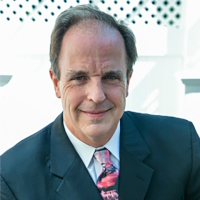 Dean McKay, PhD, is a professor in the department of psychology at Fordham University. His research focuses on the nature and treatment of OCD, as well as anxiety disorders and the role of disgust in psychopathology. He is also a board-certified clinical psychologist and director and founder of the Institute for Cognitive Behavior Therapy and Research, a private treatment and research center in New York. He's a past president of both the Society for the Science of Clinical Psychology and the Association for Behavioral and Cognitive Therapies.
 Uma Chatterjee is a neuroscience PhD student at the University of Wisconsin-Madison and an advocate with the International OCD Foundation. Her research interests include the neurobiology of OCD and neuropsychiatric disorders, and novel therapeutics for psychiatric disorders, including psychedelic compounds. She's also a peer mental health specialist. Her mental health practice and research are both informed by her experience with lifelong OCD, compounded by PTSD, young adult cancer, and other chronic illnesses.