Kim Mills: Are you afraid of heights? Do you hyperventilate at the thought of a flu shot? Do you go out of your way to avoid elevators and other small enclosed spaces? Have you driven across the country because you're too frightened to fly or avoided a particular driving route because you're terrified of bridges? All of these are examples of what psychologists call specific phobias, which constitute one of the most common forms of anxiety disorder. Studies have found that anywhere from 9% to 13% of people experience a specific phobia at some point in their lives. And unfortunately, although effective treatments are available, far fewer people receive treatment than could benefit from it.
So what are phobias, and how do they differ from fears? What are some of the most common phobias and how common are they? Where do phobias come from? Are you born with them or are they learned? What treatments are available for phobias, and how well do they work?
Welcome to Speaking of Psychology, the flagship podcast of the American Psychological Association that examines the links between psychological science and everyday life. I'm Kim Mills.
My guest today is Dr. Martin Antony, a professor in the department of psychology at Toronto Metropolitan University. He also holds part-time or adjunct faculty appointments at McMaster University and the University of Toronto, and he was the founding director of the Anxiety Treatment and Research Clinic at St. Joseph's Healthcare in Hamilton, Ontario. Dr. Antony is internationally known for his books and research on anxiety disorders, including phobias, as well as perfectionism, cognitive behavioral therapy, and assessment of psychological disorders. He has published 33 books including several evidence-based self-help manuals for the general public on overcoming phobias and anxiety. Dr. Antony is a fellow of the Royal Society of Canada and a past president of the Canadian Psychological Association.
Thank you for joining me today, Dr. Antony.
Martin Antony, PhD: My pleasure. Thank you for inviting me to be here.
Mills: Let's start by talking about the difference between a fear and a phobia. Are phobias just a more extreme type of fear or are they more complex than that?
Antony: So a phobia is a fear that first of all is excessive, so it's out of proportion to the actual danger in the situation. But it's also a fear that is causing problems to a person, so it's maybe bothering them that they have the fear or it's interfering with their life in some way. So you may be terrified of snakes, but if you never see a snake, it doesn't really affect what you do in your day-to-day life, then who cares? You just have a fear of snakes. On the other hand, if you can't leave your house because you might see a snake and your fear of snakes is affecting your ability to enjoy a movie or a TV show because there might be a snake on there, or you're having nightmares about snakes that are keeping you awake, then it might be at a level that we might call a phobia.
Mills: So that's one common phobia, snakes, but what are some of the other common phobias, and what are the triggers for these phobias? Is there something that ties them together particularly?
Antony: Yeah, so the most common phobia is most likely animal phobias. So spiders, snakes, dogs, cats, birds, mice. And often among animal phobias, the ones that are most common are the fears of creepy crawly kinds of things like mice and spiders and snakes and things like that. Heights would be probably the second most common. So that's very common as well. But we also see lots of people with a fear of flying, a fear of enclosed places, blood, needles, a fear of being in water, fear of storms. So lots of different things, but those are some of the more common ones.
Mills: And all of these, if you're phobic, it impairs your life, right? I mean, it's not just that you're worried that a hurricane is coming because it really is coming, but that you spend a lot of time dwelling on this, ruminating over, “there's going to be a storm, oh my god, I can't go anywhere.”
Antony: Yeah, so some of the people I've seen who have come for treatment of storm phobias, it's affecting their life in a few ways. So first of all, they're constantly monitoring the weather channel, for example. And on days that there are possible storms or even just maybe rain forecast, they may not go to work on those days. And then when there is a storm they may have to hide in their basement so they don't see the lightning through the window and they have the music blaring so they don't hear the thunder. So it affects their ability to make plans and do the things that they want to do. And yeah, so it's affecting their life and that's what brings people in for help.
Mills: Where do phobias come from? Do people just have a bad experience at some point early in life, like say a turbulent flight that then leads to fear of flying? Or are the origins of phobia less clear-cut than that?
Antony: Yeah, so I think it really depends on the person. So different people have different pathways to developing fear. So three pathways that have been identified, one is a negative experience in the situation. So people have a direct learning experience so maybe they've been bitten by a dog or been in a car accident that leads to a fear of dogs or fear of driving. But we can also develop phobias through modeling. And modeling basically just involves watching other people, so learning through observations. So if you grow up with parents who are terrified of driving and you see their fear year after year, by the time you get your license, you might be at a higher likelihood of having a fear of driving just from watching them be afraid for so long. So we know that children often learn to be afraid by watching other people's responses and situations.
A third pathway is through information or instruction. And this is learning through language, things that people tell us. So if our parents are always warning us to be careful when we're driving, because you never know what's going to happen, or the media certainly can contribute to different fears that people have. So that can be a third pathway to developing fear. But I'll just add those pathways don't affect everybody equally. So two people can have a car accident, one person develops a fear of driving and one doesn't.
So we know that there are also other factors, things like genetics for example, that increase our vulnerability to developing fear following one of these events. And the last thing I want to mention is the role of what we call preparedness. And all that means is that through evolution presumably, we are prepared or predisposed to learn to fear some things more easily than others. So just as an example, almost nobody has a fear of flowers, but it's very common to have fears of spiders and snakes. And the thinking is that spiders and snakes prehistorically would've been more dangerous to our ancestors than flowers would be. Even modern threats like an electrical socket. Theoretically electrical sockets can be dangerous, but we don't see a lot of people with phobias of electrical sockets.
And again, the thinking is that we haven't developed that, kind of put that propensity to develop that fear through evolution because they just haven't been around for that long. So our learning plays a role, but so does our genetics and so does just how we're built in terms of how we've evolved to be more careful around things that are potentially threatening and things that have been threatening for thousands and tens of thousands and hundreds of thousands of years.
Mills: So let's talk about treatment for a minute. What are some of the ways that you can help people overcome phobias? What is based on scientific evidence that has been shown to work?
Antony: So the most effective treatment is exposure therapy. So we have all benefited from exposure to overcome a fear of one thing or another. One thing I would ask the audience to do is to reflect on, is there anything in their life that they used to be afraid of that they're not afraid of anymore? And it might be maybe when they were kids they were afraid of the dark and now they're not. Or maybe the first day at work at their job, they were very nervous meeting new people. Or the first time they went on a date with their partner, they were very nervous and it just got easier over time. And I might ask them, why did it get easier? And usually the answer is, “Well, I just had to do it and it got easier. I got used to it. I learned that the situation wasn't dangerous.”
And that's what exposure therapy is all about. We come up with a plan where people gradually expose themselves to the situation or the object that they're afraid of at their own pace. We don't force people to do anything. And again, it's done gradually. People start at a place where they're willing to, and as they become more comfortable, they try things that are more challenging. So for phobias, that tends to be the main component of treatment. There are other strategies that may be useful as well, but that would be the most important one for specific phobias in particular.
Mills: Now with exposure therapy, is that something you can do on your own or do you need a professional to help you?
Antony: That is a great question. So I get asked all the time, “If I read your self-help book on how to overcome a phobia, will I overcome it?” And my answer is always the same. I say “Yes, in the same way that if you read a book on physical fitness, you'll get physically fit.” So in other words, reading the book isn't going to get you over your phobia. You have to do all the things that the book describes, and some people are able to do that. I get emails from people all over the world who said that the strategies in the book changed their lives.
But we also know from research that many people cannot do it on their own or completely on their own. They need the support of a therapist who can help to motivate them, help to solve any problems that come up. In the case of animal phobias, you often need someone else to be controlling the animal and holding the animals because you have a client who's afraid of dogs can't go out and find dogs themselves or spiders or whatever. So having somebody there, whether it's a family member or therapist to help control the environment and offer support can be useful. So I guess the quick answer is some people are able to do it on their own, other people need the support of a therapist or family member, somebody to work with them in the situation.
Mills: Are there some phobias that are harder to get over than others or does it really just depend on the individual who has the phobia?
Antony: I think it depends a lot on the individual. So I've seen lots of people with the same fear who respond differently to treatment. One thing I would say is that the type of fear does impact on how long it takes to get over it. So there are studies with animal phobias showing that in about two to three hours of exposure, even in a single session, the majority of people can overcome the fear. In my experience with driving fears, it takes longer. So it might take me about 10 weeks with somebody where they're practicing a lot in between sessions as well to get to that same point.
The other thing I would say is that although most people with a specific phobia can overcome the fear through treatment, more complex kinds of problems like social anxiety where people are nervous in a wide range of social situations, that can take longer to overcome. And it's not unusual for people to be doing much better at the end of treatment, but still struggling with social anxiety from time to time. So it's often a less complete recovery than it would be with something like an animal phobia or a height phobia.
Mills: Well, I'm curious about fear of flying as one example because I mean you could go through a lot of the steps that you outline in your books and your manuals. And I mean it just seems really tough if you get to the point where you're on an airplane and you have a panic attack essentially, you can't get off the plane. I mean, how do you work up to getting over fear of flying, which can be very intense for people?
Antony: So people are afraid of flying for different reasons. So for some people, it's a fear of the plane crashing. They're not afraid of having a panic attack, they're afraid of the plane itself. For other people, they are afraid of having a panic attack. So one person said, “When I'm on a plane and I'm feeling frightened, I wish the plane would crash.” For that person, it's not a fear of the plane, it's a fear of how they feel on the plane. So again, having a panic attack and not being able to escape. And if that's the case, we can often treat people on the ground because people who are afraid of panicking are also afraid of other situations often where they might panic and not be able to get out like an enclosed place for example. And they're afraid of the panic symptoms themselves.
So we can encourage people to experience those symptoms, hyperventilate breathing really quickly, for example, to get lightheaded or spinning around to get dizzy or running on the spot to get their heart racing. And what we find is that as people become less afraid of the symptoms in general, those people also become less afraid of flying because of those, when it is due to that fear of symptoms. And there are also strategies we can use with a fear of panicking that can be other strategies like cognitive strategies where we teach people to identify and challenge some of the thoughts underlying the fear. A lot of people may believe that the sensations are dangerous, for example. So we can help people to reinterpret those sensations as an experience that we all have, but not one that's dangerous necessarily. So there are other tools we can use as well in addition to just exposure.
Mills: Do people who have phobias and use exposure therapy and then feel like they're better, do they have to do some kind of maintenance? I mean, do you have to keep practicing in order for the phobia not to recur?
Antony: So fear can return and there are different factors that might contribute to a return of fear. One is a very long period of not encountering the situation. Another is having a traumatic experience in the situation. So if you've overcome your fear of driving, then you get into a car accident, you might be more likely to have a return of fear. So we do encourage people to continue some maintenance exposure when they have an opportunity to encounter the situation to do that.
The other thing I would say is when we are doing therapy, we often encourage people to continue the exposure even beyond what they might need to get by in everyday life so that if a little bit of the fear does return, it's manageable. So just as an example, if I'm working with somebody with a fear of spiders, we would begin with them standing a few feet away from a spider in a jar and they get closer and closer and eventually hold the jar and then eventually open the jar and spill the spider into a tub and eventually poke the spider. By the end, they're typically holding the spider even though nobody needs to hold a spider in their everyday life. But if they don't see a spider for a year or two and a little bit of that fear comes back, there's room for that without it interfering with their life again. And I should mention, we don't use dangerous spiders for any of these exposures.
Mills: Right. Of course. Of course.
Antony: Yep. Yeah, we're in Canada, we don't have to worry as much about that, but I know that there are people in the audience who have to be careful with the spiders they might encounter in their homes.
Mills: Sure. Now I know in recent years there's been a growing interest in using virtual reality for exposure therapy. What are the advantages and the disadvantages of VR, and is it as effective as real world exposure therapy like you just described?
Antony: Yeah, so the great thing about virtual reality is that you can do it in the therapist's office and before long people are going to have access to be able to do this in their homes. In fact, there may already be options where people can just get the software on their own. And we know that people can buy the head mounted displays from Oculus, and I think Apple is putting something up next year, at least that's what the rumors say. So it will become increasingly accessible and inexpensive over time. The other nice thing about it is that it's just easier. If you're afraid of flying, it's not practical to fly three times a week, but you could be in a virtual airplane three times a week. And there are data to support virtual reality for a range of problems. I'd say that some of the strongest studies in specific phobias have been in height phobias and flying phobias that have found them to be useful.
There's also data supporting it for public speaking phobias and the studies that have compared it to live exposure have generally found it to be about equally effective. And there is a caveat that I want to add is that most of these studies or many of these studies have been done by scientists, researchers who run virtual reality therapy clinics. And so their clients are very invested in virtual reality and they're excited about virtual reality. So there may be a bit of a bias in that way in terms of who they're studying.
I can tell you that in my own experience at our clinic we found virtual reality to be helpful but probably not as helpful as the real thing. So again, that's just more anecdotal, but the research generally has supported it. And I would say we need to see more research and we need to see research in maybe other types of settings as well where maybe clients are not—Again, if you're going to a VR clinic, you're going to be really excited about doing VR maybe more so than doing non-VR exposure.
Mills: Sure.
Antony: Yeah.
Mills: Is there a particular age when phobias are likely to develop?
Antony: Yeah, it really varies across phobias. So things like animal phobias and storm phobias begin very early. In fact, a lot of people will say, “I've had this for as long as I can remember.” They have no memory of how it started often. At the other extreme would be something like claustrophobia. So it's much more unusual for a young child to be afraid of enclosed places. That on average tends to begin more when someone's in their twenties on average. It can begin younger, but the average age of onset is much older for claustrophobia. So driving phobia obviously can't begin till you're old enough to drive. So just by definition, just in terms of licensing laws and things. So there are some differences, but for sure some phobias begin very, very young.
Mills: What about sex differences? I was wondering if there might be some phobias that women might have more than men or maybe men are socialized to hide their phobias and so we don't really know what the incidence is.
Antony: Yeah, that's a great question. So if we just look at the data on prevalence across men and women, there are differences. So some phobias like animal phobias and storm phobias again, are much more common in women than men. Other phobias like blood and needle phobias are about equally effective. Some studies have found that we have slightly more effective in women than men, but I would say it's generally much closer compared to something like an animal phobia.
But to your second question, is it possible that men are just under reporting phobias? And there is an older study that looked at that, found exactly that. What they did is they had people report on phobias and they found what we typically find, that women were more likely to report having these fears than men. But then they brought them back a few weeks later and did the same questionnaire, but this time they hooked them up to these electrodes and they told them it was a lie detector test.
They told them we're going to know whether you're telling the truth. And what they found is that women's fear levels were rated at about the same level, but men reported their fears of snakes and spiders and so on as higher when they thought they were going to be caught. So anyway, suggested that men might not be as comfortable reporting their fears unless they know that they're going to be caught. I should say that with any kind of resource it's so important that we replicate findings. There was another study that did not replicate that finding. So we really, for any kind of research, we can't rely on one study, we need to wait until there's three or four or five or six studies and look at the pattern across studies. So there's kind of mixed findings right now. And the other question that's relevant though is, why are there these gender differences?
So one possibility is that men are under reporting their fear, but another possibility is just our social learning. So I know when I was growing up, it wasn't unusual to see a woman standing on a chair screaming if there was a mouse in the room, whereas you wouldn't see that with a man. And men might also be socialized not to be afraid. Maybe they're teased more if they show fear of something, so they force themselves to do it, whereas in a little girl that might be more acceptable. So the thinking is that to the extent that there are gender differences, it has more to do with our learning and our socialization than anything to do with biological differences or anything like that.
Mills: Yeah, that makes sense. So we've talked about common phobias, but what are some of the most uncommon phobias? I mean, what is the strangest phobia you've ever encountered in your work?
Antony: Yeah, so I guess one thing I would say is as common as these common phobias are, it's also common to have uncommon phobias. So lots of people have phobias that other people don't have. So it might be a very specific kind of insect. I've seen people with a fear of moths. I saw somebody with a fear of buttons, like clothes buttons, that if they encountered buttons that would become very frightened and they would avoid them. And in every way it was similar to a spider phobia or something in that it was very specific to that one situation. It's not like they were generally anxious or anything like that. We once saw somebody who was afraid of airplanes flying overhead. They could be in an airplane, that wasn't frightening to them, but if an airplane was flying overhead, they were frightened and they would carry an umbrella.
And if the umbrella was open, they felt protected. And I don't know if it's because the umbrella blocked the vision like they weren't able to see the airplane or if they were afraid something was going to fall out of the plane, I don't know what. They didn't even know what the fear was. They just knew that they were afraid they would panic if an airplane flew overhead, and if they had an umbrella open, they were less afraid. So those are just a few examples. But again, people can be—And actually, I did mention that fear of flowers is very uncommon. We have seen two people with a fear of flowers. One of them had a fear of sunflowers and she had an experience as a very young child where she was in a sunflower field with her family and she got separated from her family and these tall sunflowers were blocking her ability to find her family. And she had a traumatic experience around sunflowers.
The other one was afraid of hollyhocks. So another very specific kind of flowers. And she had an experience when she was little where she was chased. Somebody was chasing her and hitting her with hollyhocks. So she developed a very specific fear, also a very specific flower. And from both of those cases, there was a traumatic experience that caused it. So again, it's easier to learn the fear of spiders or snakes or heights than some of these other more unusual things, but it's not impossible to learn to fear these other things. So it's not unusual to have a fear of something that's unusual.
Mills: And I'm laughing a little bit here, but I understand that this is serious stuff. I mean these are people whose lives have been impinged upon because of the fears. And I don't want to discount that. I mean this really is—We're not just being silly here. I'm not just being silly here, I should say. Let me ask you, is there a relationship between specific phobias and other anxiety disorders like social phobia or agoraphobia, which for our listeners is just the fear of being in public or crowded spaces?
Antony: Yeah, so we looked at this years ago, I think when I was still a graduate student in the 1990s. I think we published a paper on this. And what we found was that they often go hand in hand. It's not unusual for people to have a specific phobia as well as some other problem. But if the most severe problem that they have is a specific phobia, that tends to be the only thing they have. On the other hand, if the most severe anxiety problem they have is something else like social anxiety or panic disorder or OCD or something, they'll often have an additional specific phobia of lesser severity. And the way we interpret that is basically to say that specific phobias they tend to be less severe than some of the other anxiety problems. So when people do have both, it's the other problem that's usually the one that's interfering the most with their life.
And that's why specific phobias, even though they're the most common or among the most common anxiety problem that people can have, they're the least likely to show up for treatment. For most people, even though it interferes somewhat with their life from time to time, they can get by whereas something like social anxiety might affect everything. Their ability to form relationships, their ability to work, and things like that. A fear of spiders might affect places you can go. It might keep you up at night sometimes, but the impact is more manageable than it would be for some of these other problems on average. Again, there's always exceptions. I've seen people with medical phobias for example, who can't get life-saving surgery because their fear of needles or something like that. But for the average person with a specific phobia, they're more likely to either not seek treatment because they're not sure where to get it. Or even if they know where they can get it, they'd rather just live with the fear.
Mills: So what are the next big research questions for you? What are you looking at now?
Antony: So a lot of my work is very broad so I'm not currently doing any work in specific phobias in particular. Currently, we're doing some research in perfectionism, we're doing some research on social anxiety. One of the studies that one of my graduate students is working on right now is looking at the relationship between experiences of racism and discrimination in black women and their impact on social anxiety. So that's one project going on in the lab.
And then we have a couple of projects going on in perfectionism looking at perfectionism and problem gaining, for example, looking at the impact of perfectionism in friendships. So we are actually developing a new measure of specific phobias to measure severity. So this will be a tool that will be helpful for researchers to look at changes in specific phobia levels as a result of treatment. So that's ongoing right now. We've been doing some research on anxiety and COVID. I said I'm not doing work in specific phobias, but I am. We just finished a study, it's under review right now looking at claustrophobia and mask wearing during the COVID-19 pandemic.
So that is a project related to specific phobias for sure. And then a lot of my time right now is spent leading a provincial program here in Ontario aimed at getting evidence-based treatments for anxiety problems to people across the province in a stepped care model where people begin with a more self-directed approach and then step up to a therapist directed approach if needed. And the big challenge in anxiety, we now have effective treatments and we're always tweaking them to see if we can get them a little bit better. But the biggest challenge is getting them to the people who need them. And that's what this other big project is, provincial project involves is seeing if we can get the help to people who need it the most.
Mills: Well, I want to thank you for joining me today, Dr. Antony. I think this is very interesting and I appreciate that there are effective treatments and I think we can put some information in the notes that go along with the podcast directing people to some of the publications that you have out there that will tell people how to take care of themselves if they've got a phobia.
Antony: Great, thanks very much. I appreciate it. Really enjoyed being here and all the best. Thanks.
Mills: You can find previous episodes of Speaking of Psychology on our website at www.speakingofpsychology.org or on Apple, Stitcher, or wherever you get your podcasts. And if you like what you've heard, please leave us a review. If you have comments or ideas for future podcasts, you can email us at speakingofpsychology@apa.org. Speaking of Psychology is produced by Lea Winerman. Our sound editor is Chris Condayan.
Thank you for listening. For the American Psychological Association, I'm Kim Mills.


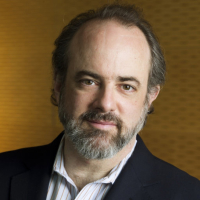 Martin Antony, PhD, is a professor in the department of psychology at Toronto Metropolitan University. He also holds part-time or adjunct faculty appointments at McMaster University and the University of Toronto, and he was the founding director of the Anxiety Treatment and Research Clinic at St. Joseph's Healthcare in Hamilton, Ontario. Antony is internationally known for his books and research on anxiety disorders, including phobias, as well as perfectionism, cognitive behavioral therapy, and assessment of psychological disorders. He has published 33 books, including several evidence-based self-help manuals for the general public on overcoming phobias and anxiety. Antony is a fellow of the Royal Society of Canada and a past president of the Canadian Psychological Association.