Kim Mills: We first talked about psychedelic therapy on this podcast three years ago. Since then, interest in psychedelics has skyrocketed. Two states, Oregon and Colorado, have voted to legalize psilocybin use by adults. And just last month, Australia became the first country in the world to recognize psychedelics as medicines. Doctors there will be able to prescribe psilocybin for depression and MDMA, popularly known as ecstasy or Molly, for post-traumatic stress disorder.
Meanwhile, researchers are studying psychedelic treatments for anxiety, addiction and other behavioral health disorders. So how did these drugs go from being a symbol of the 1960s counterculture to being touted as among the newest, most promising mental health treatments? And does the research back up the hype? How do psychedelics work in the brain? What have scientists found out about the types of mental health problems they can treat? What’s the legal status of these drugs? Are they likely to be approved as medications in the U.S.? And if they are, who will provide these treatments and who will have access to them?
Welcome to Speaking of Psychology, the flagship podcast of the American Psychological Association that examines the links between psychological science and everyday life. I’m Kim Mills.
My guest today is Dr. Albert Garcia-Romeu, a psychologist and a member of the psychiatry and behavioral sciences faculty at the Johns Hopkins University School of Medicine. He is also a guest researcher at the National Institute on Drug Abuse. Dr. Garcia-Romeu studies the effects of psychedelic drugs in humans. His research interests include clinical applications of psychedelics, mindfulness, and altered states of consciousness and their underlying neurobiological mechanisms, as well as real-world drug use patterns and impacts on public health. He has published dozens of research papers and has been widely interviewed in the media on psychedelic research.
Dr. Garcia-Romeu, thank you for joining me today.
Albert Garcia-Romeu, PhD: Yes, thank you for having me.
Mills: I mentioned a couple of drugs in the introduction that our listeners have probably heard of, psilocybin and MDMA. How do you define a psychedelic? What drugs does the term encompass? Can you explain what each of them is and how they’re similar and how they’re different?
Garcia-Romeu: That’s a lot of questions, and I could teach a whole class about that, but we’ll try to go to break it down into some of the basic components there.
The term “psychedelic” was actually coined by a psychiatrist named Humphry Osmond back in 1957, and he was interested in drugs like LSD and mescaline, which are what we call classic psychedelics. They’re serotonin 2A receptor agonist drugs. And that’s just pharmacologically the mechanism. That’s the way that they work in the brain, as far as we can tell. Psilocybin is another one of these classic psychedelics, and so is DMT, or dimethyltryptamine, which is found in the human brain as well as many plants and animals, and is found in ayahuasca as well. And so there’s this sort of canonical group of what we call classic psychedelics. Most of those are naturally occurring. So I mentioned mescaline, which is found in peyote cactus and San Pedro cactus. I’ve talked about DMT, which is found in different types of plants and animals. Also, psilocybin, which is found in about 200 different species of mushrooms that grow all over the world.
And then LSD is sort of the semi-synthetic derivative that came out, that brought the psychedelics into the limelight, if you will, during the 20th century. And you know you mentioned the counterculture, LSD was definitely heavily involved in that period as well. And so that was something that was synthesized in the laboratory back in 1938 by a chemist named Dr. Albert Hoffman, but it works by the same mechanism as these other classic psychedelics, this serotonin 2A receptor mechanism. And so we grouped those together.
And when Osmond was studying these drugs back in the 1950s, they were trying to find a better name for them because people were usually referring to them as psychotomimetics, meaning that they seemed to mimic a psychotic state. And after working with these drugs and taking them himself, self-experimenting, he didn’t feel that that was an accurate label. He felt that there was more to the drug effects than that. And so he and the British author, Humphry Osmond, were actually going back and forth trying to figure out how do we call these drugs, this more accurate representation of their effects? And Huxley had famously written about his experience with mescaline in a book called The Doors of Perception. And eventually they landed on—Osmond proposed the word psychedelic because it was meant to characterize that this was a drug that was sort of uncovering something that was in the psyche. It was allowing something in the psyche to manifest or to be revealed. And using the Greek terminology to sort of come up with a new label. And that really is the beginning of that term, specifically back in the 1950s.
However, since then, the word psychedelic has been used in so many different ways to talk about artwork, to talk about music, to talk about culture. And so the very strict sort of pharmacological classification is not always the way that people talk about these drugs in real life. And certainly MDMA, and even cannabis at times, have been sort of lumped in with these psychedelics or drugs that can cause psychedelic like states, whatever that means.
And so MDMA, although it’s not exactly the same from a pharmacological standpoint as some of these other classic psychedelics, it does induce a really strong altered state of consciousness, which is one of these key factors that people look at in terms of creating what you’d consider a psychedelic effect. And so people often talk about MDMA as a psychedelic, though it’s also been talked about as being an entheogen, for instance, which means it allows a person to access what’s within their mind and their emotional states.
So yeah, there’s lots of different ways that we talk about these. And even now, scientists, myself included, are going back and forth talking about what does psychedelic really mean and what is the definition of psychedelic medicine? So it’s an interesting time because the field, I think, is coming back to grapple with some of these terms and what do they mean.
Mills: What about the drug ketamine? It’s often lumped into the psychedelic category, and it’s the only one of these drugs that’s FDA approved and people can get a prescription for right now. Is ketamine a psychedelic?
Garcia-Romeu: So ketamine is a slightly different drug. I would call it a dissociative anesthetic. It’s been around for a long time. We use it for anesthesia in medicine, in both animals and humans, all the time, it’s pretty commonplace. But when you use a subanesthetic dose, basically a dose that doesn’t knock a person out, they can also have these psychedelic-like states, which include feelings of being outside of one’s body and having different types of altered states of consciousness. And again, when you’re talking really broadly about a drug that can create an altered state, that’s usually the sort of loose usage of that word psychedelic. And so people talk about doing, for instance, psychedelic therapy using ketamine. But when you’re doing that, again, the pharmacological mechanisms are slightly different than they are from the classic psychedelics or from MDMA.
Mills: So is ketamine operating on the same part of the brain or someplace different in the brain?
Garcia-Romeu: Well, the mechanism behind the drug action is more rooted in the glutamatergic system and the specific NMDA receptors that are part of the glutamate system. So we know that that seems to be one of the targets for these drugs that’s slightly different from the classic psychedelics that work more in the serotonin system. But ultimately we’re talking about the same brain and the same brain networks, and they end up having quite a bit of overlap it seems, in terms of the type of effects that people are experiencing when they’re under the influence.
And so for instance, one of the types of experiences that people often will talk about when they have either sub-anesthetic ketamine dosing or dosing with a classic psychedelic, is this unitive state, this feeling of the boundaries between self and others sort of coming down and feeling more interconnected with the world. And those types of experiences can be occasioned both by the classic psychedelics, but as well as ketamine, and other types of practices like meditation and so forth.
Mills: Has the huge uptick in public interest in psychedelics over the past few years come as a surprise to you, and has doing work in this area changed over the last decade?
Garcia-Romeu: I would say yes. I think it’s been a little bit surprising to see how enthusiastic popular culture has become about all the work that’s happening in this field and the prospects of psychedelic therapies. I think many people would’ve said 10 years ago, they would’ve been skeptical about sort of widespread adoption of this type of treatment in a medical setting. And nowadays, it seems almost imminent. And actually with MDMA, we will be seeing that in practice in the U.S. as early as next year.
And then, as you mentioned, ketamine is already available and there is growing interest in using ketamine in this way because it’s not something that had been practiced in a widespread fashion to be doing this type of ketamine therapy. Only until recently did there become, again, growing interest in market for something like that, and so now you’re seeing the growth of that to provide those types of services from different companies out there.
Mills: So what are the mental disorders that psychedelics can treat? I mentioned in the intro that Australia approved treatments for depression and post-traumatic stress disorder. Is that where the evidence is the strongest at this point?
Garcia-Romeu: Yeah, so there’s been a lot of work. It sort of started again with the classic psychedelics back in the 1950s and ‘60s. You saw a good amount of research, then that sort of died down for some time after backlash and criminalization in the 1970s. But really since the late ‘90s, early 2000s, you start to see another uptick in research. And you noted a couple of different conditions.
So the ones that are very close to approval, for instance, is use of MDMA with talk therapy for post-traumatic stress disorder, PTSD. And so that’s actually undergone two phase three clinical trials now that were sponsored by the Multidisciplinary Association for Psychedelic Studies, MAPS. And in both of those studies, although the second study has not yet been published, the results have been overwhelmingly positive and they’ve found a lot of remission of symptoms and improvement in mental health status in these folks who were going through the study. They’re getting, I believe it was three doses of MDMA during the course of treatment, which lasts about 12 weeks. And there’s preparation before and after the drug is administered. And in the intervening weeks there’s often different types of counseling or talk therapy going on. And the people who are getting those types of treatments versus placebo are showing a far greater response rate. And so you’re seeing a majority of people who get that MDMA therapy with PTSD are improving above and beyond what they would be doing with just the talk therapy alone.
And so those are the types of data that are necessary in order to get a medical approval through the FDA. And at this point, you see that is again, very close with MDMA. And so by next year it’s seeming as though you’re going to see a change in the classification of MDMA, so it’s no longer considered schedule one, but it can be prescribed by physicians and clinicians who want to use it to help people with PTSD. And yeah, that’s where I would say most of the evidence with MDMA therapy has been focused so far. Other folks are working on looking at MDMA in treating things like substance use disorders or other types of mental health conditions. But so far, yeah, PTSD has been the big one.
Mills: So what’s happening in people’s brains, say, if you’re taking MDMA for a substance use disorder. I mean, why would that work as opposed to any of the other treatments that are out there right now? I mean, what’s the difference between that and, say, Antabuse?
Garcia-Romeu: Well, Antabuse is definitely not one of these drugs that’s well tolerated. People don’t usually like to use it because if they want a drink, then they just stop taking the medicine. And there’s lots of different types of substance use disorders and treatments for those that vary widely.
But what I think sets apart these psychedelic therapies is that usually with a course of talk therapy and somewhere in between one and three drug administrations over the course of a few months, you’re usually able to help people move beyond, not just the problematic behavior, which would be for instance, alcohol or drug use, but often to get to the root of the issue, to psychologically work through some of the presenting problems that are related to the reasons why they use those substances to begin with. And so I think a lot of current treatments are focused on masking things like withdrawal or craving or trying to keep people so that they’re able to avoid using the drug sort of on a very surface level. But once you start to go down into the deeper roots of why it is that they’re doing those types of behaviors, then you’re able to really make long-term lasting changes.
In terms of what are they doing in the brain. That’s still really a big mystery, I would say. We’ve seen a lot more research over the last decade or so looking at psychedelics and MDMA to understand their brain mechanisms, but we’re really still unpacking those and trying to differentiate what the different types of drugs are doing and why they have the impact that they do, meaning that you’re seeing long-term changes, including things like months or later, people are still showing improvements, which is not the case with a drug like Antabuse, for instance, or SSRI standard antidepressant, because when you stop taking those then they stop working,
Mills: How much is known about how these drugs are helping people where other treatments don’t, for example, using psilocybin to treat persistent depression.
Garcia-Romeu: So that’s actually an area that’s been an active study, and particularly with psilocybin, as you noted, that’s well far along in terms of studying that as an antidepressant treatment, both in people with major depression, but also in people with treatment resistant major depression, which is a person who’s failed to improve after taking multiple different types of treatments or medications. So those are cases are usually thought of as being a little more serious because people are not responding to the traditional therapies and treatments that are available.
And so in those cases, what they’ve found is that in a nice large study that was published, this is actually the biggest study published on psilocybin so far, and it was about 230 people or so with treatment resistant depression. And they either got one high dose of psilocybin, which is 25 milligrams, or they got 10 milligrams of psilocybin, which is a moderately low dose, or they got a placebo like dose of one milligram of psilocybin that usually doesn’t have much of an effect. And they were able to see that the people who got that single high dose were showing improvements in their depression. On average it lasted out to three weeks after the drug. And again, that’s different in a couple ways from our standard treatments.
First, those people are getting symptom improvements immediately after they’ve gotten the drug dose, and that’s different than a lot of our standard antidepressant medicines that usually take weeks to start working. And the other thing is these are people who are already failed to respond to other types of medications, and yet they are still seeing these improvements in their depression that last weeks after the single dosing. And that’s not even taking into account other studies like ours here at Hopkins where people got two doses and are showing symptom remission and improvements that last up to a year later.
And so really that is exciting because for a lot of people who are not responding to current treatments, we need something new, we need something that works better. And the idea that you could take one or a few doses of this drug and supplement that with some talk therapy and see these long-lasting benefits, is in many ways revolutionary for the field.
Mills: Are there certain people who should not take psychedelics for problems that they have? For example, I’ve read that these drugs could be harmful to people with bipolar disorder. Why is that?
Garcia-Romeu: There’s concerns, and there have been case studies and other data from people who have used these psychedelics out in the world who have then gone on to develop manic symptoms, and that obviously can be problematic. We don’t want to put anyone on a course where their mental health status is going to deteriorate after you give them a high dose of the drug. And so that’s been one area where people have been very careful in excluding folks who have bipolar mood.
However, there are preliminary data showing that people who get psilocybin who have a milder form of bipolar mood seem to respond well on and have not seen these incidents of mania. However, you still get the case reports from people out in the community who have had those types of situations, and so obviously it’s still an open question and it’s an area that I think requires more study.
The main area that we know that people who receive high dose psychedelics may have lasting problems afterwards would be people who have a predisposition of a psychotic illness, schizophrenia, those types of conditions. If they either have a personal or family history of one of those disorders or if they’ve had symptoms of that type of condition, we would often screen those people out of our research studies, mainly because you’ll be, again, trying to avoid precipitating ongoing problems, including things like psychotic symptoms that can last for months or longer if things don’t go the way that we want them to.
Mills: Some of the people who are listening to this may themselves be experiencing some syndromes where they think that these kinds of drugs might be helpful to them. And where does the average person go to participate? It’s got to be a clinical trial at this point, right? I mean, most of this stuff is not approved for general use.
Garcia-Romeu: Well, I mean there are many people who are trying to self-treat or to find treatment underground. Even in places where legalization or decriminalization might have occurred, that’s still illegal at the federal level, so there are penalties for that, criminal penalties and other things that can happen that are problematic. But in terms of finding something legally available, in the U.S. particularly, yeah, you’d want to go to a website called clinicaltrials.gov, and that’s a registry where all the clinical trials that are happening both here and abroad are listed out. You can look by condition, you can look by keywords, such as psilocybin, for instance. You can look by location and try to find things that are available. I would say even though the work is growing, there’s still just a few hub regions where you can get a lot of research happening. And otherwise, there’s a lot of folks who would not necessarily have access because either the work is not happening near them or the clinical trials inclusion criteria are very strict, which they tend to be, primarily for safety sake.
Mills: So what’s the outlook for these drugs being approved as medications in the U.S.? You mentioned MDMA seems close, but what about psilocybin? What about some of the others that you mentioned? DMT that comes from ayahuasca, things like that?
Garcia-Romeu: Well, psilocybin is probably the next closest to approval, I would say, because there’s been such a preponderance of research looking at it for depression, and then also for other conditions like substance use and existential distress. And so my forecast, if you will, would be that within the next three or four years, you’ll likely see psilocybin getting into that approval process with the FDA as a new treatment, something that will be then accessible to people who are able to get psilocybin treatment via licensed clinician, particularly for things like major depression, which is where, again, a lot of the data have been so far.
There’s not a lot of widespread study right now of other types of psychedelics, LSD, mescaline, DMT. There’s been small studies here and there. The regulatory red tape to do this work, and then also the sort of regular or typical form of medication approval in this country kind of make it difficult to do this work because between the regulatory approvals and hurdles that we have to jump through to do this, the enormous cost of doing the research. And then if you’re talking about something like LSD, for instance, that’s not a patentable molecule because it’s been around for so long, then it makes it quite difficult to move it through this process and to get people to invest in that because why would anyone spend money to study it if they can’t get a return on investment from a capitalist standpoint?
Mills: So those are the drug manufacturers, the ones who have the money to go through the process?
Garcia-Romeu: Correct. But since they don’t own those molecules, then they don’t feel compelled to study them. And so that’s why you’ve seen such a long process with something like MDMA or psilocybin where the funding to do this research has sort of come in piecemeal over course of literally decades to get it to where we’re at with the science.
Mills: Now, you’ve written about equity and access issues, both in terms of who’s being included in the research trials on these drugs, but also who might have access to the treatments eventually. Can you talk a little bit about that?
Garcia-Romeu: Yeah. Well, it’s been pointed out that many of the research studies that have been published using MDMA or psilocybin have been predominantly White, predominantly high socioeconomic status participants. And there’s a number of structural reasons for that, and then there’s a number of cultural reasons for that as well, I think. But we’ll say, I think it’s over 85% of participants in the clinical trials that to date have occurred using psilocybin and MDMA have been White. And if you want to think about why is that, some of those structural reasons that I mentioned include factors such as just not being able to get off of work to spend a whole day in a therapy session like this, and being able to do that multiple times, or not being able to get away from childcare or domestic issues that have to be taken care of. So that’s one thing that I think has really skewed this work in a certain way.
Culturally, I also think that there’s a lot of mistrust of the medical institutions and biomedical research for a number of reasons, historic abuses, things of that nature, that I think make people mistrustful of coming to do a study where you’re going to take a drug that if you have read popular media and you might think, “well, this drug might make me go crazy,” or, “this drug is going to make me feel really strange and I don’t know who’s going to be around me, or what’s going to happen, or what are they going to do to me?” And so I think that can be a really very real concern for people. Not to mention the years and years of criminalization and stigmatization of drugs and drug use in general that make people probably raise an eyebrow and say, “they want to take me into a laboratory and give me this illegal drug? I don’t know if I’m comfortable with that.”
And so I think that’s a big problem with psychedelic research to this point, is that it has been predominantly White, predominantly higher socioeconomic status participants, but that’s just something that actually is parallel in all sorts of biomedical research. And so it does point to these bigger problems, which is you see less than 5% of people who are in trials of new FDA approved medications in the ‘90s and 2000s were coming from Black, African-American, Hispanic backgrounds. And so you’re seeing, again, a very homogeneous population in many of these studies for any sort of medical research, and that’s a problem.
And the other problem, I think, at another level is that many of the researchers themselves are not representative of the broader community, and so you see less than 5% of the researchers doing these studies are coming from a Black, African-American, Hispanic, Indigenous background. And so that also I think would make people hesitant to necessarily want to come in and feel invested to do this type of thing.
So there’s, I think, many different layers there to be unpacked, but ultimately I’m hoping that both the researchers and the participants are able to diversify over the next decade. And that also, should this type of treatment be approved soon, that we’re going to find ways to make that available and accessible to people, particularly people who are coming from lower SES backgrounds because they often have big health disparities and issues that they need to deal with that include many of the types of problems that we’re talking about, post-traumatic stress, substance use, depression, and so on.
Mills: Oh, that all makes sense. I want to change gears a little bit and talk about microdosing, which is taking small amounts of some of these drugs on a regular basis to treat a variety of issues. Now, proponents say that taking tiny doses of psychedelics that are too small to have real psychedelic effects can help with mood, creativity, productivity, and all sorts of things. Is there any research that backs this up?
Garcia-Romeu: Not really. I should say there’s not really a lot of research to begin with. Most of what we have is anecdotal, and you can collect anecdotal data from lots of people. And this has been done both sort of retrospectively and prospectively, but there haven’t been a lot of well controlled trials. There’s only been a few small studies of microdosing in psilocybin and LSD. They haven’t shown anything that, to me, shows a clear signal of benefit. More than anything, what I imagine we’re seeing often is some sort of placebo effect where people know they’re taking something and they feel like they’re feeling better as a result, whether or not the substance is doing something.
Now, I do think that there’s a real possibility for microdosing to have therapeutic benefit, but it’s really hard and expensive to study it properly to do a double-blind placebo control study, for instance, in dozens or even hundreds of people to actually test this out. And so until that happens, I would say the jury is out. We don’t really have a good answer. I’ve certainly spoken to lots of people with very convincing anecdotal reports of getting better from all sorts of different conditions, from using microdoses of psilocybin, for instance. But nobody’s actually drilled down into a cohort of people, for instance, with major depression and studied this carefully. And so until that happens, I think we can’t really make a conclusive statement.
Mills: Would you say that it’s dangerous for people to engage in microdosing? People are able to get their hands on some of these drugs and do it themselves at home. Is that a good thing?
Garcia-Romeu: I wouldn’t advocate for that. I mean, it’s illegal. People have lost their jobs for doing that kind of thing. Depending on what you’re taking, it can be really hard to tell what it is that you have. If you’re talking about, for instance, a synthetic molecule like LSD, you may be getting something very different than what you think you’re getting, which could have significant adverse health effects. With psilocybin mushrooms, that’s something that people can find because they grow out in the world, and the only thing I would say there is you may not have the types of mushrooms you think you have, and obviously measurement can be difficult. But otherwise, I would say that the classic psychedelics, if you know what you have and how much you’re taking, they’re relatively safe for most people. And that’s due to the fact that they don’t really cause any toxic effects on our major organ systems. And so taking small amounts of them shouldn’t be problematic.
Although there are, again, a lot of open questions. People have talked about serotonin 2B receptor properties of psilocybin, for instance, and how that can cause heart valve problems. And that actually was related to a medication called fen-phen that was being used for weight loss years ago, it was pulled for the market because of those same heart valve problems. And when you take a psilocybin treatment, for instance, with one high dose, you wouldn’t have to worry about that because it’s not a chronic dosing regimen. But if you’re taking that often, over and over again, that does lead to potential, for instance, to develop some of these problems.
So again, there’s still a lot we don’t know. And so I would certainly, again, not advocate for that type of treatment, but certainly there’s a lot of people who feel desperate and they’re looking for something to help them. And I can understand that, based on where we’re at with limited treatment options that people are exploring all sorts of different things.
Mills: Do you worry that some of these psychedelics are being overhyped or advertised directly to the public? For example, there was an opinion piece in The New York Times recently headlined, “Why are Ketamine Ads Following Me Around the Internet?” And it was about how ketamine’s being pushed by targeted social media ads. Is this a problem?
Garcia-Romeu: I think it can be, yeah. I mean, just us right now having these conversations, it’s likely that we may get one of those ads pop up later on our own social media. But what I do think is that there has been a significant overhype of what’s going on with the science. Yes, these drugs seem to have a remarkable therapeutic potentials, and yes, for many years they’ve been stigmatized and talked about as this sort of really dangerous drugs of abuse.
But flipping the script and saying, these are a panacea, these are going to save the world. And that was a headline directly pulled from Rolling Stone, “Can Psychedelics Save the World”? That type of sensationalism, I don’t think is helpful for the general public to be consuming, and particularly for vulnerable populations, including people who are struggling with mental health conditions, to see that type of media and then not really know what is the state of the science, because again, often it’s overblown.
We know that ketamine has significant antidepressant effects. I mean, we’ve known that for a long time now. And so if people can get access to it and they have serious depression, they can get often relief from that in the ketamine treatment setting. But when you’re starting to go out and try to market that or basically sell that to people aggressively, yeah, I think you’re running up against some real potential ethical issues.
Mills: So what avenues of research are you finding the most exciting right now?
Garcia-Romeu: I’m excited by the prospect of medical approvals by FDA in the next few years because I do think that’s really going to revolutionize the landscape of mental health care in this country. I think that it’s going to change the model somewhat from what it has been, where we had sort of talk therapy siphoned off on one side and then pharmacotherapy or medications on the other side. And sometimes people would be doing both, but often not in an integrated fashion. And what’s nice about these treatments is that they bring both together in a comprehensive package, and the psychedelic treatments themselves are so different than what’s available right now.
And why I say that is because, as we discussed earlier, they really kind of bring you into yourself and what it is the root of your issues, whether that be relationship problems, past trauma, issues that you have with self-esteem, all these different types of things that can be wrapped up in a mental health diagnosis can be sort of unraveled somewhat during the process of this time, this kind of psychedelic therapy, and then allow people to really resolve them and not just to cover them over with the standard types of therapies that we have available right now.
And you can’t often do that in talk therapies, obviously, over the course of a long period of time. Usually we’ll have our walls up and our defenses there to try to keep things from changing too fast because that can feel very threatening and scary, but with psychedelics, it can kind of allow us to make a very deep dive very quickly. So I think that’s most exciting to me.
But with the research, you’re just seeing more and more research branching out. And so, for instance, we’re starting to do research now with psilocybin in patients with early stage Alzheimer’s disease here. My colleague, Dr. Natalie Gukasyan, is working on a nice study that she’s just wrapping up in psilocybin in people with anorexia nervosa. So starting to look at these different areas where we are in clear need of treatments and exploring the potentials there, I think is also really exciting, because it’s a new horizon for us.
We’ve actually known for a long time that we could use psychedelics to treat addictions, existential distress, because it was being done back in the ‘60s, but now we’re kind of getting back to the place where we can reestablish that using rigorous and contemporary research methods. But now there’s all these other questions that are on the horizon, including those new clinical conditions on the one hand, but then also the biological and psychological mechanisms that underlie these drug effects, because it is a mystery. We talk about how the brain is reacting to these drugs, but it’s more than just how is the brain responding, how is the mind responding? Because that’s where you start to see changes in the sense of self-identity, for instance, in a person who’s been struggling for years, who identifies as a person with a problem with particular substance, for instance, and is able to change that sense of identity in a way that allows them to live the rest of their lives in a healthier way. And so that I find unique among all the different types of treatments that are out there.
Mills: Well, Dr. Garcia-Romeu, I want to thank you for joining me today. This has been really interesting. I think what you’re doing is very exciting and we will stay tuned.
Garcia-Romeu: Yes. Well, thanks so much for having me. I really appreciate it.
Mills: You can find previous episodes of Speaking of Psychology on our website at www.speakingofpsychology.org, or on Apple, Stitcher, YouTube, or wherever you get your podcasts. And if you like what you’ve heard, please leave us a review. And again, we’d like to hear from you about what you think of this podcast and what you’d like to hear more from us, so please go to our website, www.speakingofpsychology.org, and look for the link to our listener survey.
If you have comments or ideas for future podcasts, you can email us at speakingofpsychology@apa.org. Speaking of Psychology is produced by Lea Winerman. Our sound editor is Chris Condayan.
Thank you for listening. For the American Psychological Association, I’m Kim Mills.


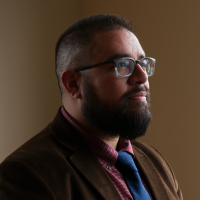 Albert Garcia-Romeu, PhD, is a member of the psychiatry and behavioral sciences faculty at the Johns Hopkins University School of Medicine and a guest researcher at the National Institute on Drug Abuse Intramural Neuroimaging Research Branch. His research examines the effects of psychedelics in humans, with a focus on psilocybin as an aid in the treatment of addiction. He received his doctorate in psychology in 2012 from Sofia University in Palo Alto, California, where he studied self-transcendence and meditation, and their relationship to mental health. His current research interests include clinical applications of psychedelics, mindfulness, and altered states of consciousness and their underlying neurobiological mechanisms; real-world drug use patterns and impacts on public health; the role of spirituality in mental health and addiction; and use of qualitative and mixed methodologies towards investigating these areas.