Kim Mills: You might think that the smartest way to make a decision is to gather all the facts, weigh them carefully, and then choose the most rational option. But psychological research suggests something different. Understanding the gist of a situation, not necessarily being able to recount precise facts, often leads to the best choices.
Today we’re going to talk to a psychologist who studies decision-making about the importance of gist and why it can help explain everything from teenagers’ propensity for risk-taking to the spread of health misinformation. So why does our brain lean on fuzzy thinking and when is that a good thing? How do teens, adults and artificial intelligence agents make sense of risk? And how can we design systems and messages that work with our natural decision-making styles rather than against them?
Welcome to Speaking of Psychology, the flagship podcast of the American Psychological Association that examines the links between psychological science and everyday life. I’m Kim Mills.
My guest today is Dr. Valerie Reyna, the Lois and Melvin Tuckman professor of human development at Cornell University. She studies judgment, decision-making and memory across the lifespan. She’s the developer of Fuzzy Trace Theory, a decision-making model that has been widely applied in law, medicine, and public health. Her recent work has focused on understanding risky decision-making in adolescence, medical and legal decision-making, and AI decision-making. Dr. Reyna is an APA fellow and has won many awards for her work, including the Lifetime Achievement Award from APA’s Division of Experimental Psychology and Cognitive Science.
Dr. Reyna, thank you for joining me today.
Valerie Reyna, PhD: It’s a pleasure to be here, and thank you for that lovely summary.
Mills: Let’s start with the core of your work. You developed something called Fuzzy Trace Theory, which I just mentioned. Can you tell us about that and how it helps people make decisions?
Reyna: Well, as you mentioned, there’s a distinction between mentally representing the gist of a situation, which is the meaningful bottom line of that situation, and what we call the verbatim representation. And by that we mean a very literal and precise representation as though you were memorizing experience and then trying to go on the basis of that to make decisions. And as you can readily imagine, if you’re a very literal thinker, it’s very hard to transfer your knowledge. So you learn about one particular patient if you’re a doctor, but the new patient is like that patient, that gist is the same, but the verbatim superficial details might be different. And life is like that. You gain experience as a child and as an adolescent and you go out into the world and now you’re trying to transfer that information to new situations. And if you get the gist, if you get the bottom line meaning of the options before you, you’re better able and better equipped to do that. And you also don’t get mired in the minutiae, the details that turn out not to be core to what really matters.
Mills: Could you give us a few more real-life examples of how people make better decisions when they focus on gist instead of getting bogged down in all these facts?
Reyna: Sure. And again, I want to underline facts are important. Knowing facts and having knowledge is extremely important in our perspective, but it’s then extracting from those details what the core meaning is for this situation. So it’s not a fact-free kind of approach, it’s a fact-rich kind of approach, but then you have to boil all that down to what does it mean?
So a concrete example would be during COVID, a lot of epidemiologists were jumping up and down when the community prevalence rate of COVID infection was a very tiny 1%, and then 5%, people were like, oh my goodness, that’s huge. And I think most of us members of the public were thinking, gee, that seems like a tiny number. Why is everyone so excited? It is a tiny number, literally it’s a small percentage. So if you just took the facts and you took them at face value, it would signal that there isn’t much of a risk. But by the time the community spread of COVID is at 1%, it’s huge, it’s potentially catastrophic. And moreover, the increase is exponential, meaning that it goes up very fast. So that sense of up very fast, that’s a gist. And the fact that a tiny number is a big problem, that’s a gist.
Mills: So if I want to buy a car or even a jar of peanut butter, do I make a better decision if I’m working on gist instead of trying to check out every available product that’s out there?
Reyna: For example, if you look at nutrition labels, people are swamped by detail and folks try to make it comprehensible. It’s a percentage of your recommended daily value. Well, what does that mean and how do you compare this many grams of sugar to that many grams of this much carbohydrates to protein? It is extremely hard for most people to grasp the gist. Is this a healthy food? Is it not? Is it good to eat? Is it bad to eat? And nutritionists will then tell you there are no good or bad foods. It depends on how you’re eating them. So now the person who’s staring at those details on the label is completely perplexed. They’re trying to get the gist of the information. So that’s the key to know whether it’s the right thing to buy. If you’re interested in nutrition, if you’re interested in taste, that matters too. Reward sensitivity and reward motivation is important in decision-making, but also the gist of the facts. What are my options for this reward? I think the nutrition example is probably a real good one of being overwhelmed with the facts and not necessarily getting the point of the facts.
Mills: Well, let’s talk about young people and decision-making, because we know that teens are famous for making bad decisions, and a lot of people chalk that up to the idea that they feel invincible. But your research suggests that’s not really the full story. So how does gist-based reasoning help explain what’s really happening when teens take otherwise unwise risks?
Reyna: That notion that adolescents feel invincible is interesting because it turns out to be false. It’s a myth. They don’t think they’re invincible. They in fact estimate their own risks as higher for many of these behaviors than adults estimate their risks. So they know sometimes they’re engaging in risky behavior. So then it’s even more fascinating as to then why do they do it? The issue is that both adults and kids have what’s called an optimism bias. They think they’re less, a little less at risk than maybe the other person is, but they’re weighing—in fact, what the research shows, and not only my own research, but reviews of the literature and meta-analysis are consistent with this very counterintuitive prediction of fuzzy trace theory, which is that adolescents are often weighing the risks and reward and they’re combining them the way an economist would say you should, to be rational.
The problem is you have very small probabilities of extremely bad things like HIV infection or those kinds of things that can be life altering. So if you’re just counting up looking at the probability, the probability of transmission even from an infected partner is actually numerically quite small. But that entirely misses the point, namely that you shouldn’t do that because you might get infected. And of the people who were infected, that’s how they got infected. So it’s not a question of, it’s just a small probability, and you have to calculate and say, well, I’m going to take an informed risk that is an unhealthy choice. And the more that adolescents do that, which they seem to do, the more trouble they will get into and have bad outcomes, bad health outcomes, and other kinds of public health outcomes.
Mills: So if I heard you right, it’s not that I’m an adolescent and I think I’m invincible, but it’s I’m an adolescent, but it’s not going to happen to me. It’s going to happen to her maybe, but not me. Is that the thinking?
Reyna: That’s part of it. And by the way, that’s true. Again, so many of these, this is why literal is not necessarily good thinking because literally that’s true. It’s not that adolescents totally are in another reality—that’s actually reality. The probability of these very catastrophic outcomes happening are often quite small. Now they accumulate over time if you repeatedly engage in them. And that’s one of the gists we used in an intervention we had for teens on premature sexual activity. We talked about cumulative risk ultimately being essentially certain. So if you have unprotected sex every month for a year, at some point during the year, virtually one hundred percent of people, someone will become pregnant. So it becomes an all or none, something nothing gist. But each time is a small probability. So they are in fact unlikely to have these bad outcomes. That is in fact literally true, but it’s not the way to look at it.
We would say the way to look at it is to put the whole picture together and to say this is sort of like playing Russian roulette. In Russian roulette, you have only one bullet in the chamber, so you have a small probability, but the outcome is so bad you shouldn’t take that risk. Even though you might think, well, for a million dollars I’d play Russian roulette. It’s rational according to regular economic theories to take that risk if the amount of dollars is high enough. But we would say the amount of dollars and the number of bullets are verbatim details, and it’s still not a good idea.
Mills: So this is part of the intervention program then that you have helped to develop that teaches teens to reason differently?
Reyna: Exactly. We then implemented that. We took a really effective program, but that had some details in it that we thought were just not the right psychological focus to reach young people. And the ambition of the intervention was, can we get these adolescents to think more like adults? The way adults look at that situation is, are you kidding? Of course no one would ever play Russian with that. That makes no sense. If you’re talking about dollars, that’s kind of a little, what has that got to do with it or the number of bullets?
But if young people think in that almost hyper-rational way, can we get them to think more in terms of gist? And we were able to do that. We were able to have a significant change between the treatment groups and the control group. And what’s more about gist is gist endures. When you teach young people something in a health class, you teach them a bunch of facts. What remains later on when they’re in life trying to apply that information is the gist of those facts, not the verbatim details. What was the percentage of HPV infection? Very few people remember that, but they do remember that it’s a lot higher than you might think, right? This was especially pre-vaccination, it was a lot higher than you think. So that kind of gist is what’s retained and what influences behavior over the longer term. And that’s what we showed—that it influenced behavior over the longer term.
Mills: And is moving to gist-based thinking a natural evolution in human development—that as you move from adolescence to adulthood, that you get it, it just becomes the way that you work?
Reyna: The research in many, many domains suggests that there is exactly that kind of shift from more literal verbatim thinking to more gist thinking. It seems to depend on experience in a domain. So you can actually have that experience as an adult if you start at as a novice in a domain, like a medical student would be more verbatim than an experienced cardiologist. And we showed that in a study we did. So that as you gain experience in a domain, whether if you’re a child, you’re gaining experience in life with these kinds of risky decisions we’re talking about, or if you’re a medical student and then eventually you become an experienced subspecialist, you’re gaining experience in that domain. In both those cases, you show a shift from more verbatim literal thinking to more gist bottom-line thinking.
Mills: Let’s talk a little bit more about medicine and public health. How does fuzzy trace theory and gist-based thinking help explain why misinformation spread so easily?
Reyna: That’s a fascinating question, and one of the most important questions of our time. The approach of initial ways to deal with misinformation was to simply give people facts. And that was true in the health domain with teenagers, and that’s true in this domain. And what people showed is that giving facts alone did not seem to change people that much. It didn’t seem to necessarily redress the misinformation. It does to some degree, but it’s surprisingly not as effective as it should be. And one of the reasons for that is what people are taking away from the facts. First of all, there are motivational things. Do they trust the person giving them the facts? The trustworthiness of all of these sources of information, whether it’s AI or social media or expert doctors, is really important. But given that you trust who’s communicating to you, do you then get the point of the information? Are you able to really understand the why behind the facts?
And that’s where the gist comes in. So it’s not just whether a fact is true or false or whether you’re motivated to believe it or not, does it fit your political persuasion or whatever. Obviously those are true, those are factors. But really what matters a lot is does this make sense to you? Does this fit the gist of the facts? And when we look at these facts from an outside perspective, we say, well, why does that person believe something like that? Well, from their background knowledge and their experience, that misinformation makes sense. It makes sense of a world that’s very complicated, a world where they may not have the relevant background knowledge like scientific literacy and so on. So that fact in that context for that individual makes sense and that’s why people tend to believe it.
Mills: So how can scientists and public health communicators use your ideas to more effectively get their messages out to the public?
Reyna: There have actually been a number of studies attempting to do just that, to take our theoretical ideas and to implement them in very practical tools for people. There was a review in 2016 of about 94 studies, some of which were intervention studies. So you have to take this information and really decide and extract what the gist of it is. So often we’ll meet with a panel of expert scientists, maybe expert clinicians and expert patients, and by expert patients, I mean someone who’s been through it, who knows what it’s like to experience these kinds of therapies like chemotherapy and radiation and medication. So just to take one example out of the different implementations we looked at rheumatoid arthritis drugs. These drugs are called biologics. And the question was, why aren’t more people taking these drugs, when they were developed? Because they would probably be a very good therapeutic option for people. They would both reduce their pain and increase their long-term medical outcomes. It would improve those.
So we designed an intervention by talking to experts and really trying to extract from all these technical details about these medications, and they’re very technical, what’s the bottom line meaning of this? And then present the information. And we did this in a very short intervention and online tool. We had real patients and we looked at their choices before and their choices after this online tool, and afterwards, their choices were much more value concordant, which means they had certain values, they wanted to not have pain, they wanted to be there for their family. They had values like that that are very core, simple values. And getting the gist of the intervention caused them to shift their choices and that medication so that they lined up and supported those values.
Mills: Now you’ve looked at false memories, that phenomenon where people think they remember something that never really happened. What is going on in people’s brains when they think that they’ve experienced something that they never did?
Reyna: Well, the typical thing that’s going on in their brain is that they’re remembering the gist of what happened and not what happened. So people subjectively encode reality, but they do so in parallel. It’s as though there’s a tape recording of the actual words in parallel with this gist that’s being recorded at the same time. So they’re of two minds. So into their brain goes both of these things, the verbatim and the gist. And depending on how you ask a question, you might get the verbatim out. You might get the gist out. That has to do with the retrieval cue that you ask, the nature of the question. So one of my favorite examples is with doctors where they would say, okay, the resident doctor, the doctor in training goes in and asks the patient, are you taking ibuprofen? And the patient says, no.
Now they’ve been in the emergency room recently in which they were prescribed ibuprofen. The resident is looking at the chart and saying, are you taking ibuprofen? Patient says, no. The resident exits that comes back in with the attending who’s the senior physician and says, are you taking anything for pain? And the patient says, Yes. And then the doctor says, what are you taking? Are you taking ibuprofen? And the patient thinks for a minute and says, why yes, I am. So the patient falsely says no to the verbatim technical name of the drug, but says, when you say the gist, Hey, are you taking anything for pain? The answer is yes, and it turns out to be that drug. The residents were very happy with me when I pointed this out because they get corrected a lot about things like that. And it has to do with how you ask the question of the patient, the retrieval cue in the question.
So most of us, most the time remember better the gist. I’m taking something for pain over a long term. And that’s what ends up getting, that’s what we remember later, is having in fact experienced that. That’s what the doctor said. They said that, and that’s what they remembered. So you’ll falsely remember experiencing something because you’re interpreting events in a light of what you understand about them. And later on you believe that that’s reality.
And one of the surprising implications of that, which we tested in data and found to be true, is you notice I said, your tendency to do that increases from childhood to adulthood. You become more gist based, which means your probability of having false memories goes up, so you don’t become more accurate in a verbatim sense. You become less accurate. So your tendency to have false memories, even in a laboratory context, is higher if you’re an adult than if you’re a child. And we show that that’s called developmental reversals because it reverses the usual expectation that of course, the adults are more accuarte than children, that they’re in fact less accurate because they’re gist based.
Mills: One of my favorite and probably more salient experiences of people with false memories came, I was a reporter in New York City around the time that the Statue of Liberty was being refurbished. And we interviewed, my colleagues and I interviewed a lot of people who insisted that they had gone up into the torch of the Statue of Liberty when they were youngsters. And of course the torch had been closed for decades. So there was no way that these people ever went up into the torch. But they insisted that they had been up there and they had mental images of going up in the torch when we know that it just didn’t happen.
Reyna: And we can systematically create those experiences, in the laboratory. That’s why we can be fairly confident as much as you can be in science, which means there’s always a caveat, but we’re fairly because we can recreate a vivid phenomenologically concrete experience like that in the lab. So if we have you retrieve your verbatim memory over and over, it strengthens and becomes more vivid to you, and then you begin to embellish it. Why? Because it makes sense. It’s a narrative of the event. It’s the why of the event. I would’ve been there because, and once you add that, it becomes so believable and so sharp in your mind, you think you experienced it.
Mills: In your recent work, you’ve looked at how AI agents make decisions. Can you tell our listeners about that research? I mean, what types of decisions have you looked at? How does AI decision-making compare with the way that humans make decisions?
Reyna: Well, when I started out and years ago, I wrote comparisons between how a computer makes a decision versus a human being. And I talked about human computer mismatches because the idea in those days was that computers were more verbatim thinkers, but people were more gist based thinkers. So when you put them together, there was an incompatibility. So way back when we talked about computer assisted decision-making, and these computer programs would be developed and they would output this, for example, enormous list of diagnoses given a patient’s symptoms. And doctors did not adopt them readily. Some did, but mostly they resisted them. And part of that reason is because there’s this mismatch. Here’s a list of symptoms. And this very formulaically, based on evidence, computer was trying to assist in making the decisions, but they weren’t making the decisions the way human doctors were making decisions, which was more gist based.
Now, machine learnings models eventually came along, and I’ve studied those too, and I’m studying those now. Those are still somewhat algorithmic and literal. And you can talk about, okay, type-two error and type-one error, which is like, okay, if the patient has the disease, does the computer program say it does or does it false alarm where the computer says you have the disease but the patient doesn’t? Does it have a miss—the patient actually has the disease and the computer misses it? You can talk about all those statistics and add them all up, but there’s all kinds of machine learning summaries, statistics, precision, and recall. But at the end of the day, that’s still a very kind of algorithmic mechanical, not very gist based way of making decisions. It can summarize enormous quantities of data about patients, but it doesn’t make the decision in the same way a human being does.
So we’ve been looking at comparing machine learning models to human decision-makers, including physicians, but most recently we have the development of these LLMs, things like chatGPT, and those kinds of artificial intelligence agents. And there has really been a qualitative change. And we published the initial findings of that. For example, in a paper about a year or so ago, showing that chatGPT of the time, this was a 3.5 version, it was sort of like an adolescent. It wasn’t completely gist based like adult humans, and it wasn’t entirely literal. It showed some of the patterns that were transitional as though it were a teenager, but it was making some of these errors that are kind of interesting. It was showing cognitive biases, beginning of cognitive biases and framing and irrational behavior of the sort people, adults in fact show. So it was transitional. Since then, chatGPT has become even more, we think, more gist based than it’s thinking. It’s as though it’s experiencing this developmental pattern. It once was a child and then it was an adolescent, and now it’s an adult, and now it will probably have false memories and cognitive biases. At least that’s what the data seemed to suggest so far.
Mills: Are you optimistic that we’re going to be able to correct for these errors that the human beings who are sort of running the show behind the AI, that we’re going to get better and not get worse?
Reyna: Well, this is interesting because the question is what’s really an error that is a problem? It is certainly the case that from a strictly literal economic theory of rationality perspective, these AI agents and adult mature humans are making errors from that perspective. So there should be an amount of money you should be willing to risk on playing Russian roulette, or it just has to be a very high number. Or you could say, well, that’s an exception. It involves death. Okay, well then there’s a HIV infection. There ought to be a level of reward that makes that worth it. That would be the rational choice, but somehow that doesn’t seem like the right choice. So the gist perspective would say these cognitive biases illustrate something advanced about people.
So what we’re trying to look at now is when does a gist based decision actually the right decision despite violating the literal guidelines or the literal details? And I think many clinicians would resonate with that, both psychology clinicians and medical clinicians, namely that sometimes the patient doesn’t fit the guideline and the clinician is right about that. Sometimes they don’t fit in. It’s just the clinician is wrong, maybe not, haven’t kept up with everything. But sometimes the experienced clinician, there are exceptions to guidelines and they’re intelligent exceptions, and that’s where the gist would actually perform better than the literal machine learning model or the literal guidelines.
Mills: So what’s next for you? What are the big questions you’re still trying to answer?
Reyna: Well, you’ve hit on some of them. In terms of the AI, I’m trying to really get my arms around the nature of AI decision-making. There’s been a remarkable change in a short period of time. So it’s a real moving target, but that’s one of the things I want to understand. I want to move the theory forward about humans, but also move the theory forward about AI, artificial intelligence as well. So understand intelligence from a human perspective and from an artificial perspective. And I am interested in the implications of this for real world decisions, things like public health and medicine.
And I’ve recently done some work on plea bargaining, which resembles these very classic decision scenarios in which you have a sure thing, namely the plea, versus a gamble, which is going to trial. And going to trial is a gamble, some probability always of acquittal, but there’s also a probability of being convicted, and there’s uncertainty in addition to that. So you have a classic dilemma there between a sure thing and a gamble in which you have the possibility of acquittal. So we recently extended the theory to that, and we’re going to be looking at artificial intelligence approaches to that as well. Will artificial intelligence help the system, the legal system, will artificial intelligence help the medical system to produce better outcomes, fairer outcomes? Outcomes that retain humane values, even if it’s not humans making the decisions.
Mills: In instances like that, how will whether AI made the quote correct decision? I mean, because either you go to trial or you don’t and you can’t do both things.
Reyna: Exactly. That is a real challenge. And we don’t have good data about the outcomes of plea bargaining too. There are not public records that are kept. We’ve now made a lot of progress in medicine, and it’s difficult because some of these same problems exist in studying medical outcomes. That patient could have been sicker. That’s why they had a worse outcome. That’s often true. For example, of university hospitals, they’ll get the most complicated patients. So if you just were to look at their medical outcomes, they might not be as good as a community hospital because that’s—all the hard patients were transferred from the community hospital to the university hospital. So it’s apples and oranges. So you’re right, very, if you only had real-life data, you have a real difficulty judging what a good decision is. Outcomes are good, but they’re not enough. You need to have a theory of how did that, was that outcome reached?
And can you really benchmark it against something where you kind of have a sense of what the right outcome is? So we’re immersed right now in work, and it’s funded by some major agencies, NIST, NSF are funding work right now where we have some idea what the doctors, patients that are exceptions where we can put objective symptoms in and look at exceptions to guidelines and really study those and try to approach this from a, is the gist the answer in some cases as opposed to the verbatim details. With trial outcomes, it’s harder because there’s less of a database out there of outcomes, just exactly as you said. I mean, that’s where we were with medicine at one point. Now, in emergency rooms, they collect data on outcomes of various kinds, for example, that they didn’t use to collect. They didn’t collect a lot of data.
In medicine, clinical trials are a phenomenon mainly of the 20th century. It wasn’t forever that we had clinical guidelines in medicine. So I see that kind of future possible in law where we would collect data maybe anonymously like we do in veterans hospitals about patient outcomes. We don’t necessarily identify people because the point of collecting those outcomes is to better the system, to make the system more fair, to make the system better for everyone involved. So if we do that kind of thing, we’ll have a better benchmark, but in the meantime, we’re looking at various ways to look at hypothetical decisions and compare them to actual decisions.
Mills: Well, Dr. Reyna, this has been very interesting. I want to thank you for joining me today.
Reyna: It’s been such a pleasure. Thank you so much.
Mills: You can find previous episodes of Speaking of Psychology on our website at speakingofpsychology.org or on Apple, Spotify, YouTube, or wherever you get your podcasts. And if you like what you’ve heard, please follow us and leave a review. If you have comments or ideas for future episodes, you can email us at speakingofpsychology@apa.org . Speaking of Psychology is produced by Lea Winerman.
Thank you for listening. For the American Psychological Association, I’m Kim Mills.


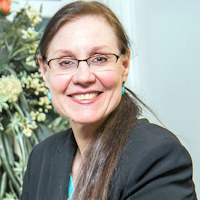 Valerie Reyna, PhD, is the Lois and Melvin Tukman professor of human development, director of the Human Neuroscience Institute, and codirector of the Center for Behavioral Economics and Decision Research at Cornell University. Her research integrates brain and behavioral approaches to understand and improve judgment, decision-making, and memory across the lifespan.