Kim Mills: Most of us like to think we’d stay grounded if we were suddenly to become very wealthy—that we’d still be our old selves, just with more money. But psychologists’ research suggests that this might not be true. In recent years, studies have found that gaining money and status can shift how people see themselves and how they behave toward others. While it was the novelist F. Scott Fitzgerald who wrote that “the rich are different from you and me,” it is psychologists who have shown this to be true.
Today we’re going to talk to a psychologist who studies wealth and the ways in which the rich are indeed different. How do money, status, and power shape people’s behavior and beliefs? What are the psychological mechanisms at play? And at a time of rising income inequality, what happens to people’s sense of empathy, fairness, and entitlement as the gap between rich and poor widens?
Welcome to Speaking of Psychology, the flagship podcast of the American Psychological Association that examines the links between psychological science and everyday life. I’m Kim Mills. My guest today is Dr. Paul Piff, an associate professor of psychological science at the University of California, Irvine, where he leads the Morality, Emotion, and Social Hierarchy Lab. Dr. Piff studies how economic inequality and social class shape relationships between people and groups. He’s published dozens of peer-reviewed research studies and has discussed his research widely with media outlets, including The New York Times, The Wall Street Journal, Marketplace, and PBS NewsHour. Dr. Piff, thank you for joining me today.
Paul Piff, PhD: Thanks so much, Kim, for that lovely introduction. It’s a pleasure to be here today.
Mills: I want to start with a question that you pose in your popular TED Talk called “Does money make you mean?” In it, you talk about an experiment you did with a rigged game of Monopoly. Can you tell our listeners about that research and what you found?
Piff: So, the rigged game of Monopoly was really our attempt in the lab to kind of emulate or model some of the features of being wealthy out in the real world. It’s hard to do because money is such a complicated thing and it means so many different things to so many different people, and it comes about in so many different ways in people’s lives. But we wanted to come up with a situation in the lab that allowed us to, within sort of this situation of a laboratory environment, create between people the experience of being, relatively speaking, rich or poor.
That’s a question that’s dogged social scientists for decades, because you can’t just randomly assign people in the real world to being millionaires or to being impoverished and follow them over the course of their lives. But, we thought within a game of Monopoly, which everyone’s familiar with or many people are, you could create within just 10 or 15 minutes some of the experiences of being wealthy or less wealthy.
And so, what we did was we brought in pairs of strangers to the lab—and they didn’t know each other, they didn’t know what kind of situation they were walking in on. It’s just a psychology study. We told them they were going to get to play a game and that to play the game, we were first going to flip a coin and we flipped a coin to randomly decide who of those two players—who of those two participants in our study—would get to be a rich versus poor player in the game. Now, my collaborators and I, leading up to those first sessions, had spent months playing Monopoly and trying to figure out what does this game need to look like to basically get people to experience being somewhat richer, somewhat poorer.
And so, we had done some piloting and we figured out that the more desirable piece, or the most desirable piece, in Monopoly was the Rolls Royce. The least desirable piece in Monopoly was the shoe. So, the flip of the coin randomly assigned one person to be a rich player versus a poor player. The rich player got the Rolls Royce, the poor player got the shoe, the rich player got twice as much money to play the game with. They got $2,000 instead of half of that amount—$1,000. When they passed go, they’d collect $200. So, they got, let’s say, two times the salary of the poor player, who only collected $100 when they went around the board. And they got to roll two dice instead of one. So, they got to move around the board a lot faster. And so, over the course of 15 minutes, we just surreptitiously observed and recorded what happened and what unfolded in this game. And we followed up this game with some surveys, where we also measured some other things, but we did this with more than 100 different pairs of strangers.
And what we found is that, in broad strokes, over the course of the 15 minutes, what started out as a kind of strange situation, quickly became a competitive game between two people. And they were just, within a couple minutes, people were playing monopoly. And obviously, the person who was assigned to be the rich player had double the advantages in so many ways, and we noticed their patterns of behavior begin to shift. They became more dominant in their behavior. They, for instance, started moving around the board in a louder fashion, smacking the board with their game piece. They took up more space at the board, so they actually became more expansive in their posture. They’re more likely to fan their money out than to keep it confined to a little stack. So, they’re more likely to sort of showcase how well they’re doing.
And over the course of the game, we noticed that just in their nonverbal behavior to the other person, they became way less sort of sensitive to the plight of the poor players and way more likely to talk about and showcase how well they were doing. So, what that tells us a little bit is that you can create this kind of rigged experience of privilege through the flip of a coin and get someone to experience that privilege and actually start to manifest as if they deserve that privilege in certain ways within an experience. At the end of the game, when we asked people to describe why the game had ended in the way that they had, and I should say that all rich players inevitably and invariably won the game, of course, they had twice the advantage, obviously. So, we asked the rich players, why did you win the game?
And they were way more likely to talk about the things that they’d done, their skill at the game, their decisions, the properties they bought. They’d just talk about decisions they’ve made as opposed to talking about that flip of the coin that randomly, and through no action of their own, got them to experience that privileged position in the first place. Now, just to tie this back, Kim, you asked me about Monopoly and I talked about wanting to model certain aspects of the real world and people could quibble, I mean, maybe this is like allegory masquerading as science or science masquerading as allegory.
I mean, I think there’s issues with the study, but I think one of the things that strikes me is that in the real world, you see very similar patterns unfold. Now, we’ve studied the psychology of wealth for now more than 20 years. People have studied the experience of other forms of privilege or other forms of status, and one of the uniform insights across all of that research is that the higher in status you are, and we find the higher in wealth you are, the more wealth you have, the more entitled, and the more deserving of that privilege you feel. And you could say, well, of course if you’ve earned your money, then of course you deserve that money, right? Because it’s come to you through your own hard effort. But we’ve studied this among lots and lots and lots of people, including people who inherited wealth and college students who have done nothing to earn their own wealth. And you actually find among wealthy college students, high class college students, levels of entitlement and deservingness that exceed that of their parents.
So, college students who are wealthy have done very little to deserve that. They’ve been born into their privilege, or much like the Monopoly players, were just sort of randomly flipped into their positions of privilege, and yet they feel deserving and entitled to more than others in life. So, I think that’s interesting. I think what the Monopoly experiment gives us is, it’s sort of an interesting insight into how the human mind makes sense of the privileges that a person experiences and attributes those privileges, in part, to one’s own deservingness, own merit, as opposed to the luck and the features of the world that, through no effort of our own, got us into that position of luck in the first place.
Mills: I knew some of those people in college. I know what you’re talking about.
Piff: We all did, we all do.
Mills: Did you find gender differences? I’m just curious if women behave the same way as men, and did you pit women against men? And what were the dynamics there?
Piff: Yeah, so that’s a great question. I think I would’ve designed the study a little differently to have been able to figure out if there are really reliable gender effects. So, we had men playing against women, women playing against women. We didn’t find major sex differences in this study, though I would say, generally, across the studies that we’ve run—upwards of maybe, let’s say, 40 to 50 studies at this point—looking at broad patterns in social orientation, social tendencies, prosociality, unethical narcissism, entitlement, typically speaking, men, at least North American men, tend to score higher in these various, you might say, self-focused or self-regarding tendencies.
So, men are more competitive, generally speaking. We’re not talking major effects. And of course, I’m talking about patterns across thousands of people, so there’s obviously lots of exceptions to the rules, but generally speaking, the pattern is men are typically more competitive, a little more entitled to feel a little more special, a little less oriented to the wellbeing of other people. And there’s lots of meta-analyses that suggest similar differences, whether they’re biological or socialized, but that women in different ways, and sometimes in very small ways, seem to be a little more empathetic, a little more compassionate, and a little more oriented to the wellbeing of others.
Mills: You did another really interesting study regarding cars and how people acted depending on which type of car they were driving. Can you talk about that a little bit?
Piff: I started out in this world as a person really interested in moral psychology, the psychology of prosociality. What are the factors that drive human kindness and cooperation and that get people to get outside themselves and want to do nice things for other people or behave in collective action with their groups? And so, when we started working on this research in social class, there was a lot of low hanging fruit. And so, we’d done some studies finding, for example, that in interpersonal interactions, wealthier people are actually a little less generous, little less compassionate. And we followed that up with a set of studies looking at individual differences as a result of social class in how willing people were to break certain normative rules of conduct, or what we would say, engage in ethical violations. Little things like you pay for a coffee and a muffin at a coffee shop for $10 and you’re given change as if you paid for $20. How likely would you be to keep that extra change?
And I think that these kinds of things are trade-offs and conflicts that we navigate daily. If you’re stuck in traffic, you’re thinking about should I zip ahead of this other car or should I wait my turn in line? We’re always thinking about the extent to which we should prioritize our own welfare versus the wellbeing of others and what’s the right thing versus the thing that I want to do. And we’re constantly juggling these things. And so, we’d run a bunch of studies finding that, generally speaking, surprising to us at the time, wealthier individuals were actually more likely to not only endorse unethical, but to also engage in small acts of cheating and normative violations to prioritize their own welfare above the welfare of other people. And I remember at the time thinking like, okay, definitely if we publish these results, people are going to be really surprised.
And one of the questions is going to be, I mean, because in many ways it’s kind of counter stereotypical, why would wealthy people—see they’ve got more to begin with? So, could we find ways to look at this in the real world? How could we do this? And so, my collaborators and I at the time were talking about all sorts of different ways to do this, and I was heading on my way to a meeting and I was waiting at a crosswalk and I was thinking about these different study versions that we’d come up with, and I’m standing at the crosswalk and cars are just zipping by me. No one’s stopping. And I remember thinking to myself, well, this is interesting. I could do a study like this where we look at whether drivers abide by the law, and in California, just as an example, it’s the law to stop for a pedestrian who’s waiting to cross.
And so, we put together a team and we ran a series of studies that looked at whether drivers of different kinds of cars, which was our way of modeling wealth and status in the real world—what kind of car do you drive? Of course, it’s the case that people without some means might drive fancy cars, but generally speaking, the correlation between the car that you drive and how much wealth you have is very, very high. We piloted that and we found that the correlation was around 0.7 or 0.8, which is double the correlation between how educated you are and how much money you make. So, it’s actually a very reliable indicator of your wealth. And so, we looked at whether drivers of more or less expensive cars would be more or less inclined to do things that violate California vehicle code.
So, we ran one study at a four-way intersection and another study at a crosswalk, where we in that study had a pedestrian walk up to the crosswalk, a car’s coming down the road. The pedestrian would always look to the driver and nod signaling their intent to cross. And then outside of view, we had coders hiding behind bushes, coating the expensiveness of a vehicle as it comes down the roadway, and whether or not the vehicle then stops for our pedestrian whose signaled his or her or their intent to cross. We did this for hundreds of different vehicles, and what we found was this kind of clear linear trend, even controlling for lots of other things, the more expensive your car was, the more likely you were to break the law in this case by driving right through the crosswalk and not stopping. And I remember at the time being surprised by this. And also, when we published the results, I got lots of lots and lots of emails from drivers of different kinds of cars. For example, Prius drivers saying like, yeah, okay, okay, okay.
Actually, Prius drivers at the time scored relatively high in our expensiveness category because Prius cars were, at the time, some of the more expensive cars that you could drive, and they were also—Prius drivers somehow, I don’t know that these would hold up nowadays, but then, they were among our most likely to be breaking the law. They would drive right through the crosswalk. And I got a lot of emails from Prius drivers saying, well, we’re too busy, we’re too focused on the efficiency of our mileage. And I know that I got emails explaining that braking for a pedestrian would implicate the climate because it would mean that your gas efficiency would go down or your mileage per gallon would go down. And so, they’re making an executive decision to better the environment as opposed to stopping for someone else. Anyway, all of which is to say, I think there are lots of reasons why someone might stop or might not.
I think, generally speaking, what these studies showcase is that maybe in very small ways, your levels of privilege, your lifestyle as signaled and expressed through the class environment that you inhabit is reflected in these little ways in which you might, in these split second decisions. Think about whether what you need to do is more important than what someone else needs in a given situation. And we find, at least that in those kinds of little decisions, it’s the case that the wealthier you are, the more likely you are to prioritize your own needs, your own goals, your own desires, your own interests above the interests of other people.
Mills: What about people who were, they weren’t born into wealth, but they earned vast wealth. I mean, does that affect people’s behavior differently depending on how their money was acquired?
Piff: Yeah, it’s a really important question, Kim, and it’s one that we have some scientific answers to, but I think that work is only just beginning. I mean, intuitively, I would say, of course it matters how you gained your wealth. Of course it matters for how you experience it, but I think the effects in some cases are kind of surprising. So, we ran a study just a couple of years ago looking at people born into wealth versus people who became wealthy over their lifetimes. And the specific question we were interested in here was, who of those two groups—people born rich or people who have become rich, but who started out less well off—are more sympathetic and empathetic to others, more likely to be willing to support various measures to help others in need?
And when thinking about that question, you could generate one idea, which would be that, yeah, someone who’s been less well off—let’s say, someone who’s been poor—well, they’ve experienced what poverty is like. They’ve experienced what immediate need is, like they’ve experienced structural unfairness or injustice in their environment. They know what it’s like to be poor. And so, even though they’re rich now, maybe because of that increased experience and increased exposure and increased empathy, they’re more sympathetic to the plight of others, to the plight of the unforced ones, and so, more willing to offer up help to help others out.
Actually, we found the opposite. So, when comparing people born into privilege versus people who became wealthy, it’s people who were born into wealth who were actually more sympathetic and more empathetic. Because those who had earned their wealth had a certain story they could tell, and the story that they could tell was one of deservingness. And it was that I know that I—because I experienced upward mobility—I know it’s possible to be upwardly mobile, so I feel deserving of that wealth that I now have. And so, if you are not equally wealthy, if you’re in need, because I know that it’s possible to have made it and pulled yourself up by your own bootstraps, it’s your fault that you haven’t been able to do that—at least yet. And so, that story allows room for blaming others for their own misfortunes as opposed to giving rise to willingness to help them.
So, I think that the effects are probably complicated. There’s other work that looks at differences in entitlement and narcissism as a function of how you came about your wealth, finding intriguing differences there. I don’t need to go into that, but generally speaking, I think it matters and the work is just now starting to get off the ground.
Mills: Do findings like these hold across countries and cultures, especially countries that are more collectivist versus individualistic?
Piff: Yeah, I think it’s a really important question. I should have prefaced, regarding our findings, that they’re primarily in what some might refer to as WEIRD cultures—Western, educated, industrialized, rich, democratic. Anyway, most of them are done with North American or certainly Western participants. And I think there’s a lot of reason to think that the effects of social class and of wealth and status might vary depending on your geographic location, but I think, importantly, vary as a function of your culture. And so, there’s work that’s shown, for example, that across lots of different countries, the association between wealth and the endorsement of unethical acts seems to be culturally—if not universal—certainly culturally consistent. So, they look at it in, I think, upwards of 20 different countries and find similar effects. The wealthier you are, the more likely you are to say that it’s okay to do small, unethical acts in the favor of your own self-interest.
Now, those effects, while they seem consistent, I think, are likely to vary as a function of where you are, what the values are around the social safety net and around wealth. In the U.S., we have, whether it’s unfortunate or not, we have a culture that sort of prioritizes almost excessive pursuits of self-interest, competitiveness, and meritocracy is, you might say, almost a sacred value. And so, if that’s the case, then that’s going to legitimize wealth and wealth inequalities in a way that more typically socially progressive or liberal countries might not, where there’s a stronger, say, explicit value toward noblesse oblige and the responsibility of sharing what you have with others, for instance, via progressive taxation. Anyway, that’s a long way of saying I think it matters, and we don’t really have a lot of data yet that sort of unpacks where and why.
Mills: I want to switch gears for a minute and talk about happiness and money. There’s been psychological research into the amount of money it takes to reach happiness, and there was one study, at least one study, maybe several, that found that there was—at $70,000 people’s happiness kind of plateaus, and after that you don’t get hugely happier after making more money. I’m just wondering, does having more money make people happier?
Piff: That’s a question that moral philosophers and poets and artists and people have thought about, not just about money, but about resources, for as long as we’ve had them. So, these are longstanding, and there are questions that we have some answers to, but I think the work is ongoing. There’s new work that suggests that, maybe in fact, the plateau isn’t at $70,000, but it’s much later. And as your money goes up, happiness does, but the incremental value of each rise in income starts to diminish. So, it’s almost logarithmic. So, to an extent money, research tells us, buys you some version of happiness, not as much as people think it does in that effect seems to diminish as money goes up. But I think what’s more important is that what we’re also simultaneously learning, and I’m just going to mention two different things here, is to the extent that money buys you happiness, what’s almost more important is how you spend the money.
And we know that work, there’s a lot of work that tells us that spending money on others for instance, versus spending it on yourself buys you a lot more happiness, a lot more bang for your buck and has a much larger effect on wellbeing when it comes to how to spend resources. Using your money to buy yourself time for example, has a much bigger effect on happiness than does using your money to buy yourself material things. Buying yourself experiences over material goods is a better predictor of happiness.
What we find actually is that happiness, when you break it down, happiness is a very complicated psychological phenomenon. You could think of it as a simple word: Are you happy or not? But in fact, when you study it, what does it even mean to people? If you ask someone, are you happy right now? Some people might say, well, it depends on what you mean. I feel content. I wouldn’t necessarily say I’m happy. So, happiness is a very multifaceted construct and psychologists have been grappling with what kind of multifaceted construct it is.
One of the things that we’ve been finding, and I think that this has been true over the last 20 years, as people have been thinking about the role of emotions in happiness, is that happiness is actually kind of, you might say, a gestalt state derived from our experiences of not just one emotion, but lots of different kinds of positive and maybe even negative emotions. And so, when we break happiness down, as we did in one study, into its composite emotions and look at people’s tendencies to experience different kinds of positive emotions—all of which contribute to this overall state of happiness—we actually find this really interesting pattern where the wealthier you are, the more likely you are to experience certain kinds of positive emotions like pride, but the less likely you are to experience other kinds of positive emotions like love, compassion, awe, that are equally, or you might even say in some cases, more powerfully connected to happiness.
So, I think wealth and happiness are connected, but the ways in which wealth connects to happiness is pretty complicated. And actually, it seems like wealth might buy you certain kinds of happiness, but not all of them. It’s not an unmitigated, unequivocal good. I’ve not found this in my life because I’m not necessarily wealthy, but people have reached out with their stories of wealth as our lab and the work that we publish has gotten some traction. And they tell me stories of retrospectively looking back at their lives and feeling like they had spent a lot of time as their money aggregated, as they gained more wealth, as they gained more status, they got more involved in their career, more focused on their numbers, more focused on working weekends and hours, and they lost sight of the things that, in retrospect, they wish they hadn’t. Like their friends, their social relationships, their family. They wish they’d spent their time differently. And so, I think wealth and money kind of shape your value system into a particular set or constellation of things that gets you to focus and prioritize on some things in life, but perhaps lose sight of some others, like your social relationships, your inherent connection to other people around you, and the ways in which you can derive value from those connections. And losing sight of those things are, I think, major determinants of your wellbeing and have a negative impact on it.
Mills: Let’s talk for a minute about politics just in a general sense. I’m wondering how wealth affects people’s political attitudes. There’s a long history in this country of the well-off favoring the republican party and being more conservative in their values, while the democratic party seems to be in touch with more average adults. Do the rich tend to be republican and conservative, or is that just a stereotype?
Piff: I think it’s largely a stereotype. You’ve got wealth on both sides and lots of wealth on both sides. Generally speaking, the work that looks at wealth and your political attitudes finds that, at least economically speaking, the wealthier you are, the more likely you are to be, let’s say, economically conservative. And what I mean by that is, if you’re wealthy, you’re less likely to support something like progressive taxation. You’re less likely to support redistribution in other ways. You’re less likely to support a social safety net that offers, let’s say, universal healthcare or universal basic income, and you’re more likely to endorse attitudes and values, politicians and political policies that you might say protect the wealthy against taxation, and that help conserve privilege. These aren’t massive effects.
There are lots of different things that drive political attitudes, but basically, I think a lot of this seems to stem from, well, if you have resources, then you’re going to feel motivated to protect them. You’re going to want to maintain them, you feel deserving of them. And so, those kinds of attitudes tend to be more, at least typically associated with conservative economic policies. There’s even work that suggests that, because you could make lots of different kinds of arguments for why that relationship might exist in the first place. There’s all sorts of chicken and egg stuff that you could talk about. There’s work that finds this with Jasmin Brown Iannuzzi, who’s at the University of Virginia. She manipulates levels of wealth within even games and finds that, if you experience privilege and status within a game, you become, economically speaking, more conservative by being less willing to support redistribution within the game. I think it’s just a general tendency among elites to want to do things that conserve their power and privilege.
I don’t think that’s only true of elites. I think that’s true of anyone who’s in a position of power, of high status, or of privilege that they will feel motivated to defend the status quo because after all, they are benefactors of it. There are of course exceptions to that, but I think generally speaking, the better off you are, the more motivated you are to keep the world as it is because you’re benefiting from it.
Mills: I mentioned in the introduction, the rise in income inequality being a huge issue in our nation, probably in the world right now. How do you see these psychological effects that you’ve been studying, playing out on a more global societal scale in terms of how we think about and deal with inequality and poverty?
Piff: First of all, I’m certainly one voice among many, many, many that have talked about the very pernicious problematic effects that inequality can have on societies. And I think it’s not a stretch to say that many of the issues that we face as a nation, as a species, as a planet, you could say derive in part from the extreme levels of inequality that we’re being experienced. You can even attribute something like the severe polarization that we’re experiencing in the U.S. right now as resulting, at least in part, from the vast economic inequality that our population’s experiencing. So, I think inequality is problematic for lots of reasons, in part because it makes it so difficult, because it’s so polarizing, to come together as cohesive units to collectively confront issues we’re facing. So, I think that our work lends a little bit of insight into the idea that inequality is problematic.
And given that we’re finding that the more wealth you have, the more motivated you are to conserve that wealth, to not want to share it with others, and to even be willing to do things that break the rules to get more wealth, there’s no reason to think that inequality on an individual level would necessarily change that. People would all of a sudden say like, look, I’ve got enough. Let me now start sharing it with others. It doesn’t seem to be that mental switch—the more wealth you have, the more willing you are to do things, to aggregate it, to conserve it, to conserve that privilege for yourself. And so, you could expect based on that, that inequality just gives rise to more inequality, which in turn gives rise to more inequality. And you get something like runaway inequality that just kind of exacerbates differences between those that have and those that don’t.
Over time, lots of people have talked about trickle down benefits of wealth. That’s part of the foundational insights of even capitalism in our country—that if you let capitalism kind of run wild, then the market always corrects itself in part by having those at the top sort of use their resources to benefit everyone, building jobs, building out different systems toward efficiency that help not just them, but everyone within the population, you kind of carry people along with you. We’ve seen politically, socially that does not seem to be the case. Maybe trickle down economics is a real thing, but trickle down compassion doesn’t seem to be.
Mills: Now there is a move afoot among some of these billionaires or oligarchs in this country to give their money away—to pledge to give their money away. And is that coming out of a sense of guilt and pressure from others or people suddenly becoming more empathetic?
Piff: It’s hard to say because I know for instance, the initiatives like the Giving Pledge, which are really interesting, and actually we’re doing a bunch of studies on them. I don’t know what’s individually motivating each of the members of the Giving Pledge, and these are billionaires who have pledged upwards of 50% of their fortunes to different charitable causes. I think it’s a wonderful endeavor. I don’t know what’s specifically motivating them. There are lots of different motivations, including some tax benefits. Certainly they’re doing it in public ways. So, the moment you’re giving away charity in a way that’s being actively recognized by people, there’s a lot of interesting benefits that you get as a result, including billionaires get to hold onto billions. And just by virtue of having given some of those billions away, they are now treated as moral and good people, even though they have exorbitant levels of wealth.
I’m not saying that the Giving Pledge is a problem, but I think that the motivations for people to become members of those kinds of initiatives can be multifaceted and not necessarily prosocial. There’s a lot of work that suggests that, actually, the charity of the wealthy is often oriented toward causes that actually conserve and exacerbate inequality, as opposed to mitigate it. So, wealthy people are more likely to give to alma maters, they’re more likely to give to different kinds of initiatives, even cultural institutions that play into elites, that help conserve the power of upper class individuals as opposed to trying to mitigate it. So, I think it’s a complicated answer.
One of the questions I’ve gotten really interested in is the stories of wealth that people tell, particularly in the U.S. And so, for instance, something like the Giving Pledge gets a lot of traction in the news because people love hearing stories about how—stereotypically speaking, the wealthy are sometimes depicted as scrooges, but here we’ve got all this evidence, including Bill Gates and Warren Buffett, but so many other people, of people being so philanthropic. And so, newspapers tell these stories, we tell these stories, we share them almost as like heroic tales.
And so, we’ve launched a set of studies that look at the role of these stories that we tell of wealthy heroes in getting people to feel like everyday people to feel like inequality might not actually be a problem. Because if it’s the case that people who are wealthy are moral and good and prosocial and charitable and give their money away, well then, inequality is not as problematic because the wealth that’s being concentrated on the top just ends up getting circulated around and benefiting everyone else. And we find that that’s the case. The more people have been exposed to these stories, the more people tell them, the more okay with inequality people feel, which would suggest that there’s actually, possibly, this kind of problematic, potentially problematic, side to these stories of wealthy philanthropy. I don’t think they’re representative of our country’s wealthy necessarily, and I think they bias the mind in some really interesting ways.
Mills: I often like to close with the question of what you’re working on next, but what are the big questions that you still want to answer?
Piff: One that we’re really interested in is how do your own narratives, your own experiences with wealth, how you earned it versus inherited it, play into the tendencies that we’ve really been interested in, towards social connection, towards social attention, towards social attunement? So, really looking at differences in inheritance versus earning in how wealth seeps into the mind.
And you pointed at this other really interesting piece, this emotional experience of guilt. And so, we’ve been in the lab now for the last six or seven years looking at the role of guilt, particularly in a climate of growing inequality, the role of guilt and how people experience their wealth and how that guilt, those feelings of undeserving this, play into not only how someone feels about their wealth, but also what they’re willing to do with it. So, we’ve gotten interested in this idea of wealth guilt and where it comes from and what are the ways that people go, what are the lengths that people go to assuage those feelings of guilt, to mitigate them? And to even try to alleviate them not only within themselves, but to also sort of demonstrate that they themselves are deserving or not as wealthy as they might appear to be. But basically, what are the different ways that people kind of confront those feelings of guilt and navigate it in various social interactions?
So, those are two projects. And then, more broadly, I’ve gotten really interested in different kinds of psychological, you might say, motivators that in some ways attenuate the wealth, class differences we’ve been finding. So, if it’s the case that wealthier individuals—that elites are generally speaking biased toward conserving their privilege, toward conserving their power and are less attuned to the wellbeing of others and their social groups, then what are some factors that might attenuate those differences? That get them to feel a heightened sense of responsibility toward the greater good, to feel more compassion for their fellow citizens, their fellow group members? And so, we’ve gotten interested in the role of compassion and, more recently, in how experiences of awe, and I don’t just mean experiences that you might have in the Grand Canyon or looking up at the night sky, but experiences of awe are characterized by feeling like you’re a small part of something much bigger. How that kind of constellation of human experience can remind various people, not just wealthy people, but various people in various locations who belong to various groups, that they’re not just these disconnected entities and disconnected individuals, but are rather interconnected bits of a much larger whole that are all sort of needing to work together toward unified goals. So, how do experiences of awe bring people together and allow us as a species to be better equipped to confront some of our most pressing challenges?
Mills: Well, this is really interesting stuff that you’re working on. I want to thank you for joining me today. It’s been a pleasure talking to you, Dr. Piff.
Piff: Thanks so much, Kim. It’s been a lot of fun and I mean that.
Mills: Thank you. You can find previous episodes of Speaking of Psychology on our website at speakingofpsychology.org or on Apple, Spotify, YouTube, or wherever you get your podcasts. And if you like what you’ve heard, please subscribe and leave us a review. If you have comments or ideas for future podcasts, you can email us at speakingofpsychology@apa.org. Speaking of Psychology is produced by Lea Winerman.
Thank you for listening. For the American Psychological Association, I’m Kim Mills.


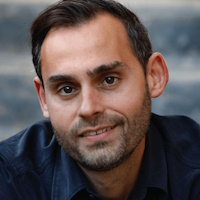 Paul Piff, PhD, is an associate professor in the Department of Psychological Science at the University of California, Irvine. His primary interests are in how social hierarchy, economic inequality and social class, and social emotion shape relations between individuals and groups.