


In 2020, several months into the pandemic, APA conducted a survey to better understand how COVID-19 impacted mental health treatment and the work of practicing psychologists. In this 2021 follow-up survey, many psychologists reported increases in demand for treatment of anxiety and depression. Additionally, many psychologists reported increased workloads, longer waitlists, and low capacity for new patients.
Most psychologists continued to see at least some patients remotely, while a greater proportion used a hybrid model, treating some patients in person and some remotely. Despite an increased number of psychologists reporting that they were able to maintain positive work-life balance and practice self-care compared with 2020, reports of burnout and the inability to meet patient demand have also increased in the same time frame.
Demand for anxiety, depression, and trauma-related treatment continues to rise
More psychologists reported increased demand across all treatment areas prior to the pandemic, and the increased demand has jumped since last year.* Psychologists reported the greatest increases in treating anxiety disorders (84%, up from 74%), depressive disorders (72%, up from 60%), and trauma- and stress-related disorders (62%, up from 50%). Other diagnoses with large increases included sleep-wake disorders, obsessive-compulsive and related disorders, and substance-related and addictive disorders.
*The 2020 data references APA’s 2020 COVID-19 Telehealth Practitioner Survey, which was fielded from August 28 to October 5, 2020.
Changes in demand by treatment area since the coronavirus pandemic started
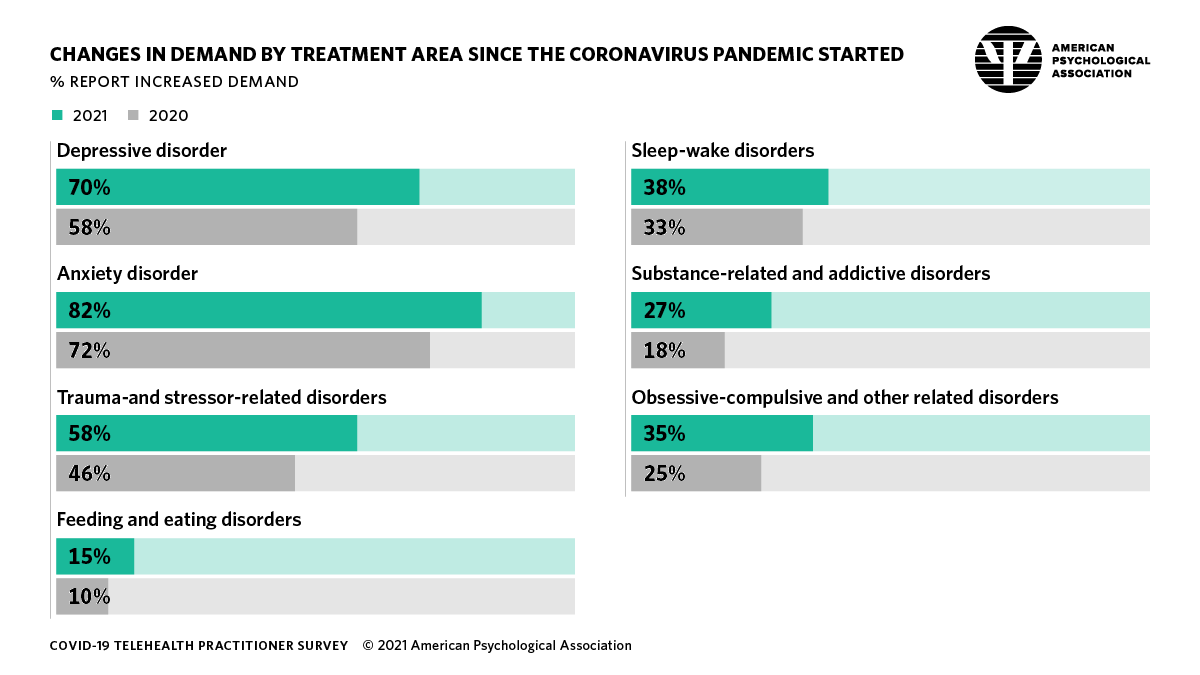
With respect to patient demographic groups, psychologists reported the greatest increase in demand among White, Asian, and multi-racial populations, and among adults (18-64), adolescents (13-17), and older adults (64-79). Across most patient population groups, more psychologists reported treating more patients than in 2020 and fewer reported decreases, indicating higher demand overall.
Providing remote services
The majority of psychologists continued to provide at least some services remotely (96%). While few returned to seeing patients entirely in person since the 2020 survey (about 4% versus 3% in 2020), a greater number of psychologists adopted a hybrid approach of seeing some patients in person and some remotely (50% versus 33% in 2020), revealing a slow progression back to the office.
Fewer psychologists reported that their patients experienced challenges accessing telehealth than in 2020 (21% said none of their patients experienced telehealth challenges in 2021, compared with 16% in 2020). For those who did experience challenges, the top three most common challenges continued to be barriers to internet access or connectivity (55%), general technical difficulties (51%), and difficulties finding a private place from which to connect (50%). Despite these challenges, 96% of psychologists agreed or strongly agreed that the use of telehealth during the pandemic has proven its worth as a therapeutic tool, and 93% agreed or strongly agreed that they intend to continue providing telehealth as an option in their practice after the pandemic.
Practitioner workload capacity, burnout, and self-care
Given the increased demand for mental health services, it is no surprise that psychologists also reported increased workloads, longer waitlists, and low capacity for taking on new patients. In terms of overall number of patients, 43% of psychologists reported an increase, while only 29% said the same in 2020. The percent of psychologists who reported getting more referrals increased dramatically in the last year (from 37% in 2020 to 62% in 2021), and almost seven in 10 psychologists (68%) with a waitlist reported that it had grown since the start of the pandemic.
Changes in workload and workforce capacity since the start of the pandemic
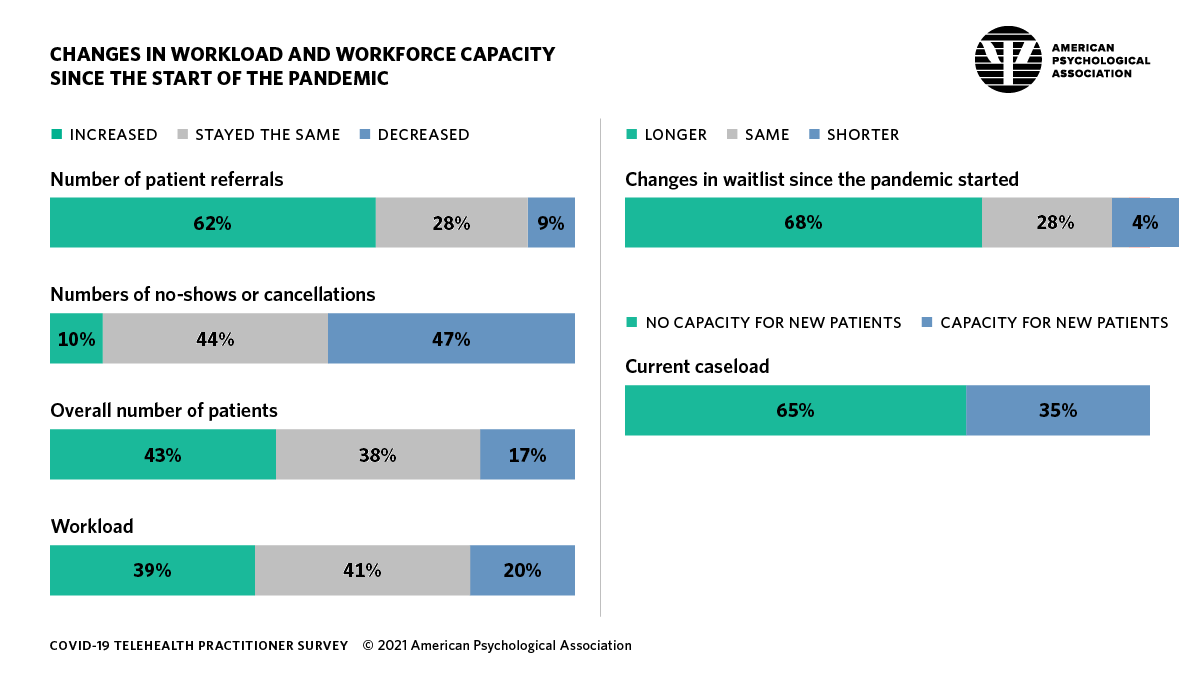
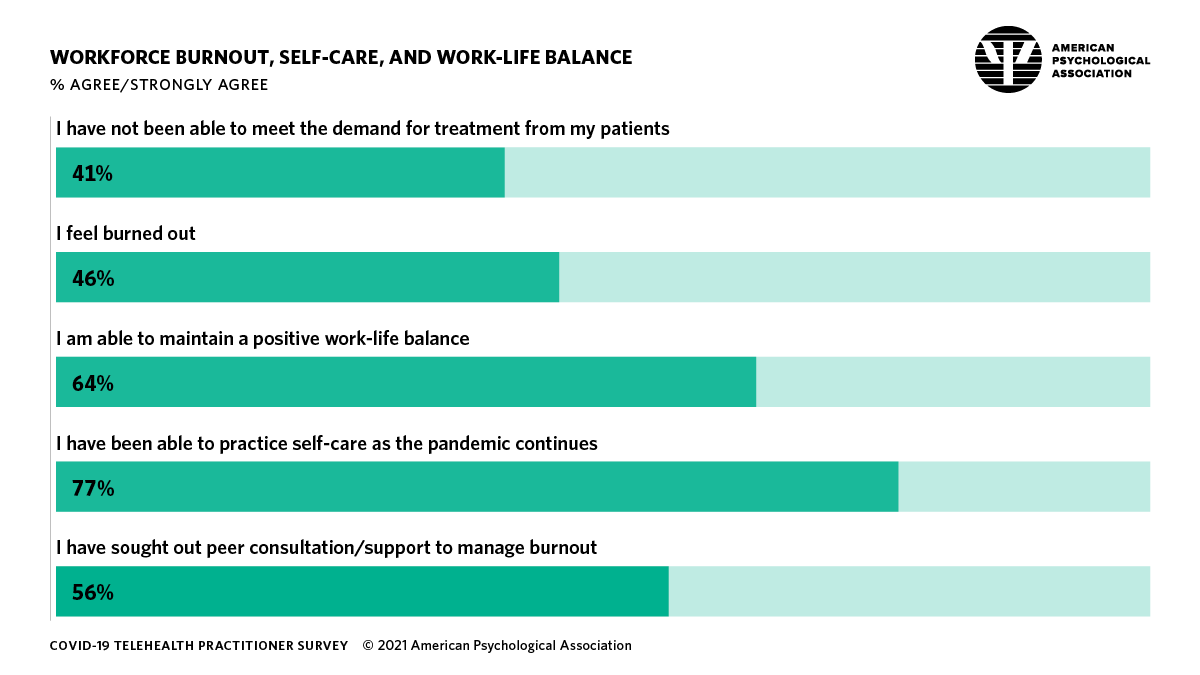
With these indicators suggesting many psychologists are working at or beyond capacity; 41% reported being unable to meet demand for treatment (up from 30% in 2020), and 46% reported feeling burned out (up from 41% in 2020). Over half of the responding psychologists (56%) reported turning to peers for consultation and support with burnout.
While a larger percentage of responding psychologists also reported that they were able to maintain a positive work-life balance (77%, up from 66%) and practice self-care (64%, up from 55%), these measures point to the importance of promoting psychologists’ well-being as well as the need for prevention and treatment of mental health issues associated with the pandemic both in the population and the psychologist workforce.
Workforce burnout, self-care, and work-life balance
APA's COVID-19 Practitioner Survey data

About the survey
Results were from the 2021 American Psychological Association’s COVID-19 Practitioner Survey. The survey was distributed to approximately 26,400 doctoral-level active licensed psychologists in the United States during August 30-September 17, 2021. A total of 1,141 psychologists responded to the survey, yielding a response rate of 4.3%.
The 2020 COVID-19 Practitioner Survey was fielded from August 28 to October 5, 2020. A total of 1,787 psychologists responded to that survey. All comparisons to 2020 data reference this survey.
Related
Press releases and previous reports
- Demand for mental health treatment continues to increase, say psychologists
- Psychologists report large increase in demand for anxiety, depression treatment
- Psychologists embrace telehealth to prevent the spread of COVID-19
- Press contact: Sophie Bethune (email)
Telephone: (202) 336-6134
Telehealth and COVID-19 resources
- Practice resources in response to COVID-19
- APA's COVID-19 information and resources
- The age of digital interventions: Software designed for diagnosing and treating mental illness comes into its own
- 2021 trends report: Online therapy is here to stay. What does the future of telepsychology hold?
- How well is telepsychology working?: Researchers are pinpointing what we need to know and learn about these treatment options