Kaitlin Luna: Hey everyone, its Kaitlin Luna host of Speaking of Psychology. This episode was recorded during APA's Technology, Mind and Society Conference held in October 2019 in Washington DC. I was away on maternity leave during that time. So my colleague Kim Mills was a guest host. We hope you like this episode.
Kim Mills: Hello and welcome to Speaking of Psychology a bi-weekly podcast from the American Psychological Association that explores the connections between psychological science and everyday life. I'm your host Kim Mills and I'm coming to you from APA's annual Technology, Mind and Society Conference in Washington, DC, a cross-disciplinary meeting to discuss psychology's role in developing and advancing everything from virtual reality to artificial intelligence to the Internet of Things.
Have you ever wondered why drivers don't get carsick? And if you've ever been seasick, are you curious to know what causes it and what if anything can be done to stave it off? Joining me today is Dr. Arnon Rolnick, a clinical and experimental psychologist from Israel where he directs Rolnick's Institute for Advanced Psychotherapy and studies psychophysiology and the integration of technology and psychology.
He spent 20 years as a psychologist in the Israeli Navy developing various methods to improve sailors performance and well-being under conditions attended to make them seasick. He is also working on a book exploring how virtual psychotherapy can open new ways to study the roles of the body and brain in therapy. Welcome Dr. Rolnick.
Arnon Rolnick: Thank you very much. Thank you for inviting me.
Kim Mills: One reason I wanted to talk to you today is to learn more about one of the papers you're presenting an APA's Technology, Mind and Society Conference. It's called Technology Made Us Motion Sick: Autonomous Cars Will Make Us Vomit. It's a review of 40 years of research, which is a lot of time to study motion sickness. With the advent of self-driving cars, the idea that these vehicles might make people motion sick is one glitch that hasn't gotten a lot of coverage by the media. So I'm wondering how much do scientists know at this point about the likelihood that this will be a widespread problem. And what can we do about it?
Arnon Rolnick: Well, we studied this phenomenon for many years. In fact, this is one of the ancient problems that technology made. You know, we were very happy that we could be moved by cars, ships and horses, but we were not aware that it will produce such a debilitating effect like motion sickness and, not only, we found in my work in the Navy that people tend to be even helpless. They feel desperate. And I connected it to Martin Seligman’s theory of learned helplessness. The exposure to uncontrolled motion is producing some sickness and not only sickness, it produces really some type of depression, which I was able to show in my research. So that brought me to the question, how come there are certain people who are not sick, like drivers, and that came very nice with the theory of controllability.
What learned helplessness theory predicts is controllability prevents feeling bad. So I did this study for almost 40 years ago and I was not aware at that time that in a few years from now, everybody will be a passenger and not only they will be passenger, they will be reading devices like phones or the Kindle because they are free, they don't have to drive. So this autonomous car or driverless car is opening a real problem or producing a real problem, which we psychologists will have to deal with. And I'm going to present a few types of solutions or possible solutions, which I did in my work in the Navy. One of them was artificial horizon.
We do know that the reason motion sickness develops is because it has to do with some type of conflict between the information the eyes get and the information that the vestibular information gets, our vestibular system.
Kim Mills: Which is in your ear?
Arnon Rolnick: In our inner ear, yes. And in the study I did with the TNO in the Netherlands we were able to show that using artificial horizon, we could dramatically reduce the amount of motion sickness and increase performance. That performance is becoming better as compared to people who did not have this artificial horizon, which was kind of projected on the walls of the tilting room that we used, but this is some technical details. But what I really want to emphasize in this lecture that I'm going to give which will be one of another two lectures. But one of my talks will speak not so much on technical solution, but that we as psychologists have to examine the process of adaptation. Because people do adapt to motion sickness, but we don't know enough about this process and apparently it's not enough just to be exposed to the motion. We have to help them using various cognitive behavioral therapy approaches.
And there is an interesting correlation now between what I do in my clinical practice with people who are afraid from being sick or afraid from vomiting, I'm doing gradual exposure to motion sickness. And it is possible that with this driverless car we will need to do the same. So this is one of the area I'm going to talk about in this conference, but then I will jump, if it's okay with you, to another area which is related to my main practice as a clinical psychologist.
Kim Mills: Okay, but before we get too far into that, a couple questions about motion sickness. So you talked about an artificial horizon. So I'm in an autonomous car there's a real horizon out there. So why does that not prevent me from getting motion sick? What's happening? Or, if you just gave me a steering wheel and I thought I was in control, would I feel better?
Arnon Rolnick: Well, that's a very interesting... You have two points here. Both of them are good. But let's go to the second one which I was just trying in my clinic in Israel. I wondered what happens if you have a wheel, but you don't really control it, you just play with it, like what I did with my child when he was some years ago. And, apparently, we don't have good research about it yet, but apparently it does help. So, you know, in this autonomous car there's going to be some stages. At the beginning, we will still need the wheel although it would not really control the car. So I do suggest that people will kind of play with a useless wheel just to feel that they have perceived control.
Regarding your previous question. It is true, the main focus is that we need to give them a good visual reference. If the car manufacturer will be wise enough, they will make big windows and that would be best. But if you will notice in the diagram of how they prepare or plan those cars, they are going to be like a room with many chairs facing each other, not facing the movement, and a lot of screens. So people might not see the visual surrounding and this is why, I'm kind of, I think that they will have to hear us psychologists. Our voice must be heard on these issues.
Kim Mills: Is that a problem so far with the cars that they're designing or are you hearing that car sickness is an issue?
Arnon Rolnick: Well, you see, everybody is now obsessed with the issue of shall they do accident or not and not enough about this issue. Well, there is, I should be more concrete. Mercedes Benz is doing some research and other companies are doing research. So it's not that they ignore it. But still the main focus is not exactly on this issue, I think. There's another issue I should mention, it's again important for psychologists, the issue of trust. We have to trust this computer that will drive us. And it will be interesting to see what type of people will be kind of trusting it. No problem. And others who should sit anxious and anxiety might produce even more sickness. So there are interesting questions here.
Kim Mills: Hmm. So, why is it that some people get seasick or carsick and others don't?
Arnon Rolnick: That's again a good question. Some people thought its related to the function of their vestibular system, this in the inner ear, and apparently not. Everybody that has a functional vestibular system might get sick. In our Navy my data so that 70% of the people get seasick if the sea is high enough. In the car. It might be a little bit less. It might be less. But again, if they will be reading and looking on certain devices, they will be apparently, either not sick, or they will have what they call Sopite syndrome.
Sopite syndrome is related to what I said about some type of lethargy, apathy, depression that we did show that motion sickness does produce even without nausea.
Kim Mills: So that's produced, it's not something that you have before you get motion sick. It's when after you become motion sick, you have this Sopite syndrome.
Arnon Rolnick: That's an interesting question. I studied with three of the leading people in this field. One is [inaudible] from England. The other is Ashton Graybiel from Florida. And the third is James Lackner in Brandeis University. They were all studying this Sopite syndrome. And they say that sometimes it develops even without the symptoms of motion sickness. Like we can see it as a phenomena that might be developed without nausea and without vomiting.
Kim Mills: Interesting. So you talked a little bit about cognitive behavioral therapy as one way to counteract motion sickness. How exactly would that work?
Arnon Rolnick: Well in my studies again some earlier studies and some later. We trained soldiers or sailors with some cognitive, simple cognitive behavioral techniques. It could be either relaxation either changing their cognition. And we showed that people that did it and the people that had high self-control, were by far, they perform better than their counterparts or the other sailors that did not have self-control ability. We used the classical method of measuring self-control and we were able to show that cognitive ability of self-control might be very useful. Now I should mention here a very important figure his named Dobie, James Dobie, I believe, who worked in the naval biodynamic lab here in this country. And he just published a book about his, I am speaking about 40 years, I think he's working 50 years in the field, and he's not psychologist, but what he found that in order to help, pilots, sailors and people that suffer from motion sickness he uses cognitive behavioral therapies and there is another study that people did it in the sea just some years ago with very good results.
So, yes we, you know people in the field of cognitive behavioral therapy usually think that their job is to prevent drivers rage of drivers anger or, you know, anxiety or depression. I invite our colleague in the CBT to begin to prepare themselves to a new arena that they should work and this is how to help people at the cars. And more important motion sickness is very much conditioned. Like if I'm driving in a car and in this car there is a smell, some type of smell that usually wouldn't bother me. This smell is kind of conditioned with the nausea. This is the phenomena we all know in psychology. We called conditioned taste aversion and conditioned smell aversion. So it is possible again that we might also test the role of odors. And maybe we can prevent this conditioning by using different odors at the first drive or the first voyage that they people are doing.
Kim Mills: So you'd associate a good odor with feeling well.
Arnon Rolnick: Exactly, exactly, but may I now go to the other field that, I'm like, I began with the old ancient problem, but now I'm dealing a lot with the role of the internet in helping people. And in fact in psychology, there are two directions that the internet took. One is to do what they call Skype therapy or online video conference. And this is mainly the relational people of the psychodynamic people that were said, hey, it's interesting to see what we can learn about therapy when we do it online. Is it the same therapy? Is that the same alliance that is produced in this online therapy? And I just published a book with Heim Weinberger, a friend of mine, about online therapy. There is some books in this area but our book is dealing with cases that we are doing it, not only one-on-one like classical psychotherapy, we're doing it with couples, with families, with groups, and with organizations. So this is the uniqueness of our book that we are doing online therapy and that produces very interesting questions. For example, now, there's two people sitting in front of me, you and our technician. And suppose I want to see the interaction between the two of you. Now the classical people just put the guy or the couple before the camera, before the computer, and we just see two faces. It's not what we want. We want to see the full body. We want to see the interaction between the couple. What happens when the wife says something that bothers the male or vice versa. We want to see their bodily behavior. So we did develop some new way that we think new cameras that can go from one to the other and the couple then can also see where I'm looking, although I am in Israel and the couple let's say is in the United States, we found the cameras that could represent my head. And now my head is showing like the camera is looking on you and now the camera is looking on our nice technician here. So I'm speaking about a lot of things that we are testing now regarding this online therapy.
Kim Mills: So is the therapist controlling the cameras and then the people who are the patients they're able to see themselves at the same time or afterwards.
How exactly does that work?
Arnon Rolnick: Well, the people can see themselves. That's another interesting question and in Skype and Zoom and all of the other programs people can see themselves and sometimes it produces some, too much, people are too much self-aware. But your question is very important.
Yes, we found a way that the therapist from a distance can control the camera which exists in the couple's room. And in this way, it makes it somewhat more like a real therapy. You know in couples therapy we usually need to kind of approach the male and tell him, hey, please calm down. We might approach the female and tell her could you invite him in more? So it is, we are like a conductor of an orchestra and we cannot do it. Or we couldn't do it till we develop this technique where we can really give the couple the feeling that we are either looking on one of them or the other. So that's one direction that we are doing with online therapy, but that's not enough.
I think that we need, not to, it's not enough to be happy that we are doing a good online therapy. What happens between one session to the other session? Usually in psychotherapy, psychotherapy is a wonderful experience, people love it. If we are a good psychotherapist, the patient feels that you understanding him.
The patient feels that you are helping him to accept himself. The patient might feel some hope. It's a wonderful thing, but it's a fantasy that we can think that in one session a week or two sessions a week. We can really do a significant change. So we developed an application that is kind of accompanying the subject, or the patient, all the week. Suppose we were talking about, let's say my arousal now speaking in this conference, and I will come to my therapist and I say, I was a little bit too, I don't know, exhausted. And suppose the therapist say, listen Arnon, it's okay, you can take a breath and you can kind of think differently, you know cognitive, but that's not enough what will happen when I'm going to be interviewed tomorrow on CBS.
It might happen again. So our point is that we will, between sessions, we produced an application that remind me to do what we discussed. It could be some types of what we call in CBT homework, but it could also be some type of, hey Arnon why won't you, this program kind of accompany would say, why won't you share with me some of your dreams? Or some of the thoughts that you had in the middle of the week. So our idea is to produce, we produced application that is accompanying the subject between sessions. It also measures our anxiety, our depression. So there is a constant measure of the patient's situation, patient's well-being, and that helps the therapist to be aware what's happening and if the therapy is going well or not.
Kim Mills: So how is it measuring these things? Is it like testing your skin conductance, or your heart rate, or I mean, what exactly is it doing? And like is you set it so that every day at 3 o'clock it reminds you, like now is the time for you to be mindful and deep breath and all those good things?
Arnon Rolnick: Yes. Reminder is of course one very important aspect. We came from the biofeedback field, all of our, it's not only me, it's Dr. [inaudible] and [inaudible] who is kind of developing this system. So we are very much aware of this psychophysiology and the sensor, but at this stage we are more focusing really on some interaction between the patient and the therapist. And it goes automatically, the therapist does not have to be aware, hey what happens to my patient who now in Tel Aviv? The system sends him a message, a message that is designed with the therapist and the patient. Let's say this week we are going to focus on your ability to think differently or your ability to initiate more social activities. So it's, so coming back to a question, it's not mainly sensors, although we have developed some ideas about sensors, but at this stage it is more verbal.
Kim Mills: So you think that's where psychotherapy is going or is this going to be just an adjunct to traditional therapy?
Arnon Rolnick: I think we psychologists are now divided into two camps. There is the camp who says this is not psychotherapy. We are not allowed to do it. The main issue in psychotherapy is the human interaction and they say completely don't do that.
There is the other camp who says if it works why won't we do it. In my clinic we decided to combine the two camps and what we're doing, is really, we are doing a lot of online therapy and, coming back to your question, we are going there. Now the genie is out of the bottle. Now we could use it in a positive way or in a negative way.
I've just been in New York and I've seen Aladdin and we could see that there was happy ending and I do hope that in our case there will also be some happy end, namely that psychotherapy can really advance using both online video conference and online applications that can enhance the therapy.
Kim Mills: Well it sounds like you're doing a lot of really interesting work in your clinic. I'm very happy that you were able to join us today and appreciate your taking the time and we'll keep an eye on your work. I'm sure people who experience things like sea sickness and car sickness are going to be very concerned as we have more and more of these autonomous cars out there. So I hope that your work is able to save those of us who get a little queasy from experiencing that.
Arnon Rolnick: Well, thank you and if people are interested in our work will be published on a site called internet psychology. And, sorry, internetpsychotherapy.orgopens in new window. Internet Psychotherapy one word dot-org.
Kim Mills: Great. That's good to know. We can include that in our notes. So before we go, I just wanted to remind our listeners that we at Speaking of Psychology want to hear from you. You can email your comments and ideas to speakingofpsychology@apa.org.
That's speaking of psychology all one word dot org. And please give us a rating in iTunes. It really helps. Speaking of Psychology is part of the APA Podcast Network which includes other informative podcasts at such as APA Journals Dialogue, about new psychological research, and Progress Notes, about the practice of psychology. You can find all our podcasts on Apple, Stitcher, Spotify or wherever you get your podcasts . You can also go to our website www.speakingofpsychology.org and listen to more episodes. I'm Kim Mills with the American Psychological Association. Thank you.


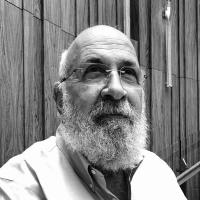 Arnon Rolnick, PhD, is a clinical psychologist with a special interest in the integration of technology and psychology. Rolnick gained his PhD in psychology from Tel Aviv University and did his postdoctoral research at Brandeis University in Massachusetts. A recipient of the Rothschild and the Lewis fellowships, he served as a visiting scientist in several motion sickness research centers in the USA, Britain and the Netherlands. Based on his 20-year career as a psychologist in the Israeli Navy, Rolnick developed methods for stress management and he uses motion sickness and seasickness as a model for general research in medical psychology. In 1991, Rolnick established the Israeli Association for Applied Psychophysiology and Biofeedback and served on the board of the American Association for Applied Psychophysiology and Biofeedback. Rolnick recently co-edited the book "The Theory and Practice of Online Therapy" where he suggests that virtual therapy opens a unique way to study the role of the body and the brain in therapy. To learn more, visit