Kim Mills: The New York Times reported in January that a rise in the number of suicides among students in Clark County, Nevada had pushed the school district to reopen its school buildings, which had been shuttered since the beginning of the COVID-19 pandemic. Eighteen students had died by suicide in the Las Vegas area district since March 2020. That report was just one of a number of news articles that have suggested that the pandemic may be raising the risk of suicide, as people in the US and around the world cope with the virus and the economic turmoil, closed schools and offices, and other disruptions that have come with it. But even before COVID-19, the suicide rate in the United States had been increasing in recent years, particularly among young people. What's behind this rise? What can we do about it? What effective interventions have psychologists and other researchers developed to help those at risk of suicide? And what can you do if you're worried about someone in your life?
Welcome to Speaking of Psychology, the flagship podcast of the American Psychological Association that examines the links between psychological science and everyday life. I'm Kim Mills. Our guest today is Dr. Jill Harkavy-Friedman, the vice president of research for the American Foundation for Suicide Prevention, and an associate professor of clinical psychology and psychiatry at Columbia University. She has more than 30 years of experience as a clinician and researcher, and has worked to translate research in suicide prevention into clinical practice. Her own research has focused on suicidal behavior among adolescents and adults. She has published more than 100 research articles and was the first researcher to ask high school students about suicidal ideation and behavior. Thank you for joining us today, Dr. Harkavy-Friedman.
Jill Harkavy-Friedman, PhD: Thank you so much for having me, Kim.
Mills: As I mentioned a moment ago in the introduction, before the coronavirus pandemic, the suicide rate had already been increasing in recent years in the United States. Do researchers have any idea why this might be?
Harkavy-Friedman: You know, that's a great question, what has led to the increase in suicide rates, especially over the past 10 years? The short answer is, we don't have a specific answer, but we have some thoughts. And one of the thoughts has been that maybe it's just better reporting, because we've become more willing and able to talk about suicide risk. And so perhaps some deaths that might not have been recognized as a suicide are now being identified as such. That's one reason.
Other than that, the one change that's been shown in the literature is that the rates were actually going down in the 90s, which is if you recall that some of the antidepressant medications, the SSRIs came out in the early 90s. And from that point, from about that point forward, the rates started going down. Then there were some talk about them actually causing suicidal behavior and people stopped prescribing them. There are some researchers that are suggesting and showing that prescription rates have gone down, and at the same time suicide rates have gone up. Some people explain the rise in that way. There are natural fluctuations in suicide over time. We also, in general, have better reporting of the statistics. While we don't really know, those are some of the ideas about it.
Mills: Do suicide rates in the U.S. vary based on race, gender, or other cultural or demographic factors? And if so, which demographic groups are at greater risk?
Harkavy-Friedman: I mean, suicidal behavior cuts across all demographics, all social factors. The way suicide works is that there's not really one cause. So it's not like--there are groups that have higher rates, but that doesn't mean that it's causal. For instance, males have higher rates than females, more than three times the rate. Is there something about being males, or is it that they choose more lethal or have access to more lethal weapons?
Mills: Or maybe both.
Harkavy-Friedman: Or both. We don't really know that. We know there are differences. We know that whites have much higher rates than other races, except American Native, American Indian. All the other ethnic and racial groups have much lower rates than those two groups. And suicide is complex. It's a result of many contributors on an individual and environmental, social, biological level that come together within a person. And in the context of stress or stressors, may increase the risk, such as somebody who is already at risk, acts on it. And then, of course, you have to have access to lethal means for a person to actually die.
Lots of people think about it, but—it’s a sign of distress, you know when you're feeling well, you usually don't think of taking your life. Lots of people think about are--Fortunately, way fewer make suicide attempts. And fortunately, way fewer die by suicide. Now, what leads--It's not a straight continuum. And that's where some combination of ethnic, racial, and other, urban, rural, there are so many factors that differentiate groups. Whether they contribute is one thing, whether there are differences is another. There are differential rates, but that doesn't mean that race or gender actually contributes to suicide. Does that--I might've complicated a little bit.
Mills: No, no, no, that makes perfect sense. It isn't a causal, it's associated. Since the beginning of the COVID-19 pandemic, there've been quite a few anecdotal reports about an increase in suicides, especially among young people. Do we know if the pandemic is having an effect on the suicide rate? And if we don't, how long will it take for us to get a really reliable data?
Harkavy-Friedman: We don't know yet what the rate of suicide has been during the pandemic in the United States. The most recent formal confirmed statistics that have come out are for 2019. We do have a new system now that collects data from states in a different way, where we know the first quarter of 2020. The CDC just put out a paper, but it's projected, it's not actual rates. And in their projection of mortality, they're projecting the rate of suicide will go down during the second quarter of 2020.
But again, that's based on probabilities, not numbers. It is important to understand though that the rates of suicidal ideation have increased. And there are data about young people and the rate of suicidal ideation, depression, anxiety has increased. And so it's important to know that that ideation isn't necessarily going to translate into suicidal behavior, but there may be other behaviors we want to look out for. We want to take it seriously because trauma, substance use, withdrawal, all those things are also associated with suicidal ideation.
Mills: And there have been media reports that gun sales have gone up in the US since the beginning of the pandemic, is this something that we should be worried about?
Harkavy-Friedman: We should always be worried when there are lethal means in a household. And it's not that having a gun or a gun will make somebody kill themselves, it doesn't work that way. It's not that gun owners have any more mental health or suicide risk than anyone else, but they are lethal. When there’s somebody at risk, you always want to try and limit access to any lethal means that you have in your house.
We know that guns are lethal. We know that other things are lethal. By design, I'm not going to list them off because I don't want to give a list of the ways that one can take one's life. But when you worry about somebody, it's important to put some time between the person and the means they may use, because that time allows for the situation to de-escalate, and it also allows for intervention.
When a person's in that state, they have very inflexible thinking. If you block their effort to get a lethal means, they're probably not going to think of something else instead. And even if they do, whatever they pick is going to be less lethal, so they're more likely to survive.
Mills: Even after decades of study, it seems that we're still not very good at identifying individuals who are at risk of suicide. A meta-analysis a few years ago suggested that most guidelines for recognizing suicide risk factors are not much better than chance at predicting suicide attempts. How big a problem is this?
Harkavy-Friedman: When you're trying to predict risk on a broad community level or a long-term level, it's really different from trying to understand for the person sitting in front of you whether or not they are going to attempt to take their lives in the short term. And that is the challenge. I often, when I'm speaking with clinicians, I ask them, how many of you know somebody who you're worried about them taking their life but they haven't even talked about it? Literally everybody raises their hand. And then if you say, how many people talk about it, but you're not worried about them, many people raise their hand. And that is where the risk factors come into play.
As clinicians, for instance, or as family members, we need to understand what the risk factors are and the warning signs so it will let us know should we be worried. And because it's different for each individual, that prediction on the individual level is really different than on the group level. So we always say, trust your gut. If you're worried about it, ask. All you have to do is ask. It's not that somebody may even be at risk in that moment, but start to find out, do they have any risk factors, have there been any warning signs, and start to have that conversation.
Mills: One new area of research related to suicide is using digital technology to monitor people who might be at risk. I know you recently co-authored a paper laying out ethical guidelines for this type of research. Can you talk about that?
Harkavy-Friedman: Yeah. This type of research is really exciting because it's giving us the first bird's eye view on suicidal ideation and behavior in real time. And so what this technology does is it monitors people, maybe pops up questions every few hours. Each researcher does it in a different way. It may monitor your what they call geospatial activity, like where are you going. It may monitor your sleep through an actigraph, which is what measures your movement during sleep. So there are a lot of aspects related to suicide that it can monitor at the same time. And what we're starting to learn from that research is that some people don't think about it, and then they have a crisis, a blip. Some people think about it all the time and their risk goes up at certain times. And some people have this sort of sawtooth up and down even throughout the day where they're in a different place about suicide throughout the day.
So what we've learned is that there are different patterns of suicidal thinking and behavior and risk, but there are groups of individuals in each pattern and that's going to help us. Just before I just said it's difficult on an individual level, but if we get a bunch of individuals that are similar, that's when we're going to be able to learn even more about prediction. So, the ethical issues that come up have to do with you're asking somebody and monitoring their risk. But a lot of times you're not looking at the data 24/7. So how do you decide to set up a study to get the best most accurate data, but also not put the person at risk?
And we have learned that the best way to do that is to make a decision and then inform the participants of your decisions so they know we're not going to be looking at these data. So if you give us a signal that you're at risk, we won't know. So please here are some emergency numbers. Here's your clinician. Call them if you feel that, don't rely on us. And then other times they put little messages or they give emergency numbers. So those are ethical decisions that have to be made over the course of the research.
Mills: What about the reverse? Is there some liability potential for the researcher? Say you weren't watching and a signal came across that this person was feeling very suicidal and you weren't there to do something. Does it work both ways?
Harkavy-Friedman: Not really, because first of all, we're studying people who are already at risk for suicide. That's what happens in suicide studies, and sometimes effectiveness means that you've reduced the number of suicide attempts but you may not have stopped it. So from a researcher standpoint, when you inform the person of what you're going to do, then they don't have an expectation that you're going to intervene. And you provide safeguards about who they can contact, when and where, you give them lots of information. But if you let them know you're not going to be watching it, you're not going to intervene, then they're aware of that and they shouldn't have that expectation of you.
Mills: That makes sense. What's the connection between suicide and mental health conditions? Are there particular mental health conditions that are linked to suicide?
Harkavy-Friedman: First let's start by saying that what we've found from psychological autopsy studies and over 30 studies over many, many years, these are not like one study, we found that when you take a deep dive and you gather information, about 90% of people who die by suicide have a diagnosable and potentially treatable mental health condition. So the potentially treatable is the important part of that. However, most people who have mental health conditions don't die by suicide. But a third of people with mental health conditions actually think about it.
The conditions that come up are in a single sense depression, bipolar disorder, psychosis, and substance use. Now, there are many disorders where there is elevated risk because there's comorbid conditions. And that's something that many times, most of the time we see--where there's more than one mental health problems. So for instance, with eating disorders, it looks like people with eating disorders are at increased risk. But some of the studies have shown that the risk comes when it's eating disorders with alcohol or substance use, or eating disorders with depression, not the group that has eating disorders alone. The same is true for anxiety and for PTSD. So we're looking for comorbidities here.
Mills: We sometimes see news reports of clusters of people who knew each other dying by suicide, and tragically this is often the case with young people. Why does this happen and is there really such a thing as suicide contagion?
Harkavy-Friedman: There is such a thing as suicide contagion. Interestingly, when you look closer, there's no relationship between the people in a cluster, which is unusual. That's why we worry about the media. It's not going to put somebody at risk who's not at risk already. So in other words, if there's a suicide in a school, it's not going to make somebody who's fine suddenly become suicidal. However, if someone is at risk, again, because they have a host of risk factors like mental health conditions, substance use, maybe early trauma, head injury, parental separation at a very early age. If they have some of those short-term factors and they have more immediate factors like they're in a depression, they're intoxicated, they have just handled major life stressor. For kids it's like failed a test and family breakup and all those things.
For those kids who are already at risk, when they learn about a suicide, that's where the potential for contagion comes in. We don't totally understand it, whether it's, "Oh, they did it, so I could do it," or some interpretation of the results of that person having taken their lives. We really don't know. But what is interesting is that often it's not necessarily the person who knew the person who died by suicide. So, think about when famous people died by suicide. Before we were so conscientious in the media. They don't know this person and yet there could be a rise in suicides. It also works the other way. Suicide prevention can kind of be contagious, which is when people are engaged in having conversations and helping each other and talking about what's going on instead of bottling it up, that can help prevent suicide. So, it works both ways.
Mills: There are a number of factors that place people at risk for suicide, and one of them is biology. Can you explain the role that biology plays in determining who is at risk of dying by suicide?
Harkavy-Friedman: So, when we're talking about the biology of suicide, we're talking about our brain chemicals, our neurotransmitters, we're talking about genetics, and we're even talking about things like inflammation in the gut biome, because they're all related. So, the idea of nature/nurture, that debate is over. We've pretty much decided it's all of it. So, when there's a biological event, there's also a psychological and social event, and vice versa. So, let's take one thing, which is your neurotransmitters and your response. There's been lots of research that has shown that certain neurotransmitters like serotonin are related to suicide. And nothing in suicide is straightforward. So of course, what happens is that one area of the brain has too much and one area of the brain doesn't have enough. So, it's even the balance of those chemicals.
And we can only study one chemical at a time, so we don't even know how well the neurotransmitters interact with each other. But we know that there are increases and decreases, particularly in the frontal lobe, which is the executive branch of our thinking which controls impulse control and a little bit of mood and direction, self-direction, that in that area there's often a little bit of a lack of activity of certain transmitters. And then in other parts of the brain there's an increase. So, it's that balance of transmitters that seems to be different in people who are at risk. And how does that play out? They tend to have rigidity of thinking in the moment. They can't think of alternatives. They get like a tunnel vision.
Now, where we're actually funding a study that looks across the lifespan, so we're going to learn more. But we have kids who go for the short-term reward rather than the long-term reward. So when they're suicidal, they're saying, "I feel terrible. I want to do something now. It's never going to get better." Adults on the other hand, it looks like their brain function says the world is gloomy, the world is down. And they have kind of a negative lens. So it's a little bit different in their decision-making. Okay, let me switch to genetics now.
Mills: That was going to be my next question. Like, does it run in families, for example?
Harkavy-Friedman: It runs in families sometimes.
Mills: Yeah.
Harkavy-Friedman: Of course. It's what we call a gene environment interaction. So if you have the genetic predisposition, you might have an increased risk for suicide or you might not. Think about something like breast cancer or heart disease, you might have the genetic predisposition. So what do you do? You monitor closely and you take action quickly when you start to see signs. It's the same thing with suicide and mental health. You monitor it closely if you know you have family members who have it. And let's say you get depression, you treat it early and you treat it with gusto so that it doesn't grow and fester, and you get back to your normal, usual self. The longer people are living with a mental health condition without treatment, the harder it is to get out of it.
So the biology plays a role, but you know what the really cool thing is? That therapies and medications change brain function. So the people who have those problems in the beginning may not have those problems after treatment. So that's one of the things we've learned too, which is so exciting. It's not carved in stone. If you have a genetic risk or your brain function is slightly different, and we are talking subtle differences, treatment helps. Treatment can help you to have a fulfilling life.
Mills: So, if you're concerned that someone in your life may be at risk of suicide, what should you do? What's the best way to approach a conversation with that person? Some people are worried that if you actually raise the issue with somebody, that it's going to give them the idea that they should die by suicide. But is that a valid concern?
Harkavy-Friedman: That's a concern, but it's not valid. I would say that we all worry about that, but the truth is that if they're thinking about suicide, they're already thinking about it. And if they're not, they'll tell you so. It doesn't work that way. You're not going to make somebody who isn't at risk, suddenly at risk. Or somebody who's suicidal, you're not going to make them have that if they're not already. But there are things that we can do to have a conversation to open up the thinking and the door and the sense of connection, so that they can gain a better sense of control over those thoughts.
We know connection makes a difference. And we know when people are in that state, there's what I call dysconnection, with a dys. It's just a slightly dysfunctional connection. It's the reason why somebody can say, "I love my family and my family loves me, but I'm a burden and they'll be better off without me." If you know your family loves you, then you know they're not going to be better off without you, but somehow that logic comes through. And I think that's a good example of how the thinking is shifted. And so when you have a conversation with someone, you don't try to talk them out of it and please try not to be judgmental, because they already feel crummy. They are probably in a lot of pain and think the only way they can stop it is to end their life. They're not even most likely thinking about being dead. So, when you have a conversation with them... And you start that by saying, "Hey, I noticed that you haven't been around lately, like you're pulling back. What's going on? Everything okay?" You don't start with, "Are you thinking of killing yourself?" You start with-
Mills: That's an ice-breaker.
Harkavy-Friedman: You'd start with, "How are you feeling, are things going? I know that you've had a lot of stress lately, can I help?" And then you work into, "I worry because I care about you, that sometimes when people feel like you do, or people see what I see, that sometimes people are thinking about killing themselves. And have you thought about that? Because if you have, I'm here to help. I'm not a therapist, I can't fix it, but I can help you get help." And sometimes people say, "No, no, no, I'm fine." Then you say, "Okay. But this is what I see, and I'm always here for you." Which doesn't mean you're there every minute, it just means that you're going to connect with them.
Mills: You're available. Yeah.
Harkavy-Friedman: And they're not a pariah because they feel so terrible.
Mills: On a broader national level, what kinds of things could lawmakers be doing on this issue? What are the policy changes you're looking for?
Harkavy-Friedman: There are several policy changes that would make a huge difference in suicide prevention and mental health care, in general. So the first is, Mental Health Parity was legalized and enacted, I think it was in 2008, and it is still not fully implemented. So just treating mental health like physical health and having access to care and having coverage. So like, if you have access to care, but you have no coverage, it's not going to help you very much because then you're going to have a huge bill on top of everything else. So, if you go into the emergency room with a heart attack, somebody there knows how to deal with a heart attack, but if you go into an emergency room on the verge of taking your life, it's 50/50. I'm just making up the ratio. I haven't measured it.
But you might have somebody there who knows what to do, or you might have somebody who says, "Okay, have a seat over there and we're going to try and get ahold of someone who can evaluate you." And a day and a half later when they ask you again, you're no longer thinking of taking your life. So, there are some wonderful experiences, and terrible. That has to get equalized. Mental and physical health clinicians need to learn about suicide and suicide prevention because we have new therapies and techniques that help people. We didn't have that 20 years ago, so it's no wonder it wasn't enacted. I don't blame anybody. But we have it now, so we need to educate our clinical workforce and we need to increase and reimburse our clinical workforce in a way that they will engage in this work. There's a huge shortage of mental health professionals in this country.
We need to take care of our veterans. We need to make sure they have access to healthcare and one of my favorites and since I'm the VP of research is, we need to fund more research in the area of suicide prevention and guess what? That's not just in mental health, that's across the health spectrum and a National Institutes of Health level because you know, suicide and diabetes go together. Suicide and heart disease goes together. Suicide and physical disabilities go together. You know, it's not like, Oh-- It's like we all have brains. We all have social environment, so it's not just in the mental health sector, so we need more funding for research. That's where the treatments have come from.
Mills: And if all that money were available, what are some of the biggest challenges in researching suicide right now?
Harkavy-Friedman: I was, you know, I've been in this field of researching for over 35 years when nobody talked about suicide and nobody would let you ask. So I think we've come a long way and I'd like to see us continue to keep growing, having access, not being afraid to study suicidal and suicidal people, opening those doors to so that people can be studied.
You know, a lot of clinical trials, for instance, for new medicines, they eliminate people who have ever thought about suicide. It has nothing to do with if they're in immediate risks. So we're working to help educate people about how to do research with people who are at risk for suicide.
Again, if 30% of people with mental health conditions at least think about suicide and have that distress, when you eliminate them, what are you studying and who are you really--Who's your target for the medication? So one is just including people who have suicide risk in research. And other barriers, just instrumentation. Whether it's that some sites have access to imaging techniques and genetic techniques and other research sites don't or because suicide is complex, looking at all the factors related to suicide and not just one. So those are some, having the infrastructure to carry on large scale studies; having refrigerators for genetics, for storing blood. You know, those refrigerators are about a hundred thousand dollars apiece. So infrastructure is a big problem, but I don't see anything that's insurmountable and I see that as our technology improves, our ability to study, it gets better. So we need that investment in new technologies as well.
Mills: This has been really interesting. I appreciate your thinking and helpful advice that you have put out there. Dr. Harkavy-Friedman. Thank you for joining me.
Harkavy-Friedman: Thank you so much for having me and this topic.
Mills: And if you're thinking about suicide or you know someone who is exhibiting warning signs of suicide, contact the National Suicide Prevention Lifeline at 1-800-273-TALK. That's also 1-800-273-8255. This is a free, 24/7 service that can provide suicidal people or those around them with support, information or local resources.
You can find previous episodes of Speaking of Psychology on our website at www.speakingofpsychology.org or on Apple, Stitcher, or wherever you get your podcasts. If you have comments or ideas for future podcasts, you can email us at speakingofpsychology@apa.org. That's speakingofpsychology, all one word, @apa.org. Speaking of Psychology is produced by Lea Winerman. Our sound editor is Chris Condayan. Thank you for listening. For the American Psychological Association, I'm Kim Mills.


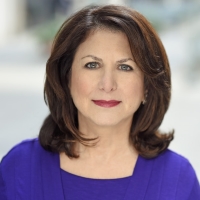 Jill Harkavy-Friedman, PhD, is the vice president of research for the American Foundation for Suicide Prevention and an associate professor of clinical psychology and psychiatry at Columbia University. She has more than 30 years of experience as a clinician and researcher, and has worked to translate research in suicide prevention into clinical practice. Her own research has focused on suicidal behavior among adolescents and adults. She has published more than 100 research articles and was the first researcher to ask high school students about suicidal ideation and behavior.