Jacquelin Goldman Congressional Fellowship
The purpose of the Jacquelin Goldman Congressional Fellowship is to provide developmental and clinical psychologists with expertise in the psychological development of children with an invaluable public policy learning experience; to contribute to the more effective use of psychological knowledge in government; and to broaden awareness about the value of psychology-government interaction among psychologists and within the federal government.
Through a generous bequest to the American Psychological Foundationopens in new window from Jacquelin Goldman, PhD, APA administers this APF-funded program for a congressional fellow with an interest in public policy. Applicants for this fellowship must have a background in developmental or clinical psychology and experience working directly with children. Fellowship activities may involve drafting legislation, conducting oversight work, assisting with congressional hearings and events, and preparing briefs and speeches. Fellows also attend a 2-week orientation program on congressional and executive branch operations, which provides guidance for the congressional placement process, and participate in a yearlong seminar series on science and public policy issues. The American Association for the Advancement of Science (AAAS) administers these professional development activities for the APA fellows and for fellows sponsored by over two dozen other professional societies.
APF will sponsor up to one Jacquelin Goldman Congressional fellow for a 1-year appointment beginning approximately August 30, 2027. The fellowship stipend is $93,750. In addition, the fellowship provides reimbursement for health insurance coverage and a $3,500 stipend for professional development during the fellowship year.
Jacquelin Roberta Goldman, PhD, was professor emerita at the department of clinical and health psychology and the department of psychology at the University of Florida at the time of her death in November 2008. Goldman served at the University of Florida for 35 years before retiring in 1998. Among her many distinguished accomplishments, Goldman authored three psychology textbooks, published over 40 book chapters and professional articles, served as president of the American Board of Professional Psychology, and received honors that included Phi Beta Kappa, Who’s Who of American Women, and the Audrey Schumacher Faculty Award for Excellence in Clinical Teaching.
To learn more about the fellowship experience please watch the 2021 presentation video:
APA Convention Fellowship Presentation 2021opens in new window
For questions, contact Ben Vonachen, APA Advocacy Office.
A prospective fellow must:
- Demonstrate excellence in scientific and/or professional psychology related to child development issues and have hands-on experience working directly with children.
- Demonstrate knowledge of policy issues.
- Have a strong interest in applying psychological knowledge to public policies.
- Be able to work quickly and communicate effectively on a wide variety of topics and be able to work cooperatively with individuals with diverse viewpoints.
- Commit to working full-time in an in-person office environment in Washington, D.C. with a schedule to be determined by their respective congressional office placement. Fellows may not pursue concurrent professional employment or volunteer opportunities that conflict with the schedules set by their congressional office placements.
An applicant must:
- Have a doctorate in psychology (from an APA accredited doctoral program and internship, if in the area of professional psychology) or related field by the application deadline.
- Be a psychologist, a member of APA (or applicant for membership), and a U.S. citizen.
A special exception is made for current psychology interns who may apply with certification from the director of training in their doctoral program that they have met all but the internship requirement for their doctoral degree by the application deadline.
Applicants may also simultaneously apply for APA’s Congressional Fellowship, Springfield LGBTQIA+ Congressional Fellowship, and Executive Branch Science Fellowship.
A complete application must include the following:
- A completed online application. Submitting the application will require uploading and submitting the following materials electronically:
- A detailed curriculum vita providing information about educational background, professional employment and activities, professional publications and presentations, public policy and legislative experience, and committee and advisory group appointments.
- A statement of approximately 1,000 words addressing the applicant's interests in the fellowship, career goals, and what the applicant can contribute to and learn from the fellowship experience.
- A letter of recommendation to be separately uploaded and submitted by a recommender. Letters should specifically address the applicant’s ability to serve successfully on Capitol Hill as a congressional fellow. Applicants are responsible for forwarding the recommendation submission form to their recommenders.
For additional information about the fellowship, please contact Ben Vonachen, MA, Congressional Fellowship.
Current fellows
2025–26
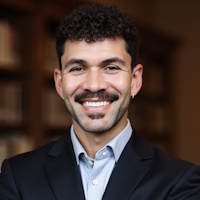 Steven W. Kasparek, PhD, is the 2025–26 Jacquelin Goldman Congressional Fellow, a program funded by the American Psychological Foundation that supports psychologists in applying their expertise in child development to bridge psychological science and federal policymaking. Steven is serving in the U.S. Senate Committee on Finance with the Democratic Health Team, which is led by Ranking Member, Senator Ron Wyden (D-OR). In this role, Steven supports legislative and oversight efforts for major federal healthcare programs—Medicare, Medicaid, the Children’s Health Insurance Program, and the Affordable Care Act—as well as prescription drug pricing, telehealth, mental health, and reproductive health.
Steven joined the fellowship shortly after earning his doctorate in clinical psychology from Harvard University and completing his predoctoral residency at the VA Palo Alto Health Care System. His research, supported by the NIH, NSF, and the American Psychological Foundation, among others, investigates how early-life stress alters brain, social, and emotional development, shaping risk and resilience for mental and behavioral health problems. He has authored more than 20 peer-reviewed articles in leading scientific journals, presented widely at national and international conferences, and received numerous honors and awards for his scholarship and advocacy. Clinically, he has trained across the VA Palo Alto Health Care System, Massachusetts General Hospital, McLean Hospital, and Boston University’s Child Center for Anxiety and Related Disorders, conducting assessments and delivering gold-standard interventions for youth and adults with PTSD, anxiety, substance use disorders, and mood disorders, among others. Steven has also applied data science to evaluate healthcare policy, inform product strategy, and derive user analytics in industry settings. As an educator and advocate, he has taught evidence-based stress management courses at Harvard, co-founded national equity initiatives to support underrepresented students in higher education, and continues to integrate research, clinical expertise, and policy engagement to advance equitable mental health care
Former fellows
2024–25
Erica Eisenman, PsyD
2024
Janice Lepore, PsyD
2022
Malcolm H. Woodland, PhD
2021
Erika Felix, PhD
2020
Jonathan S. Beier, PhD
2018
Melissa Laitner, PhD
2017
Meghann Galloway, PhD
2016
Amber Hewitt, PhD
2015
Manisha Gupta, PhD
2014
Chrisina Kapungu, PhD
2013
Joshua Wolff, PhD
2012
Edwin Tan, PhD
2011
Valarie Molaison, PhD
2010
Cheri Hoffman, PhD