


skip to main content

Meet the division volunteer: Dean Keith Simonton, PhD

Simonton is past president of APA Division 26: Society for the History of Psychology

APA Style leaf logo Cite This Article in APA Style
American Psychological Association. (2024, September 11). Meet the division volunteer: Dean Keith Simonton, PhD. https://www.apa.org/about/division/digest/leader-resources/dean-simonton

Why did you join the division?
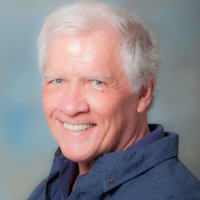
Dean Keith Simonton, PhD I was already active in other APA divisions before I undertook a research and teaching interest in the history of psychology. At that point it seemed wise to join the Society for the History of Psychology, eventually getting access to its journal, the History of Psychology. Yet the division remained somewhat peripheral for some time. It is telling that while I became an APA fellow back in 1983 (in Division 10), and eventually became fellow in 12 divisions, Division 26 was the 12th and last, that recognition not happening until 2015. However, many members of the division have a similar story to tell. Not all historians of psychology were formally trained as such, but rather were psychologists who acquired historical interests later in their careers.

How did you become a division volunteer or leader?

I became a division leader somewhat inadvertently. All my leadership positions had been in other divisions, especially 1 and 10, with minimal engagement with Division 26. Indeed, my main involvement was just participating on the division’s listserv regarding various historical topics. Yet the division’s by-laws require that two candidates run for the position of president-elect. Although the nomination committee already had one candidate lined up—and a very good one at that—I was asked to fill out the ballot as stipulated. To my surprise, I won the election, albeit by a very narrow vote (my former opponent, in fact, is now president-elect). Of course, that electoral victory entailed a 3-year commitment to the division as I had to successively take on the year-long duties of the president-elect, president, and past president, my current position as I write this.

What do you get out of your involvement?

One of the pleasures of the three successive leadership positions is that each features some worthwhile and worthy responsibilities. As president-elect, I became largely responsible for organizing the division’s program at the APA convention. With the help of a program cochair who was a bona fide historian, that task included inviting speakers for the division’s distinguished lectureships. As president I had many more duties, of course, including presiding over meetings and appointing officers. Yet the most enjoyable was delivering a presidential address that enabled me to present my distinctive approach to teaching the history of psychology, an approach that incorporates the psychology of science. As past president my key responsibilities were perhaps the most rewarding: overseeing the division’s main honors, namely the early career, career achievement, and best article awards. When I leave office at the end of this year, I can feel that I contributed much of value to the history of psychology both as a discipline and as a profession.

What are you most proud of?

Although I received my PhD from a very distinguished university—Harvard no less—I made the deliberate decision to pursue a nonmainstream research program, starting with my doctoral thesis. Both my mentors and my fellow graduate students warned me that I was committing academic suicide. My work would never get published in top-tier journals, and thus I would never get a job at a major research university. Well, they were just wrong. After hundreds of publications later, including many award-winning articles and books, I reached the point where the career achievement awards started arriving. Thus in 2023, when I served as president for Division 26, I also was honored with the Ernest R. Hilgard Lifetime Achievement Award from the Society for General Psychology, APA’s Division 1. Given that this award will be bestowed in a ceremony that takes place almost exactly a half century after I submitted my doctoral thesis, I feel that the justification for my career choice is complete. As a special bonus, it was Hilgard who coauthored the introductory textbook that inspired me to change my undergraduate major from chemistry to psychology. Everything becomes consolidated in a neat autobiographical package.

Tell us a fun fact about yourself

I have two closely related confessions, whether fun or just strange. I’m not only a history nerd but also a geography nut. I’m fascinated by human cultural activities across time and space. This twofold preoccupation is certainly visible in my research where I’ve published studies of genius, creativity, and leadership using both transhistorical and cross-cultural samples. I’m probably the only psychologist alive whose research “participants” range from antiquity to the present day and who represent almost all the world’s great civilizations, from China and Japan to Islam and Europe. Yet this same coupling also influences my hobbies. Certainly it’s evident in my love for classical music from medieval to modern times and from practically every corner of the globe. Likewise, I have developed a special fascination for fine wines and gourmet cheeses from all over the world, and all aged to perfection. Although the actual food and drink do not date back more than a decade, the traditions and cultures that created them often go back centuries. Since my retirement, this history-geography obsession now encompasses smoky single-malt Scotches. I guess it fits that my surname originated about 700 years ago in the Scottish Lowlands. I must have the right gene. And now, thanks to the internet, I can visit the wineries, creameries, and distilleries while sipping and nibbling to my heart’s content—plus listening to great music from diverse eras and realms. Should I add that these hobbies really helped me avoid cabin fever during the recent pandemic?

Contact: Dean Keith Simonton

You may also like