



skip to main content

G. E. Kawika Allen, PhD: Division volunteer

Allen is member-at-large, Division 45: Society for the Psychological Study of Culture, Ethnicity and Race

APA Style leaf logo Cite This Article in APA Style
American Psychological Association. (2026, January 28). G. E. Kawika Allen, PhD: Division volunteer. https://www.apa.org/about/division/digest/leader-resources/kawika-allen

""

Why did you join the division?
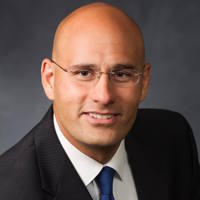
G. E. Kawika Allen, PhD I joined the divisions (17, 36, and 45) because, for me, they felt like home. The mission to center culture, spirituality, justice, and relationships in psychology aligned perfectly with who I am, the communities I come from, and the people I feel called to serve—religious and spiritual communities, Pasifika, and other marginalized and faith-centered communities.

How long have you been a member?

I’ve been connected with APA and these divisions for many years—really since early in my training as a graduate student. Over time, my involvement has deepened from just “showing up” at events to serving on ECs, collaborating, and mentoring within Divisions 17, 36, and 45.

How did you become a division volunteer or leader?

I became a division volunteer the way many of us do: I said “yes” when someone invited me to help. That led to committee work, task forces, reviewing, and eventually leadership roles. For me, service in the divisions has grown very naturally out of relationships and a sense of stewardship to give back to the communities that have invested in me. One of my first encounters with APA, like many others, was my first APA Convention in Hawai’i where I presented my first Polynesian/Pasifika Psychology study (master’s thesis). 

What do you get out of your involvement?

I get community, accountability, and hope. Being involved and meeting others in the divisions keeps me grounded in why I do this work—hearing from students, early career psychologists, and senior mentors who are all trying to make psychology more humane, culturally grounded, and spiritually sensitive. It also gives me collaborators for research, writing, and service that I could never do alone.

What do you value most about being a counseling psychologist?

What I value most about being a counseling psychologist who works at the intersection of culture, ethnicity, and spirituality is that I get to honor the whole person. For me, that means honoring family, culture, ancestry, faith, land, and community—not just “symptoms.” I love that my identity, my spiritual life, and my cultural commitments are not separate from my work, but actually help shape it.

What does a typical workday look like for you?

A typical day for me includes teaching and mentoring students, working on research related to Pasifika well-being, psychotherapy, and religious/spirituality issues (including perfectionism and scrupulosity), writing or revising manuscripts, books and book chapters, and meeting and consulting with community partners and colleagues. I also spend time reviewing for journals and working on editorial or division-related service. Most days, I’m moving between classroom, computer, and community.

Who inspires you?

I’m inspired by my family, my students, my faith, and the communities I serve. Pasifika elders, Indigenous healers, and faith leaders who quietly do the work of healing without titles or recognition inspire me deeply. I’m also inspired by students who are the “firsts” in their families and who carry so much responsibility and promise.

What are you most proud of?

I’m most proud of helping to center Pasifika voices and religious/spiritual experiences in psychology in ways that are respectful, evidence-based, and culturally grounded. I’m proud of mentoring students—especially diverse, first-generation, and faith- and spiritually-centered students—and watching them step into their own callings as scholars, clinicians, and leaders. And I feel grateful for these opportunities.

What issues do you think will be front and center for counseling psychologists in the coming year(s)?

I think we’ll continue to wrestle with how to decolonize psychology in meaningful, not symbolic, ways—especially around race, ethnicity, Indigenous sovereignty, and spiritual/religious life. For counseling, religion/spirituality, and multicultural psychologists, front-and-center issues will include health and mental health inequities, intergenerational and historical trauma, land and disaster-related trauma, and the spiritual struggles people carry. There will also be ongoing work around making evidence-based treatments truly culturally and spiritually responsive rather than simply “adapted.”

What are you or your division working on now?

I’m currently working on projects focused on Pasifika well-being and psychotherapy, religiosity and scrupulosity, and integrating spirituality and culture into mental health training and practice. Specifically, I just completed a Fulbright scholarship in Brazil around spiritual, cultural, and religious healing in psychotherapy. I’m also currently coediting a Pasifika Psychology APA book. Division-wise, I’m engaged in efforts to elevate scholarship and practice that center Indigenous, Pasifika, and diverse communities, and to support students and early career psychologists who are doing culture-, ethnicity-, and spirituality-focused work.

What advice would you offer to new members or new leaders/volunteers?

For me, the best advice is: start by showing up and saying “yes” to something small. Join a committee, attend a business meeting, volunteer to review manuscripts/books/chapters, or reach out to someone whose work you admire. Leadership in the divisions is really about relationships and service, not titles. Be curious, be humble, and let your values—not your CV—drive your decisions.

What’s something you want people to know about your division?

I want people to know that these divisions—17, 36, and 45—are places where your whole self is welcome. You can care about culture, race, ethnicity, spirituality, justice, and rigorous science all at the same time here. These are communities that are actively trying to move psychology toward more relational, culturally grounded, and spiritually sensitive understandings of human flourishing.

What is your favorite place to travel to? What is next on your travel list?

One of my favorite places to travel is back to Poções, Bahia, Brazil, where I served years ago as a missionary for my church and the first branch president and later returned as a Fulbright Scholar. Next on my travel list is spending more time in Pacific homelands—visiting and revisiting communities where my collaborators, friends, and students call home.

If you weren’t a psychologist, what would you be?

If I weren’t a psychologist, I’d still be in a helping and teaching role—probably a teacher, a consultant, or working full-time in some kind of spiritual, community, or ministry setting. For me, the calling to teach, mentor, and walk with people through their lives would still be there.

If you could time travel, what year would you go to and why?

If I could time travel, I might go back about 30 years to those early days in Poções, Brazil, to see again how that little branch began and to appreciate, with my current eyes, the faith and resilience of those members. I’d also love to spend time with ancestors and elders, listening to their stories with more intention.

What can you not live without?

I can’t live without my family, my faith, and community. Being connected—to God, to ‘ohana/family, to students, and to the communities I serve—is what keeps me grounded and gives meaning to all the work.

What is the best way to spend a day off?

For me, the best day off is simple: time with my family, good food, being outdoors—ideally near the ocean or in nature—and unplugging from email and deadlines. A mix of rest, laughter, and movement is a good day.

What is your favorite childhood memory?

Some of my favorite childhood memories are my young years in Hawai’i surfing, skateboarding, big family gatherings with food, laughter, and music—being surrounded by people I loved and feeling that sense of belonging and warmth. Those experiences really shaped how I think about community and well-being today.

Tell us a fun fact about yourself.

A fun fact is that I speak fluent Portuguese and still have deep ties to friends and church members in Brazil. I also had peacocks as pets. My wife and I own and run a homestead on our land.

Contact: G. E. Kawika Allen

You may also like