
How long have you been a member?
 I joined the division during graduate school as a Multicultural Concerns Committee Scholar in 2014. I now serve as co-chair of that committee, but we have renamed it the Committee of the Global Majority.


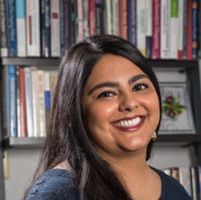
Dwivedi is APA Council Representative, Division 39: Society for Psychoanalysis and Psychoanalytic Psychology
I joined the division during graduate school as a Multicultural Concerns Committee Scholar in 2014. I now serve as co-chair of that committee, but we have renamed it the Committee of the Global Majority.
I was drawn to Division 39 because psychodynamic thinking has been foundational to how I understand people and psychotherapy. My interest in psychoanalysis began as an undergraduate philosophy major. I had incredible professors who introduced me to psychoanalytic ideas. Division 39 felt like a place where I could continue thinking deeply about the human experience while also engaging with questions of culture, identity, power, and belonging that are central to my clinical work. I was also a graduate student looking for community and applied to the division’s scholars’ program which allowed me to attend our spring meeting and connect with a mentor and other graduate students at the time.
My involvement grew gradually after my graduate school scholarship in 2014. I started by finding places where my interests and values aligned with work already happening in the division, and over time I became the co-chair of the Committee of the Global Majority, co-chaired our 2025 Spring Meeting, and was elected to represent Division 39 on APA’s Council of Representatives. One of the things I appreciate about Division 39 is that there have been opportunities to move from being a member to helping shape the work of the division and APA more broadly.
The relationships are probably the most meaningful part for me. Division 39 has connected me with people who are willing to wrestle with difficult questions about our profession, our institutions, and our communities. My involvement has also given me opportunities to work with people whose perspectives are very different from my own. I value having a professional community where disagreement, curiosity, and collaboration can coexist. My son has also gained an extensive network of the most loving aunties and uncles from Alaska to New York and beyond!
What I value most is the commitment to understanding rather than simply categorizing people. Psychodynamic thinking asks us to be curious about why a person experiences themselves and others in the ways they do, how their history lives in the present, and what happens between people in relationships. I also value that it gives us room for complexity and contradiction. People can be doing the best they can and still need to change; they can understand something intellectually and still repeat it relationally. That way of thinking has shaped not only how I practice psychotherapy, but how I understand people more broadly.
I am incredibly proud of my work on Council over the last three years. I have co-authored and co-moved several New Business Items (NBIs) that were ultimately adopted by Council, including a statement on ceasefire, concerns related to the EPPP, council voting policies, and the reaffirmation of human rights and freedom of expression. I am especially proud that these NBIs addressed issues that felt consequential both to my colleagues and to the communities our profession serves, and that I was able to contribute to shaping APA’s response to them.
I want people to know that Division 39 is much broader than some of the stereotypes people may have about psychoanalysis. There is tremendous diversity in how our members think, practice, teach, and understand psychodynamic psychology. There are also people actively asking how psychoanalytic ideas need to change in response to culture, identity, social context, and contemporary clinical practice. You don't have to practice in one way or fit one image of a psychoanalytic therapist to find a home here.
In addition to my clinical work, I work at a cactus nursery here in Colorado. We grow cacti that can thrive in our cold temperatures while also being drought tolerant—an increasingly important quality as climate change brings greater heat, water scarcity, and uncertainty to our growing conditions. Yes, I am that plant person.