
Why did you join the division?
 I joined Division 33 as a graduate student because it was where all the luminaries in the field of intellectual disabilities (ID) and autism spectrum disorder (ASD) were/are.


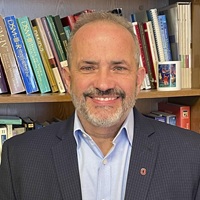
Tassé is president, Division 33: Intellectual and Developmental Disabilities/Autism Spectrum Disorder

I joined Division 33 as a graduate student because it was where all the luminaries in the field of intellectual disabilities (ID) and autism spectrum disorder (ASD) were/are.
I enjoy more closely engaging with the student members, early career professionals, and colleagues at our division meetings and APA convention. Volunteering in a leadership role is a great opportunity for networking.
I never thought I’d be saying this in 2026 but it is combatting misinformation and anti-science positions coming from federal agencies such as the U.S. Department of Health & Human Services, Centers for Disease Control and Prevention, U.S. Department of Education => publishing health and public health recommendations (e.g., vaccinations, Tylenol, false and derogatory misconceptions about autistic persons, etc.) all in clear contradiction with 50 years of established scientific findings. It is challenging for the public to differentiate between recommendations from APA, American Academy of Pediatrics, American Medical Associations, universities, state public health offices, etc.
Division 33 is focused on advancing scholarly work and translating scientific findings into clear language for better access and availability to the public and stakeholders. We are also currently working on two professional practice guidelines:
We are also actively growing our students/early career professional mentorship program and creating special interest groups that bring members working at the intersection of ID/ASD and relevant areas of practice (e.g. mental health) to find a home to meet and engage.
Division 33 is a vibrant group of professionals who have common interests in people with ID and/or Autism. We have worked, and continue to work, hard at recruiting students and early career professionals and making sure they have a place and voice in Division 33. We are most proud of the diversity in our membership and division leadership that includes students, early career professions, junior and senior leaders throughout our field, and also includes educations, clinicians across the many practice areas of our field as well as university faculty and researchers.
I’ve been doing Tai Chi, on and off for several decades, more consistently in the last 7-8 years. It is a great source of relaxation, health centering movement and exercises, and improves balance and movement control.
Contact: Marc J. Tassé can be reached via email.