



Why did you join the division?
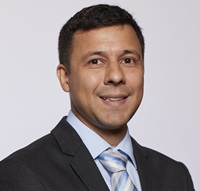 I joined Divisions 21 and 20 of the APA, inspired by Professor Daniel G. Morrow, who introduced me to the fields of Applied Experimental and Engineering Psychology, as well as Aging Studies. Since 2013, I have had the opportunity to work with him at the intersection of aging, health, and technology. While I was pursuing my PhD in Educational Psychology, becoming involved with APA and engaging with the science and community within these divisions was truly eye-opening. During my postdoctoral training and now as a faculty member, the APA, and particularly Divisions 21 and 20, have remained a cornerstone of my professional growth and development.
How did you become a division volunteer or leader?
During Dr. Nicole Werner’s presidency, I was elected to serve representing Members-at-Large. In that role, I was eager to contribute meaningfully and serve the community of members I represented. I took on the responsibility of updating our division’s website, and from that initial task, new opportunities for involvement emerged. With the strong support of past, current, and incoming presidents — Dr. Joe Keebler, Dr. Jing Chen, and Dr. Jing Feng, as well as other leadership members, I stepped up to serve as Program Chair for the current year and agreed to continue supporting the division by serving an additional term.
What do you value most about being an experimental and cognitive psychologist?
I find the fields of Applied Experimental and Engineering Psychology, Cognitive Psychology, Behavioral Psychology, Educational Psychology — or I should say Psychology more broadly — truly fascinating. My research focuses on understanding the relationships among cognition, decision-making, risk perception, aging, and expertise across domains such as health, education, and behavioral economics. As I mentor students and scholars, as well as engage in the design, development, and implementation of human-centered technological interventions and data visualizations, my aim is to support positive behavior change, informed decision-making, and the promotion of health, education, and overall well-being. For example, I am constantly reflecting on how technology can be leveraged to improve comprehension and engagement, improve health outcomes, or reduce inequities. Ultimately, the greatest challenges lie in human factors: how we interact with technology, the barriers and enablers to its use, and the broader impact it has on our lives.
Who inspires you?
I have been fortunate to have many mentors and sources of inspiration throughout my life, and narrowing it down to a single person would not do justice to the diverse influences that have shaped me. I would say the answer to this question is very contextual, because I admire different individuals for different reasons. That said, if I had to choose, I hold a special inspiration in my maternal grandparents. I was raised close to them until the age of 11, and through my work in gerontology and health technologies aimed at supporting older adults, I carry them in my heart as guiding examples of those I strive to serve. How to help us all age with greater health, dignity, and quality of life. In my daily work, I draw inspiration from the incredible research being carried out by my colleagues at the Institute of Gerontology at the University of Georgia and the CARE Center. I feel fortunate to be surrounded by incredible people and to work in such a supportive and enriching environment.
What are you or your division working on now?
As Program Chair for Division 21, I am thrilled about the exciting programming we had at the 2025 Annual Convention in Denver, Colorado! This year, we introduced new and innovative ways to bring value to our community. One such initiative is a Mentoring Social Hour: an informal gathering designed to connect students and early career members with experienced senior members of our field. This event provided an opportunity to ask questions and engage in conversations around key topics such as grant writing and funding, navigating the academic and industry job markets, and developing research ideas. The Mentoring Social Hour took place on Thursday, August 7, from 6:30 to 7:30 p.m. We strongly encouraged students from all areas of psychology to join us, learn more about our division, and explore career development topics that matter to you. If you are interested in participating in the future, feel free to send me an email.
What is your favorite place to travel to? What is next on our travel list?
Work hard, play hard: or work hard to pay for the next travel! I am always on the lookout for a new travel adventure. One of my favorite destinations is Japan, where I have had the chance to visit three times in recent years, and I am always eager to go back. I highly recommend visiting at least once in your lifetime, and if possible, experiencing it during different seasons, like the breathtaking fall in Kyoto. Next on my itinerary is a trip to São Paulo, Brazil, my birthplace. But who knows what journey might come after that. I am excited for whatever comes next.
What is your favorite childhood memory?
I deeply miss watching football (soccer) games with my grandparents. My grandfather had a great sense of humor, and I miss him by a lot. They immigrated from Portugal to Brazil in the 1950s, and watching matches together was a cherished tradition. To this day, I still cheer for Portugal in every game, both as a fun activity, and as a tribute to my heritage and to those memories we shared.
Contact: Renato Ferreira Leitao Azevedo