


skip to main content

Richard N. Landers, PhD: Division volunteer

Landers is president-elect, Division 14: Society for Industrial and Organizational Psychology

APA Style leaf logo Cite This Article in APA Style
American Psychological Association. (2026, March 13). Richard N. Landers, PhD: Division volunteer. https://www.apa.org/about/division/digest/leader-resources/richard-landers

A volunteer sign-up sheet attached to a clipboard.

How did you become a division leader?
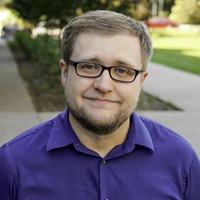
A headshot of Richard N. Landers, PhD. I’ve been involved in the Society for Industrial and Organizational Psychology (SIOP) volunteering almost continuously since 2012, when I was asked to help figure out how to offer one of the society’s conferences—the Leading Edge Consortium—in a hybrid format. Hybrid conferences were extremely uncommon at the time, and I was tasked with simply figuring it out! I ended up sitting at a table in the front of the room, aiming a webcam on a tripod, with cables running from the room’s AV system directly into my laptop. After that, I served on our conference assessment subcommittee, then helped coordinate special sessions and the presidential theme track on the program committee. From there, I served three years on the program chair trio for our annual conference, followed by another three years as an elected executive board member, and now three years yet again as part of the presidential trio. Every role I’ve held has given me a new perspective on the people of SIOP and what they want from their membership, and I try to carry all those experiences with me in every decision I make.

What do you value most about being an industrial-organizational (I-O) psychologist?

I-O psychology is unique. We support organizations and the people within them, both directly and indirectly. To serve them directly, we work inside organizations to help shape people processes so they align more closely with psychological science and well-established, healthy organizational practices. To serve them indirectly, we conduct and promote scientific research, sharing it with organizations as well as with state and federal policymakers. Across both, I-O psychology is about making real, tangible improvements to organizations, for the benefit of both the organization itself and the people within it. Sometimes that’s challenging, as we often advocate for change alongside consultants and business leaders who may not share the same background or fundamental values. Even so, our firm grounding in psychological science, especially on issues such as ethical workplace practices and respect for scientific evidence, positions us to make a meaningful, positive difference in the lives of many people. I deeply value the perspective I’ve gained through my training in I-O psychology, as well as the responsibility and privilege that come with it.

What are you most proud of?

Over the last couple of years, I’ve written several articles exploring the ethical and professional responsibilities of psychologists, including but not limited to I-O, in this new age of artificial intelligence. A big challenge for us is to figure out how to most meaningfully apply and merge our expertise. We don’t want to run in saying the I-O way is the only way, but we also don’t want to let the technologists and tech firms dash ahead without our expertise and values represented. I’ve spent a lot of time trying to walk this line myself and then helping others to walk it, and I’m particularly proud when someone tells me how those writings and perspectives changed the way they approach their work.

What advice would you offer to new members or new leaders/volunteers?

This is the time to be bold.  We’re in a precarious moment in history that demands ever more psychologists put themselves out there to do more good in the world. So if you’re thinking about doing something big and impactful but are afraid of failure—do it anyway! You’re exactly who we need right now.

Tell us a fun fact about yourself

I’m a certificated pilot! When I was six years old, my grandfather—who was an insurance agent—took me up in his little single engine Piper Tripacer and did a loop-de-loop! Or at least that’s how I remember it. Whatever we really did, I was terrified but also amazed at hurtling through the sky in such a small vehicle. I thought about it frequently for decades and got majorly into flight simulators, with a variety of pieces of special equipment hooked up to my computer. But I didn’t fly again until during the covid-19 lockdown, when I suddenly had the thought, “If not now, then when?” Life seemed especially short and fragile then. So I scraped together the money and learned to fly! Two years later I earned my instrument rating so that I could fly in the clouds. Since then, I joined a flying club as a 1% owner of seven single-engine Piper airplanes. It’s like an airplane timeshare! And now, one of my very favorite things to do is to surprise my family with a couple of weekends away each year kicked off with a couple hours flying “private.”

Contact: Richard Landers

You may also like