

Candidates’ statements reflect their own views and do not represent the positions of APA or APA Services, Inc.
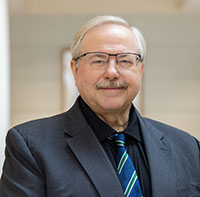
William L. Hathaway, PhD
Board of Directors member-at-large candidate
Statement on the Issues Facing Psychology/APA
 As we move into the second quarter of the 21
st
century, the climate for our complex field of psychology is being impacted by multiple forces such as socio-political polarizations, shifting policy landscapes, the dizzying impact of artificial intelligence, funding instability for research, and eroding public confidence in education and science. This is occurring at a time when the mental health crisis is snowballing, and the need for a culturally competent and ethical psychological science is proportionally more acute. If we desire to effectively respond to this moment, it is vital that we engage our world in persuasive and salient ways, grounded in robust science. I have frequently found myself in roles that span distinct disciplines, socio-cultural divides, or other differences that can be sources of tension or conflict. My grounding in psychology, clinical experiences, and the psychology of religion have been key resources I found helpful in navigating such roles. Let us continue to cultivate the advocacy skills and ethos long cultivated in community psychology that are a strong part of our discipline’s strategic resources. To be a constructive force in these challenging times, we need to be more effective at connecting with communities not always warm to our discipline or profession. I have seen how it can be reinvigorating for psychology as well as a force for much good to those with whom we engage when we do that well. Let us continue to be agents for flourishing in our world in these difficult times.
Biography
I am currently the provost spearheading an R2 initiative for Regent University. I completed my PhD in clinical psychology at Bowling Green State University, where I had previously completed a master’s in philosophy. My leadership experiences in psychology started early: During my Air Force internship, I was selected to write a newsletter column for the branch’s three APA sites. As a military clinician, I served as chief of an interdisciplinary clinic but also as chief of psychology for a neuropsychology service and chief of psychology for the military’s largest European interdisciplinary clinic for special need persons. I was a generalist in my military service. But I also did post-doctoral supervised work in neuropsychology and forensic psychology and completed a clinical child fellowship at UMASS Medical Center’s ADHD center under Russell Barkley. My subsequent career has focused on clinical training, leading an APA-accredited doctoral program and subsequently serving as Dean of a multidisciplinary school. My professional service roles have included: 15 years on APA’s council of representatives, 9 years as a commissioner on the CoA, various leadership roles in APA’s division 36 including president, three terms on Virginia’s board of psychology, a member of various APA working groups drafting APA’s early policies on antisemitism, religion and prejudice, the current Standards of Accreditation, and BEA/BPA’s guidance on navigating diversity issues pertaining to conscience clause legislation. I helped write Virginia’s first regulations for masters level licensure, and I am currently serving on the state’s psychologist prescriptive authority working group.
Date created: July 2026