

skip to main content

Candidates’ statements reflect their own views and do not represent the positions of APA or APA Services, Inc.

Statement on issues currently facing psychology
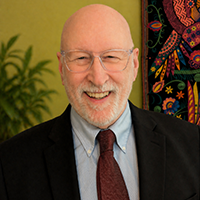
Chuck Hollister, PhD Flying home to Southwest Missouri from Washington, DC, after an APA Council meeting, I sat next to a young woman who had just completed her medical internship rotations. Because she had graduated before internship, patients and colleagues called her “doctor.” She trained in a system where Medicare helps finance physician education and billable care. Her stipend was likely twice a psychology intern’s. I asked what she learned from her psychiatric rotation. I expected to hear about the latest medications. Instead, she said, “What did I learn? CBT!”

There is a lot to learn from that story.

In running for APA President-Elect, my goal is simple. We need to focus on the day-to-day needs of psychologists in practice, education, applied settings, research, and training.

APA is a membership organization, and our members are struggling. Reimbursement is frozen. Research funding is disappearing. Social justice initiatives are being rolled back. Student loan limits threaten graduate education. Institutions supporting psychology are under attack. Medicine is moving rapidly into behavioral health.

I am a three-time APA Fellow, licensed psychologist, consultant, and CEO/DPA for the Missouri Psychological Association. I live in a red state, where you must work across the aisle, identify shared interests, and listen deeply to be effective. I helped pass more than a dozen pieces of legislation that increased reimbursement, funded students, supported integrated care, and aided rural communities. Within APA, I helped write the strategic plan, served on the Advocacy Coordinating Committee, Council of Representatives, and Population Health writing group, and helped increase funding to state psychological associations for the first time in 17 years.

We can make things better. But only if we act.

First, we must strengthen reimbursement. Reasonable compensation allows qualified providers to remain available in insurance networks and community settings. Patients see psychologists on an out-of-network basis 10.6 times as much as a medical/surgical clinician. Many psychologists have gone more than 10 years without an insurance increase. Insurance hassles consume time and add costs. One insurance company is experimenting with reducing doctoral reimbursement to master’s-level rates. Physicians, according to an RTI study, receive over 150% of Medicare under commercial plans, while psychologists are often paid at or near Medicare rates. We should support parity-focused legislation, like Illinois’ law, that uses RTI-based reimbursement standards to incentivize psychologist participation in commercial insurance networks.

Second, we need better CPT codes. I spent much of my career treating high-risk youth in residential and hospital programs, yet the same time-based code applied whether a patient was suicidal or mildly depressed. Psychology needs codes, like those available to physicians, that recognize complexity, risk, and clinical decision-making, along with “incident to” codes” that provides recognition for certain supervision services --- all supported by appropriate reimbursement advocacy through APA Services.

Third, let’s modernize doctoral education and provide relief to students and PsyD programs. Mid-level providers such as nurse practitioners and physician assistants now earn more and have more authority than many doctoral psychologists. To compete students should be able to build market-relevant, cross-disciplinary expertise in RxP, business administration, systems, law, technology, or policy without staying in school longer. This responds to I/O concerns that psychologists are being encouraged to enter areas without adequate preparation.

Too often, psychology interns enter institutions as “junior” members of the team, even after years of doctoral education. Our students should enter internship as doctors. Graduating before internship could open the possibility of Medicare billing during internship. Current borrowing limits appear to fall short of what many students need to complete a PsyD degree. Awarding the doctorate before internship could reduce financial pressure by changing students’ status at a critical point.

Let’s stop shifting the cost of the mental health workforce onto students. Think paid training, expanded federal and state workforce support, stronger loan repayment, and reimbursement that makes the doctoral degree financially viable.

Fourth, we must defend and explain the doctoral difference. I respect master’s-level providers. They are important colleagues in behavioral health. But our training is different. Doctoral psychologists bring advanced training in assessment, differential diagnosis, medical complexity, research, supervision, consultation, and systems thinking. APA should lead a national campaign to educate employers, insurers, policymakers, and the public about psychologists’ roles and contributions. And reflect that difference in our model licensure act.

Fifth, APA must protect science and education. Science is the heart of our profession. Behavioral health research depends heavily on federal support through NIH, NIMH, SAMHSA, NSF, HRSA, CDC, VA, and AHRQ. When budgets are cut, grants terminated, agency staff reduced, or topics politically targeted, the damage is not easily repaired. Research teams disperse. Early career scientists leave the pipeline. Specialized programs lose staff and institutional knowledge. Rebuilding can take years.

Sixth, let’s stand up for educators. Teaching psychology at the high school, community college, undergraduate, and graduate levels involves different responsibilities and support needs. APA should defend educators from measures that weaken tenure protections, restrict science-based teaching, or make dismissal easier for political or ideological reasons. Academic freedom is essential.

Seventh, we harness the advocacy power of our state associations. For two years, Martha Turner Quest and I have worked with Dr. Stephen Gillaspy to encourage state associations to send formal letters to CMS on proposed rules affecting practicing psychologists, including audio-only telehealth and reimbursement methodology. We should expand that work. Is it time to advocate again for psychologists to be included in the Medicare physician definition? Can we advocate for more psychological science funding?

Eighth, we must advance our social justice values with strategies that can be heard and used in different communities. It was my honor to organize a town hall with Dr. Mayra Zoe Ortiz involving 40+ SPTAs on social justice successes and best practices. Psychologists have a deep commitment to fairness and human dignity. To advance our values, we need respectful messaging that works in states that can have very different cultures and political environments. Our strength comes from being there for each other.

Please vote for someone who will devote themselves to you and our members. Visit my website at drhollister.comopens in new window.

Biography

What do people need? Where are they struggling? What can be done next? These are the simple questions I ask myself.

Leadership should begin with listening closely to people’s lived experience, understanding their pain points, and creating practical opportunities for change. Whether working with patients, psychologists, students, state associations, divisions, or communities under pressure, my approach has been consistent: show up, listen, solve problems, and help people move forward.

I have spent my career focusing on the practical needs of psychologists, the communities to which they belong, and the patients, families, and diverse communities they serve. My work has centered on improving patient care, expanding access for rural and marginalized communities, strengthening services for children and families, securing fair reimbursement, seeking privileges for psychologists comparable to those available to physicians, supporting SPTAs and divisions, promoting market-relevant education and training, protecting science, and helping APA become more unified, useful, and responsive.

A licensed psychologist, consultant, and three-time APA fellow, I serve as CEO and director of professional affairs for the Missouri Psychological Association, where I oversee operations, advocacy, continuing education, membership, public relations, risk management, and consultation on professional issues. I am also a past president and legislative chair of the association.

My goal has always been to move good ideas into action. My work has contributed to Missouri’s adoption of PSYPACT, Medicaid reimbursement for psychology interns, Medicaid coverage of Health and Behavior Codes, audio-only telehealth protections under commercial insurance, and support for research funding. These efforts reflect my belief that policy should make life better for both patients and psychologists. I was also appointed by Missouri’s Speaker of the House to a task force on redesigning Medicaid.

Culturally responsive advocacy matters. I organized an event involving 40+ state psychological associations focused on best practices in social justice advocacy, helped develop programming on race, gender equity, and LGBTQ+ issues, provided consultation to psychologists facing pressure for legally available gender-affirming care, and addressed EPPP concerns, including disparate impact and biased content. 

My background includes more than 20 years of clinical and administrative experience, including leadership roles in two large behavioral health systems. I piloted a residential hospital-diversion program that helped keep children and adolescents connected to their families, instead of living for months in state hospitals. I have worked with more than 20,000 adolescents and families, many involving serious risk to self or others, and supervised and mentored doctoral and master’s-level clinicians.

Nationally, I have served in APA leadership roles and worked to help APA Council become more functional, efficient, and responsive. I am a member of APA’s Council of Representatives, chair of Council’s SPTA Caucus, past chair of CESPPA, and past member of APA’s Advocacy Coordinating Committee and Strategic Plan Update Committee.

My leadership has been recognized with APA’s Karl F. Heiser Presidential Award for Advocacy and Division 31’s 2025 Outstanding SPTA Psychologist Award. Under my leadership, MOPA received Division 31’s Outstanding SPTA Award and SPTA Diversity Award.

My credentials matter. But what matters more is what we do together next.

Questions and answers on important issues to APA’s overall mission and strategic plan

1. What are the most pressing challenges and/or opportunities facing psychology graduate students today, and what are your proposed actions or advocacy priorities for APA to address these issues and to effectively support graduate students?

One of the biggest challenges for psychology graduate students is the mismatch between training and career reality. No student should have to say, “I bought a degree instead of a house.” Students face high debt, long timelines, unpaid/underpaid clinical training, licensure complexity, and uncertainty about reimbursement and career flexibility. They need a stronger introduction to professional psychology: what their jobs will actually look like, the demands placed on them, and the practical skills needed for advocacy, consulting, business, interdisciplinary care, technology, and leadership. They need help with paid training, loan repayment, modernized curricula, stronger mentorship, and a real student voice.

2. At a time when public trust in research and science is under increasing scrutiny, APA has issued guidance aimed at protecting scientific integrity. How do you define scientific integrity? Describe how that definition would guide your leadership decisions when APA faces pressure from public or internal stakeholders around evidence‑informed policy and practice. 

Scientific integrity matters because science itself is under attack. Internally, APA must ensure that research is conducted rigorously, reported honestly, and applied with humility about what the evidence does and does not show. Externally, we must defend science in public policy, practice, education, and public trust. Both require clear standards that protect credibility and affirm values we will not compromise. They also require adequate research funding and meaningful professional security. When researchers fear losing funding, employment, academic freedom, or protection from retaliation, they face pressure to soften conclusions or avoid controversy. Protecting science means protecting the people who do it.

3. What principles will guide your approach to emerging technologies such as artificial intelligence in psychology? How would you balance innovation, ethical responsibility, workforce impact, and public benefit when determining APA’s role in promoting, regulating, or resisting AI‑based tools across psychology and the profession?

“Do no harm” must be the starting point for any AI tool used with patients or other vulnerable groups. AI may assist education, screening, and access to information, but it should not replace qualified humans providing expert judgment, care, or advice. Recent court cases have shown that poorly regulated AI can mislead consumers and place the public at real risk, especially when tools offer inappropriate medical or mental health guidance. That is why we have sponsored legislation in Missouri to protect consumers from AI systems that cross the line into unsafe advice. Innovation matters, but public safety must come first.

4. APA’s strategic plan strives to “Prepare the field of psychology for current and future opportunities and challenges." What strategies and values guide your thinking about how APA can strengthen and support the current workforce and reduce barriers to those entering and sustaining a career in psychology? 

Psychology is a diverse field, and sustaining it requires multiple strategies. Students need market-relevant training in areas like administration, leadership, consulting, technology, and RxP without simply adding more years to education. We should expand paid training, Medicare billing during internship and postdoctoral work, and faster, easier loan repayment. Practicing psychologists need reimbursement reform, freedom from strictly time-based CPT codes, access to extenders, and payment for supervision. Payment should reflect clinical responsibility, risk, and medical complexity. Academic psychologists need stronger research funding and job security. Training and licensure barriers disproportionately affecting students of color, including EPPP concerns, demand serious attention.

5. As APA president, how would your values and practices assist APA in promoting and shaping culturally responsive and relevant research, practice, and advocacy across different populations both within the U.S. and globally?

We are a multicultural society, rich with wisdom, complexity, and potential. As APA president, I would promote culturally responsive research, practice, and advocacy by listening carefully to diverse communities, supporting evidence-based approaches that reflect lived experience, and ensuring APA policy is informed by equity, inclusion, and science. Psychology has always understood the importance of individual differences; culture, identity, language, history, and context are central to how people experience health, stress, opportunity, and care. Championing culturally relevant psychology is not separate from advocating for the field. It is advocating for who we are, what we know, and whom we serve.

6. How would your leadership approach and strategies strengthen the public’s understanding of psychology and appreciation for the breadth of psychology expertise?

We have done a better job helping the public understand psychology than explaining what psychologists do. Our science is increasingly used by other professions, sometimes with limited involvement from psychologists. We must first clarify our own message: psychologists bring advanced training in science, research, assessment, intervention, consultation, ethics, and systems change. Then APA should communicate that message directly to the public, legislatures, insurers, employers, schools, and health systems. I would support clearer public education campaigns, stronger advocacy materials, rapid-response messaging, and more visible examples of psychologists improving health, workplaces, communities, and policy. Public understanding grows when expertise is made concrete.

ELECTION CAMPAIGN FUNDS (PDF, 69KB)opens in new window

Reporting of campaign funds for the 2026 APA president-elect candidate Chuck Hollister
Last updated: July 2026Date created: April 2026