

The APA values the contributions of its Past Presidents to the success of our association and the development of psychology. Because of this, we highlight several past presidents every year, giving a brief bio and presenting photos and other information from our archives. These are the presidents we’ve highlighted so far:
Carl R. Rogers, PhD: 1947
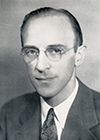 Carl R. Rogers (1902–1987) is esteemed as one of the founders of humanistic psychology. He developed the person-centered, also known as client-centered, approach to psychotherapy and developed the concept of unconditional positive regard while pioneering the field of clinical psychological research.
Joseph McVicker Hunt, PhD: 1952
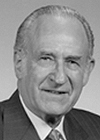 Joseph “Joe” McVicker Hunt joined the Department of Psychology at the University of Illinois in 1951. Hunt was already a productive contributor to American psychology by this time, but the years at Illinois were the peak years of his intellectual and professional life. Just one year after arriving at Illinois, he served as APA president and by the end of his first decade there had authored one of the most important volumes on child development, “Intelligence and Experience” (1961).
Melba J.T. Vasquez, PhD: 2011
 During her 2011 presidential term, Vasquez established the APA Presidential Task Force on Immigration. This task force developed an evidence-based report "Crossroads: The Psychology of Immigration in the New Century" that addressed the psychological factors related to the experience of immigration, with particular attention to the mental and behavioral health needs of immigrants across the lifespan and the effects of acculturation, prejudice, discrimination and immigration policy on individuals, families and society.
Carol D. Goodheart, EdD: 2010
 Goodheart supported two major initiatives during her 2010 presidency: the Presidential Task Force on Advancing Practice and the Presidential Task Force on Caregivers. To that end, the APA Family Caregiver Briefcase was created o assist psychologists and other health and human services professionals to address the needs of contemporary family caregivers.
Goodheart believed that psychological science contributed to the health, productivity, well-being and resilience of individuals, families and societies in a diverse world.
Ronald F. Levant, EdD, ABPP: 2005
 Levant's signature contribution to psychology has been establishing the empirical foundation for the “Normative Male Alexithymia” hypothesis. (Alexithymia is the inability to express feelings with words.) In addition, Levant developed alexithymia reduction treatment, a brief psychoeducational intervention designed to remediate normative male alexithymia in order to prepare men to engage more fully in psychotherapy.
Richard Suinn: 1999
 Richard Michael Suinn was the first APA president of Asian American descent. He earned his doctoral degree from Stanford University in 1959. After brief stints at Whitman College and the University of Hawaii, Dr. Suinn settled in to a long career at Colorado State University. There he served as Department Chair, in which capacity he initiated a progressive program to recruit and retain ethnic minority students at a time when there was still significant resistance to such efforts.
Joseph Dominic Matarazzo: 1989
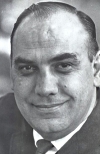 “To successfully grapple with one of the more important challenges of the last 2 decades of the 20th century, we must aggressively investigate and deal effectively with the role of the individual’s behavior and lifestyle in health and dysfunction. There is much more that could be done at the interfaces of normal physical health and behavior.” Joseph D. Matarazzo in the American Psychologist, 1982, p. 12.
Florence Denmark: 1980
 Florence Levin Denmark was born in Philadelphia into a large extended family. Her father was an attorney and her mother a musician. She has recounted that she shares many of her father’s aptitudes and interests, while it was her mother who was a powerful force for achievement and accomplishment in Florence’s life.
Anne Anastasi: 1972
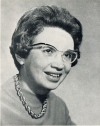 Anne Anastasi was born in New York City. Her father died when she was 1 year old and she was raised by her mother and grandmother. Precocious in intellect, Anne was primarily home-schooled by her grandmother, while her mother provided the role-model of being a resourceful woman in the work force. Anne's intellectual ability facilitated her early entry into Barnard College at age 15 and into graduate school at Columbia University, where she earned her doctorate in only 2 years, at age 21.
Paul Meehl: 1962
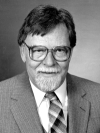 Paul Meehl was born in Minneapolis, Minn., in 1920, was educated there from grade school through graduate school, and died there in 2002. Although he stayed close to his physical origins, Paul Meehl encompassed the world of thought. Arguably one of the most brilliant American psychologists of the twentieth century, Paul contributed ideas of substance to numerous domains of psychological theory, science and practice.
Neal Elgar Miller: 1961
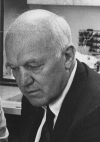 Neal Elgar Miller was born on Aug. 3, 1909, in Milwaukee, Wis. He earned his bachelor’s degree from the University of Washington in 1931, a master’s from Stanford the next year, and his doctorate from Yale in 1935, where he eventually began teaching and became the first James Rowland Angell Professor of Psychology in 1952.
Ernest Hilgard: 1949
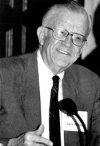 Ernest Ropiequet “Jack” Hilgard was one of APA’s most remarkable Presidents. His long life span and his intimate involvement for many years in the very middle of the mainstream of American psychology ensured that he knew personally most of the key figures that shaped the science and emerging practice of psychology in the 20th century.
Margaret Floy Washburn: 1921
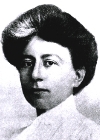 Margaret Floy Washburn was the first woman to earn a doctoral degree in American psychology (1894) and the second woman, after Mary Whiton Calkins, to serve as APA President.
Mary Whiton Calkins: 1905
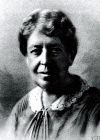 Mary Whiton Calkins was the 14th president of APA and the first woman to serve in that office. Although she earned her PhD at Harvard under William James, Calkins was refused the degree by the Harvard Corporation (who continues to refuse to grant the degree posthumously) on the grounds that Harvard did not accept women.
William James: 1894 and 1904
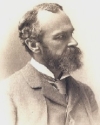 William James did more to establish the new science of psychology in American than anyone else, despite the fact that he did not conduct psychological research or develop a systematic theory of psychology.
Date created: 2011