


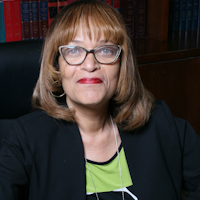
 In this edition of Commission on Accreditation Update, we interview Sheila Peters, PhD, clinical psychology. A licensed psychologist in Tennessee, she has been at Fisk University since 1997, currently serving as an associate professor in the psychology department, the director of the Fisk Counseling Center, and the discipline coordinator for psychology. She also works as the principle psychologist at the Peters Group (private practice) and as a mental health consultant to the Meharry Counseling Center and the Tennessee Titans. As a commissioner, Peters currently serves as the chair of the Master’s Policy Group.
What sparked your interest in joining the CoA’s master’s policy group?
As a member of COGDOP, I was proud to have the opportunity to serve the profession. As I reflected on my academic journey and my position within a master's program, I was intrigued and motivated to learn more about the proposed accreditation process for master's programs. I humbly find professional satisfaction in understanding that the commission is opening up the process to enable so many more clinicians to be available to the public. We live in a traumatizing time with individuals triggered in various ways. We need more practitioners at all levels of training available to support and demystify the stigma regarding mental health and therapy.
What was your path to becoming a psychologist and how did that help inform you about master’s accreditation?
I am grateful for my early education in psychology in Davie Hall at the University of North Carolina-Chapel Hill as an undergraduate. I built upon my training at Vanderbilt University within a clinical program known as transactional ecological psychology. I was trained as a clinical/community psychologist. I believe that my training and my personal journey has shaped my advocacy for access and opportunity for all to have mental health resources and support. Today, I find myself at the historic Fisk University and have the awesome opportunity and responsibility to train clinicians to serve various populations and empower others to overcome their challenges and not only survive but thrive. Access to health care including behavioral health is an issue for many underserved communities and I know that former students and hopefully students will continue to contribute to the psychological well-being of many underserved and under-resourced communities.
What would you like people to know about the value of master’s accreditation?
The COVID-19 pandemic shifted our society, our world and our communities in significant ways that continue to be revealed to us. I believe that this extraordinary period left many stressed and they continue to struggle even today. Anxiety and depression are prevalent in our communities and on college campuses. Everyone is not going to seek support in the midst of their pain. Master's clinicians can be even more accessible in various settings. More clinicians at all levels of training including master's opens up a greater understanding of the importance of emotional support and opportunities for many more persons to recover from their personal trauma. More master's level clinicians equip our communities with enhanced resources.
Change can be met with resistance; how have you navigated any challenges in furthering master’s accreditation?
We have a group of committed commissioners who have championed this journey. They are responsive to the various concerns within our profession and have been thoughtful and supportive in ensuring that the commission has moved with deliberate speed. We have been open to listening to internal as well as external concerns. I am confident that the commission's thoughtfulness has made this journey more rewarding as we see programs training future health service psychologists.
Master’s accreditation is new to the CoA; what has been your experience leading the way?
I am grateful for all of our commissioners including our chair, Janay Sander, PhD, who included me and solicited my input as we strategically moved forward with making master's accreditation a reality rather than merely a promising idea. I joined the process and I remain humbled to serve in this capacity. It is historic and exciting. I am able to lead because of the tireless work of many commissioners who proceeded my service.
What advice would you give to future CoA members or applicants?
To future commissioners, I encourage them to seriously consider serving. I was honestly told about the commitment and can affirm that the service of all commissioners can be time consuming with all of our responsibilities. I have been mentored and encouraged by dynamic psychologists who serve the profession unselfishly. I am happy to serve on my watch and I am surrounded by excellent commissioners and former commissioners have modeled excellence in service to the field and I am grateful for all of our colleagues.
Is there anything else you would like to add?
Lastly, I would like to underscore that none of us, the commissioners, could contribute without the professional, efficient contributions of all of the staff. I have come to know the staff during the COVID-19 pandemic as they have led us in virtual, hybrid and in person formats. We as a commission have a superb foundation and infrastructure that enables us to serve. We can never fully express our appreciation for all of the staff.