When you think of a career in psychology, you may think of working as a clinical practitioner. Others may think of a career in research as an experimental psychologist working in developmental psychology, social psychology, behavioral neuroscience, comparative psychology, or learning and cognitive psychology. Many are unaware of the career opportunities in applied psychology—even some psychologists. Yet some of the most interesting careers in psychology are applying the knowledge generated by research psychologists to improve the lives of individuals, teams, communities, and organizations. Applied psychologists enhance performance and solve real world problems through the application of psychological science and principles in a variety of settings including the workplace, sports, the military, government, and education.
Job prospects for applied psychologists are excellent and these jobs tend to be well paid. For example, in May 2018, the U.S. Bureau of Labor Statistics identified industrial-organizational psychology as a top job and one of the fastest growing jobs over the next decade; the 2020 median income was $96,270. The master’s degree is sufficient for practitioners in many applied psychology areas; that is, students earn an undergraduate bachelor’s degree and spend an additional two years of study to earn a master’s degree. It is well worth the investment as applied psychology is an inspiring field that positively impacts the lives of many.
To help get the word out to undergraduate and high school students about these amazing career opportunities, the APA Office of Applied Psychology (OAP) initiated a series of panel recordings on careers in applied psychology. Panelists with exciting careers in different areas of applied psychology discuss what they do in their job and the career path they followed. For students contemplating pursuing a career in applied psychology, the panelists share insights about graduate education and deciding on a career path.
Thus far, four interesting and informative career panels have been recorded and may be found on the OAP webpage.
The Educational Psychology Panel presents six interesting career paths in “ed psych” and includes discussions about the important impact of educational psychology via a university research center, applying educational psychology in urban middle school math classrooms, the role of ed psych in research and program evaluation, codesigning research projects and research products with education stakeholders, and highlights from a career in educational psychology.
The industrial-organizational (I-O) psychology panel includes I-O psychologists who work in Talent Management in Global Human Resources and for the National Basketball Association; in a consulting firm utilizing technology to optimize employee selection; as a diversity, equity, and inclusion manager, and as faculty members in master’s and doctoral I-O graduate programs. This engaging introduction to I-O, explains how I-O psychologists use science to make organizations and the people who work in them more effective.
The panelists in Occupational Health Psychology (OHP) share insights into the broad discipline of OHP and different OHP career paths. Panelists work as a stress management coach, a safety professional with the National Institute for Occupational Safety and Health Spokane Mining Research Division, and as graduate students and faculty members consulting and/or conducting research on a broad array of topics including employee well-being, work-life balance, workload, incivility, emotional labor, safety, and stress.
The panel on sport, exercise, and performance psychology includes applied psychologists who work as a master resilience trainer-performance expert with the U.S. Army, a sport psychologist with the United States Olympic and Paralympic Committee, a mental performance consultant in private practice, a university faculty member implementing grant-supported programs addressing life-long exercise and physical activity, and a clinical and sport psychologist working with professional sports including the NFL, NBA, and WNBA.
In addition to the recorded panels on interesting careers in applied psychology, the webpage contains links to related APA Divisions and other member associations for various areas of applied psychology (e.g., Human Factors and Ergonomic Society, Association for Applied Sport Psychology, and The Society for Occupational Health Psychology). The APA Office of Applied Psychology will add career videos in other areas of applied psychology such as environmental psychology and military psychology. Career panels on human factors psychology and psychology and law are already in the works. A final panel focusing on preparation for and application to applied psychology graduate programs will conclude the series.
Reference
U.S. Bureau of Labor Statistics (2021). Occupational employment statistics. Retrieved from https://www.bls.gov/oes/current/oes193032.htmopens in new window
About the author
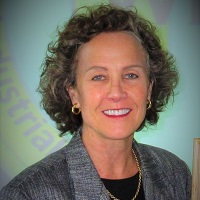 Elizabeth (Betsy) Shoenfelt, PhD, university distinguished professor emerita in the department of psychological sciences at Western Kentucky University (WKU), directed the WKU I-O master’s program for 25+ years. In 2013, she received the SIOP Distinguished Contributions to Teaching Award. She is a licensed I-O psychologist, an APA fellow, a SIOP fellow, a certified mental performance consultant® and fellow in the Association for Applied Sport Psychology, and a member of the United States Olympic and Paralympic Committee Sport Psychology and Mental Skills Registry.
Betsy has more than 30 years of experience in applied psychology, working to achieve excellence in high demand performance contexts in business, industry, government, education, and sports. Betsy is the editor and coauthor of two of the most recent volumes in the SIOP Professional Practice Series, Mastering Industrial-Organizational Psychology: Training Issues for Master’s Level I-O Psychologists (Oxford University Press, 2020) and Mastering the Job Market: Career Issues for Master’s Level Industrial-Organizational Psychologists (Oxford University Press, 2021). In 2019, she authored a definitive “how to” book, Mental Skills for Athletes: A Workbook for Competitive Success (Routledge/Taylor Francis).