You know how, on the top of your resume, you’re supposed to have some kind of mission statement? Well, if my resume coming out of college had been honest, it would have said, “Psych major seeks literally any job that includes health insurance.” I applied for a wild assortment of positions, from camp counselor for troubled youth to window display designer. Sometimes, I bent the truth to look more attractive to potential employers. “Fashion is my life,” I said, at an interview at a now-defunct department store. At the time, I was wearing pants with a hole in them—one that I’d attempted to conceal by Sharpie-ing the skin underneath. I never got a call back.
I ended up landing a job at a political action committee, and it quickly became apparent that I did not belong there either. While my colleagues sobbed every time we lost an election, I found myself just pretending to care.
I did my best to fit in, though. I’d gotten my foot onto a real career ladder, and my plan was to keep climbing and see how high I could get.
Then, one day, I was having lunch with my boss, Cheryl, and I made a huge mistake.
“What do you want to do in the next election cycle?” Cheryl asked.
“I want to be a writer—a journalist,” I said.
“Well, you can’t do that here,” she correctly replied.
My heart thumped visibly beneath my ill-fitting blazer. Had I just thrown away something precious, something I’d never find again: A moderately interesting white-collar career?
I’m happy to say that wasn’t the case. Rather, blurting out the truth, and admitting my true career dreams to myself and my boss, turned out to be the smartest thing I ever did.
Much to my surprise, Cheryl did not fire me on the spot. Instead, she suggested that I work part-time at the political action committee—just enough to keep my health care—while also attempting to launch my career as a journalist. On my off-days, I wandered the streets of D.C., finding juicy little stories here and there, and pitching them to community newspapers.
My first articles were published in a tiny newspaper called Hill Rag, and I used those clips to get freelance assignments with the Washington City Paper and eventually, The Washington Post. I reported the hell out of every story, no matter how small. My first story for the Post was supposed to be a boilerplate profile of an apartment building, but instead of just talking to the people the management hand-picked for me to interview, I loitered in the laundry room to get the real dirt. Then, I wrote and rewrote that piece until it sang.
I don’t know who told me this, or how I figured it out, but you don’t need anyone’s permission to be a journalist or a writer. You can just do the job, and then try to persuade someone to publish your work. It’s risky, and I did a lot of unpaid work along the way—probably too much, to be honest—but it got me the clips I needed to climb the ladder that I really wanted to be on.
I eventually landed my dream job as a reporter for The Washington Post’s sassy free tabloid, The Washington Post Express. For seven years, I was paid to have adventures—including a walk-on part in the Washington Ballet’s “Nutcracker,” playing fiddle tunes on one of the Smithsonian’s priceless Stradivarius violins—and write about them. I would have stayed there forever, but the Express folded in 2019, and I was on my own again.
I did get some money as a parting gift, a severance package that I decided to call the Jeff Bezos Fellowship for Aspiring Book Authors, and I started writing a memoir and talking to book agents. This process was gut-wrenching at every juncture. I poured my soul into something that definitely could have gone nowhere, and I faced a lot of rejection along the way. But as a person with no dependents (other than two cats), I decided that I could take that risk. Worst case scenario for me at this point was that I’d have to go to the dark side: public relations.
I’m happy to say that my risky venture worked out. I got a book deal—one that’s allowed me to showcase the skills that I began to hone decades ago as a psychology major: writing, reading scientific papers, and shamelessly peppering professors with dumb questions.
Like all success stories, mine took just as much luck as pluck. I also feel a little premature declaring victory. Print journalism is dying, and no one knows what’s going to take its place. Social media? Podcasts? Gossip? The future is murky, but I feel less afraid, knowing that I have a flashlight and a flare: Being honest about what I want, and being brave enough to go for it.
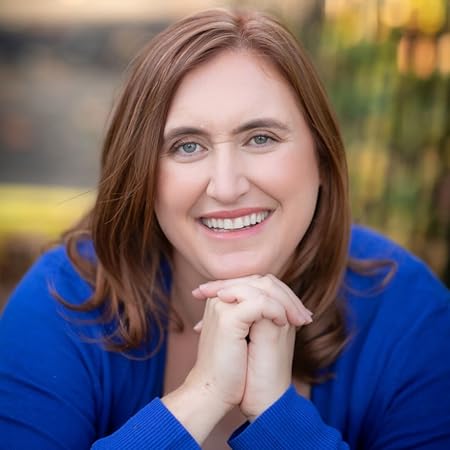 Sadie Dingfelder is the author of