As an undergraduate psychology major, my first research experience involved applying operant learning strategies to condition pill bugs (i.e., Porcellio Scabers). The university had no psychology lab at that time, so Professor Morrow assigned us to condition pill bugs to turn right eight out of ten times in a T-maze. I recruited my four participants from under a rock in my backyard. My classmates and I carved our T-mazes into slices of paraffin wax. Because pill bugs tend to roll up in balls when handled, running the trials was especially tedious; nudging them with a pencil eraser caused them to roll up into a ball and bounce off the maze turning point! Looking back years later, the bug assignment was a creative, inexpensive, yet effective “high impact” learning experience. I learned about the large body of literature on insect conditioning and how I could access that literature in the university library. I developed a much deeper understanding of operant conditioning principles, and I began to learn to write in APA style.
Engaging undergraduates in research benefits them. In a survey of over five hundred psychology alumni, respondents gave high ratings to the skills gained from their research experiences (Budesheim et al., 2022). A study of four summer undergraduate research programs at liberal arts colleges found that students benefit in terms of cognitive and personal growth, and development of a professional identity (Hunter et al., 2006). One college, Durham Technical Community College, promotes multidisciplinary research because:
Research experiences provide benefits even for those not planning to work in research. They can provide students with a stronger understanding of the role of science, deeper engagement and understanding of course material, enhanced critical thinking, problem-solving and analytical skills, enhanced self-efficacy, and the ability to work on a team - all critical workplace skills that industry often finds lacking in potential job candidates. (Paris, 2009, p. 2)
Undergraduate research is a strategy for diversifying psychology’s educational pathway, and a high-impact learning experience that contributes to higher MFT or ACAT scores and entry into graduate school (Stoloff et al., 2015).
Despite the benefits to students, psychology departments often face challenges in offering research opportunities. There can be budget and space limitations, an unsupportive administration, and other obstacles. Some states, for example, discourage community colleges from even offering the introductory behavioral research methods course. Fortunately, departments have found solutions.
The literature reveals a variety of ways faculty can provide students with research experiences. Teachers embed research projects into the courses they teach (Johnson, 1996; Williams, 2007), or have more advanced students (“teaching fellows”) deliver research lab lessons to introductory psychology students (Newcomb & Bagwell, 1997). Stevens et al. (2016) offer eight ready-to-use modules designed to strengthen scientific reasoning in introductory psychology students, and instructors can teach introductory psychology as a laboratory course (Thieman et al., 2009). Psi Beta and Psi Chi each offer members research opportunities and a student journal. Finally, Webster (2021) provides ten tips for maintaining an active research program at primarily undergraduate institutions.
Absent lab resources, Koschman and Wesp (2001) used the college dining facility as a real-life laboratory. Utah State offers a distance learning research lab (Levin & Grewe, 2020). Proctor and Jones (2020) have found discoid cockroaches to be an ideal invertebrate alternative to rats and pigeons at a fraction of the cost and with reduced ethical concerns.
Another approach is to encourage psychology students to get involved in co-curricular research opportunities or to form a “research committee” within your psychology club, Psi Chi, or Psi Beta chapter. In this regard, McCarthey et al. (2020) describe why and how they launched Towson University’s Interdisciplinary Undergraduate Research Club. Aside from fostering a culture of peer-mentored undergraduate research, club activities include fundraising, social events, service projects, research presentation practice, and hosting a homegrown research conference. One innovative fundraising strategy at Towson named "I Heart Research,” launched just before Valentine's Day. In support of the I Heart Research initiative, the club’s website featured a menu of research presentations (each 10-15 minutes in length) that club members were available to present in person for $5 each. By completing an online form, the site visitor could choose a presentation and designate a research presentation recipient, then pay the $5 fee. Recipients included entire classrooms of students and individual presentations given to students, professors, staff members, and community organizations. “I Heart Research” fundraisers help the club cover operating expenses, but also provide students with valuable practice in communicating research. The program also boosts cross-campus awareness of undergraduate research. Aside from forming a research club, additional co-curricular strategies are available.
Hosting an on-campus student research conference promotes awareness of undergraduate research and offers students a place to share their research projects (Carsud et al., 1984; Lipton, 1986; Woody & Miller, 2020). Psychologists often help implement interdisciplinary research programs at their college (Paris, 2019; Peterson et al., 2021), launch their own student research journals (Hart, 2012; Dawson & Marken, 2019; Farkas & Pashkove-Balkenhol, 2021), and escort students to professional psychology conferences (Rastogi et al., 2011). By attending a professional conference, students gain confidence and knowledge about interacting in a professional setting, learn about current research, and feel more connected to one another, the psychology program, and the school.
In closing, I thank Dr. Morrow for the research project he assigned so many years ago. To this day, I try not to step on the random pill bug I sometimes encounter crossing before me on the sidewalk. When I see one, I think fondly of their ancestors who were participants in my first research study.
References
Budesheim, T. L., Khanna, M. M., Klanecky Earl, A. K., & Guenther, C. L. (2022). The long-term impact of undergraduate internships and research experiences in psychology: An alumni survey study. Teaching of Psychology, 0(0), 1-12. DOI: 10.1177/00986283211041071
Carsud, A. L., Palladino, J. J., Tanke, E. D., Aubrecht, L, & Huber, R. J. (1984). Undergraduate psychology research conferences: Goals, policies, and procedures. Teaching of Psychology, 11(3), 141-145.
Dawson, D., & Marken, L. (2019). Beyond consumers: The value of engaging undergraduate students in journal management and authorship. In A. S. Jackson, C. Pierard, & S. M. Schadl (Eds.), Scholarship in the Sandbox: Academic Libraries as Laboratories, Forums, and Archives for Student Work (pp. 269–290). Chicago, IL.: ACRL. https://hdl.handle.net/10388/11989
Farkas, K. R. J., & Pashkova-Balkenhol, T. (2021). The problems and possibilities of creating and sustaining a multidisciplinary, undergraduate, digital journal. Scholarship and Practice of Undergraduate Research, 4(4), 51-58. ERIC Number: EJ1306155 DOI:10.18833/spur/4/4/3
Hart, D. A. (2012). How to start an undergraduate research journal. Council for Undergraduate Research. ISBN: 0-941933-41-5
Hunter, A., Laursen, S. L., & Seymour, E. (2005). Becoming a scientist: The role of undergraduate research in students' cognitive, personal, and professional development. Science Education, 91, 36-74. DOI 10.1002/sce.20173
Johnson, D. E. (1996). A "handy" way to introduce research methods. Teaching of Psychology, 23(3), 168-169. https://psycnet.apa.org/doi/10.1207/s15328023top2303_6
Koschmann, N, & Wesp, R. (2001). Using a dining facility as an introductory research laboratory. Teaching of Psychology, 28(2), 105-108. https://doi.org/10.1207/S15328023TOP2802_07opens in new window
Levin, C., & Grewe, J. (2020). Distance learning lab: A model for undergraduate research. Scholarship and Practice of Undergraduate Research, 4(2), 15-20. DOI:10.18833/spur/4/2/12
Lipton, J. P. (1986). A successful undergraduate conference: Organized through a special course. Teaching of Psychology, 13(3), 111-115. https://psycnet.apa.org/doi/10.1207/s15328023top1303_2
Lipton, J. P. (1986). A successful undergraduate conference: Organized through a special course. Teaching of Psychology, 13(3), 111-115. https://psycnet.apa.org/doi/10.1207/s15328023top1303_2
McCarthey, A. R. M., Clements, R. R. N., Cahalan, L., Johnson, K., & Pace, B. (2020). Building undergraduate research across the discipline: New ideas outside the classroom with an interdisciplinary undergraduate research club. Scholarship and Practice of Undergraduate Research, 3(3), 37-44. DOI:10.18833/spur/3/3/11
McClure-Brenchley, K. J., Picardo, K., & Overton-Healy, J. (2020). Beyond learning: Leveraging undergraduate research into marketable workforce skills. Scholarship and Practice of Undergraduate Research, 3(3), 29-35. DOI:10.18833/spur/3/3/10
Newcomb, A. F., & Bagwell, C. L. (1997). Collaborative learning in an introduction to psychological science laboratory: Undergraduate teaching fellows teach to learn. Teaching of Psychology, 24(2), 87-95. https://psycnet.apa.org/doi/10.1207/s15328023top2402_2opens in new window
Paris, S. (2019). Two-year college students can benefit from research projects. Community College Daily: American Association of Community Colleges. https://www.ccdaily.com/2018/07/two-year-college-students-can-benefit-from-research-projects/
Peterson, J., Franco, M. M., Lall-Ramnarine, S., and Wang, S. (2021). Institutionalization and sustainability of undergraduate research at a public, urban community college: Successes and challenges. Scholarship and Practice of Undergraduate Research, 4,(3), 30-39. ERIC Number: EJ1296905 DOI:10.18833/spur/4/3/16
Proctor, D., & Jones, M. (2020). Cockroaches to the rescue: A new approach to reintroduce animal labs to the psychology undergraduate curriculum. Scholarship of Teaching and Learning in Psychology, 8(3), 237-242. https://dx.doi.org/10.1037/stl0000235opens in new window
Rastogi, M., Montano, D. F., Paulson, A., Brinkman, J., Brondyke, K., Dushac, A. L., Pequet, E., & Suplicki, T. (2011). The value of professional conferences for undergraduate students. Poster presented at the annual meeting of the American Psychological Association, Washington, D.C.
Stevens, C., Witkow, M. R., & Smelt, B. (2016). Strengthening scientific reasoning skills in introductory psychology: Evidence from community college and liberal arts classrooms. Scholarship of Teaching and Learning in Psychology, 2,4, 245-260. https://dx.doi.org/10.1037/stl0000070
Stoloff, M. L., Good, M. R., Smith, K. L., & Brewster, J. (2015). Characteristics of programs that maximize psychology major success. Teaching of Psychology, 42(2), 99-108.
Thieman, T. J., Clary, E. G., Olson, A. M., Dauner, R. C., & Ring, E. E. (2009). Introducing students to psychological research: General psychology as a laboratory course. Teaching of Psychology, 36, 160-168. DOI: 10.1080/00986280902959994
Webster, R. J. (October 7, 2021). 10 ways to conduct cost-effective research at primarily undergraduate institutions. SPSP online newsletter article. https://www.spsp.org/news-center/announcements/research-tips-for-primarily-undergraduate-institutions
Williams, J. A. (2007). Student research in psychology courses. Association for Psychological Science, 20(10) 41-44. https://www.psychologicalscience.org/observer/student-research-in-psychology-courses
Woody, W. D. & Miller, R. L. (Eds.). (2020). Administration of a Student Friendly Psychology Conference: Challenges and Opportunities. Retrieved from the Society for the Teaching of Psychology website: https://teachpsych.org/ebooks/studentfcopens in new window
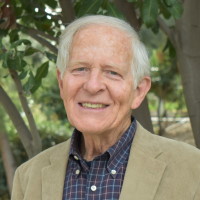 Jerry Rudmann is a professor emeritus of psychology at Irvine Valley College (CA) where he teaches statistics and mentors undergraduate student research. Jerry also serves as executive director of the Psi Beta National Honor Society in Psychology for community college students. Rudmann has served on various APA task forces and working groups, such as for the revision of the APA Guidelines for the Undergraduate Psychology Major: Version 3.0, the APA Introductory Psychology Initiative, and the APA Summit for National Assessment in Psychology.