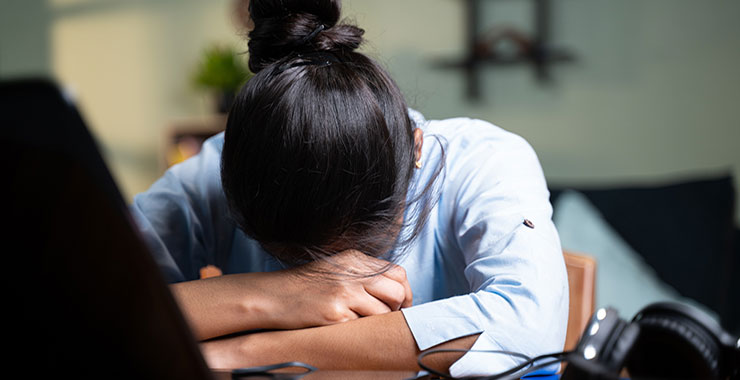
Though the world has finally emerged from the pandemic, those working in education are still awash in ripple effects. Much of the conversation swirls around K-12 teachers, as in this May 2023 ABC News piece entitled “The nation’s top teachers share their biggest challenges: Burnout, student mental health and more.” Though less commonly discussed in the media, these issues extend into higher education as well. Concerns such as these led the Healthy Minds Network—a team of collaborators from the University of Michigan, Boston University, UCLA, and Wayne State University—to create a survey for employees of colleges and universities. It asks about mental and emotional health, use of mental health services, supporting students, and campus climate. In this article, we provide a glimpse into a few key measures from the Healthy Minds Study (HMS) Faculty/Staff Survey, in particular items related to burnout.
Between September 2022 and May 2023, the HMS Faculty/Staff Survey was conducted at eight 4-year institutions and eight community colleges. Respondents included 1,003 faculty and instructors - 725 from 4-year schools and 278 from community colleges. Of these, 61% identified as women, 38% as men, and 1% as gender minorities.
Overall, 64% of faculty reported “feeling burned out because of work” either somewhat (30%), to a high degree (19%), or to a very high degree (15%). Burnout was higher among women (69%) and gender minority faculty (71%) relative to men (57%). A higher proportion of faculty at 4-year institutions (68%) felt burned out than at community colleges (54%). Despite this, 67% of all faculty said they were satisfied with their job. Also on the positive side, 89% said they felt “competent and capable.”
The survey goes deeper too, exploring the concept of burnout from multiple angles. Women (84%) were the most inclined to agree with the statement, “In the past 12 months, I have felt overwhelmed by all I had to do,” followed by gender minorities (71%) and men (68%). Considering how high those rates are, it may be interesting to note that 60% of women, 57% of gender minorities, and 65% of men also agreed with the assertion, “I achieve a healthy work/life balance.” The price paid for that balance, however, might be reflected in those relaying that they experience stress (56%), lack of sleep (45%), and anxiety (43%).
The HMS Faculty/Staff Survey analyzes toll taken on health using two measures:
- “In the past 12 months, my job has taken a toll on my mental or emotional health.”
- “Supporting students in mental and emotional distress has taken a toll on my own mental and emotional health.”
Out of all professors/instructors, 58% noted that the job had taken a toll (63% from 4-year institutions and 46% from community colleges). It might seem like supporting students in mental and emotional distress would be a small facet of the job. However, 90% of faculty agreed that “student mental health is significantly worse now than when they began their careers,” and 72% of faculty in the sample said they “had one-on-one conversation/s with a student about their mental or emotional health in the past year.” By the same token, close to half (47%) of faculty reported, “Supporting students in mental and emotional distress has taken a toll on my own mental and emotional health.”
Institutions provide mental health services for both students and employees, of course. Yet 81% of faculty feel that their institution should be investing more resources to support faculty and staff mental health and wellbeing. To inform and assess the value of future investments, data from faculty and staff are essential.
If these statistics relating to burnout resonate with you, you may appreciate some approaches suggested in Coping with stress at work, an article from APA. Alternatively, the data might raise questions about how faculty can better support students’ mental and emotional wellbeing. In that case, we’d recommend the resource Creating a culture of caringopens in new window from Active Minds.
Finally, if you are interested in learning more about the HMS Faculty/Staff Survey, please visit our website or reach out to the study coordination team. We’d be happy to link you to the full questionnaire and talk with you about supporting your colleagues’ well-being.
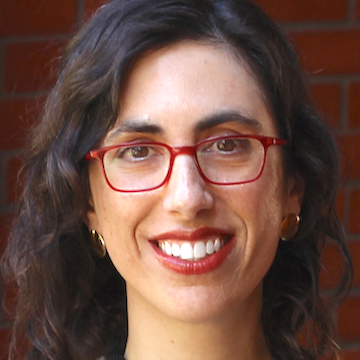 Sarah Lipson, PhD, EdM
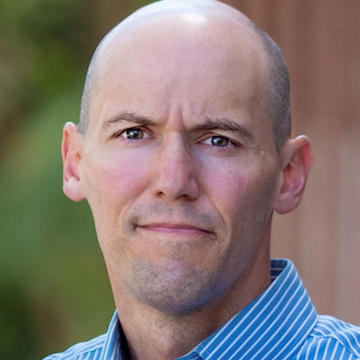 Justin Heinze, PhD
 Erin Voichoski, MPH
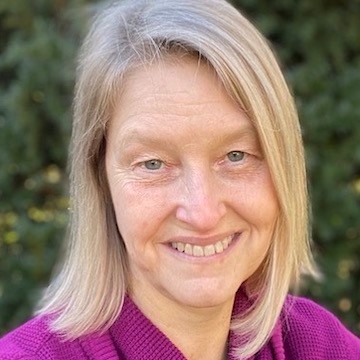 Brenda Vyletel, MSE