Having survived the Spring 2020 adaptation to online teaching with little warning, I’ve developed five strategies that could help make a similar transition more successful should it become necessary in the future. Although these strategies were developed for introductory and social psychology courses (see Syllabi for APA Teacher Network articleopens in new window) at a small liberal arts college, they could be adapted to a variety of courses and institutions.
American Psychological Association. (2020, May 27). Five tips for flexible teaching during the COVID-19 pandemic. https://www.apa.org/ed/precollege/psychology-teacher-network/introductory-psychology/flexible-teaching-covid-19
During initial course preparation, create online quizzes and assignments
My courses already include reading quizzes and written assignments that are submitted and graded completely online, which makes the transition to online teaching easier. My “reading check” quizzes are done either through textbook software (e.g., Macmillan’s Launchpad) or learning management systems (e.g., Moodle), and are short (5-10 questions), relatively easy, and reward students for reading before class. Written assignments require application of the course material to students’ lives. In introductory psychology, “Personal Connections” require students to participate in an activity (e.g., related to time management, mindfulness, validation, relationships) and apply concepts from the course in a 700-word reflection; students report finding these interesting, useful and fun. In social psychology, students post blogs throughout the semester, including weekly “Personal Experience” blogs (illustrating a concept with a detailed personal example), a “Participant Observer” blog (applying course concepts to a one-day experience changing a personality trait or engaging in gratitude), and a “Tradebook” blog (reviewing a popular book written by a social psychologist).
If we have to shift to online teaching, lighten the students’ workload
Being quarantined presented students with many challenges, including issues with internet connectivity, family stress, financial hardships, increased distraction, low motivation and loneliness from missing campus friends and activities. I found that decreasing the workload — but not my expectations for the quality of the work — reduced students’ stress levels, made the course more manageable, and motivated them to do high quality work. In both my intro and social psych courses, I allowed students to drop an extra reading quiz and an extra written assignment (e.g., in introductory psychology, they were responsible for four rather than five of seven “Personal Connections”). Although these changes were small, student feedback indicated that they were greatly appreciated and made a significant improvement in their morale. During course preparation, it would be helpful to have these changes already in mind.
Provide additional structure
One of students’ most common complaints about being quarantined off campus was that they had no structure and lost track of assignments and due dates. Feedback from students suggested that two strategies were particularly helpful:
- Having live “synchronous classes” if possible (e.g., via Zoom) with recordings for those who couldn’t attend: students said that they forgot or weren’t as motivated to watch asynchronous lectures, but “looked forward” to the live lectures, which provided much-needed normalcy and structure.
- Sending many more reminder emails: after having students miss deadlines and exams (even those listed on Moodle before the pandemic), I sent email reminders before each class day.
Disincentivize cheating on exams
I’m known on campus as a rigorous instructor, and I stand by my tough-but-fair in-class exams that require both encoding and application of course concepts. However, given academic dishonesty concerns surrounding online exams, I wanted to “level the playing field” as much as possible. I allowed students to use five-page typed “cheatsheets” (approved by me first) during the exam. I decided against completely “open book/open notes” exams because I thought students would lose their incentive to study at all. I emphasized that they should study as hard as they did for in-class exams, but use their cheatsheets to organize their studying and as a “safety net” if they couldn’t remember a concept. This strategy worked well: exam scores were only slightly higher (3-4 points out of 100) and students reported feeling less stress. To decrease the likelihood of collaboration with other students, I used Moodle to administer random questions from a larger item pool using categories (e.g., two of four neuron questions, three of eight brain damage questions) and also shuffled both the questions and answers. Although my strategy doesn’t prevent cheating entirely (e.g., a student could have consulted sources beyond their cheatsheet), I do think it lowered the incentive to cheat. Student feedback was positive and they concluded that although cheatsheets were a welcome adaptation for online exams, they weren’t necessary for in-class exams.
Provide more opportunities for extra credit
Finally, to acknowledge the hardships caused by the quarantine, I provided additional opportunities for extra credit. In introductory psychology, students could earn points for a “Top 10” list of the most useful theories or concepts in psychology, along with a brief explanation and personal example. In social psychology, students could watch up to three videos (including social psychologist interviews and/or Ted Talks) and write reflections. I was really impressed with students’ thoughtful work on these assignments, and the students appreciated the chance to boost their final grade.
In short, moving to online teaching doesn’t have to mean dramatic adjustments; even small changes can have a meaningful and significant impact on students’ well being without sacrificing course standards.
About the author
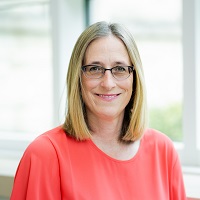 Traci Giuliano (BA, psychology, University of Texas; MA, PhD, social psychology, UCLA) is a professor of psychology at Southwestern University in Georgetown, Texas. She’s been a member of the faculty since 1994, and still considers Southwestern her dream job. In 2009, she was named holder of the John H. Duncan chair, and enjoyed hosting Southwestern’s annual Brown Symposium (“Sex Talk: A Symposium With Benefits”) in 2013. At Southwestern, she’s been honored to receive the Jesse E Purdy Excellence in Scholarly and Creative Works Award, the Outstanding Teaching Award (twice), the University Advising Award, and to be nominated for the Case U.S. Professor of the Year award. Her favorite part of being a professor is mentoring undergraduates through the research process. Since starting at Southwestern, she’s published 30 journal articles with 68 student co-authors, and is especially proud that 25 of the 30 articles were first-authored by SU undergraduates. Currently, her research examines factors related to faculty-undergraduate publication. In 2019, she edited a special issue of the journal Frontiers in Psychology called “Engaging Undergraduates in Publishable Research: Best Practices” (all 44 articles can be found onlineopens in new window).