As a result of a service-learning course focusing on issues for people in poverty, we recently studied food insecurity at our institution. According to the United States Department of Agriculture (USDA, 2022), food insecurity is the limited or uncertain availability of nutritionally adequate and safe foods or limited or uncertain ability to acquire acceptable foods in socially acceptable ways. As a direct result of our work, and with faculty approval, we began a psychology department snack station in spring 2022. The basket empties weekly. One day, one of us saw a particular student taking food from the station.
The next day, I stopped to restock it, and she was back again.
She said, “Oh! Is it you who does this?”
I replied, “Yup. No need to be hungry in class. Hard to learn that way.”
With a huge smile, she replied, “I told my brother about this, too. We only get to eat one meal each day, so this really makes a difference. Thank you.”
Her comment hit me to my core. I wanted to cry, but since she was smiling, I smiled back. She told me proudly she is the first in her family to graduate high school, let alone attend college. Because of the service-learning class’ community-driven research, I was also able to provide information about our campus food pantry and other local resources so she can get food more regularly.
Prevalence of food insecurity
The 2019-20 National Postsecondary Student Aid Study (NCES, 2023) presented the first comprehensive dataset that examined food insecurity and homelessness among graduate and undergraduate students in the United States. While the NPSAS study found that 23% of undergraduates experienced food insecurity overall, there were disparities that exist between different institutions of higher learning. Researchers at the Hope Center at Temple University used the NPSAS:20 data to reveal that among undergraduates, food insecurity is higher at community colleges (23.4%) compared to public and private non-profit 4-year institutions (20.9% and 18.8% respectively; see full Hope Center article hereopens in new window). A limiting factor of the NPSAS:20 data is that it was collected at the start of the COVID-19 pandemic, which may have compounded undergraduate students’ challenges for accessing food. One 2020 study found that in Texas community colleges designated as Hispanic-Serving institutions, food provision on campus was significantly negatively impacted by the pandemic (Zottarelli et al., 2021).
It is important to note that there is also variation between studies in regard to the overall prevalence of food insecurity among college students. For example, another recent study found that while the national average for food insecurity is about 12% (Henry, 2017), college students reported it at 41% (Nikolaus et al., 2020). Having completed our survey work post-COVID, 53% of our 286 survey respondents (convenience samples) indicated struggling with food insecurity in the last 12 months (Wickline et al., 2024).
Predictors of food insecurity
Food insecurity typical has higher rates with lower income and unemployed individuals (Mabli, 2023; USDA, 2012), ethnic/racial minorities (Feeding America, n.d., Becerra et al., 2015), women (Jung, 2017; Whittle et al., 2019,), and those with dependent children (Coleman-Jensen et al., 2021). Our study found largely commensurate results, with food insecurity being significantly predicted by having lower household income, being Latino(a), and having dependent children (Wickline et al., 2024), but not by gender or unemployment levels.
Consequences of food insecurity
Food insecurity has been linked to detriments in school settings, including academic distress, grade point average, and mental health challenges (Ahmad et al., 2022; Cady, 2014; Davison et al., 2015; Smith et al., 2020; van Woerden, 2018). We likewise found that students who struggled with greater food insecurity indicated significantly higher rates of anxiety, depression, stress, and academic difficulties (Wickline et al., 2024). Moreover, a state-based stress indicator at the beginning and end of the survey demonstrated that talking about food insecurity temporarily decreased students’ stress, making them feel less invisible.
What can faculty do to help
- Recognize the widespread prevalence of food insecurity and its negative impacts on students in your classes. Adding information about food insecurity to your course syllabi could help raise awareness and point students towards services that mitigate food insecurity.
- Stock a snack station in your department with granola or protein bars, microwave meals, ramen, and nuts. This will not address all hunger-related issues, but can keep students’ stomachs from grumbling in class, improving their learning.
- Be aware of - and publicize - your campus food pantry. If none exists, advocate with your department and campus leadership to get one started.
- Make and keep a list of local food and hygiene pantries, clothing closets, homeless shelters, meal programs, and resources for struggling students.
- Encourage students to explore their eligibility for the Supplemental Nutrition Assistance Program, a federal program that provides monthly benefits to help eligible low-income individuals and families purchase nutritious food (see Freudenberg et al., 2019).
- Collaborate with student support services and advocate for institutional change. Faculty can actively partner with their institution's student support services (e.g., counseling services, student affairs) to better understand the needs of food-insecure students and how to effectively refer them for help. Additionally, faculty can use their voice and position within the university to advocate for broader institutional changes that address student food insecurity, such as:
- Increasing funding for the campus food pantry.
- Creating or expanding affordable meal plan options for students.
- Establishing emergency funds for students facing unexpected financial hardship.
- Allowing students to donate leftover meals on their meal plans to other students at the end of each semester.
- Conducting campus-wide surveys to better understand the prevalence and impact of food insecurity among the student body.
With thanks
The authors would like to thank student researchers Rashuna Middleton, Destiny Truth, Rachel Baker, and Sharon Hathaway, who contributed to the design, analyses, and literature review for the research project detailed here. We are also grateful for Ms. Cherie Gaume and Mr. Casey Weaver, who coordinate the important work of the food pantry resources at our campuses and whose contributions helped us design our research study.
 Virginia (Ginger) Wickline, PhD, is an associate professor of clinical psychology at Georgia Southern University — Armstrong Campus. She has served as faculty adviser for the psychology club and Psi Chi National Honor Society chapters at her institution. Her work with her Social, Cultural, and Interpersonal Process research lab focuses on intercultural competence and adjustment of both domestic and international college students; she also publishes in the realms of Scholarship of Teaching and Learning, study abroad, and nonverbal communication. In addition to numerous local and regional service, mentoring, and teaching awards, she has been recognized with the 2006 Emory University Humanitarian Award, was a 2019 finalist for the Council of Undergraduate Research Social Science Mentoring Award, and the Southeastern Psychological Association Mentoring Award, and is the 2012 national recipient of the Society for Teaching in Psychology Wayne Weiten Teaching Excellence Award. She received her BA in psychology from Anderson University and her MA and PhD in clinical psychology from Emory University.
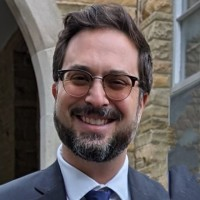 Joshua Herrington, PhD, has a broad interest in developmental neurobiology and behavior. His research program explores the behavioral effects and biological mechanisms of early life experiences on behavior and physiology across the lifespan. He has conducted research in perceptual development, learning, and epidemiology in both human and non-human animal models including birds, non-human primates, and rodents. Currently, he and his collaborators are exploring the link between prenatal and early postnatal exposure to oxidative stress and a broad range of developmental disorders such as autism spectrum disorder. He has experience teaching general, physiological, cognitive, emotional, health, and developmental psychology, as well as research methods. He earned a BS at Virginia Polytechnic Institute and State University, spent time as a research associate at DePaul University in Chicago, was awarded an MS and PhD from Florida International University, and completed a postdoctoral fellowship at the California National Primate Research Center at the University of California Davis.