Psychology covers a multitude of sensitive and challenging topics. Some teachers may endeavor to avoid such difficult topics. However, teachers of psychology are well aware that the psychology course provides a lot of opportunities for great discussion and hands-on learning. Keeping your elective an engaging learning experience for students is still a possibility even with sensitive, challenging, and even controversial topics.
| Do
|
Do not
|
| Use authentic case studies to illustrate the diagnostic criteria found in the DSM-5 (e.g. DSM-5 Case Studies or other pieces of nonfiction). The case studies feature symptomatology that match the criteria found in the DSM-5. |
Act out or dramatize symptoms that one associates with various disorders found in the DSM-5. Contemporary films or fictionalized narratives often trivialize the suffering of those with disorders. In order to reduce stigma/shame, the use of colloquial terms (e.g.. crazy or insane) should not be used.
|
| Do
|
Do not
|
| Use film clips and video clips that are relevant. |
Show an entire film when only a portion is relevant to the course.
|
| Do
|
Do not
|
| Be clear about what your level of training has or has not prepared you to do, and act accordingly. You might include a disclaimer in your syllabus noting the boundaries of your competence and how you will handle them. (For example, you might note, “While we will discuss mental health and treatment in this class, I am trained as an educator, not a clinician. If you need help with mental health concerns, I will assist you by referring you to student services for additional support, but I cannot provide psychotherapy services myself.”) |
Misrepresent your training or level of expertise. Many students mistakenly believe that “because you know so much about psychology…” you are qualified to diagnose psychological conditions and provide treatment recommendations. Failing to correct that misconception could harm students who believe that your advice or recommendations constitute mental health treatment. Even if you are trained as a clinician, don’t endeavor to act as both a psychotherapist and a teacher to your students. Such dual roles create ethical challenges related to boundaries as well as the problem of role conflicts. |
| Do
|
Do not
|
| Use sample items or historical examples of intelligence tests to help students understand the strengths and limitations of traditional tests of intelligence. Sample items from the Army Alpha and Beta tests (historic tests) or from the Mensa website can give students a sense of what test-takers encounter without the risks inherent in giving students a “score.” | Ask students to complete scored “Intelligence Tests” as part of their course experience. The content of valid intelligence tests is tightly controlled (to maintain validity) and it would be unethical to make those test items public. Additionally, intelligence tests found online lack validity, so there is risk of harm to students who take them (and then, mistakenly believe the results of these tests are “true” or predict something meaningful about them). Psychologists who are trained in administration of intelligence tests have experience writing psychological reports that accurately and sensitively communicate what intelligence test results do (and do not) mean. |
| Do
|
Do not
|
| Accurately present information about personality tests and their limitations when using sample items in class. Of course, some controlled tests, such as the Rorschach inkblot test or the MMPI should never be used directly with high school students due to their potential for revealing clinically significant diagnostic information and a lack of teacher training for accurate scoring. However, many instructors find it useful to share publicly available sample items from these tests to illustrate how they are used. Likewise, non-controlled personality tests can be useful reflection items for students if done voluntarily and without forced disclosure. When using these items or tests, it is important to make students aware of their limitations. Teachers should discuss the appropriate (and inappropriate) uses for personality tests and may want to mention the controversies about the validity of the Myers-Briggs Type Indicator test. | Use personality tests of questionable validity without informing students of their limitations. While it might be tempting to make use of a free “personality test” uncovered through a Google search, instructors cannot guarantee that such instruments are valid or reliable. If using items from these tests to stimulate class discussion, students should be made aware of their limitations. And, students should never be forced to share results from a personality assessment with their instructor or classmates, regardless of its quality. |
| Do
|
Do not
|
| Model ethical data collection as a part of your course practice. When asking your students to participate in a demonstration or learning experience, provide them with information they would need in order to make a decision about whether or not to participate, and allow students to decline participation. If you use deception as part of a class demonstration, model the debriefing process. | Require students to play the role of “subject” during class demonstrations. Students may feel victimized or taken advantage of if forced to participate in conditioning trials or to disclose personal information, even if a teacher feels the effects are benign. APA Ethical Guidelines explicitly forbid mandatory participation in studies as part of coursework to protect the rights of students. |
| Do
|
Do not
|
|
Provide equivalent, alternate assignments for students when coursework calls for self-disclosure.
|
Require students to disclose potentially distressing/embarrassing personal information as part of class assignments. Do not attempt to handle a situation alone if a student discloses a threat to self or others or instances of harm. |
| Do
|
Do not
|
| Acknowledge the limits of your knowledge. Psychology is an incredibly rich and broad field. No one can know all that is currently known about the science of psychology. Model good behavior by stating, “let’s see if we can find the answer to that question” and looking at research on the topic or question. | Don’t base your answer on something you may have heard through the media or other popular source. Many myths of psychology began through television, the popular press, and social media and have become “zombie” topics—myths that don’t seem to die. |
A few other items to consider as you navigate the do’s and don'ts of teaching psychology:
- Do give credit where credit is due. If you borrowed or adapted a lesson, cite the source. It is a great way to let students know that collaboration is part of the process of teaching and learning.
- Do utilize social media and the internet as a tool in your planning but do not forget that not everything out there has been vetted. TOPSS has a great tool to help you vet your resources (PDF, 48KB)opens in new window.
The authors thank Linda Woolf, PhD, for her review of this article.
 Dana Melone teaches at Kennedy High School in Cedar Rapids, Iowa. She has been teaching psychology and AP psychology for 18 years. She has also been a part of the AP reading as a reader and table leader for many years. For the last three years she has sat as a member at large for TOPSS. She will be the TOPSS chair-elect in 2021.
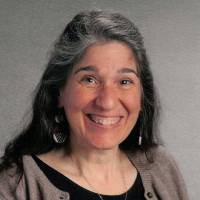 Maria Vita currently teaches AP psychology at Penn Manor High School in Millersville, Pennsylvania. She has over 20 years of teaching experience in a range of courses including psychology, U.S. history, and global history. Before moving to Lancaster, Pennsylvania, 17 years ago, Maria taught on an American Indian reservation in Zuni, New Mexico. Her bachelor's degree is in history and she completed graduate work in American Indian ethnohistory at the University of Wyoming. She also taught at a public magnet school for the humanities in New York, where she is from originally. Maria has been a reader for the AP exam since 2011 and she served on the TOPSS committee as member at large from 2013-14. She was the TOPSS Committee chair in 2018. She is passionate about psychological science and is currently pursuing a master's degree in school counseling from Millersville University.
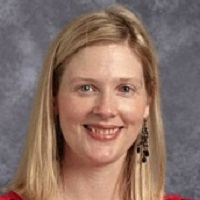 Virginia Welle teaches advanced placement psychology at Chippewa Falls Senior High School in Chippewa Falls, Wisconsin. She earned her BA in broadfield social studies education from the University of Wisconsin-Eau Claire in 2003 and an MS in psychology from Capella University 2013, specializing in counseling psychology. Her graduate training included experience providing mental health counseling for adults in individual and group psychotherapy settings. She has 15 years of classroom experience teaching AP psychology and has served as an AP exam reader. She is passionate about expanding access to psychology education and to AP coursework, and has overseen substantial growth in the AP psychology program at Chippewa Falls Senior HS. She was elected to serve on the APA TOPSS as member-at-large during 2014-15. Her course blog, Welle’s Wacky World of Psychology, is a widely-used resource for AP psychology students and teachers. She was a question contributor for the recently released iScore5™ App for AP Psychology Exam review, and has presented professional development at national conferences. Welle was a 2016 recipient of the APA TOPSS Charles T. Blair-Broeker Excellence in Teaching Award.