APA’s strategic goals include elevating the public’s understanding, appreciation, and utilization of psychology and preparing the field of psychology for future opportunities and challenges. One of the most powerful ways the organization can achieve these goals is through high-quality psychology education. Over one million young adults each year are introduced to psychology through an introductory high school or college course. To ensure that students receive accurate and engaging information about the discipline, APA offers guidance, curricular recommendations, suggested student learning outcomes, instructional resources, professional development opportunities, and connections with peers to support psychology educators.
However, not all educators are aware of, or can access, the support and professional development opportunities that disciplinary societies like APA offer. Although one-third to one-half of college students who take introductory psychology in the U.S. do so in the context of a 2-year school, community college educators are significantly underrepresented in psychology disciplinary societies (Bickerstaff & Ran, 2021; Maier et al., 2021, inter alia). Barriers that prevent community college educators from fully engaging with disciplinary societies can range from financial (e.g., a lack of administrative support for professional development) to social (e.g., being marginalized or excluded from opportunities).
Including community college educators in activities aimed at improving psychology education is an important step in diversifying pathways into psychology. Moreover, because teaching is the central role of community college educators, they have a wealth of experience teaching introductory courses that can and should inform best practices and instructional resources. Community college educators have also paved the way for integrative learning, online portfolios, and countless more pedagogical innovations. Strengthening the reciprocal relationships between community college educators and disciplinary societies has the potential to deeply enhance undergraduate education in psychology.
A National Science Foundation (NSF) grant was recently awarded to APA to offer a virtual conference for community college educators. The organizing committee includes both APA staff (Sue Orsillo, Kristen Gilyard, and Martha Boenau) and community college educators with deep teaching and leadership experience (Angela Belden, Todd Joseph, Crystal Quillen, and Liza Véliz). Through this conference, we hope to explore the potentially unique professional needs of psychology educators at 2-year colleges, uncover barriers to disciplinary society participation, and brainstorm methods of creating a more inclusive community that meets educators’ needs. We also hope to provide a space for 2-year college educators to cultivate a network of colleagues. Finally, we aim to offer a transformational professional development experience for psychology educators at 2-year colleges through engaging presentations and introductions to resources available through Psi Beta, the Society for the Teaching of Psychology (STP), and APA.
This project offers the opportunity for STEM educators beyond psychology to learn from the information provided by this conference, consider the needs of educators, and support the development of solutions. Together, disciplinary societies and 2-year college educators can work to promote science education and expand access to academic careers.
About the authors
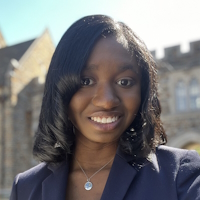 Kristen Gilyard is an intern in the Education Directorate at APA. She is currently a third-year PhD student at Harvard University, where she studies developmental psychology. Kristen earned her bachelor’s degree in neuroscience and mathematics at Harvard University in 2021. She additionally obtained a master’s in education and strives for the development and advancement of children’s learning. Her academic interests include novel noun learning and the intersection of education and psychology.
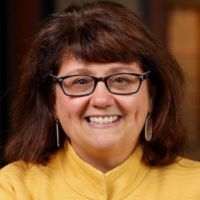 Sue Orsillo is the head of education at APA. Before joining APA, Sue taught, supervised, and mentored undergraduate students, doctoral students in clinical psychology, interns, and postdoctoral fellows for close to 25 years. Her clinical research focused on using acceptance-based behavioral therapy to prevent and treat anxiety and related disorders.