As we approach a full year of fully remote instruction, I have been spending a lot of time thinking about how to support student learning in my classroom while decreasing their stress and bolstering their motivation. Though best practices in online education call for instructors to create many short, high-quality, scripted videos with activities to accompany them, students from my courses over the past year reported that the increase in activities in the majority of their classes was overwhelming and difficult to keep track of. In light of this, it might be worth focusing our effort on making small changes to our in-person course structure, rather than large-scale overhauls of the type required to create intentional asynchronous courses.
My teaching philosophy for emergency online remote instruction can be captured by an oldie, but (modified) goodie: KISS—Keep It Strategically Similar. What I mean by this is to keep your course structure mostly the same to preserve a sense of familiarity and normalcy for students (and yourself) but be sure to offer flexibility throughout your course to ensure that students can participate regardless of their new learning environment. Below I offer suggestions for keeping course structure similar while still incorporating flexibility at every level of your course. These tips are mostly based on instruction of my small graduate courses (~25 students) and large lecture courses (up to 585 students) over the past year:
Syllabus Flexibility
Keep the same categories you typically have in your course (e.g., exams, quizzes, assignments, attendance, papers). But…
Encourage your students to discuss how much weight each category should have, rather than you deciding for them. Let them tell you what they value, what they will be able to handle, and how they would prefer to be scored. Of course, you’ll need to guide the discussion so that students can come to an agreement, but allowing them a bit of autonomy in making class decisions may help increase their motivation to engage with the course.
Lecture Flexibility
Deliver your lectures as you normally would—live during your scheduled class time (synchronously). This allows students to attend if they are able, and to ask you questions about the course content in real time. You can clarify confusion as it occurs (which keeps emails out of your inbox). But…
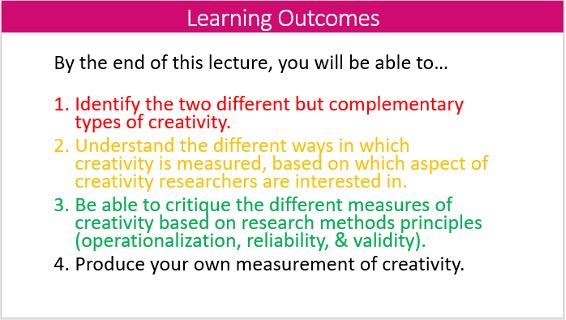
Make sure that you are offering the lectures in multiple formats for students who cannot attend synchronously: full-length with audio and captions, audio-only (lower bandwidth necessary to download/stream), and as a series of strategically cut shorter clips. I like to separate my lectures into shorter videos by the learning outcomes of the lecture (see image below).
Attendance Flexibility
Require attendance. This combats the low motivation that only continues to drop lower as the pandemic and remote instruction continues. But…
Allow students to acquire attendance points in multiple ways. Students who can attend live sessions can get these points by participating in clicker questions during the live sessions (there are free options if your university doesn’t have access to a paid version—try Mentimeter or Kahoot). For students who are routinely or even occasionally unable to attend, let them submit a set of notes on the lecture materials they watched, to provide evidence that they watched it, without requiring them to do something that they may not be able to do (i.e., attend live).
Assignment Flexibility
Incorporate regular “due dates” for assignments in your course (beyond the typical exams and large assignments) so that students have to keep up with the material. This is good practice both for online and in-person instruction. But…
Allow for flexible deadlines. Encourage students to submit their assignments weekly but do not take points off as long as they submit the assignment by a certain deadline. I switch between having two and three deadlines in my courses—one each in weeks 5 and 10, or weeks 4, 8, and 10, for a 10-week quarter system. Spreading out the deadlines ensures that my TAs do not get overwhelmed with things to grade at the very end of the class, which would likely happen with total deadline flexibility.
Critically, make sure to always assign some points for late assignments, even if they are months late. This provides motivation for students to complete the work, even if it is long past due—and it’s always better for students to do the work late than not at all.
Assessment Flexibility
Offer exams during the normal class time, as you would in person. Open the exam at the beginning of class time, and be available to answer questions during that time. But…
Leave the exam open for a period of time (e.g., a few days) so that students who cannot attend class during the scheduled time also have a chance to take it. You can set exams to only be open for a specified amount of time (e.g., the 60 minutes of a lecture) so it’s still fair for all students.
In sum, recreating the familiar structure of a college course in the online space can be a method of reducing both your own and your students’ stress. Just make sure to think about what flexibility your students may need to succeed when they are tuning into class from all over the world instead of your home campus.
About the author
 Annie S. Ditta, PhD, is an assistant professor of Teaching at UC Riverside. She received her PhD in Cognitive Psychology from UC Santa Cruz. Annie’s research investigates the complex interplay between memory and creativity, with particular focus on how people’s ability to both remember and forget helps them produce novel ideas and avoid becoming fixated on old or unhelpful ones. As an assistant professor of Teaching, she uses her knowledge of fixation and experience teaching to inform studies of undergraduate learning. The ultimate goals of her research are threefold: 1) to help students develop their critical and creative thinking skills; 2) increase motivation to learn; and 3) to design better methods of instruction for large lecture courses at the university level. Before pursuing graduate studies, she completed her undergraduate education at the University of California, Irvine, where she received her BA in Psychology (cognitive psychology track).