The upheaval caused by the global COVID pandemic to teaching and learning at many of our institutions was unimaginable. This year has given us an opportunity to focus our efforts on developing strategies for student engagement that can flexibly cross different teaching and learning environments. This article argues for the increased use of two strategies for engaging students to increase student success:
- using peer review activities to foster metacognitive practices; and
- using efficient affirmation practices to make students feel noticed and supported.
There is evidence that both practices are associated with learning gains in students, and more importantly are essential in developing the learner as a more sophisticated thinker in a discipline (Carrell, Kurlaender, and Bhatt, 2019; National Research Council Donovan and Bransford 1999; Halim et al., 2018).
How do you foster metacognitive practices across course platforms? There is evidence that reflection and peer review are excellent candidates and can be facilitated in a remote learning environment. Assignments that foster reflection using peer review should be low stakes writing assignments that focus on threshold concepts. Threshold concepts can be thought of as a lens through which learners must orient their thinking within a discipline (i.e., data is considered good evidence in psychology for assertions). Understanding a threshold concept often requires a shift in orientation on the part of the students (i.e., my research proposal does need a strong rationale.). Threshold concepts are usually troublesome for novices, and when threshold concepts are realized they fundamentally change the novice/students’ approach to the discipline (Meyer and Land, 2006). Scaffolded writing and peer review assignments facilitate student comprehension of threshold concepts necessary for their particular course. The process of writing and peer review directed at understanding threshold concepts can engender metacognitive practices which can aid in students shifting their thinking to an approach most consistent with the discipline (i.e., now they think like a psychologist), thereby increasing their ability to be successful in their courses and as an active member of the disciplinary community.
Efficient affirmation practices can also help students feel engaged (Carrell, Kurlaender, and Bhatt, 2019). Students who have suddenly switched from in-person to online formats are reporting this experience as very alienating. At many large institutions the change in learning environment has further amplified the struggle to feel like a learner rather than a number when students are enrolled in large traditional lecture courses. This anonymity and alienation are associated with less motivation, use of poor learning strategies, and procrastination. The removal of the contextual and specific cues to learning (i.e., campus library for studying) as well as adjusting to less than ideal new learning environments (i.e., on my bed on my phone) lead to a sense of distance. Given this uncertainty, professors are tasked with the responsibility of noticing student engagement and giving appropriate feedback. Professors can use reports from their course management system and a spreadsheet sort function to quantify some measure of engagement that they feel is important for success in their class. Using these sort functions two to four groups of students can be created based on engagement. The instructor creates emails associated with each engagement measure that gives specific feedback and offers support to the student. The instructor (even in a large class) can use their course management system to send these emails to multiple students at once. With this relatively low work practice the professor has both noticed the student’s engagement and offered support (Table 1). Noticing the student’s engagement sends a powerful message to the student, as it feels personal to the learner and their behavior is noticed (someone actually cares if I am doing these things or not). Further, these emails also convey the professor’s concern for their well-being and performance in the course. Noticing engagement and showing your support both serve to motivate the students to work harder in your course, thereby increasing student engagement and motivation.
Now is the time to commit to using some strategies that can engage students regardless of the instructional platform (fully remote, hybrid, or in-person). These two strategies are relatively low work for instructors but can provide powerful tools and feedback to students to increase their success in their course, and discipline. As part of a Sloan Equity Inclusion in STEM Introductory Courses (SEISMIC) collaboration the authors are currently collecting data from courses using low stakes writing assignments aimed at threshold concepts. For more information on the Access to Practice (AtP) project please contact Vanessa Woods.
Table 1: Sample email text to improve engagement via feedback and offers of support
| Sample groups of students
|
Sample email text
|
|
Had been to all of the labs/online lectures. |
I just wanted to say thank you for being an engaged <insert class> student. I see that you have been to lab/section last week and both lectures this week. I am happy to see this engagement as it is one of the factors that is associated with success in my courses. |
| Had been to lab but not either online lecture that week. |
I just wanted to check in because I noticed you haven't been to either of the live online lectures for this week. I want to make sure you are not having any technical difficulties. Please let me know if you are so I can get you connected to resources. It is imperative for your success in the course that you stay up to date with the course material and missing this much can be problematic. Please let me know if there is anything I can do to support you. |
| Had not been to lab or online lecture all week. |
I just wanted to check in because I noticed you haven't been to lab/section last week and didn't attend either of the live online lectures for this week. I want to make sure you are not having any technical difficulties. Please let me know if you are so I can get you connected to resources. It is imperative for your success in the course that you stay up to date with the course material and missing this much is very problematic. Please let me know if there is anything I can do to support you, and I am requesting you reply to this email as it is important to address this issue. |
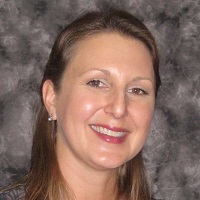 Vanessa Woods, PhD, is an assistant teaching professor at the University of California Santa Barbara. She is an expert in effective teaching practices, and studies student success as her research area of interest. Vanessa is passionate about increasing success in all students, and her research looks at how traditionally underrepresented groups can be successful in educational settings—including women in STEM fields as well as transfer student and first generation student success. Vanessa serves as a faculty advisor board member for the Certificate for College and University Teaching. Vanessa is affiliated with the UCSB Opening New Doors to Accelerating Success (ONDAS) Center, which is dedicated to increasing the success of first generation and underrepresented minority students, and the Transfer Student Center, aimed at increasing transfer student success. As a trained teacher of culturally aware mentorship practices, she serves as a mentor trainer and faculty supporter for the ONDAS and Transfer Student Centers. In addition, she coordinates and leads campus-wide workshops for staff to explore culturally aware mentorship practices.
 Margarita Safronova, PhD, is the associate director at the Center for Innovative Teaching, Research, and Learning at the University of California Santa Barbara. She is involved in projects that explore the role of pedagogical innovations on students’ sense of belonging in large universities. In her research, she focuses on the intersection of student academic and social experiences within the context of R1 institutions. She is the project director for UCSB’s ECoach project, where she works with faculty members and students across the university to contribute to the development of successful learning behaviors of undergraduate students in large gateway courses. In addition, she collaborates with faculty across STEM, Social Sciences, and Humanities to develop and implement low-stakes class assignments that foster inclusive learning experiences for students. She received her PhD from the department of political science at the University of California Santa Barbara. Her research in political science focuses on the role of university experiences on the political attitudes of ethnic minority students in Latvia and Kazakhstan.
 Linda Adler-Kassner, PhD, is professor of writing studies, faculty director of the Center for Innovative Teaching, Research, and Learning and associate dean of undergraduate education at University of California Santa Barbara. Her research and faculty development activities focus on identifying elements of expertise in disciplinary contexts and making them more visible for students; her undergraduate and graduate teaching center around studying and practicing with knowledge-making in specific contexts. She is author, coauthor, or coeditor of eleven books and more than 40 articles and book chapters, a former president of the Council of Writing Program Administrators, and a former Chair of the Conference on College Composition and Communication, composition’s largest disciplinary association.